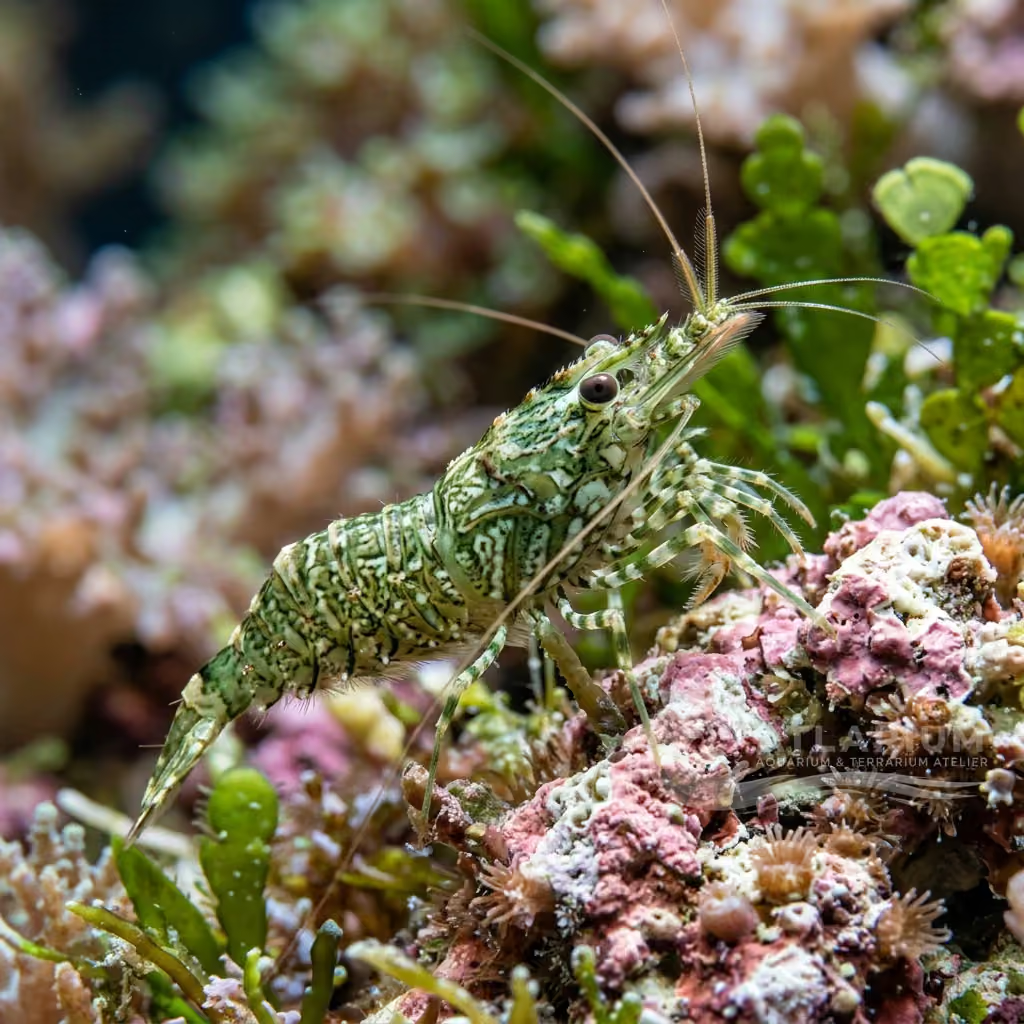
Skunk cleaner shrimp
Lysmata amboinensis
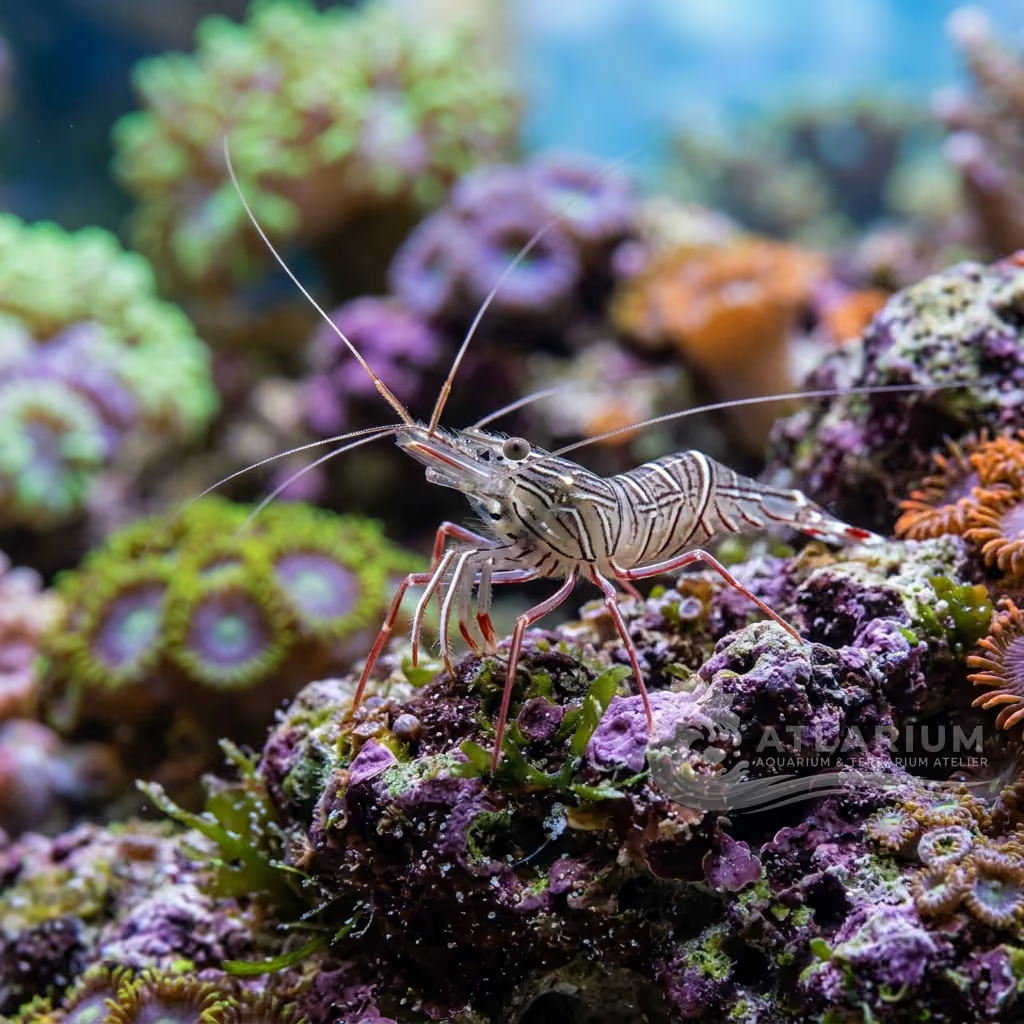
The Skunk Cleaner Shrimp is an iconic marine crustacean that actively cleans parasites from fish. It is a peaceful, highly visible addition to any community reef tank.
Temperatura da água
24 - 28 °C
Valor de pH
8.1 - 8.4
Tipo de água
Marinho
Tipo invertebrado
Marine shrimp
Tamanho adulto
6 cm
Grupo mínimo
>= 1
Papel ecológico
Scavenger
Sensibilidade ao cobre
High

Descrição da espécie
Geographical Origin and Habitat: The Skunk Cleaner Shrimp (*Lysmata amboinensis*) is an iconic, highly utilitarian marine decapod crustacean natively endemic to the warm, shallow, and pristine coral reefs of the Red Sea and the vast Indo-Pacific Ocean. Their natural biotope is defined by expansive, highly structured coral formations where they establish highly visible, permanent "cleaning stations" atop prominent live rock outcroppings or massive stony corals, easily accessible to passing fish.
Taxonomy: Scientifically classified within the Hippolytidae family, they are the most famous member of the *Lysmata* genus. Fully mature adults reach 5.0 to 6.0 centimeters (2.0-2.4 inches) in body length. They possess a delicate, classic decapod body plan. Their defining morphological features are their extraordinarily long, brilliant white sensory antennae (which sweep the water constantly) and their specialized, tiny front claws (chelipeds) designed explicitly for surgical precision when extracting parasites from fish scales.
Social Behavior: They are entirely peaceful, highly social, and inherently fearless organisms. They are obligate "cleaners." In the wild, they set up stations and "dance" by wildly waving their massive white antennae to signal passing fish. Fish of all sizes, including massive, predatory groupers and moray eels, will approach the station, enter a trance-like state, and open their mouths and gills, allowing the tiny shrimp to crawl inside to pick off dead skin and *Cryptocaryon* (Ich) parasites.
Coloration and Sexual Dimorphism: Sexual dimorphism is non-existent because they are simultaneous hermaphrodites. Their coloration is world-renowned and instantly recognizable. The base body is a deep, translucent amber or golden-yellow. The dorsal (back) surface features a violently contrasting, thick, blindingly bright blood-red stripe running the entire length of the body. This red stripe is perfectly bisected down the absolute center by a thin, razor-sharp, stark white "skunk" stripe.

Cuidado, criação e companheiros de tanque
Tank Setup: The aquarium architecture MUST accommodate their need to establish a secure cleaning station. A minimum 110-liter (30-gallon) marine aquarium is recommended.
CRITICAL REQUIREMENT: The tank MUST be heavily aquascaped with highly porous live rock featuring deep crevices and ledges. They require a specific, prominent rock to stand on while cleaning, but absolutely demand a deep cave to retreat into immediately when they undergo their highly vulnerable molting process.
Diet and Feeding: They are aggressive, omnivorous scavengers and obligate parasite cleaners. While they actively consume dead skin and some parasites off fish,
CRITICAL WARNING: A tank's parasite load cannot sustain them. They are voracious and will greedily steal food right out of the mouths of LPS corals. They MUST be fed sinking carnivore pellets, frozen Mysis, or meaty scraps daily. They are incredibly bold and will readily learn to crawl onto the aquarist's hand to accept food.
Water Quality: As marine invertebrates, they are profoundly sensitive to water chemistry fluctuations. They demand stable tropical heat (24-27°C / 75-81°F). Specific gravity (salinity) MUST be maintained precisely between 1.023 and 1.025 (they cannot tolerate hyposalinity). They require hard, highly alkaline water (pH 8.1 - 8.4) with pristine levels of Calcium (400-450 ppm) and Alkalinity to properly construct their exoskeletons during molting. They cannot tolerate elevated Nitrates.
Compatibility and Tankmates: Compatibility requires absolute vigilance regarding predatory fish. They are 100% reef-safe and beneficial to all corals and fish. They are universally welcomed by peaceful fish (Tangs, Angelfish, Clownfish).
CRITICAL WARNING: While wild predators respect the "cleaning truce," hungry aquarium predators often do not. They WILL be hunted, brutally dismembered, and eaten by Triggerfish, large Hawkfish, Pufferfish, and large aggressive Wrasses (like the Six-Line).
Aquarium Breeding: Breeding the Skunk Cleaner Shrimp in captivity is a massive, unsolved challenge for home aquarists. Because they are simultaneous hermaphrodites, ANY two shrimp will instantly pair up, mate, and both will simultaneously carry bright green egg masses under their swimmerets (pleopods). They release thousands of microscopic larvae into the water column roughly every 14 days. However, raising the delicate larvae through their multi-month, multi-stage pelagic phase is practically impossible at home.
Risks and Diseases:
CRITICAL TOXICITY WARNING: Like all crustaceans, they are devastatingly, immediately, and fatally hypersensitive to COPPER (Cu). If you have ever used copper-based medications (like Cupramine) in your aquarium, you CANNOT keep this shrimp; even residual trace copper leaching from silicone or rocks will cause instantaneous death. The second major risk is death during molting due to low iodine or calcium levels, leaving them trapped in their old exoskeleton.

Origem e distribuição geográfica
The Skunk Cleaner Shrimp (*Lysmata amboinensis*) is an iconic, highly utilitarian marine decapod crustacean natively endemic to the warm, shallow, and pristine coral reefs of the Red Sea and the vast Indo-Pacific Ocean. Their natural biotope is defined by expansive, highly structured coral formations where they establish highly visible, permanent "cleaning stations" atop prominent live rock outcroppings or massive stony corals, easily accessible to passing fish.
Origem
Oceanos tropicais e recifesÁfrica e MadagascarEuropa, Mediterrâneo e Ásia Ocidental

Perfil de invertebrados
- Dieta
- Carnivore
- The diet of Lysmata amboinensis must be carefully managed to ensure robust health, vibrant coloration, and long-term survival in captivity. In its natural environment, it has specific foraging habits that should be replicated as closely as possible in the aquarium. Supplementing its diet with high-quality, targeted commercial foods or fresh preparations ensures it receives necessary vitamins and minerals. Care should be taken not to overfeed, as uneaten food will quickly degrade water quality and harm the animal.
- Papel ecológico
- Scavenger
- Within its native ecosystem, Lysmata amboinensis plays a vital biological role that contributes to the overall stability of the environment. Whether acting as a scavenger, filter feeder, predator, or prey, it helps to efficiently cycle nutrients through the food web. Its natural behaviors prevent the over-accumulation of organic waste or the unchecked growth of specific prey populations. Introducing this species to a home aquarium often replicates these beneficial ecological functions, promoting a cleaner and more balanced system.
- Tamanho adulto
- 6 cm
- Risco de salto
- Yes
- While not generally known for jumping out of the water like some fish, Lysmata amboinensis can exhibit sudden, frantic escape responses when startled. Crabs and snails, in particular, may deliberately climb above the waterline and explore beyond the rim of an open aquarium. To prevent tragic accidents and desiccation, a well-fitted lid or tight netting is highly recommended for any tank housing this species. Providing adequate hiding spaces also reduces the likelihood of panic-induced erratic movements.
- Sensibilidade ao choque
- High
- Aquarists must be aware that Lysmata amboinensis is exceptionally sensitive to rapid fluctuations in its surrounding water parameters. Sudden shifts in temperature, specific gravity, pH, or dissolved organics can induce severe physiological shock, leading to rapid decline or death. A prolonged and careful drip acclimation process is highly recommended whenever moving this animal between systems. Maintaining pristine and unwavering water conditions is arguably the single most critical factor for its successful husbandry.
- Cálcio e minerais
- Medium
- Proper mineral balance is crucial for Lysmata amboinensis, as it requires consistent access to dissolved calcium and related trace elements for physiological maintenance. Depending on its specific biology, calcium is utilized for building external shells, hardening exoskeletons after molting, or supporting skeletal growth. In enclosed aquarium systems, these essential minerals can be rapidly depleted and may require regular supplementation. Routine water testing is encouraged to ensure that general hardness or specific calcium levels remain within the optimal range.
- Muda
- Yes
- For invertebrate species that undergo ecdysis, Lysmata amboinensis requires a safe and stress-free environment to successfully shed its old exoskeleton. During and immediately following a molt, the animal's new shell is soft, leaving it extremely vulnerable to physical damage and predation. It is important to provide ample hiding spaces where it can retreat until its body fully hardens. If applicable, the discarded exoskeleton should be left in the tank, as the animal will often consume it to reclaim vital minerals.
- Reprodução
- Oviparous
- The reproductive strategies of Lysmata amboinensis are varied and often highly adapted to its natural environmental conditions. Breeding efforts in a captive aquarium setting can range from straightforward to exceedingly difficult, often depending on specific larval requirements. Successful rearing of young frequently involves managing microscopic planktonic stages and specialized diets away from the main display tank. Nevertheless, captive propagation remains a rewarding endeavor that helps reduce the reliance on wild-caught specimens.
- Compatibilidade e companheiros de tanque
- Verify
- Careful consideration of tank mates is required to ensure the safety and wellbeing of Lysmata amboinensis in a community setup. It should generally be housed with peaceful species that will not relentlessly harass it, nip at its appendages, or view it as a food source. Conversely, its own predatory or territorial instincts must be evaluated to ensure it does not harm smaller or slower-moving tank inhabitants. Observation during the initial introduction period is vital to confirm a harmonious balance within the aquarium.

Galeria de imagens
Imagens licenciadas vinculadas à espécie ou, quando marcadas, ao táxon representativo mais próximo.

Espécies relacionadas
Recomendações agrupadas por parentes próximos, escolhas de acompanhantes e cuidados semelhantes.