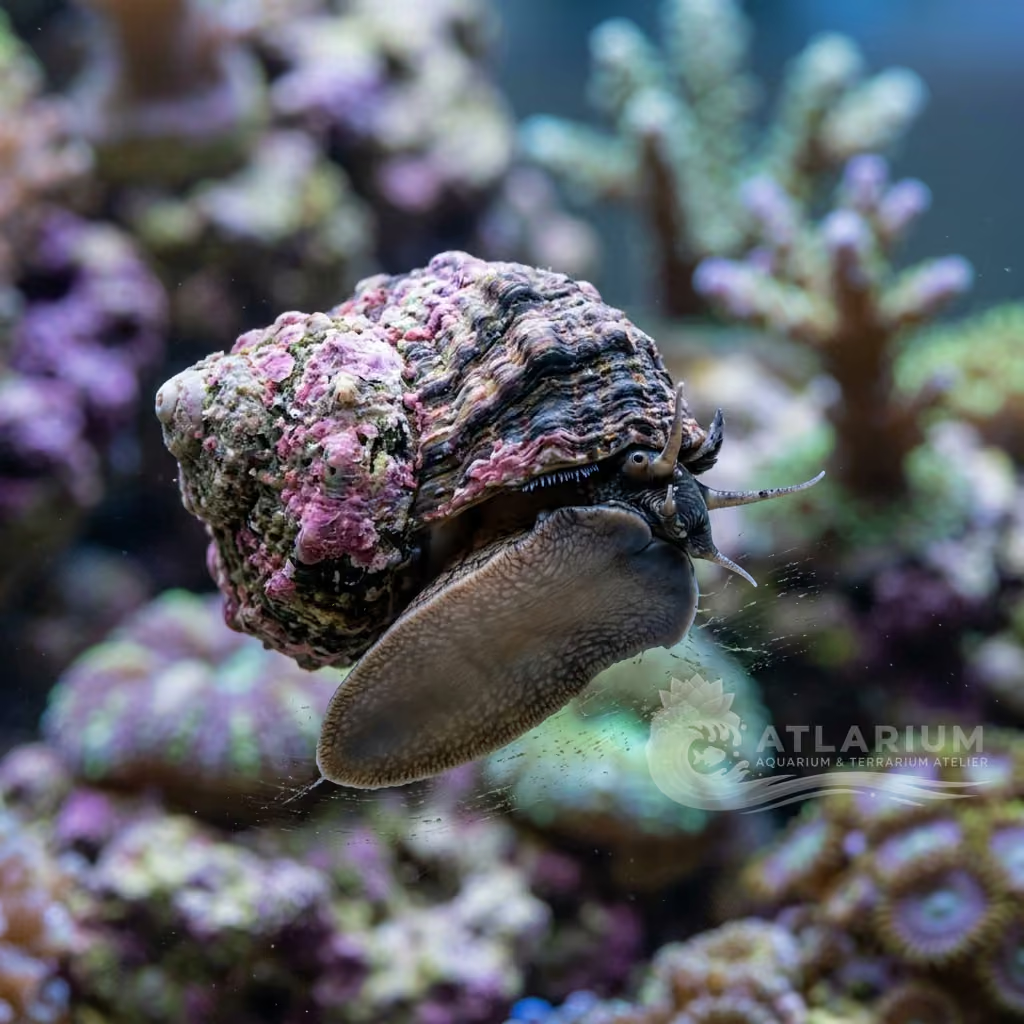
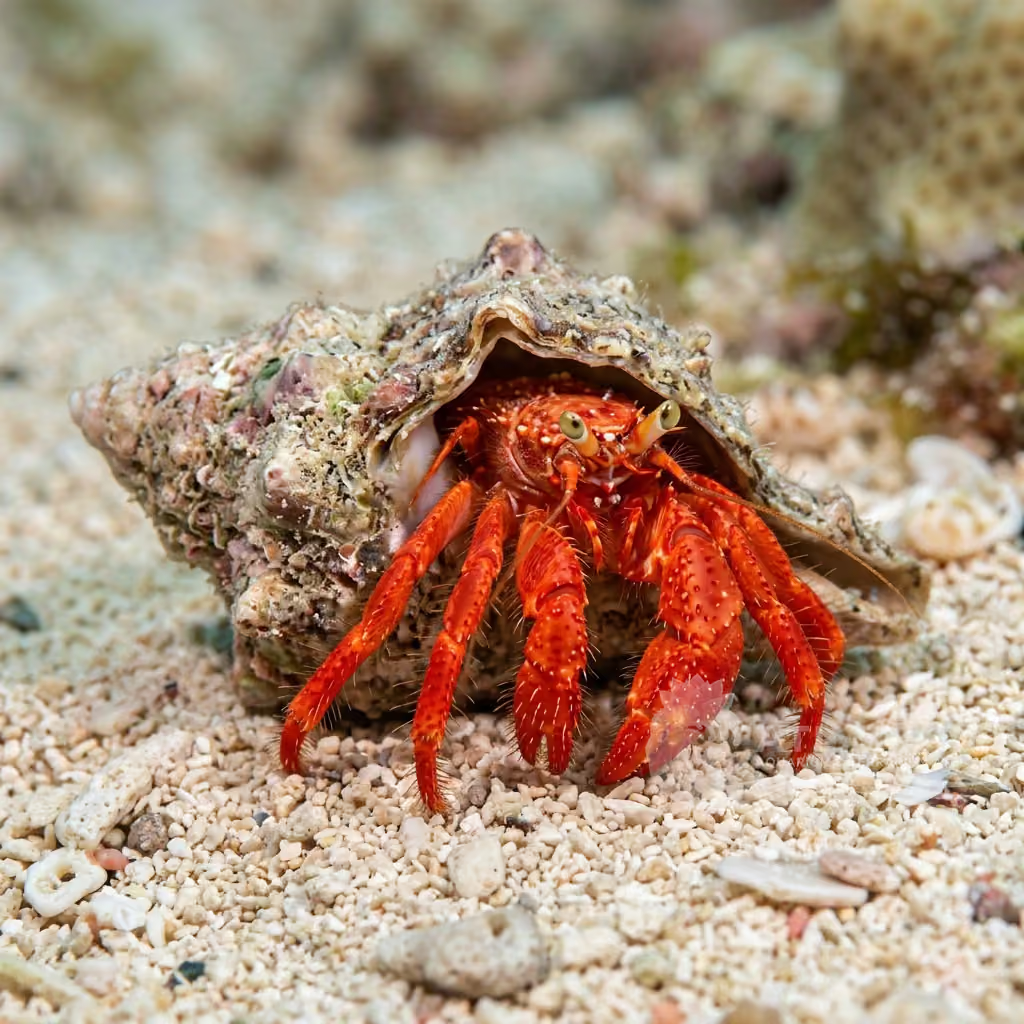
Nassarius snail
Phrontis vibex
The Nassarius Snail is a specialized marine gastropod that burrows in the sand bed, emerging rapidly to consume uneaten meaty foods. Essential for a clean substrate.
Temperatura da água
24 - 28 °C
Valor de pH
8.1 - 8.4
Tipo de água
Marinho
Tipo invertebrado
Marine snail
Tamanho adulto
2 cm
Grupo mínimo
>= 1
Papel ecológico
Scavenger
Sensibilidade ao cobre
High

Descrição da espécie
Geographical Origin and Habitat: The Nassarius Snail (*Nassarius vibex*), often affectionally called the "Zombie Snail," is a highly specialized, entirely benthic marine gastropod natively endemic to the warm, shallow coastal waters, mudflats, and sandy lagoons of the Western Atlantic Ocean, the Caribbean Sea, and the Gulf of Mexico. Their natural biotope is defined strictly by vast, flat expanses of deep, soft aragonite sand or mud, where they live completely buried beneath the substrate.
Taxonomy: Scientifically classified within the Nassariidae family, they are a small, highly adapted scavenging snail. Fully mature adults reach a maximum shell length of only 1.2 to 2.0 centimeters (0.5-0.8 inches). Their shell is slightly elongated and heavily ridged.
Fascinating Adaptation: They possess an extraordinarily long, flexible, snorkel-like tube called a "siphon," which they extend vertically above the sand surface while buried to detect the chemical scent of decaying meat in the water.
Social Behavior: They are the ultimate sand-bed scavengers and possess behavior utterly unique among aquarium snails. They spend 95% of their lives completely submerged beneath the sand bed, plowing through the substrate and keeping it highly oxygenated.
"Zombie" Behavior: When food (meaty scraps or a dead fish) hits the water, the siphon detects the scent; instantly, dozens of Nassarius Snails will erupt violently from beneath the sand like zombies and rapidly "sprint" toward the food source.
Coloration and Sexual Dimorphism: Sexual dimorphism is visually non-existent. Their coloration is functional, designed for camouflage on a sandy or muddy bottom. The ridged, spiraled shell is typically a mottled, highly disruptive pattern of tan, beige, off-white, and dark brown spots or zigzags. The fleshy foot that propels them across the sand at surprising speeds is pale white or gray, heavily speckled with dark black or brown dots. The long, prominent sensory siphon is similarly speckled.

Cuidado, criação e companheiros de tanque
Tank Setup: The aquarium architecture MUST accommodate their absolute biological necessity to burrow. Even a tiny 10-liter (2.5-gallon) pico-reef can house them.
CRITICAL REQUIREMENT: The tank MUST possess an established sand bed (at least 1 to 2 inches deep) composed of fine, soft aragonite sand. They CANNOT be kept in bare-bottom tanks or tanks with coarse crushed coral, as they will be unable to bury themselves, leading to lethal stress and starvation.
Diet and Feeding:
CRITICAL DISTINCTION: Unlike Turbo, Trochus, or Astrea snails, Nassarius snails are strictly OMNIVOROUS SCAVENGERS/CARNIVORES. They absolutely DO NOT eat algae of any kind. They exclusively consume meaty detritus, uneaten fish food, and dead organisms.
CRITICAL WARNING: In a clean tank with no leftover food, they will quickly starve. They MUST be target-fed with sinking carnivore pellets, frozen Mysis shrimp, or small pieces of raw seafood 1-2 times a week.
Water Quality: As marine mollusks, they are sensitive to water chemistry fluctuations. They demand stable tropical heat (24-27°C / 75-81°F). Specific gravity (salinity) MUST be maintained precisely between 1.023 and 1.025. They require hard, highly alkaline water (pH 8.1 - 8.4) with stable Calcium levels to maintain their shells. They are incredibly beneficial to Water Quality, as their constant burrowing prevents toxic hydrogen sulfide gas pockets from forming deep within the sand bed.
Compatibility and Tankmates: Compatibility is absolute for peaceful reef tanks. They are 100% reef-safe and completely ignore all corals. While they will swarm and rapidly consume a dead fish, they will NEVER attack a healthy, living fish.
CRITICAL WARNING: Because they are small and smell like meat, they are highly vulnerable to predators. They MUST NEVER be housed with Pufferfish, Triggerfish, Hawkfish, or large, aggressive Hermit Crabs that will easily dig them up and crush their shells.
Aquarium Breeding: Breeding the Nassarius Snail in captivity frequently occurs in well-fed, mature reef tanks. They are not broadcast spawners; instead, the female will lay highly distinctive, zig-zagging rows of tiny, clear egg capsules securely attached to the aquarium glass (often looking like tiny, translucent grains of rice). The eggs will eventually hatch into microscopic pelagic larvae. While many larvae are eaten by the tank's filtration or corals, some frequently survive to adulthood in the sand bed.
Risks and Diseases:
CRITICAL TOXICITY WARNING: Like all marine snails, they are immediately and fatally hypersensitive to COPPER (Cu) and heavy metals. They will die instantly in tanks treated with copper medications. The second major risk is lethal starvation; aquarists frequently purchase them mistakenly believing they eat algae, leading to mass starvation. The third risk is physical damage; never pull them forcefully off the glass, as you will tear their delicate muscular foot.

Origem e distribuição geográfica
The Nassarius Snail (*Nassarius vibex*), often affectionally called the "Zombie Snail," is a highly specialized, entirely benthic marine gastropod natively endemic to the warm, shallow coastal waters, mudflats, and sandy lagoons of the Western Atlantic Ocean, the Caribbean Sea, and the Gulf of Mexico. Their natural biotope is defined strictly by vast, flat expanses of deep, soft aragonite sand or mud, where they live completely buried beneath the substrate.
Origem
Oceanos tropicais e recifesAmérica Central e CaribeLeste Asiático

Perfil de invertebrados
- Dieta
- Carnivore
- Carnivorous scavenger. Quickly detects and consumes meaty foods, uneaten fish food, and deceased tank mates.
- Papel ecológico
- Scavenger
- Functions as the 'vultures' of the clean-up crew. Burrows in the sand and emerges rapidly when food is introduced.
- Tamanho adulto
- 2 cm
- Risco de salto
- Yes
- Low risk.
- Sensibilidade ao choque
- High
- Generally hardy marine snail.
- Cálcio e minerais
- Medium
- Needs sufficient calcium for shell maintenance.
- Muda
- No
- Scavenging snails like Phrontis vibex absolutely do not molt. They grow by continuously expanding their thick, calcareous shell. If a snail appears to have lost its shell or you find an empty, intact shell, it is highly likely the snail was attacked and killed by aggressive hermit crabs.
- Reprodução
- Oviparous
- Can reproduce in aquariums. Females lay egg capsules on hard surfaces. Larvae are pelagic and have a low survival rate in tanks.
- Compatibilidade e companheiros de tanque
- Verify
- Peaceful towards fish and corals. May outcompete other slow scavengers for food.

Modelos e parâmetros científicos
SeaLifeBase
Acesso aos dados científicos oficiais da espécie
SeaLifeBase v26.04Dados sincronizados em: 15/06/2026
- Resiliência
- Alta (menos de 15 meses)

Galeria de imagens
Imagens licenciadas vinculadas à espécie ou, quando marcadas, ao táxon representativo mais próximo.

Espécies relacionadas
Recomendações agrupadas por parentes próximos, escolhas de acompanhantes e cuidados semelhantes.