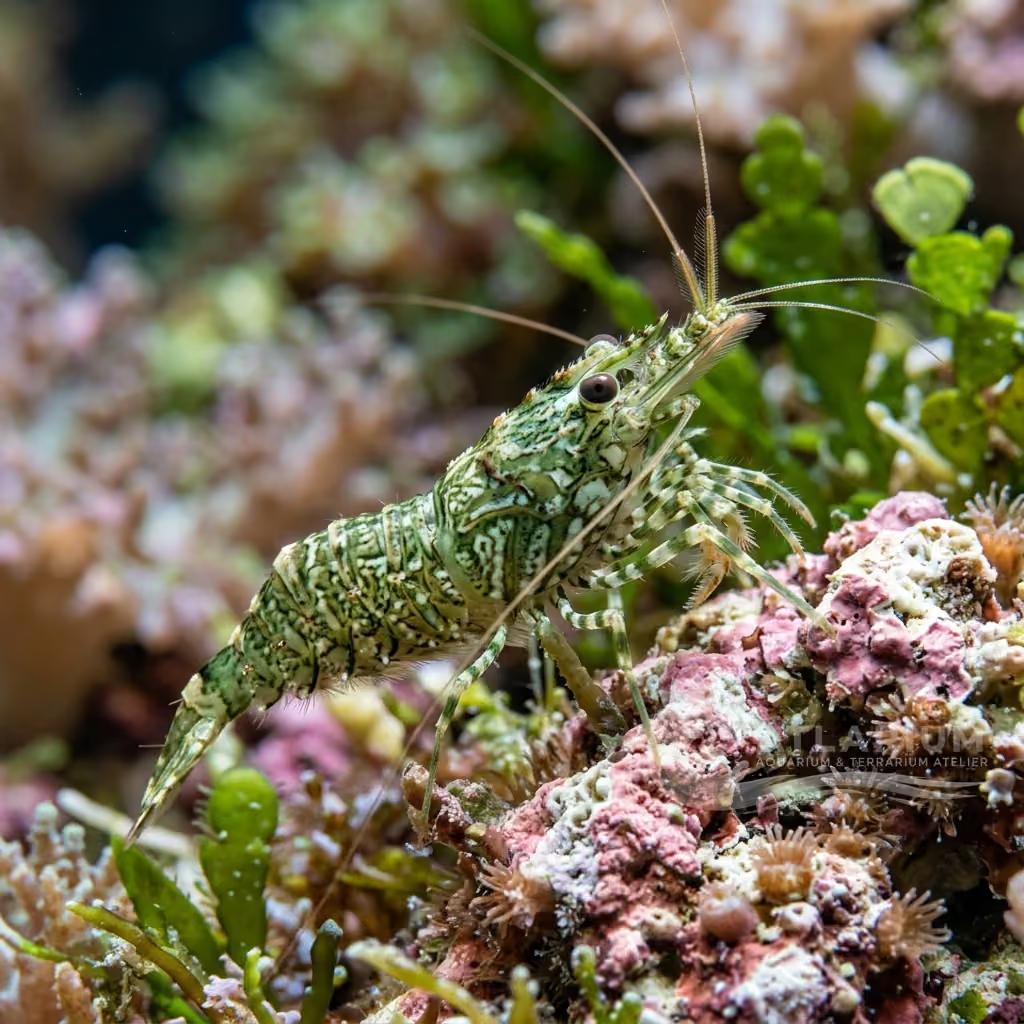
Emperor shrimp
Zenopontonia rex
The Emperor Shrimp is a stunning symbiotic species that exclusively lives on sea cucumbers or large nudibranchs. A majestic, peaceful addition to mature reef aquariums with proper hosts.
Temperatura da água
22 - 28 °C
Valor de pH
8.1 - 8.4
Tipo de água
Marinho
Tipo invertebrado
Marine shrimp
Tamanho adulto
2 cm
Grupo mínimo
>= 1
KH
8 - 12 dKH
Papel ecológico
Scavenger
Sensibilidade ao cobre
High

Descrição da espécie
Geographical Origin and Habitat: The emperor shrimp, Periclimenes imperator, is widely distributed throughout the warm tropical waters of the Indo-Pacific. Its presence is recorded from the Red Sea and the coasts of East Africa to Hawaii, French Polynesia, and the Marshall Islands. It lives exclusively in a commensal symbiotic association with large benthic marine invertebrates, particularly large nudibranchs (such as the Spanish Dancer, Hexabranchus sanguineus) and various species of sea cucumbers (holothurians of the genera Stichopus, Bohadschia, and Synapta), at depths between 1 and 45 meters along coral reefs and sandy substrates.
Taxonomy: Taxonomically, it belongs to the phylum Arthropoda, subphylum Crustacea, class Malacostraca, order Decapoda, family Palaemonidae, subfamily Pontoniinae, and genus Periclimenes (although some recent revisions have tentatively reclassified it under the genus Zenopontonia). It is a highly specialized species whose morphology has evolved in close relation to living on the outer tissues of its hosts, ensuring a mutually beneficial or purely commensal ecological interaction.
Social Behavior: This is a highly commensal, non-aggressive species that lives almost exclusively on the body of its chosen host, often in pairs consisting of a male and a female. The shrimp moves agilely across the surface of the nudibranch or sea cucumber without causing it any harm. Its behavior consists of feeding on the host's mucus, organic debris accumulated on the host's body, and small external parasites, performing an effective cleaning action that benefits the host's overall health.
Coloration and Sexual Dimorphism: Its coloration is extraordinary and striking, characterized by a sharp color contrast: the body is predominantly bright red or orange, with a broad white patch covering the dorsal part of the carapace and abdomen. The claws and legs exhibit very intense purple or cobalt blue coloration. Sexual dimorphism is primarily manifest in physical size, with adult females being significantly larger and more robust than males, possessing a wider abdomen to accommodate the eggs.

Cuidado, criação e companheiros de tanque
Tank Setup: Requires a mature, stable reef aquarium rich in microfauna, with a minimum capacity of 50 liters (approx. 13 gallons). The absolute fundamental condition for keeping this species is the presence of a healthy and suitable symbiotic host, such as a large sea cucumber or a compatible nudibranch. The aquarium should have areas with weak to moderate water current and a bottom of fine sand. The rockwork must allow easy movement for the host so the shrimp is not crushed against rocks.
Diet and Feeding: In nature, it feeds on host mucus and organic particulate matter. In the aquarium, this source is not sufficient long-term. It is necessary to target-feed the shrimp directly using a pipette or tweezers, offering very small portions of frozen food such as cyclops, rotifers, baby brine shrimp, or liquid invertebrate foods. Feeding must be done carefully to prevent faster fish from stealing the food or causing it to disperse and pollute the aquarium water.
Water Quality: Demands absolute chemical and physical stability of the water. Temperature must be maintained between 24°C and 28°C (75°F - 82°F), pH between 8.1 and 8.4, and salinity around 1.023-1.025. Ammonia and nitrites must be strictly zero, and nitrates kept below 10 ppm. As with all crustaceans, the presence of copper or zinc is lethal. Maintaining optimal levels of iodine, calcium, and magnesium is essential to support the periodic molting of its exoskeleton.
Compatibility and Tankmates: Cohabitation with small, peaceful fish (such as small gobies, pipefish, or blennies) is ideal. The presence of predatory or aggressive fish that could attack the shrimp or harass its host must be completely avoided, including pufferfish, triggerfish, active wrasses, hawkfish, and predatory crabs. The survival of the shrimp is closely linked to its host; if the nudibranch or sea cucumber dies, the shrimp becomes highly vulnerable and faces a high risk of death.
Aquarium Breeding: Breeding in the aquarium is extremely rare and complex. If a compatible pair is kept on the same host, the female will regularly produce small clutches of greenish or yellowish eggs under her abdomen. Upon hatching, which usually occurs at night, microscopic planktonic larvae are released. Rearing larvae requires specialized circular-flow tanks and a constant diet of live fitoplankton and zooplankton of appropriate sizes.
Risks and Diseases: The primary biological risk is the decline or death of the symbiotic host. Without it, the shrimp suffers severe physiological stress and loses its main protection. Other critical risks include failed molts due to mineral deficiencies (iodine and calcium) or sudden fluctuations in salinity during water changes. During a molt, the shrimp is soft and must remain hidden on the host or in safe cracks to avoid injury or predation.

Origem e distribuição geográfica
The emperor shrimp, Periclimenes imperator, is widely distributed throughout the warm tropical waters of the Indo-Pacific. Its presence is recorded from the Red Sea and the coasts of East Africa to Hawaii, French Polynesia, and the Marshall Islands. It lives exclusively in a commensal symbiotic association with large benthic marine invertebrates, particularly large nudibranchs (such as the Spanish Dancer, Hexabranchus sanguineus) and various species of sea cucumbers (holothurians of the genera Stichopus, Bohadschia, and Synapta), at depths between 1 and 45 meters along coral reefs and sandy substrates.
Origem
Oceanos tropicais e recifesAmérica do NorteÁfrica e Madagascar

Perfil de invertebrados
- Dieta
- Carnivore
- As a omnivore/commensal, Periclimenes imperator plays an active role in consuming various organic matters in its environment. Its diet in captivity should be varied, including specialized pellets, frozen foods, and natural algae or detritus depending on its specific preferences. Regular and balanced feeding is crucial for its health and longevity.
- Papel ecológico
- Scavenger
- The primary ecological role of Periclimenes imperator is acting as a symbiotic within the aquarium ecosystem. By constantly foraging, it helps manage waste, uneaten food, or pests, contributing significantly to water quality. Its presence introduces a natural balance and mimics complex biological interactions found in the wild.
- Tamanho adulto
- 2 cm
- Risco de salto
- Yes
- The jump or escape risk for Periclimenes imperator is considered low. Like many active invertebrates, it may attempt to climb out of the water if it feels stressed, threatened, or if water conditions deteriorate. A tight-fitting lid or mesh screen is highly recommended to prevent accidental escapes.
- Sensibilidade ao choque
- High
- Periclimenes imperator is quite sensitive to sudden shifts in water parameters, particularly salinity, temperature, and pH. It is highly recommended to use a slow drip acclimation method over several hours when introducing it to a new tank. Maintaining stable conditions is vital to prevent stress-induced ailments or mortality.
- Cálcio e minerais
- High
- To support healthy molting and exoskeleton growth, Periclimenes imperator requires adequate calcium and trace elements like iodine in the water. Regular water changes with a high-quality salt mix usually provide sufficient levels, but specific supplementation may be necessary in heavily stocked reef tanks. Monitoring calcium and alkalinity ensures proper skeletal development.
- Muda
- Yes
- During the molting process, Periclimenes imperator becomes extremely vulnerable to predators and aggressive tankmates. It will typically retreat to a secure hiding spot until its new exoskeleton hardens. It is important to leave the discarded molt in the tank, as the invertebrate will often consume it to reclaim valuable minerals.
- Reprodução
- Oviparous
- Breeding Periclimenes imperator in a home aquarium is incredibly challenging due to its complex reproductive cycle. It typically involves a planktonic larval stage that requires highly specialized foods and precise water conditions to survive. In most standard setups, any spawned larvae will quickly become food for fish and corals.
- Compatibilidade e companheiros de tanque
- Reef safe
- When considering tankmates, Periclimenes imperator is generally compatible with peaceful fish and other similarly sized invertebrates. Since its reef compatibility is rated as 'yes', careful observation is required if kept with delicate corals or smaller ornamental shrimp. Aggressive or large predatory fish should always be avoided to ensure its safety.

Espécies relacionadas
Recomendações agrupadas por parentes próximos, escolhas de acompanhantes e cuidados semelhantes.