Hammer Snapping Shrimp
Alpheus malleator
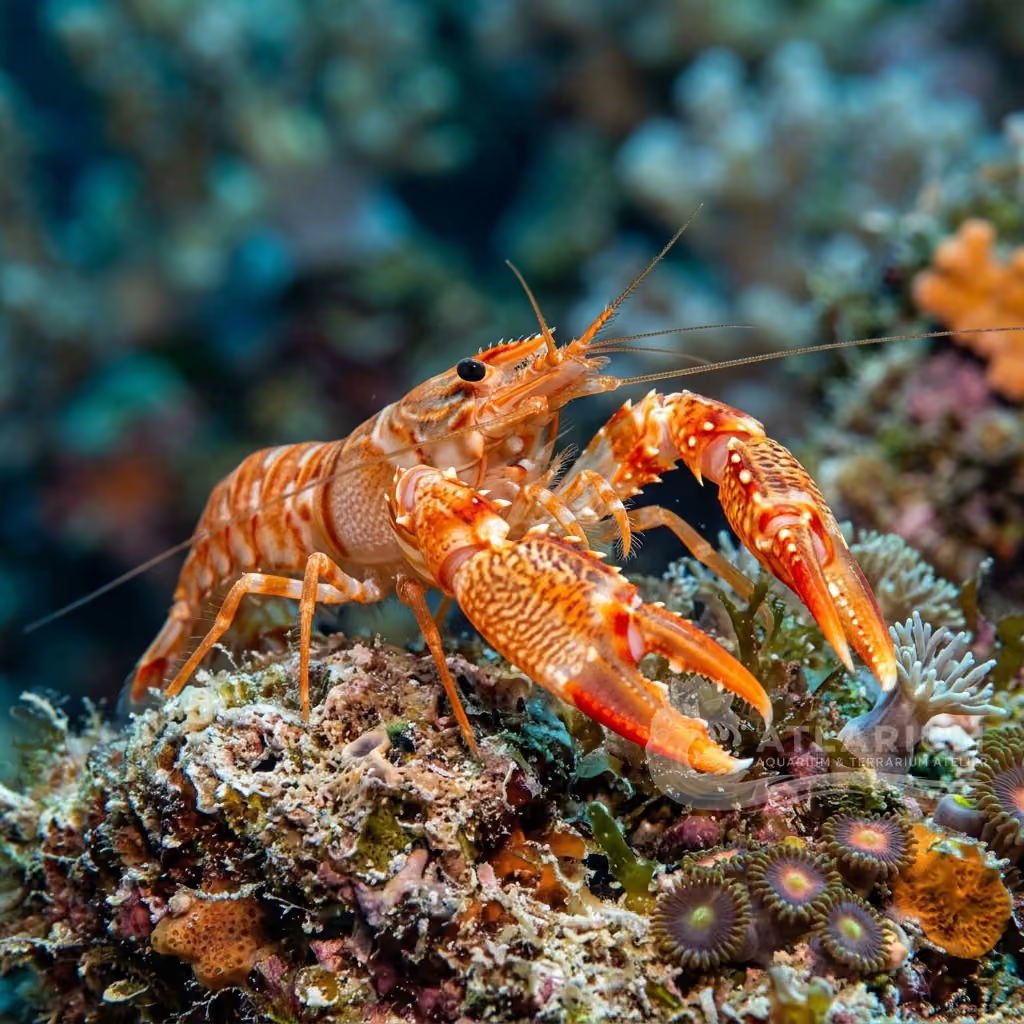
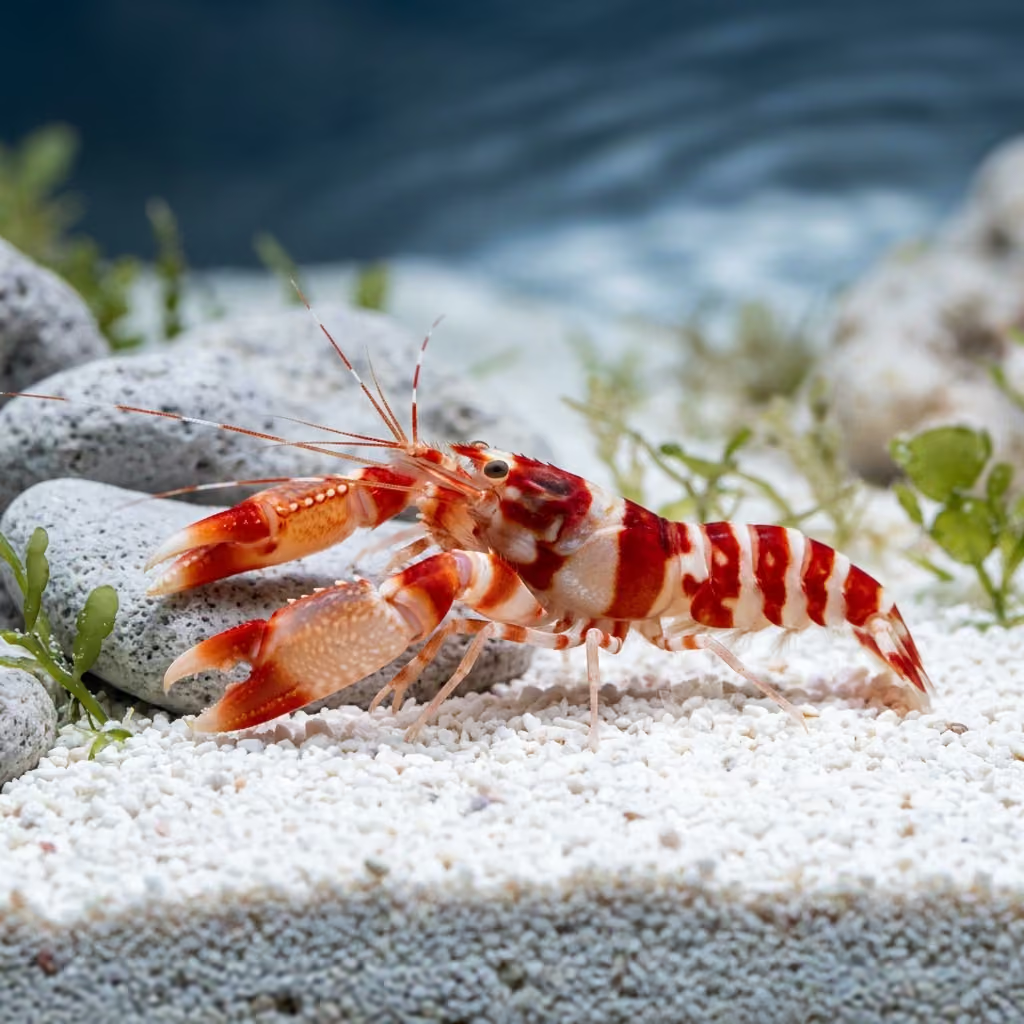
A highly resilient marine snapping shrimp with a massive hammer-shaped claw. It is capable of producing exceptionally loud pops and stunning shockwaves.
Temperatura da água
22 - 28 °C
Valor de pH
8.1 - 8.4
Tipo de água
Marinho
Tipo invertebrado
Marine shrimp
Tamanho adulto
5 cm
Grupo mínimo
>= 1
KH
8 - 12 dKH
Papel ecológico
Symbiont
Sensibilidade ao cobre
High

Descrição da espécie
Geographical Origin and Habitat: Alpheus malleator, commonly known as the Hammer Snapping Shrimp, is a decapod crustacean inhabiting the tropical waters of both the Atlantic Ocean (from West Africa to the Gulf of Mexico and Brazil) and the eastern Pacific Ocean (from Mexico to Ecuador). It lives in shallow coral reefs, coral rubble flats, and rocky intertidal zones, rarely found deeper than 15 meters. It seeks shelter in burrows excavated under rocks or within large sponges.
Taxonomy: Belongs to the class Malacostraca, order Decapoda, family Alpheidae, and genus Alpheus. Snapping shrimp are famous for their asymmetrical claw modified to produce a high-velocity cavitation bubble. The collapse of this bubble generates a loud popping sound and a powerful shockwave used to stun prey and defend their territory.
Social Behavior: It is a benthic, burrowing species. It spends most of its time digging and maintaining an extensive tunnel system beneath the sand and rocks. Unlike some other snapping shrimp species, Alpheus malleator does not always establish an obligate symbiotic relationship with Gobiidae shrimpgobies, often leading a solitary, highly territorial life inside its burrow.
Coloration and Sexual Dimorphism: Displays a robust and camouflaged coloration with bands and patches of dark brown, olive green, gray, and reddish or purplish hues on the claws. The main snapping claw is massive and features a distinct hammer-like shape. External sexual dimorphism is not easily visible; mature females are distinguished only when carrying eggs under the abdomen.

Cuidado, criação e companheiros de tanque
Tank Setup: Requires a mature marine or reef aquarium of at least 60-80 liters. The substrate is the most important setup element: it must consist of a mixture of sand of various grain sizes, coral gravel, and small rubble pieces to allow stable burrow construction. Rockwork must be placed directly on the glass bottom rather than on top of the sand to prevent collapses due to digging.
Diet and Feeding: An opportunistic omnivore and scavenger. In captivity, it accepts almost any food: bottom dweller pellets, pieces of shrimp, mysis, minced krill, clam meat, and leftover fish food. It occasionally hunts small benthic invertebrates by stunning them with its claw snap. Feeding near its burrow entrance helps ensure it gets sufficient nutrition.
Water Quality: Demands stable marine water parameters: temperature between 23°C and 27°C, pH stable at 8.1 to 8.4, and specific gravity of 1.023 to 1.025. It is extremely sensitive to copper and heavy metals, which are lethal. Adequate levels of calcium, magnesium, and iodine are necessary to ensure successful exoskeleton molting.
Compatibility and Tankmates: Generally reef-safe for corals. It can coexist with most medium-to-large reef fish. However, it poses a threat to very small, peaceful shrimp or tiny bottom-dwelling gobies if they enter its burrow system. Avoid housing it with large predators like lionfish, groupers, or hawkfish that will readily prey on it.
Aquarium Breeding: Breeding in the aquarium is extremely difficult and not commercially viable. Mated pairs may produce eggs regularly, but the larval development involves a complex, prolonged planktonic phase requiring specialized live microscopic foods and specialized filtration setups to prevent larvae from being destroyed by filtration systems.
Risks and Diseases: The main risk is molting failure in aquariums lacking trace minerals, particularly iodine. The snap of its claw is remarkably loud; while the myth that it can break aquarium glass is false, the noise can stress skittish tankmates. Perform slow drip acclimation to prevent fatal osmotic shock during transitions.

Origem e distribuição geográfica
Alpheus malleator, commonly known as the Hammer Snapping Shrimp, is a decapod crustacean inhabiting the tropical waters of both the Atlantic Ocean (from West Africa to the Gulf of Mexico and Brazil) and the eastern Pacific Ocean (from Mexico to Ecuador). It lives in shallow coral reefs, coral rubble flats, and rocky intertidal zones, rarely found deeper than 15 meters. It seeks shelter in burrows excavated under rocks or within large sponges.
Origem
Oceanos tropicais e recifesExtra-Amazônica América do SulAmérica Central e CaribeÁfrica e Madagascar

Perfil de invertebrados
- Dieta
- Omnivore
- This species is primarily a scavenger and carnivore, continuously foraging the substrate for uneaten food, detritus, and small benthic organisms. In captivity, their diet should be supplemented with meaty foods such as mysis shrimp, brine shrimp, and sinking pellets. Providing a varied diet is crucial for their long-term health and successful molting.
- Papel ecológico
- Symbiont
- In the wild, this shrimp plays a vital role as a bioturbator, constantly turning over the sand and gravel. This digging behavior helps oxygenate the substrate and prevents the buildup of toxic anaerobic zones. Furthermore, they often form beneficial symbiotic relationships with certain goby species, sharing a burrow for mutual protection.
- Tamanho adulto
- 5 cm
- Risco de salto
- Yes
- While not known to be prolific jumpers like some fish, they can suddenly propel themselves backward using a powerful tail flick if startled. This explosive movement could inadvertently launch them out of an uncovered tank. It is highly recommended to use a tightly fitting lid to prevent any accidental escapes during feeding or tank maintenance.
- Sensibilidade ao choque
- High
- They are highly sensitive to sudden fluctuations in water parameters such as salinity, temperature, and pH. Acclimation should be performed very slowly, preferably using the drip method over several hours. Sudden changes can induce shock, premature molting, or even immediate death in sensitive individuals.
- Cálcio e minerais
- High
- As a crustacean, this species requires adequate calcium levels and proper alkalinity to construct and harden its exoskeleton after molting. Iodine and magnesium traces are also essential to facilitate smooth molting processes. Regular water changes and appropriate dosing usually maintain these necessary elemental levels.
- Muda
- Yes
- During the molting process, the shrimp becomes extremely vulnerable and will retreat to its burrow or hideout until its new shell hardens. It is crucial to leave the discarded exoskeleton in the tank, as the shrimp will consume it to recover lost calcium and nutrients. Do not disturb the animal during this critical period to avoid causing fatal stress.
- Reprodução
- Not bred in captivity
- Breeding in captivity is rare and quite challenging due to the specialized requirements of their planktonic larval stages. Females carry the fertilized eggs under their abdomen until they hatch into free-swimming zoeae. These larvae typically require specialized microscopic foods and a dedicated rearing setup to survive into adulthood.
- Compatibilidade e companheiros de tanque
- Reef safe
- This species is generally peaceful towards most tankmates but can be fiercely territorial towards conspecifics or similar bottom-dwelling crustaceans. They are best kept either singly, in a mated pair, or associated with a compatible watchman goby. Avoid keeping them with large, aggressive predatory fish that may view them as a food source.

Espécies relacionadas
Recomendações agrupadas por parentes próximos, escolhas de acompanhantes e cuidados semelhantes.