Banded snapping shrimp
Alpheus armillatus
A fascinating West Atlantic snapping shrimp famous for its loud clicks. It is highly prized for forming symbiotic relationships with burrowing partner gobies.
Temperatura da água
22 - 26 °C
Valor de pH
8.1 - 8.4
Tipo de água
Marinho
Tipo invertebrado
Marine shrimp
Tamanho adulto
4,5 cm
Grupo mínimo
>= 1
KH
8 - 12 dKH
Papel ecológico
Symbiont
Sensibilidade ao cobre
High

Descrição da espécie
Geographical Origin and Habitat: The species Alpheus armillatus is a fascinating and unique invertebrate native to tropical and subtropical Western Atlantic, especially along the coasts of Florida, the Gulf of Mexico, the Caribbean, Bermuda, and southwards to the northern coasts of Brazil. It predominantly populates shallow marine waters, sheltered lagoons, seagrass beds, and under rocks or cobblestones adjacent to sandy burrow areas, where it finds shelter within rocky crevices, cracks, and areas rich in debris or vegetation to protect itself from natural predators and direct light. The geographical distribution of this organism reflects its ecological adaptability to various marine or brackish microhabitats.
Taxonomy: From a systematic perspective, Alpheus armillatus belongs to the class Malacostraca, order Decapoda, and the family Alpheidae. This species was officially classified by H. Milne Edwards, 1837 and is phylogenetically linked to congeneric species with which it shares some morphological characteristics, yet it is distinguished by structural and genetic details of its appendages.
Social Behavior: This invertebrate exhibits a behavior that is predominantly mostly nocturnal, territorial, and dedicated to excavating complex underground burrow networks and tends to carry out its primary activities during crepuscular or nocturnal hours. In a controlled environment, it quickly adapts to the presence of tankmates and the aquarist, though it retains the tendency to seek dark shelters. It plays a fundamental ecological role as a bioturbator that constantly turns over the sandy substrate, aerating deep layers and establishing facultative symbiotic relationships with burrowing gobies.
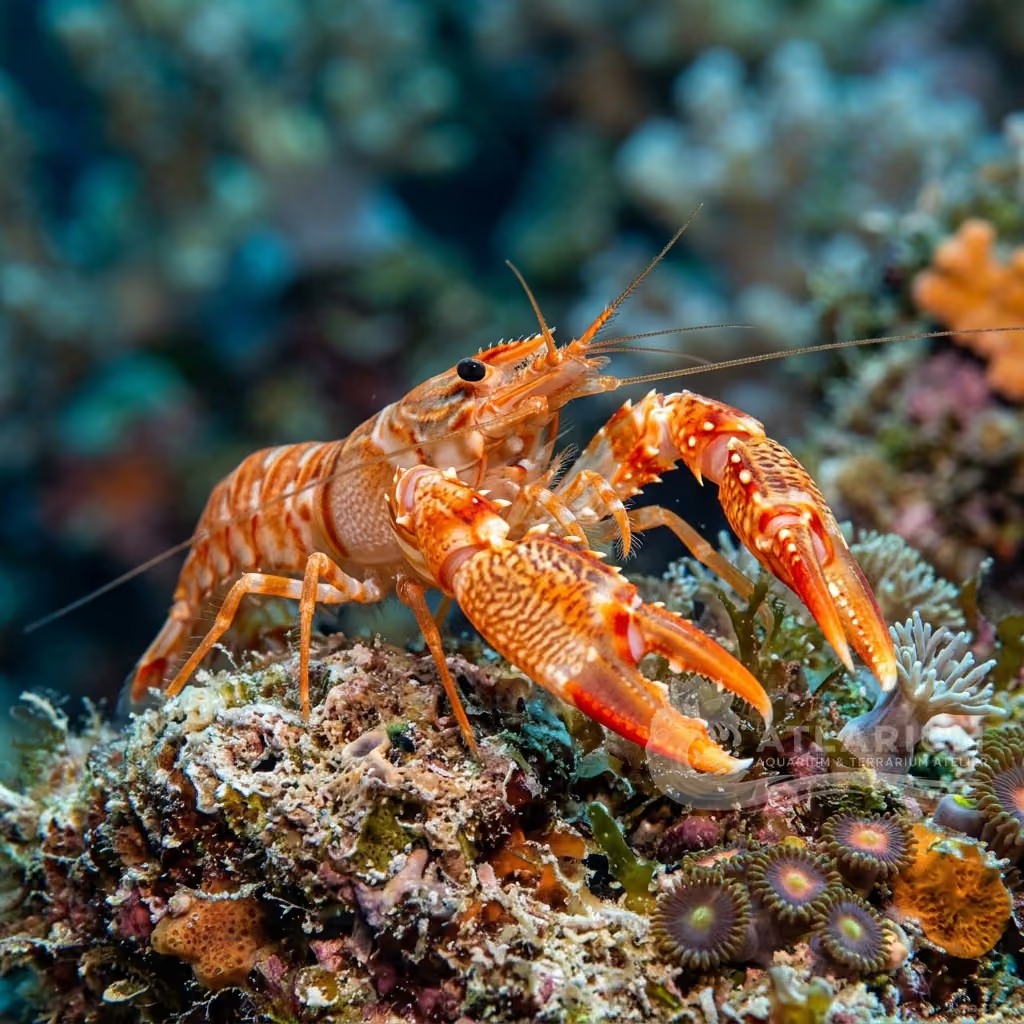
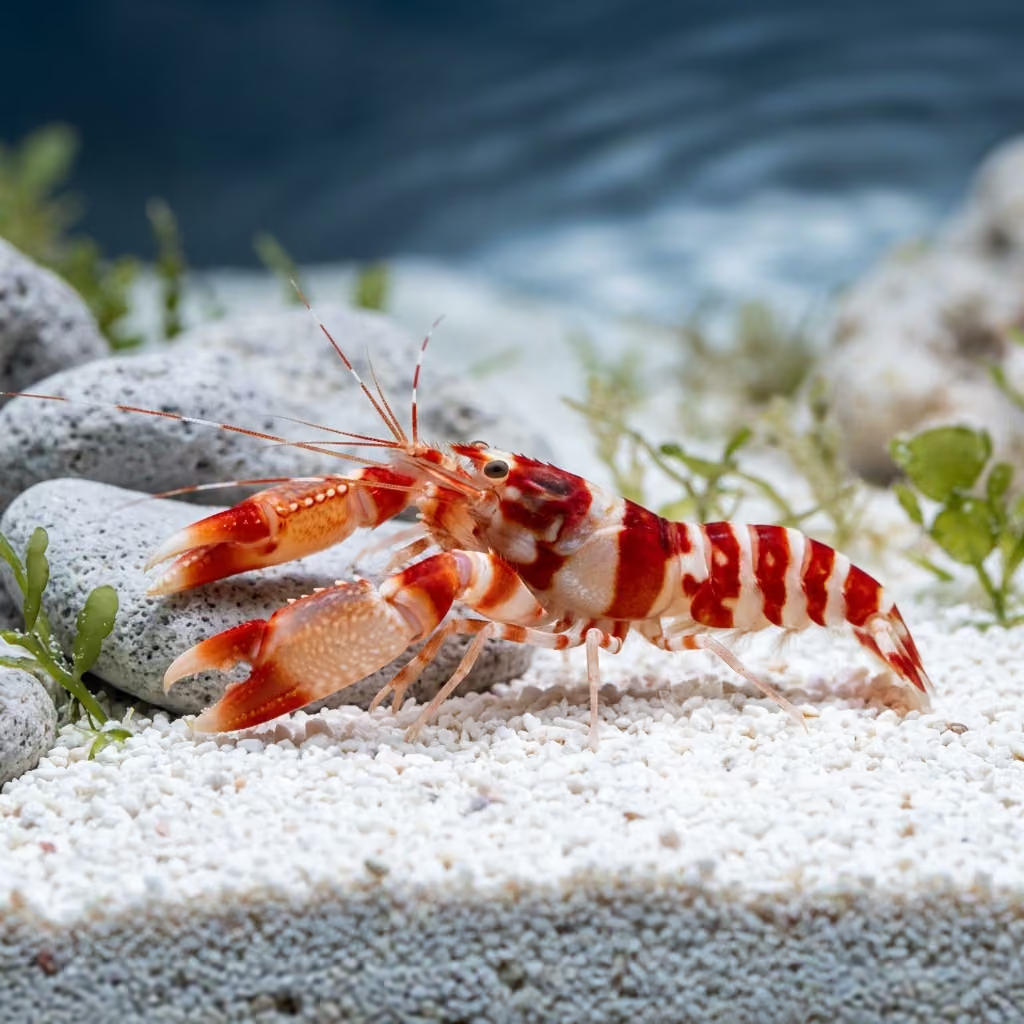
Coloration and Sexual Dimorphism: The coloration of this species is characterized by a banded coloration with alternating rings of brown, greenish-grey, and cream, paired with a massive, asymmetrical snapping claw used for sound production. These chromatic features offer excellent camouflage in its natural habitat. Regarding sexual dimorphism, the sexes are not visually distinguishable to the naked eye; the only reliable way to identify a female is by the presence of eggs carried beneath her abdomen.

Cuidado, criação e companheiros de tanque
Tank Setup: To properly house Alpheus armillatus, a stable aquarium with a minimum volume of 80 liters for a stable pair or a single specimen is recommended. The tank must be set up with a deep substrate of fine sand mixed with small rock fragments and shell rubble (at least 5-8 cm) to allow burrowing and tunnel fortification to ensure a stimulating and safe environment. The presence of hiding places is crucial, especially during the molting period when the body is unprotected.
Diet and Feeding: The diet of this invertebrate is predominantly omnivorous with a strong preference for protein-rich, meaty food items. In the aquarium, it readily accepts frozen mysis, chopped krill, small pieces of fresh shrimp, and slow-dissolving pellets that reach the substrate. Integrating the diet with specific vitamins and minerals helps keep the specimen healthy and prevents nutritional deficiencies.
Water Quality: The stability of water parameters is fundamental for the long-term health of Alpheus armillatus. Ideal values include a temperature of 24-27 °C, pH of 8.1-8.4, specific gravity of 1.023-1.025 specific gravity, and KH of 8-12 dKH. It is essential to perform regular water changes to maintain ammonia and nitrites at zero, and limit nitrates. Supplementing iodine is highly recommended to stimulate safe molting, alongside adequate calcium and magnesium levels to support a robust exoskeleton.
Compatibility and Tankmates: In terms of compatibility, this species proves to be peaceful towards fish and corals, but highly territorial against other snapping shrimp. It can be housed with symbiotic gobies like those of the genera Cryptocentrus or Stonogobiops, peaceful reef fish, and all types of corals. Conversely, cohabitation with benthic predatory fish, groupers, hawkfish, large predatory wrasses, or aggressive crabs that could dig it up and consume it is absolutely not recommended, as they could harm or prey on it.
Aquarium Breeding: Breeding Alpheus armillatus in the aquarium is extremely high due to the complex planktonic larval stages that rarely survive standard aquarium filtration systems. The reproductive cycle involves mating takes place immediately after the female molts; eggs are carried under the abdomen for several weeks before hatching into swimming zoeae that require microscopic live food. The development of larvae or offspring requires stable conditions and microscopic live feeds in the early stages.
Risks and Diseases: The main health risks for this species are related to molting issues stemming from mineral deficiencies, osmotic shock due to rushed acclimation, and the collapse of unreinforced sand tunnels. Like all crustaceans, it is extremely sensitive to medical treatments containing copper or formalin, and elevated concentrations of heavy metals which lead to quick death. Rapid fluctuations in chemical parameters can cause fatal osmotic stress.

Origem e distribuição geográfica
The species Alpheus armillatus is a fascinating and unique invertebrate native to tropical and subtropical Western Atlantic, especially along the coasts of Florida, the Gulf of Mexico, the Caribbean, Bermuda, and southwards to the northern coasts of Brazil. It predominantly populates shallow marine waters, sheltered lagoons, seagrass beds, and under rocks or cobblestones adjacent to sandy burrow areas, where it finds shelter within rocky crevices, cracks, and areas rich in debris or vegetation to protect itself from natural predators and direct light. The geographical distribution of this organism reflects its ecological adaptability to various marine or brackish microhabitats.
Origem
Oceanos tropicais e recifesExtra-Amazônica América do SulAmérica Central e CaribeAmérica do NorteLeste Asiático

Perfil de invertebrados
- Dieta
- Omnivore
- The Alpheus armillatus is generally considered an opportunistic omnivore that will scavenge for leftover food, detritus, and small organisms. In the home aquarium, its diet should be supplemented with a variety of meaty foods such as frozen mysis shrimp, brine shrimp, and high-quality sinking pellets. Providing a varied diet ensures they receive the necessary nutrients for growth and molting. Feeding them targeted amounts helps prevent starvation while keeping the aquarium clean.
- Papel ecológico
- Symbiont
- In its natural habitat, the Alpheus armillatus serves as a valuable cleaner and scavenger, helping to control detritus and organic waste. By consuming uneaten food and dead organic matter, it plays a critical role in nutrient recycling within the reef ecosystem. Some species within this group also engage in symbiotic relationships with other marine life, providing cleaning services in exchange for food. Their presence indicates a healthy and balanced marine environment.
- Tamanho adulto
- 4.5 cm
- Risco de salto
- Yes
- While not notorious escape artists, the Alpheus armillatus can be startled easily and may dart unpredictably when frightened. In open-top aquariums, this sudden burst of speed could potentially cause them to launch out of the water. It is advisable to use a tight-fitting lid or a mesh screen top to prevent any accidental escapes. Minimizing sudden movements or aggressive tank mates will also reduce the likelihood of jumping behavior.
- Sensibilidade ao choque
- High
- The Alpheus armillatus is quite sensitive to sudden changes in water parameters such as salinity, temperature, and pH. Rapid fluctuations can cause severe osmotic shock, leading to stress, failed molts, or immediate death. It is highly recommended to use a slow drip acclimation method over several hours when introducing them to a new aquarium. Consistent water quality and stability are paramount for their long-term survival and health.
- Cálcio e minerais
- Medium
- Proper calcium levels are essential for the Alpheus armillatus to successfully build and maintain its exoskeleton. Along with calcium, trace elements like iodine and magnesium must be kept at optimal marine levels to facilitate the molting process. A lack of sufficient calcium can result in soft shells, deformities, and ultimately fatal molting complications. Regular water changes with high-quality salt mix usually provide adequate amounts of these crucial minerals.
- Muda
- Yes
- Molting is a vulnerable time for the Alpheus armillatus, during which it sheds its old exoskeleton to grow a new, larger one. Following a molt, the invertebrate will hide in the rockwork for a few days until its new shell hardens completely. During this period, they are highly susceptible to predation and physical damage from tank mates. It is best to leave the discarded exoskeleton in the tank, as they often consume it to reclaim valuable minerals.
- Reprodução
- Oviparous
- Breeding the Alpheus armillatus in a home aquarium can be challenging due to the complex larval stages and dietary needs of the offspring. These invertebrates often carry their eggs under their abdomen until they hatch into planktonic larvae. Raising the delicate larvae requires specialized rearing tanks and constant supplies of specific microscopic live foods. Although spontaneous spawning is common in well-fed adults, successful rearing to maturity is rarely achieved by casual aquarists.
- Compatibilidade e companheiros de tanque
- Reef safe
- The Alpheus armillatus is generally peaceful and can be safely housed with a wide variety of reef-safe fish and corals. Care should be taken to avoid keeping them with large, aggressive fish such as triggerfish, puffers, or large wrasses that might view them as a meal. They are usually tolerant of other peaceful invertebrates, though some territorial squabbles may occur with closely related species. Providing ample hiding spots among live rock will help them feel secure and reduce stress.

Modelos e parâmetros científicos
SeaLifeBase
Acesso aos dados científicos oficiais da espécie
SeaLifeBase v26.04Dados sincronizados em: 15/06/2026
- Resiliência
- Alta (menos de 15 meses)

Espécies relacionadas
Recomendações agrupadas por parentes próximos, escolhas de acompanhantes e cuidados semelhantes.