Pederson's cleaner shrimp
Ancylomenes pedersoni
A tiny symbiotic marine shrimp associated with reef anemones, renowned for cleaning ectoparasites off fish. Geographical Origin and Habitat: Ancylomenes pedersoni is native to the tropical...
Temperatura da água
22 - 27 °C
Valor de pH
8.1 - 8.4
Tipo de água
Marinho
Tipo invertebrado
Marine shrimp
Tamanho adulto
3 cm
Grupo mínimo
>= 1
Papel ecológico
Cleaner
Sensibilidade ao cobre
High

Descrição da espécie
Geographical Origin and Habitat: Ancylomenes pedersoni is native to the tropical waters of the Western Atlantic, widely distributed throughout the Caribbean Sea, the Gulf of Mexico, the Florida Keys, and the Bahamas. It lives in a close symbiotic relationship with sea anemones, primarily Bartholomea annulata and Condylactis gigantea, on coral reefs at depths of 1 to 30 meters.
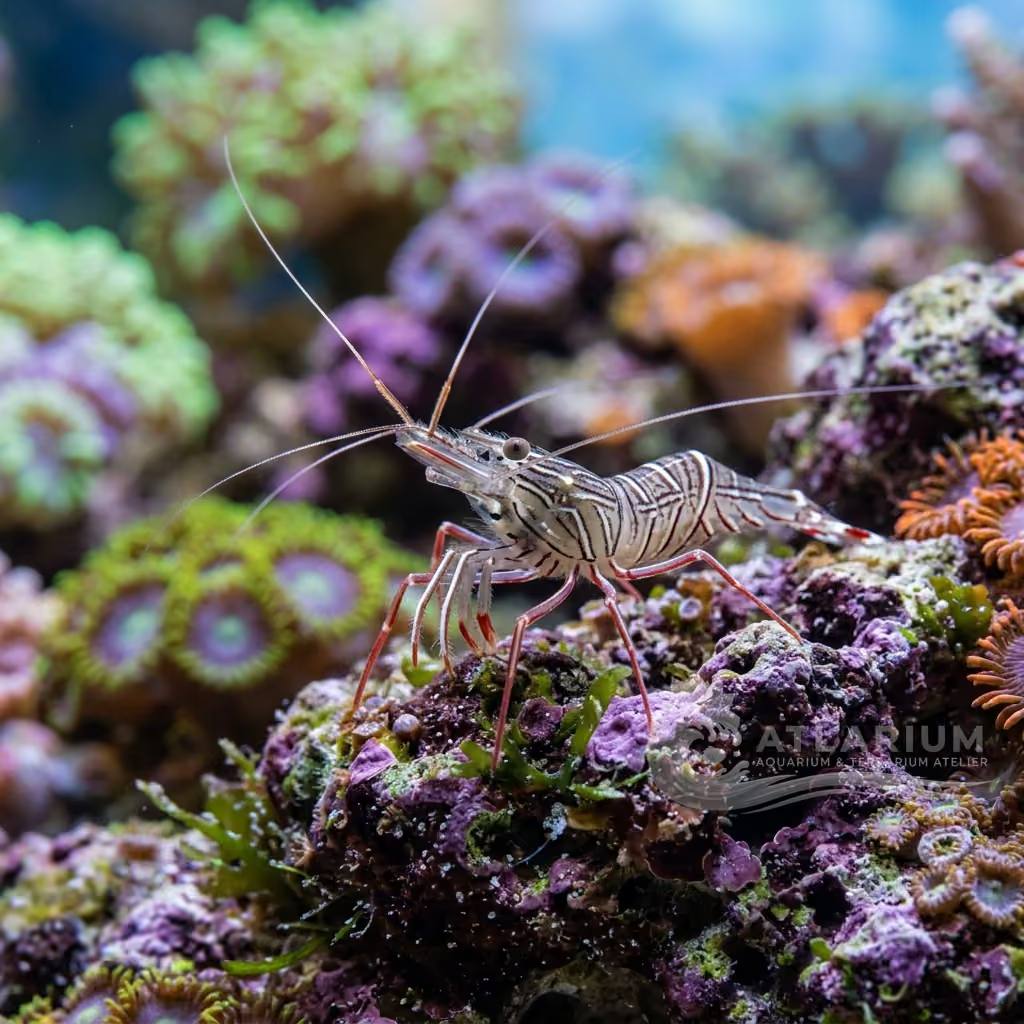
Taxonomy: Belongs to the class Malacostraca, order Decapoda, family Palaemonidae, and genus Ancylomenes (previously placed in the genus Periclimenes). It is a tiny shrimp, reaching a maximum adult length of only 2 to 3 centimeters. It features long, conspicuous white antennae used to signal to fish.
Social Behavior: Famous for its highly cooperative cleaning symbiosis. It perches on or near its host anemone, waving its long white antennae and performing a swaying dance to attract passing reef fish. Once a fish approaches and signals readiness, the shrimp climbs onto it to feed on ectoparasites and dead tissue.
Coloration and Sexual Dimorphism: The body is almost completely transparent, helping it avoid predation. It is decorated with electric purple and blue spots and lines on its carapace, tail, and legs. The claws feature purple banding. Sexual dimorphism is minor; adult females are slightly larger and carry eggs under their abdomen.

Cuidado, criação e companheiros de tanque
Tank Setup: Well-suited for small reef tanks (nano-reefs) starting from 30 liters. It is highly recommended to provide live rock and a compatible host anemone (such as Condylactis) to replicate its natural symbiosis, though it can adapt to live among the large tentacles of large-polyp stony (LPS) corals.
Diet and Feeding: Carnivorous and detritivorous. In nature, it feeds on ectoparasites collected from fish. In the aquarium, it easily feeds on organic leftovers. Offer tiny frozen foods like cyclops, minced mysis, brine shrimp, and high-quality micropellets, placing them close to the shrimp or its host anemone.
Water Quality: Requires standard, stable marine water parameters: water temperature between 22 and 26 °C, pH levels of 8.1 to 8.4, and specific gravity of 1.023 to 1.026. Maintain adequate iodine levels to facilitate successful exoskeleton molting. Copper treatments are highly toxic and must be avoided.
Compatibility and Tankmates: Completely reef-safe. It coexists peacefully with small, non-predatory reef fish. It must never be housed with invert-eating predators such as hawkfish, large wrasses, dottybacks, or lionfish, which will quickly eat it, ignoring its status as a cleaner.
Aquarium Breeding: Breeding occurs regularly in home tanks, with females carrying green or translucent eggs under their pleopods until hatching. However, the planktonic larvae are usually swept into filters or eaten by tankmates, making successful captive rearing extremely difficult without dedicated nursery setups.
Risks and Diseases: The primary risk occurs during the molting process, when the shrimp's new exoskeleton is soft, making it vulnerable to strong currents and tankmates. Sudden salinity shocks can disrupt molting and lead to death. Highly sensitive to medications containing copper or other heavy metals.

Origem e distribuição geográfica
Ancylomenes pedersoni is native to the tropical waters of the Western Atlantic, widely distributed throughout the Caribbean Sea, the Gulf of Mexico, the Florida Keys, and the Bahamas. It lives in a close symbiotic relationship with sea anemones, primarily Bartholomea annulata and Condylactis gigantea, on coral reefs at depths of 1 to 30 meters.
Origem
Oceanos tropicais e recifesAmérica Central e CaribeAmérica do Norte

Perfil de invertebrados
- Dieta
- Omnivore
- Ancylomenes pedersoni is primarily an opportunistic omnivore that constantly scavenges the substrate. Its diet consists of detritus, uneaten fish food, and naturally occurring biofilm in the aquarium. Supplemental feedings of sinking pellets or blanched vegetables can help maintain optimal health.
- Papel ecológico
- Cleaner
- In its natural habitat, Ancylomenes pedersoni acts as a crucial part of the cleanup crew. It helps to process waste materials and keeps the environment free from decaying organic matter. In captivity, it provides the exact same valuable sanitation services.
- Tamanho adulto
- 3 cm
- Risco de salto
- Yes
- While not notorious jumpers, Ancylomenes pedersoni can easily escape if startled by predators or abrupt light changes. A tight-fitting lid is always recommended to ensure they stay safely within the aquarium. Escaped shrimp will quickly desiccate and perish if they breach the water surface.
- Sensibilidade ao choque
- High
- Ancylomenes pedersoni is remarkably sensitive to sudden shifts in water parameters such as temperature and salinity. A slow drip acclimation is highly recommended when introducing this invertebrate to a new system. Rapid fluctuations can lead to shock, failed molts, or sudden death.
- Cálcio e minerais
- High
- Maintaining adequate calcium levels is essential for Ancylomenes pedersoni to develop a strong exoskeleton. Calcium deficiencies can result in molting problems and leave the shrimp vulnerable to predators or disease. Regular water changes and calcium-rich diets can support healthy carapace formation.
- Muda
- Regular
- Molting is a critical and stressful period in the life cycle of Ancylomenes pedersoni. After shedding its exoskeleton, it will instinctively seek hiding places until its new shell hardens. The discarded molt should be left in the tank, as the shrimp will consume it to reclaim valuable minerals.
- Reprodução
- Oviparous
- Breeding Ancylomenes pedersoni in captivity can be challenging depending on the specific larval stages required. Females often carry fertilized eggs under their pleopods until they are ready to hatch. Depending on the species, the young may hatch as miniature adults or undergo complex planktonic stages.
- Compatibilidade e companheiros de tanque
- Community
- Ancylomenes pedersoni is generally peaceful but vulnerable to being eaten by larger, aggressive fish. It is best housed with other small, peaceful tankmates and plenty of hiding spots. Care should be taken to avoid housing it with natural invertebrate predators.

Espécies relacionadas
Recomendações agrupadas por parentes próximos, escolhas de acompanhantes e cuidados semelhantes.