Anemone crab
Mithraculus cinctimanus
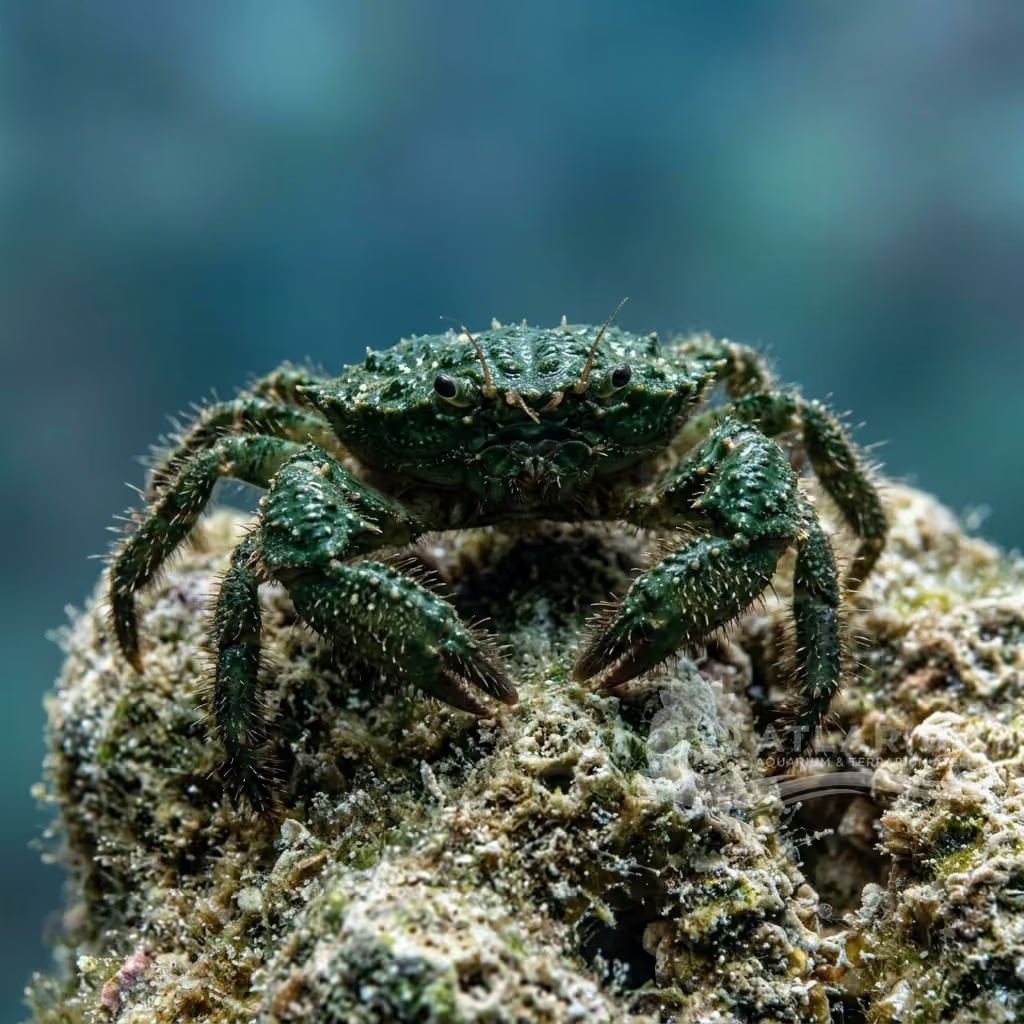
This symbiotic crab lives alongside host anemones, keeping them clean. As a peaceful detritivore, it grazes on nuisance algae and leftover food, making it an excellent addition to reef aquariums.
Temperatura da água
22 - 27 °C
Valor de pH
8.1 - 8.4
Tipo de água
Marinho
Tipo invertebrado
Marine crab
Tamanho adulto
4 cm
Grupo mínimo
>= 1
Papel ecológico
Symbiont
Sensibilidade ao cobre
High

Descrição da espécie
Geographical Origin and Habitat: Mithraculus cinctimanus is native to the tropical waters of the Western Atlantic Ocean, particularly the Caribbean Sea, the Gulf of Mexico, the Bahamas, and coastal Florida. It inhabits shallow coral reefs at depths of 1 to 15 meters. It lives almost exclusively in symbiotic association with large sea anemones, notably Condylactis gigantea, Bartholomea annulata, and Lebrunia danae.
Taxonomy: Belongs to the class Malacostraca, order Decapoda, family Mithracidae (formerly Majidae), and genus Mithraculus. This species is closely related to the emerald crab (Mithraculus sculptus), sharing a similar carapace morphology and detritivorous feeding habits, but distinguished by its ecological specialization with sea anemones.
Social Behavior: A predominantly nocturnal and stationary species. It spends daytime sheltered among the stinging tentacles of its host anemone, which protects it from predators. In return, the crab cleans the anemone of organic debris and parasites. It is generally peaceful toward other tank inhabitants but can be territorial toward conspecific crabs.
Coloration and Sexual Dimorphism: Features a smooth, rounded carapace varying in color from beige to light brown or grey-green. The most distinctive feature is the claws, which are whitish or translucent with bold dark brown or black bands and purple or blue tips. Sexual dimorphism is visible underneath: males have a narrow abdomen, while females have a wide, rounded one.

Cuidado, criação e companheiros de tanque
Tank Setup: Requires an established marine aquarium of at least 40-50 liters. The presence of a host anemone (such as Condylactis gigantea) is highly recommended to observe its natural symbiotic behaviors, though not strictly mandatory. Provide plenty of live rock with small crevices and caves for hiding.
Diet and Feeding: An omnivorous detritivore. It feeds mainly on nuisance algae (including bubble algae Valonia), organic detritus, leftover fish food, and host anemone mucus. In captivity, it readily accepts dry sinking pellets, frozen foods like mysis or brine shrimp, and small pieces of nori seaweed.
Water Quality: Demands stable marine parameters: water temperature between 23 and 27 °C, pH levels of 8.1 to 8.4, and specific gravity of 1.023 to 1.025. Like all crustaceans, it is highly sensitive to copper-based treatments and heavy metals, as well as rapid salinity changes. Adequate calcium and magnesium are required for molting.
Compatibility and Tankmates: An excellent reef-safe invertebrate. It coexists peacefully with community fish, corals, and other invertebrates. Avoid housing it with large predatory fish (such as hawkfish, triggerfish, or large wrasses) that will easily prey on it, especially during its vulnerable soft-shell molting phase.
Aquarium Breeding: Breeding in home aquariums is extremely difficult. Although mating occurs and females can carry eggs under their abdomen until hatching, the resulting planktonic larvae are microscopic and fragile, making them easily skimmed by filtration or eaten by fish before development.
Risks and Diseases: The primary risk is related to the molting process. The crab will hide for a few days while shedding its old exoskeleton and remains vulnerable until the new shell hardens. Maintain trace levels of iodine in the water to support successful molts and prevent fatal molting complications.

Origem e distribuição geográfica
Mithraculus cinctimanus is native to the tropical waters of the Western Atlantic Ocean, particularly the Caribbean Sea, the Gulf of Mexico, the Bahamas, and coastal Florida. It inhabits shallow coral reefs at depths of 1 to 15 meters. It lives almost exclusively in symbiotic association with large sea anemones, notably Condylactis gigantea, Bartholomea annulata, and Lebrunia danae.
Origem
Oceanos tropicais e recifesAmérica Central e CaribeAmérica do Norte

Perfil de invertebrados
- Dieta
- Omnivore
- As a robust omnivore, Mithraculus cinctimanus actively searches for both plant matter and meaty food items. They consume detritus, algae, and any small leftover scraps of food provided to the tank. Sinking wafers and chopped seafood can supplement their daily scavenging.
- Papel ecológico
- Symbiont
- Mithraculus cinctimanus serves as a highly effective scavenger, breaking down larger pieces of organic waste. They aerate the substrate with their movement and control nuisance algae growth. Their constant activity maintains the health and cleanliness of the benthic zone.
- Tamanho adulto
- 4 cm
- Risco de salto
- Yes
- Although they do not jump, Mithraculus cinctimanus possesses exceptional climbing abilities and a strong desire to explore. Many crabs can effortlessly climb up airlines, heater cords, or silicon edges. A secure top cover is absolutely essential to prevent escapes.
- Sensibilidade ao choque
- Medium
- Mithraculus cinctimanus should be acclimated carefully to avoid the shock of rapidly changing water parameters. Wide fluctuations in salinity or temperature can compromise their immune systems or trigger premature molting. Consistency in water quality is paramount for their long-term health.
- Cálcio e minerais
- High
- Sufficient calcium availability is an absolute requirement for Mithraculus cinctimanus to maintain its hard carapace. Poor calcium levels can cause incomplete molting and eventual death. Feeding calcium-enriched diets and keeping minerals in balance is vital for their exoskeleton strength.
- Muda
- Periodic
- During molting, Mithraculus cinctimanus sheds its old shell to allow for growth and regeneration of lost limbs. It is entirely soft and defenseless during this process, requiring secure caves or crevices for hiding. The old molt should remain in the tank so the crab can recycle the calcium.
- Reprodução
- Oviparous
- Rearing Mithraculus cinctimanus in an aquarium is generally quite difficult due to their complicated larval phases. Females carry dense clusters of eggs on their abdomen before releasing them as planktonic zoea. These microscopic larvae usually require separate rearing vessels and very specific live foods.
- Compatibilidade e companheiros de tanque
- Peaceful
- Mithraculus cinctimanus is generally safe with fish that are too large to be eaten but too small to view the crab as prey. Certain predatory species of fish should be entirely avoided. Be cautious when keeping them with slower bottom-dwelling species which might be pinched.

Espécies relacionadas
Recomendações agrupadas por parentes próximos, escolhas de acompanhantes e cuidados semelhantes.