Blue-eyed coral crab
Trapezia cymodoce
A small symbiotic crab that lives exclusively within the branches of Pocillopora or Acropora hard corals, actively defending its host coral from predators.
Temperatura da água
22 - 28 °C
Valor de pH
8.1 - 8.4
Tipo de água
Marinho
Tipo invertebrado
Marine crab
Tamanho adulto
2,5 cm
Grupo mínimo
>= 1
KH
8 - 12 dKH
Papel ecológico
Symbiont
Sensibilidade ao cobre
High

Descrição da espécie
Geographical Origin and Habitat: This species is widely distributed throughout the tropical coral reefs of the Indo-Pacific, ranging from the East African coast and the Red Sea to French Polynesia and Hawaii. It lives in an obligate symbiotic relationship with small-polyp stony (SPS) corals, particularly within the genera Pocillopora, Acropora, and Stylophora, at depths from the surface down to 30 meters.
Taxonomy: Belongs to the family Trapeziidae and the genus Trapezia. Commonly known as coral crabs or guardian crabs. This species is morphologically distinguished by its smooth, trapezoidal carapace and vibrant blue eyes. Their evolutionary biology is tied to their coral hosts, feeding on coral mucus and organic detritus trapped by the coral colony.
Social Behavior: Typically lives in monogamous pairs that occupy a single coral colony. They exhibit aggressive territorial behavior towards conspecifics or competing crabs, defending their specific coral home. In return for shelter, they protect the host coral from destructive predators, such as the crown-of-thorns starfish (Acanthaster planci), by pinching its tube feet.
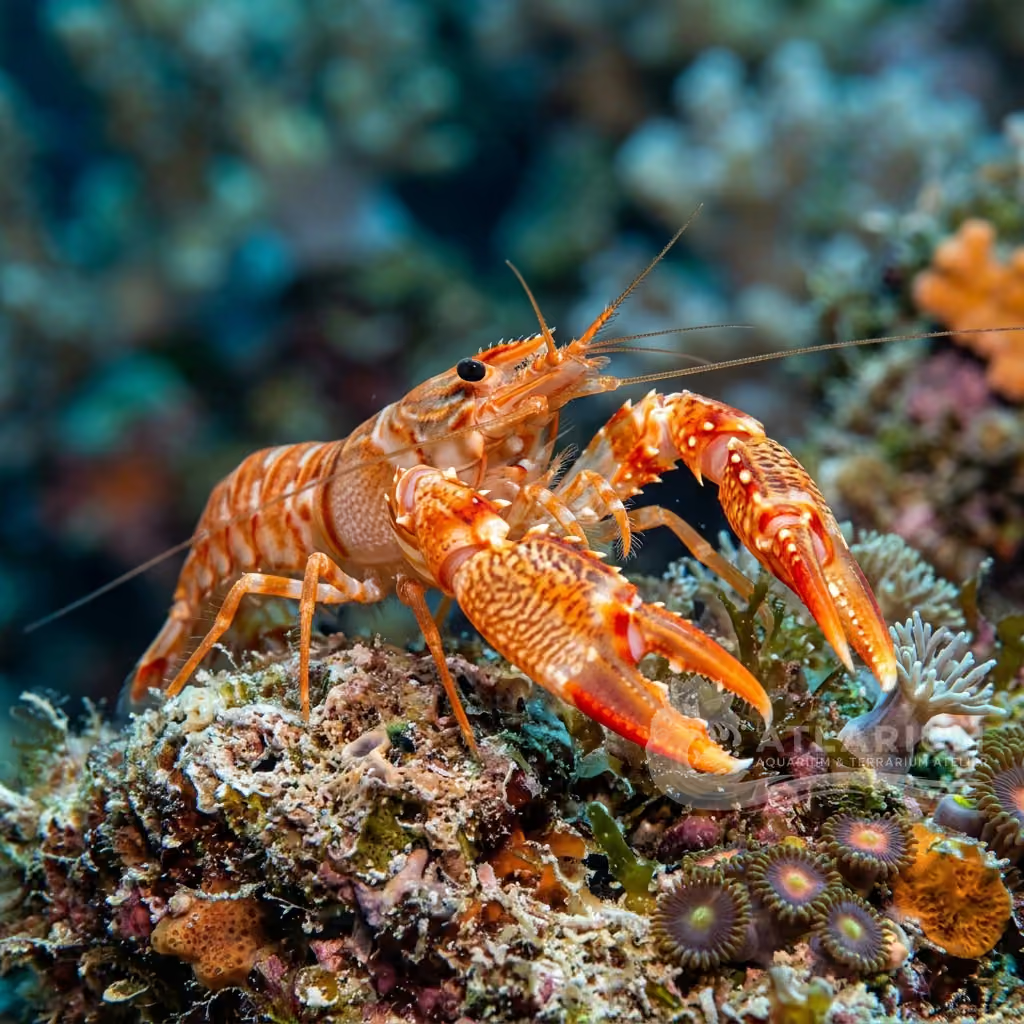
Coloration and Sexual Dimorphism: The body displays a uniform bright orange, pinkish, or reddish-orange color. The most striking feature is their eyes, which are a brilliant, luminous light blue or turquoise. Males and females look alike, but mature females can be identified by their wider, rounded abdominal flap used to carry and protect egg masses.

Cuidado, criação e companheiros de tanque
Tank Setup: Because this crab is an obligate coral symbiont, the aquarium must contain healthy, live colonies of branching SPS corals, preferably Pocillopora or Acropora species. The minimum tank size depends on the requirements of the host corals, starting from 80-100 liters (approx. 20-25 gallons). The aquascape must prioritize coral health and stability.
Diet and Feeding: It feeds primarily on the mucus secreted by the host coral and organic particles trapped within the colony's branches. In captivity, it benefits from target-feeding fine coral foods (planktonic foods, particulate powders) and frozen cyclops or rotifers near the host coral. It does not harm or consume the actual tissue of a healthy coral.
Water Quality: Water parameters must meet strict reef standards required by SPS corals: temperature 24-26°C (75-79°F), pH 8.1-8.4, specific gravity 1.023-1.025, KH 8-10, calcium 420-450 ppm, and magnesium 1300-1350 ppm. Nitrates and phosphates should be kept close to zero. Requires high water flow and intense lighting for coral health.
Compatibility and Tankmates: Completely reef-safe and peaceful. Never house with predatory fish that hunt small crustaceans, such as hawkfish, large wrasses, triggerfish, or puffers, as they will easily pick the crab out of the coral branches. Excellent tankmates include peaceful reef-dwellers like chromis, gobies, and cardinalfish.
Aquarium Breeding: Mature females frequently carry orange egg masses under their abdomen in home aquaria. However, raising the larvae in captivity is highly challenging due to their planktonic larval stages. The larvae are easily removed by standard filtration systems and protein skimmers before they can settle.
Risks and Diseases: The primary threat to this crab is the health of its host coral. If the coral suffers from tissue necrosis (RTN/STN) or bleaching, the crab will lose its shelter and primary food source, leading to starvation. Like all crustaceans, they are highly sensitive to copper-based treatments and sudden shifts in water parameters.

Origem e distribuição geográfica
This species is widely distributed throughout the tropical coral reefs of the Indo-Pacific, ranging from the East African coast and the Red Sea to French Polynesia and Hawaii. It lives in an obligate symbiotic relationship with small-polyp stony (SPS) corals, particularly within the genera Pocillopora, Acropora, and Stylophora, at depths from the surface down to 30 meters.
Origem
Oceanos tropicais e recifesÁfrica e Madagascar

Perfil de invertebrados
- Dieta
- Photosynthetic
- Consumes coral mucus and suspended particles.
- Papel ecológico
- Symbiont
- Protects Acropora and Pocillopora corals from pests.
- Tamanho adulto
- 2.5 cm
- Risco de salto
- Yes
- Remains in its host coral at all times. No jump risk.
- Sensibilidade ao choque
- Medium
- Sensitive to environmental shifts. Acclimate slowly alongside its host.
- Cálcio e minerais
- Medium
- Relies on ambient calcium for exoskeleton maintenance.
- Muda
- Yes
- Like other crustaceans, the Trapezia cymodoce undergoes molting to grow. During this process, it sheds its exoskeleton and remains extremely vulnerable. It typically hides securely among the tight, protective branches of its host Pocillopora or Stylophora coral until its new shell fully hardens, avoiding predators during this sensitive phase.
- Reprodução
- Bubble nest builder
- This crab species typically lives in heterosexual pairs within a single coral head. They can breed year-round, with the female brooding over a thousand eggs under her wide abdomen. Mating occurs naturally within the protective branches of their coral host, ensuring the safety of the reproducing pair.
- Compatibilidade e companheiros de tanque
- Reef safe
- This crab is an obligate symbiont of branching corals and is an excellent addition to specialized reef tanks. It acts as a guard, actively defending its host coral from predators like starfish. While completely harmless to fish and other invertebrates, it can be highly territorial toward other crabs.

Espécies relacionadas
Recomendações agrupadas por parentes próximos, escolhas de acompanhantes e cuidados semelhantes.