Chestnut Turbo Snail
Turbo castanea
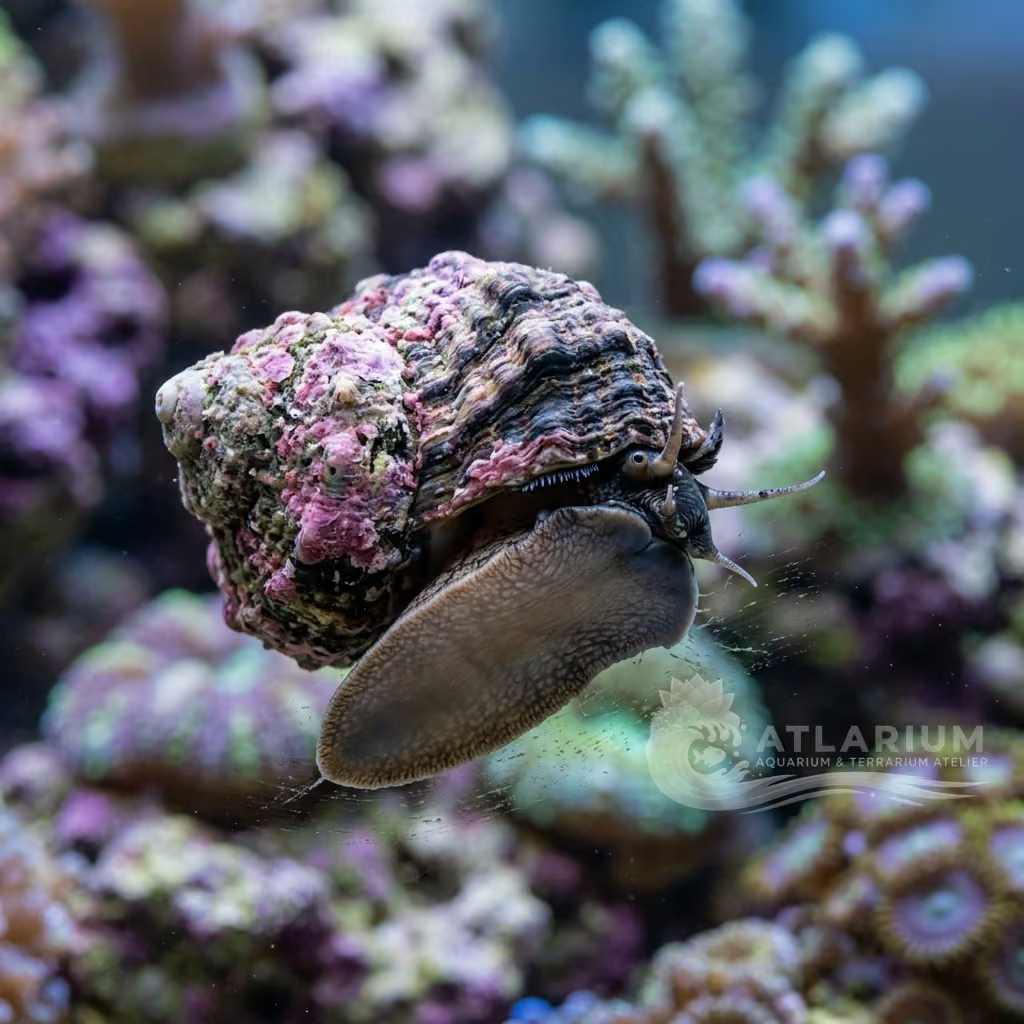
A small herbivorous marine turbo snail with a chestnut-brown, bumpy shell. It is highly efficient at cleaning algae from live rock and aquarium glass.
Temperatura da água
22 - 28 °C
Valor de pH
8.1 - 8.4
Tipo de água
Marinho
Tipo invertebrado
Freshwater snail
Tamanho adulto
3 cm
Grupo mínimo
>= 1
KH
8 - 12 dKH
Papel ecológico
Herbivore
Sensibilidade ao cobre
High

Descrição da espécie
Geographical Origin and Habitat: Widely distributed in the tropical and subtropical Western Atlantic, from North Carolina and Florida, through the Gulf of Mexico, to Brazil. Inhabits shallow rocky reefs and seagrass beds.
Taxonomy: Member of the family Turbinidae. Features a globose, top-shaped shell measuring about 2.5-3.5 cm in size. The shell surface is sculpted with spiral cords of small, rough nodules. Grows to 3 cm.
Social Behavior: Peaceful, primarily nocturnal, and strictly herbivorous. Spends the night grazing over live rock and glass surfaces. Cannot easily right itself if it falls upside down on loose sand.
Coloration and Sexual Dimorphism: Shell color varies from chestnut-brown, reddish-brown, to dark brown, often marbled or flecked with white and gray patches. Operculum is greenish-white. No visible sexual dimorphism.

Cuidado, criação e companheiros de tanque
Tank Setup: Suitable for reef aquariums of 10-12 gallons or larger. Requires stable live rock structures with ample surface area for grazing. Avoid open sand expanses without rock support.
Diet and Feeding: Strictly herbivorous. Consumes green hair algae, diatoms, cyanobacteria, and film algae. Supplement with dried seaweed (nori sheets) if natural algae is depleted.
Water Quality: Stable reef parameters. Salinity SG 1.021-1.025, pH 8.1-8.4, temperature 22-28°C. Highly sensitive to copper treatments and sudden osmotic shocks.
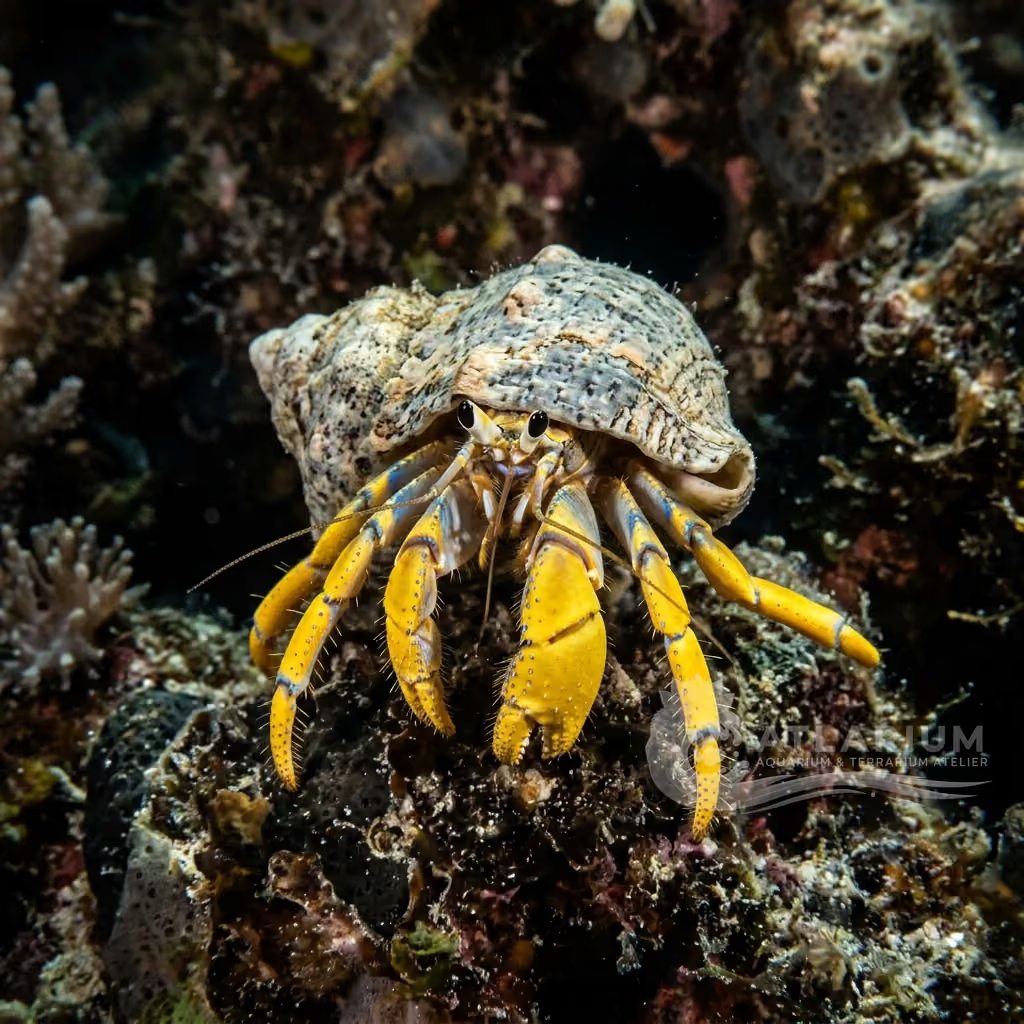
Compatibility and Tankmates: 100% reef-safe. Excellent member of the clean-up crew (CUC). Compatible with peaceful fish and corals. May be targeted by hermits seeking replacement shells.
Aquarium Breeding: Broadcast spawner. Reproduction in home aquariums is extremely rare as pelagic larvae do not survive standard filtration systems.
Risks and Diseases: Starvation in overly clean aquariums. Death from being flipped over on sand; must be manually turned upright. Shell erosion in aquariums with low pH.

Origem e distribuição geográfica
Widely distributed in the tropical and subtropical Western Atlantic, from North Carolina and Florida, through the Gulf of Mexico, to Brazil. Inhabits shallow rocky reefs and seagrass beds.
Origem
Oceanos tropicais e recifesExtra-Amazônica América do SulAmérica Central e CaribeAmérica do Norte

Perfil de invertebrados
- Dieta
- Algae eater
- Voracious herbivore. Eats large amounts of macroalgae.
- Papel ecológico
- Herbivore
- A heavy grazer that can clear rocks quickly.
- Tamanho adulto
- 3 cm
- Risco de salto
- Yes
- Does not jump.
- Sensibilidade ao choque
- High
- Sensitive to fluctuating water parameters.
- Cálcio e minerais
- High
- Demands stable calcium and alkalinity.
- Muda
- Shell growth
- The Chestnut Turbo snail is a mollusk and does not molt. Its robust, turbinate shell grows continuously along with the snail as it extracts calcium from the water. If you observe a hollow shell in the tank, the snail has likely perished or been predated upon by a crab.
- Reprodução
- Oviparous
- In the ocean, this species is a broadcast spawner, simultaneously releasing gametes into the water column. In a home aquarium, captive breeding is highly improbable. The resulting pelagic larvae inevitably fall victim to mechanical filtration, protein skimmers, or hungry tank mates long before they can settle and mature.
- Compatibilidade e companheiros de tanque
- With caution
- This voracious algae-eater is wonderfully peaceful and completely reef safe, making it a staple clean-up crew member. However, because of its bulky shell and clumsy nature, it acts somewhat like a bulldozer and may accidentally knock over unmounted or loosely secured coral frags as it grazes over the rockwork.

Espécies relacionadas
Recomendações agrupadas por parentes próximos, escolhas de acompanhantes e cuidados semelhantes.