Longspine Star Snail
Lithopoma phoebium
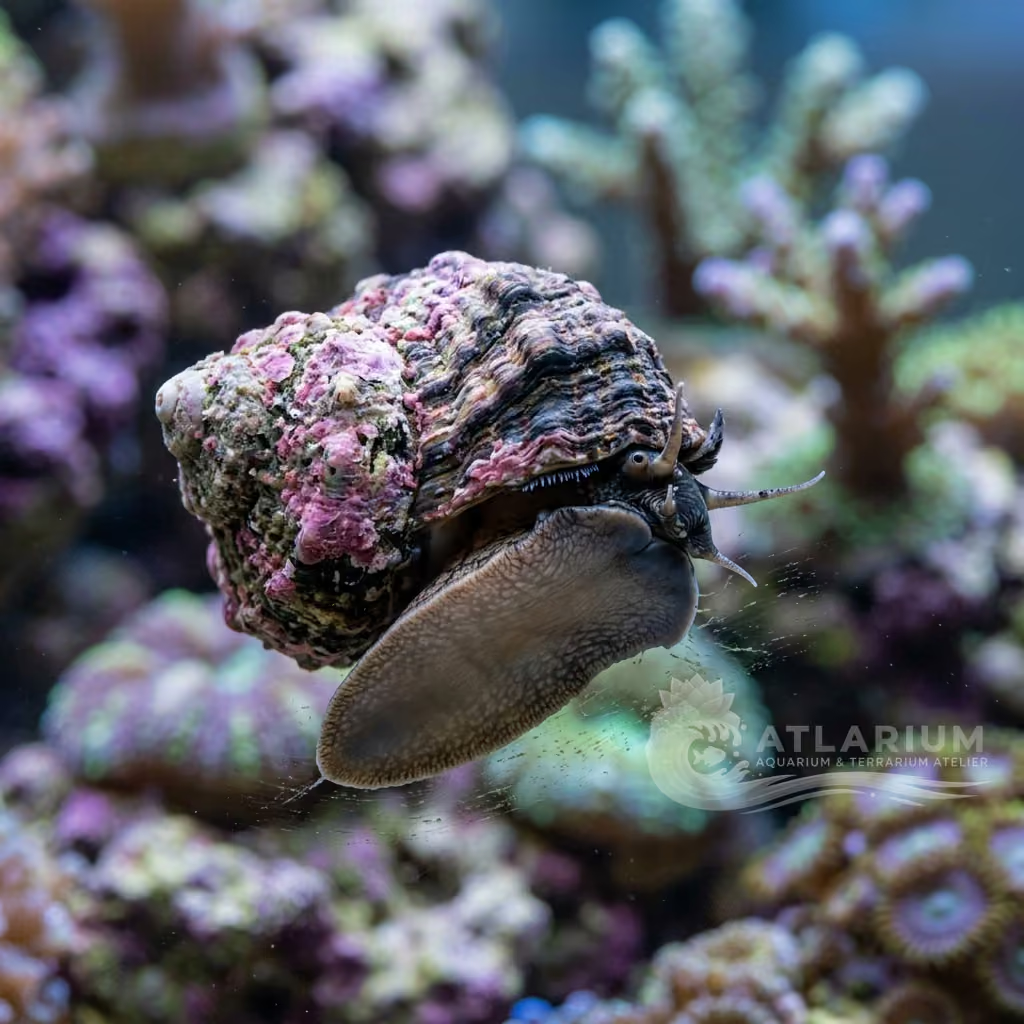
An attractive, hard-shelled marine snail from the Caribbean. It is highly efficient at cleaning algae and features a unique, beautiful star-like appearance.
Temperatura da água
22 - 28 °C
Valor de pH
8.1 - 8.4
Tipo de água
Marinho
Tipo invertebrado
Freshwater snail
Tamanho adulto
5 cm
Grupo mínimo
>= 1
KH
8 - 12 dKH
Papel ecológico
Herbivore
Sensibilidade ao cobre
High

Descrição da espécie
Geographical Origin and Habitat: Lithopoma phoebium, commonly known as the Longspine Star Snail or Star Shell, is native to the tropical Western Atlantic Ocean. It is widely distributed throughout the Caribbean Sea, the Gulf of Mexico, Florida, and down to Brazil. It inhabits shallow reefs, rocky shores, and seagrass beds with high light levels.
Taxonomy: Belonging to the family Turbinidae and the genus Lithopoma, this species was historically categorized under the genus Astraea by some taxonomists. It is distinguished from other star snails by its long, prominent triangular spines radiating outward from the margins of its whorls.
Social Behavior: It is a completely peaceful, slow-moving herbivore. It does not possess any venom or defensive mechanisms other than its hard shell and operculum. The snail spends its time crawling over rocks and glass, rasping microalgae. It is primarily nocturnal but will graze during daylight hours.
Coloration and Sexual Dimorphism: The shell is typically light brown, grey, or cream, but is frequently encrusted with pinkish-red coralline algae in marine tanks. The distinctive feature is the series of flattened spines that create a star shape when viewed from above. There is no visible sexual dimorphism between males and females.

Cuidado, criação e companheiros de tanque
Tank Setup: A well-established marine aquarium of at least 15-20 gallons (60-80 liters) is recommended. The tank should have plenty of mature live rock for grazing. Ensure rocks are stable, as these snails are relatively strong and can knock over loose, unsecured corals or rockwork while moving.
Diet and Feeding: This species is an excellent herbivore, feeding on film algae, hair algae, diatoms, and cyanobacteria. They are highly valued for cleaning the glass and rocks. If the aquarium has insufficient algae, supplement their diet with dried seaweed (nori) secured to a veggie clip, or herbivore pellets.
Water Quality: Maintain standard reef parameters: temperature 74-80 °F (23-27 °C), pH 8.1-8.4, and specific gravity 1.023-1.025. Adequate calcium levels (400-450 ppm) and magnesium are critical for shell maintenance and growth. Keep copper levels at zero, as it is highly toxic to all invertebrates.
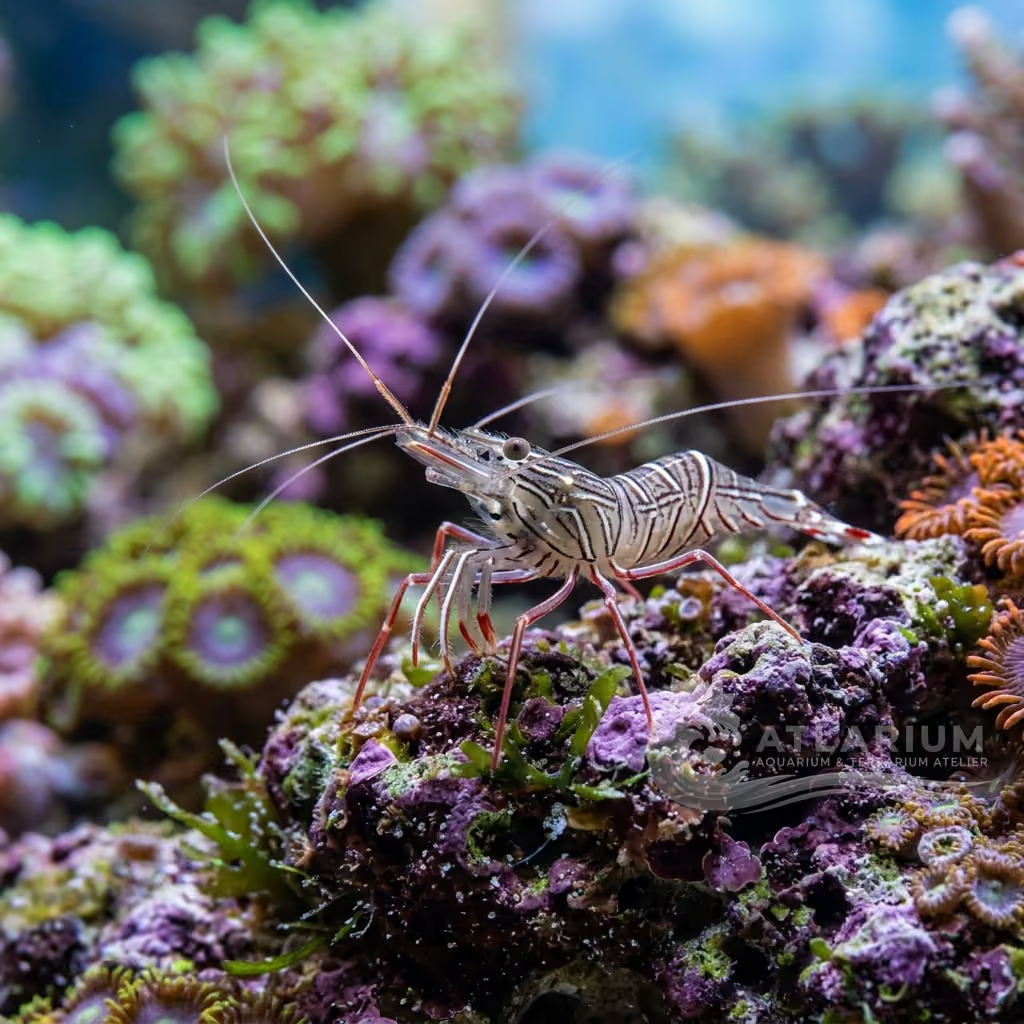
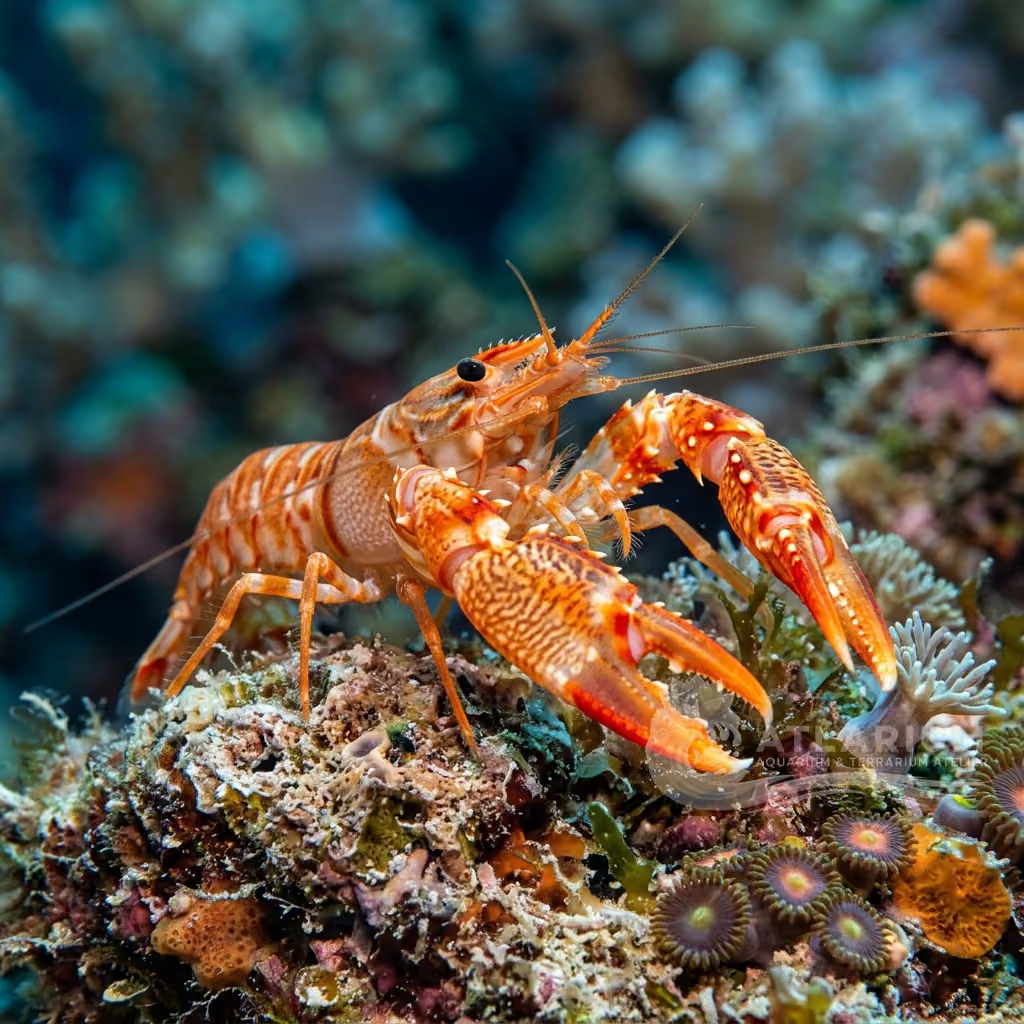
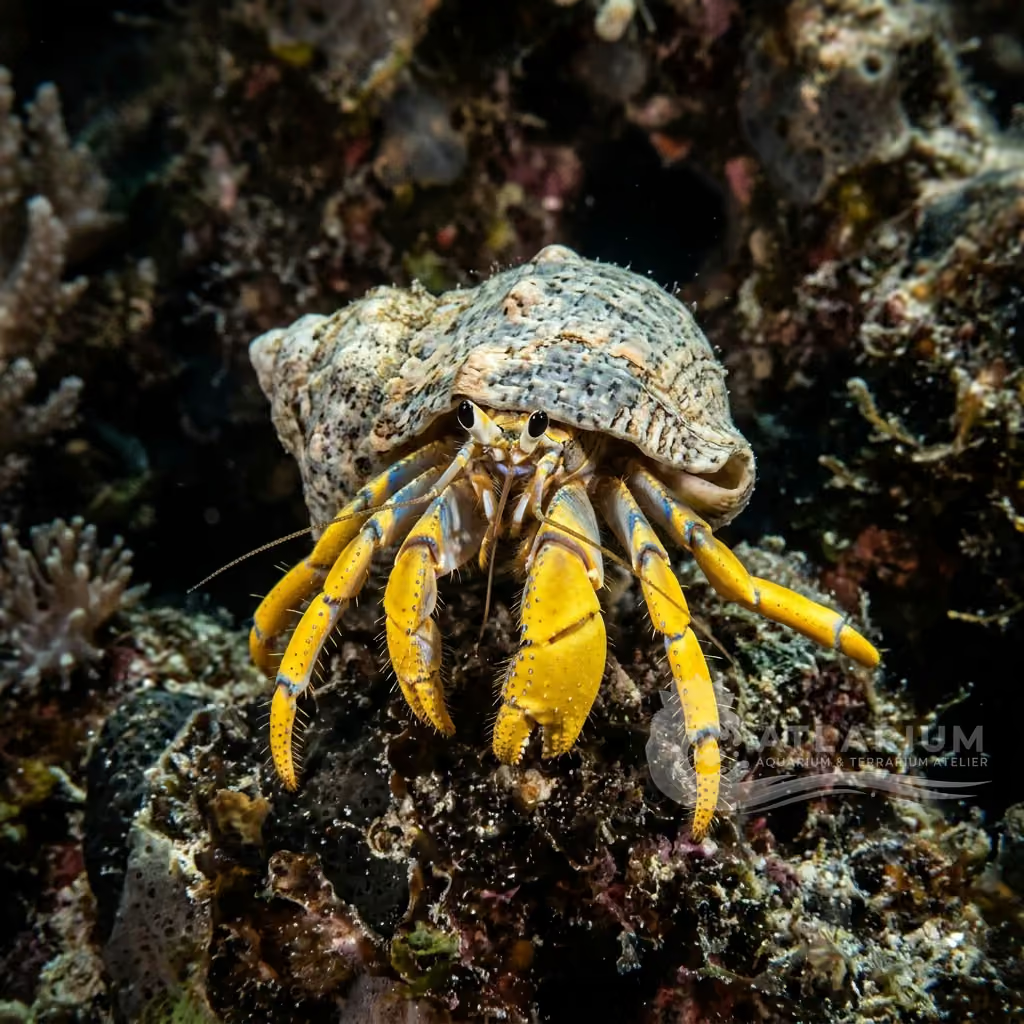
Compatibility and Tankmates: Ideal for reef aquariums as they are 100% reef-safe and do not harm corals. They coexist well with peaceful fish and shrimp. Avoid housing them with aggressive crabs, large hermit crabs that might kill them for their shells, or snail-eating fish such as Puffers and Triggers.
Aquarium Breeding: Breeding in home aquariums is extremely difficult and rarely successful. They are broadcast spawners, releasing eggs and sperm into the water column. The resulting free-swimming larvae are usually consumed by filter-feeding corals or removed by filtration systems like protein skimmers.
Risks and Diseases: A significant risk is the snail's inability to right itself if it falls upside down on loose sand. If left upside down, it will die or be eaten by scavengers. Keepers must manually flip them back over. Starvation in clean tanks and sensitivity to rapid salinity shifts are other common risks.

Origem e distribuição geográfica
Lithopoma phoebium, commonly known as the Longspine Star Snail or Star Shell, is native to the tropical Western Atlantic Ocean. It is widely distributed throughout the Caribbean Sea, the Gulf of Mexico, Florida, and down to Brazil. It inhabits shallow reefs, rocky shores, and seagrass beds with high light levels.
Origem
Oceanos tropicais e recifesAmérica Central e CaribeAmérica do Norte

Perfil de invertebrados
- Dieta
- Algae eater
- Consumes diatoms, hair algae, and film algae.
- Papel ecológico
- Herbivore
- Important part of a diverse cleanup crew.
- Tamanho adulto
- 5 cm
- Risco de salto
- Yes
- Does not jump.
- Sensibilidade ao choque
- High
- Needs stable parameters. Sensitive to osmotic shock.
- Cálcio e minerais
- High
- Calcium is essential for its spiky shell.
- Muda
- Shell growth
- Like all marine gastropods, Lithopoma phoebium does not molt. Instead of shedding an exoskeleton like crustaceans, this snail continuously calcifies and expands its intricate, star-shaped shell throughout its life. Maintaining stable calcium and alkalinity levels in the aquarium is critical for ensuring proper, healthy shell growth.
- Reprodução
- Oviparous
- In the wild, it is a broadcast spawner, releasing gametes into the water. Successful reproduction in captivity is exceptionally rare. While spawning events may occasionally occur in home aquariums, the delicate planktonic larvae generally perish quickly due to starvation and removal by the tank's mechanical filtration systems.
- Compatibilidade e companheiros de tanque
- With caution
- This herbivorous snail is highly prized as a peaceful, reef-safe algae grazer that will not bother corals or fish. However, extreme caution must be exercised if housing them with hermit crabs. Hermit crabs are known to aggressively attack and kill these snails simply to steal their decorative shells.

Espécies relacionadas
Recomendações agrupadas por parentes próximos, escolhas de acompanhantes e cuidados semelhantes.