Blackeye thicklip
Hemigymnus melapterus
The Thicklip Wrasse is a massive, two-toned benthic predator. Growing up to 90cm, it requires an 800L fish-only tank, a deep fine sand bed for sleeping, heavy filtration, and a diet of hard-shelled invertebrates.
Temperatura da água
24 - 28 °C
Valor de pH
8.1 - 8.4
Tipo de água
Marinho
Nível do tanque
Parte inferior e intermediária
Tamanho adulto
50 cm
Volume mínimo do tanque
>= 1.000 L
Grupo mínimo
>= 1
KH
8 - 12 dKH

Descrição da espécie
Geographical Origin and Habitat: Hemigymnus melapterus is widely distributed across the tropical Indo-Pacific, ranging from the coast of East Africa and the Red Sea to Micronesia, Polynesia, and the Great Barrier Reef of Australia. It inhabits coastal coral reefs, protected lagoons, and sandy areas adjacent to reef structures at depths from 1 to 30 meters. Juveniles are typically found in shallower habitats rich in algae and soft corals for camouflage.
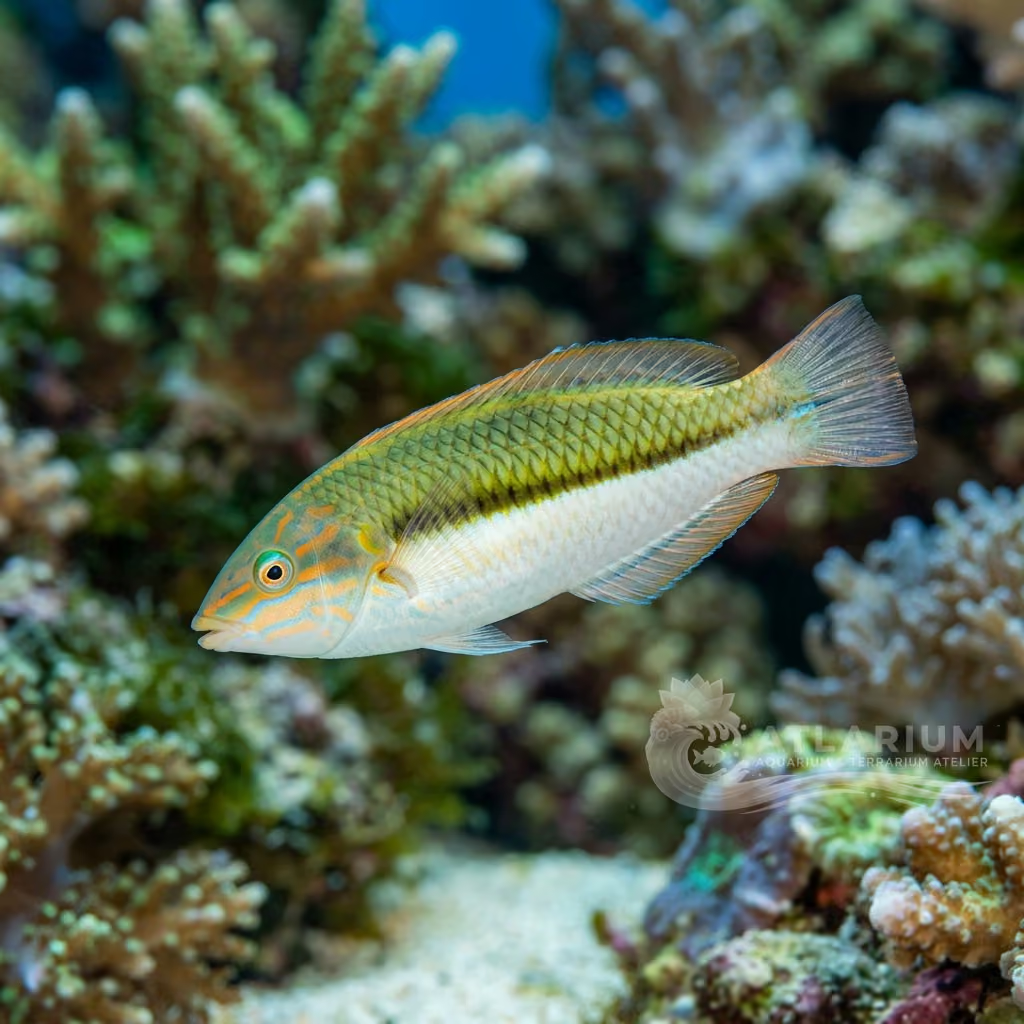
Taxonomy and Morphology: This species belongs to the family Labridae. Described by Bloch in 1791, it is characterized by its exceptionally thick, fleshy lips that fold back, a feature that defines the genus. It has a robust, laterally compressed body and a large head. In the wild, it can grow to a massive size of 60 to 90 centimeters, though it usually remains smaller in aquarium environments.
Social Behavior: Juveniles are peaceful and tend to inhabit soft coral areas solitarily or in small groups. As they mature, they become solitary, highly active diurnal fish that constantly search the sandy substrate for prey, blowing water into the sand or overturning stones with their mouth to find benthic invertebrates. At night, they bury themselves in the sand to sleep.
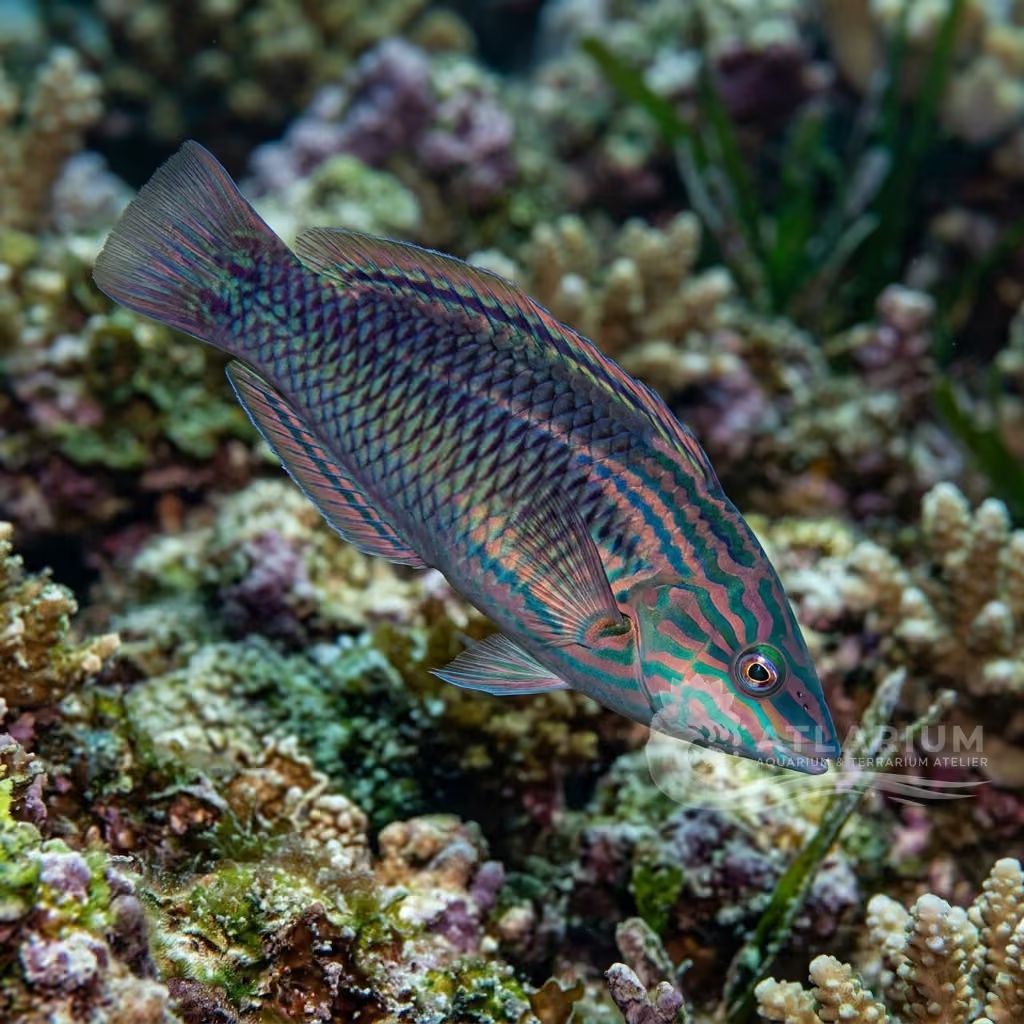
Coloration and Sexual Dimorphism: Features a very sharp two-toned coloration: the anterior half of the body (head to anterior dorsal fin) is light greyish-green or white, while the posterior half is dark green or black. Juveniles show a vertical white band separating the two zones. There is no major sexual dimorphism, but dominant males may show brighter colors and blue facial markings during spawning.

Cuidado, criação e companheiros de tanque
Aquarium Setup: Due to its large adult size and active swimming behavior, it requires a giant marine aquarium of at least 800-1000 liters. It is absolutely mandatory to provide a deep bed of fine, non-sharp sand (at least 8-10 cm deep) on the tank bottom, as this fish needs to bury itself to sleep or when startled. Rockwork must be stable and placed directly on the bottom glass.
Diet and Feeding: A benthic carnivore with a large appetite. Its diet should consist of a variety of meaty frozen foods such as mysis shrimp, krill, whole shrimp, chopped clams, mussels, and squid. In the reef aquarium, it can help control populations of pyramidellid snails and bristleworms, but it will also consume any ornamental shrimp, crabs, or small mollusks.
Water Quality: Requires heavy filtration and a powerful protein skimmer to handle the large organic waste output of such a large fish. Water temperature should be kept between 24°C and 28°C, pH between 8.1 and 8.4, and specific gravity between 1.022 and 1.025. Nitrates and phosphates should be monitored closely and kept low through regular water changes.
Compatibility and Cohabitation: Because of its large size and active nature, it should not be housed with very small or slow-swimming fish, which may be intimidated or eaten. It is compatible with tangs, triggerfish, groupers, and other large wrasses. It is not reef-safe for tanks with benthic invertebrates, as it will eat ornamental shrimp, crabs, urchins, and snails.
Aquarium Breeding: Breeding in home aquaria is considered impossible due to the massive water volume required for courtship rituals and its complex pelagic larval phase. In nature, wrasses spawn at dusk in open water, releasing gametes into ocean currents that disperse the floating eggs until they hatch and develop.
Risks and Diseases: The primary risk in captivity is the lack of a suitable sand substrate, which leads to extreme stress, mouth damage, and death when the fish tries to bury itself. It is susceptible to marine ich (Cryptocaryon irritans) if stressed. Quarantine tanks must be equipped with a bowl of clean sand so the fish can sleep safely.

Origem e distribuição geográfica
Hemigymnus melapterus is widely distributed across the tropical Indo-Pacific, ranging from the coast of East Africa and the Red Sea to Micronesia, Polynesia, and the Great Barrier Reef of Australia. It inhabits coastal coral reefs, protected lagoons, and sandy areas adjacent to reef structures at depths from 1 to 30 meters. Juveniles are typically found in shallower habitats rich in algae and soft corals for camouflage.
Origem
Oceanos tropicais e recifesÁfrica e MadagascarAustrália, Nova Guiné e Oceania

Perfil de peixe
- Temperamento
- Semi-aggressive
- Juveniles are generally peaceful and shy, but as they grow into large adults, their temperament becomes increasingly boisterous and moderately aggressive. They are not intentionally malicious but their sheer size and feeding habits can bully smaller, more delicate fish. They demand tank mates of similar size and assertive nature.
- Dieta
- Carnivore
- In nature, they use their thick lips and strong jaws to capture hard-shelled benthic invertebrates. In the aquarium, they require a varied, meaty diet consisting of chopped squid, clams, krill, and large pellets. Providing hard-shelled foods is beneficial for keeping their teeth naturally worn down.
- Expectativa de vida
- 6 years
- Tamanho adulto
- 50 cm
- Proporção sexual
- Solitary
- Due to their massive adult size, they are almost exclusively kept as solitary specimens in home aquariums. Keeping multiple individuals requires public-aquarium-sized enclosures to prevent severe territorial combat. They do not tolerate other large wrasses with similar body shapes or feeding habits.
- Frequência de alimentação
- Twice daily
- These robust fish possess voracious appetites and should be fed substantial meals two to three times daily. Their fast growth rate and high activity level demand consistent, high-protein nutrition. Underfeeding can lead to aggression towards tank mates as they constantly hunt for sustenance.
- Carga biológica
- High
- The Hemigymnus melapterus has a significantly high bioload due to its large adult size and substantial dietary intake. As they grow, their waste output increases dramatically, requiring oversized protein skimmers and heavy biological filtration. Frequent water changes are necessary to maintain pristine water quality.
- Fluxo
- Strong
- They prefer strong, turbulent water flow that mimics the outer reef slopes and lagoons of their natural habitat. Vigorous circulation helps manage the substantial waste they produce by keeping detritus suspended for mechanical filtration. It also provides the oxygen-rich environment they thrive in.
- Risco de salto
- Yes
- Despite their heavy, robust build, Hemigymnus melapterus are powerful swimmers capable of leaping out of open aquariums. A sturdy, weighted glass canopy or a strongly reinforced mesh lid is imperative to keep them safely contained. Startling them with sudden light changes can easily trigger a jumping response.
- Reprodução
- Oviparous
- Like most members of the wrasse family, they are protogynous hermaphrodites, changing from female to male based on environmental and social cues. Captive breeding is practically non-existent due to their massive size requirements and pelagic spawning behavior. Adults undergo dramatic color and pattern shifts as they mature.
- Compatibilidade e companheiros de tanque
- Reef safe
- While peaceful when small, large adults can become boisterous and destructive in a typical reef setting. They routinely flip over rocks and corals in search of prey, making them unsuitable for delicate reef tanks. They are best suited for large fish-only-with-live-rock (FOWLR) aquariums.
- Nível do tanque
- Middle/Bottom
- They are highly active and will boldly patrol all levels of the aquarium, continuously investigating the rockwork for food. A deep, coarse sand bed is absolutely required, as they bury themselves entirely to sleep at night. They may continuously rearrange the sandbed during their daily foraging activities.

Modelos e parâmetros científicos
FishBase
Acesso aos dados científicos oficiais da espécie
FishBase v25.04Dados sincronizados em: 15/06/2026
- Nível trófico
- 3,6 ± 0,45 se
- Resiliência
- Média (1,4 - 4,4 anos)
- Unicidade filogenética (PD50)
- 0.625
- Relação bayesiana comprimento-peso
- a = 0.01479, b = 3.02
- VulnerabilidadeVulnerabilidade de baixa a moderada (30 / 100)

Espécies relacionadas
Recomendações agrupadas por parentes próximos, escolhas de acompanhantes e cuidados semelhantes.