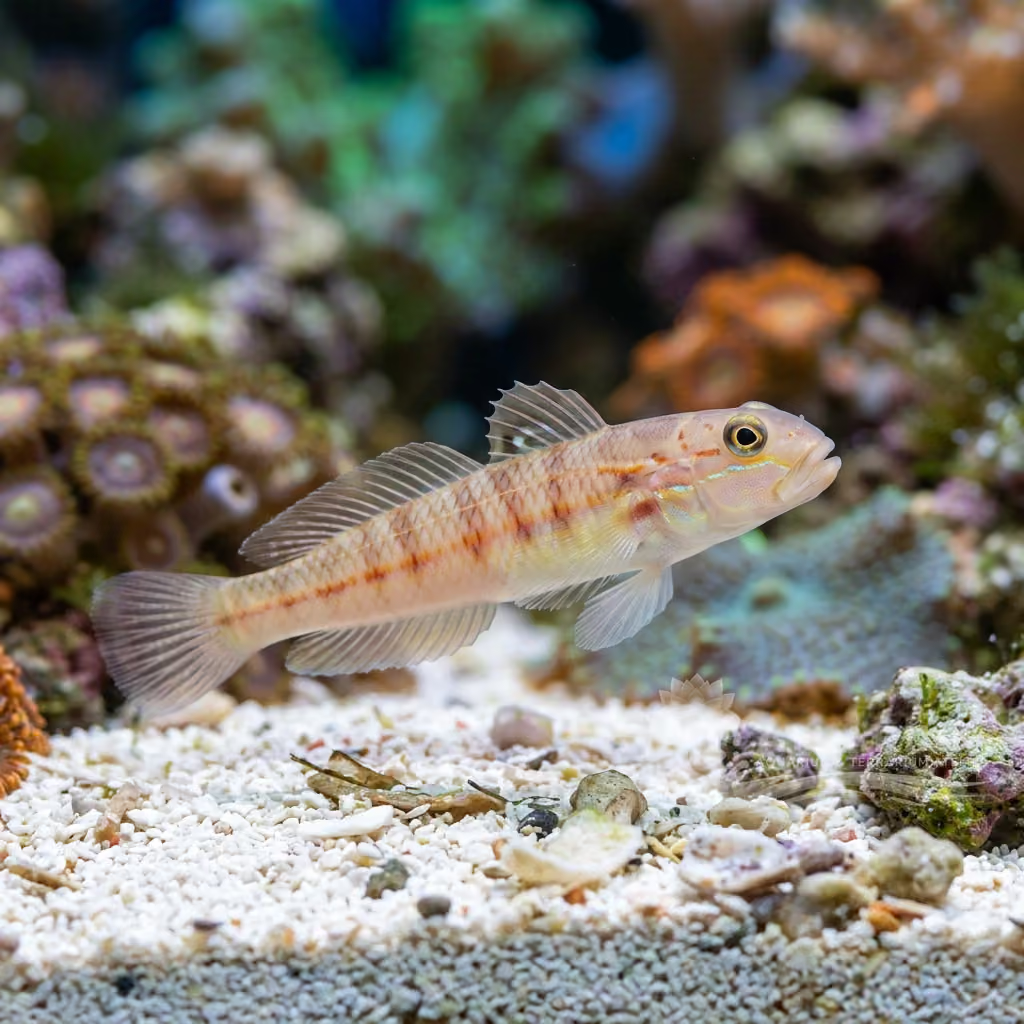
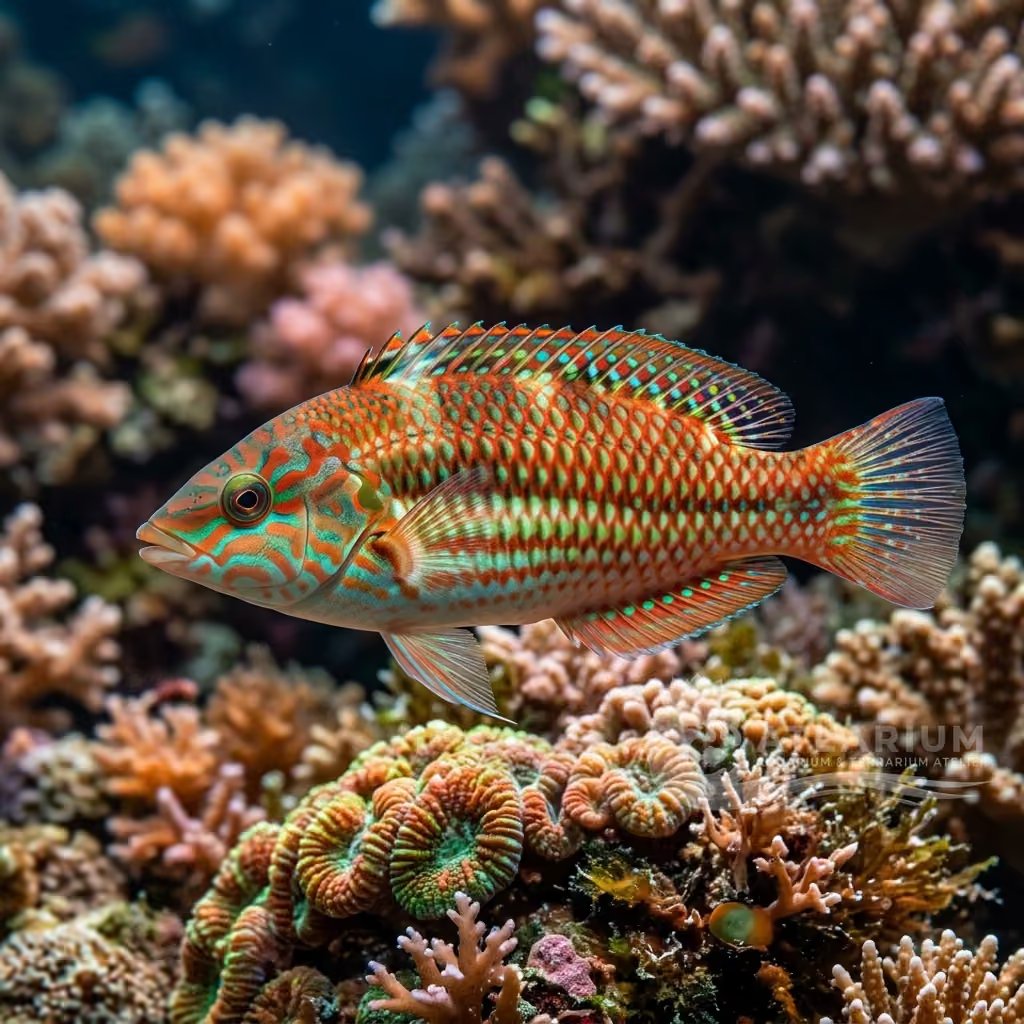
Yellow Assessor
Assessor flavissimus
The yellow assessor is a strikingly bright, peaceful reef inhabitant that frequently swims upside down under ledges. It requires calm tankmates and extensive, shaded rockwork to feel fully secure.
Temperatura da água
22 - 27 °C
Valor de pH
8.1 - 8.4
Tipo de água
Marinho
Nível do tanque
Todos os níveis
Tamanho adulto
7 cm
Volume mínimo do tanque
>= 100 L
Grupo mínimo
>= 1
KH
8 - 12 dKH

Descrição da espécie
Geographical Origin and Habitat:
This species is native to the Western Central Pacific, particularly common along the Great Barrier Reef in Australia. It inhabits seaward reef slopes and vertical drop-offs at depths of 5 to 20 meters, living in loose schools inside dark caves and under ledges.
Taxonomy and Morphology:
Member of the family Plesiopidae. Assessor flavissimus features an elongated, laterally compressed body with a deeply forked caudal fin. It grows up to 7 cm in length and has large eyes. It has a unique physiological adaptation allowing it to swim upside down.
Social Behavior:
Extremely peaceful, shy, and non-aggressive. In nature, it forms large colonies. In the aquarium, it can be kept individually or in small groups if introduced at the same time. It will not harass any tankmates and is easily intimidated by active fish.
Coloration and Sexual Dimorphism:
The entire body displays a solid, brilliant lemon-to-golden yellow coloration. It features thin orange-red margins along the dorsal and anal fins, and a thin blue-violet ring around the iris of its eyes. No visible sexual dimorphism exists.

Cuidado, criação e companheiros de tanque
Aquarium Setup:
Requires a tank of at least 100 liters with plenty of live rock arranged to form caves, overhangs, and arches. Shaded areas and dim lighting will encourage it to swim in the open. The tank must be tightly covered as they may jump if startled.
Diet and Feeding:
Carnivorous planktivore. In captivity, feed high-quality frozen foods like mysis, enriched brine shrimp, copepods, and finely minced seafood. Over time, it will accept dry flakes and pellets. Feed twice daily in a quiet area of the tank.
Water Quality:
Requires standard marine reef conditions: temperature at 22-27°C, pH at 8.1-8.4, salinity at SG 1.020-1.025, and KH between 8 and 12 dKH. Ammonia and nitrite must be kept at zero, with low nitrates and moderate water flow.
Compatibility and Cohabitation:
100% reef safe. It is completely safe with all corals and invertebrates, including small shrimp. Keep with peaceful tankmates such as firefish, gobies, cardinals, and peaceful clownfish. Do not house with aggressive or fast-swimming species.
Aquarium Breeding:
Breeding has been achieved in captivity. They are paternal mouthbrooders. After spawning, the male carries a spherical egg mass in his mouth for approximately two weeks until hatching, during which time he does not feed.
Risks and Diseases:
The main risk is starvation due to stress from aggressive tankmates, which will cause it to hide constantly. Susceptible to marine ich (Cryptocaryon) under stress. Slow acclimation and a calm environment are vital for its success.

Origem e distribuição geográfica
This species is native to the Western Central Pacific, particularly common along the Great Barrier Reef in Australia. It inhabits seaward reef slopes and vertical drop-offs at depths of 5 to 20 meters, living in loose schools inside dark caves and under ledges.
Origem
Oceanos tropicais e recifesAustrália, Nova Guiné e Oceania

Perfil de peixe
- Temperamento
- Peaceful
- Extremely peaceful and somewhat shy. Do not keep with large aggressive fish. They need a calm environment to thrive.
- Dieta
- Carnivore
- Planktivores that feed on small suspended prey. Provide cyclops, small mysis, and high-quality micro-pellets. They enjoy frequent small feedings.
- Expectativa de vida
- 5-7 years
- Tamanho adulto
- 7 cm
- Proporção sexual
- Group
- Can be kept in small groups or pairs. Provide enough rockwork to establish territories. Groups are fascinating to observe.
- Frequência de alimentação
- Twice daily
- Feed small amounts two to three times a day. They will pluck food from the water column. Ensure the pieces are small enough for their mouths.
- Carga biológica
- Low
- Assessors have a very low bioload. They are small and do not produce much waste. Perfect for smaller reef tanks.
- Fluxo
- Strong
- Prefer low to moderate flow. They often swim upside down under ledges. Too much flow can keep them hiding.
- Risco de salto
- Yes
- They can jump through small openings. A tight lid is necessary. They may dart to the surface if chased.
- Reprodução
- Mouthbrooder
- They are mouthbrooders, which is unique. Males carry the eggs in their mouths until they hatch. Captive breeding has been successfully accomplished.
- Compatibilidade e companheiros de tanque
- Reef safe
- Very peaceful and completely reef safe. Excellent companions for small, timid fish. They will not bother corals or invertebrates.
- Nível do tanque
- All levels
- They stay near rock overhangs and caves. Often seen swimming vertically or upside down. They rarely venture into open water.

Modelos e parâmetros científicos
FishBase
Acesso aos dados científicos oficiais da espécie
FishBase v25.04Dados sincronizados em: 15/06/2026
- Nível trófico
- 3,4 ± 0,2 se
- Resiliência
- Alta (menos de 15 meses)
- Unicidade filogenética (PD50)
- 0.625
- Relação bayesiana comprimento-peso
- a = 0.00468, b = 3.18
- VulnerabilidadeVulnerabilidade baixa (10 / 100)

Espécies relacionadas
Recomendações agrupadas por parentes próximos, escolhas de acompanhantes e cuidados semelhantes.