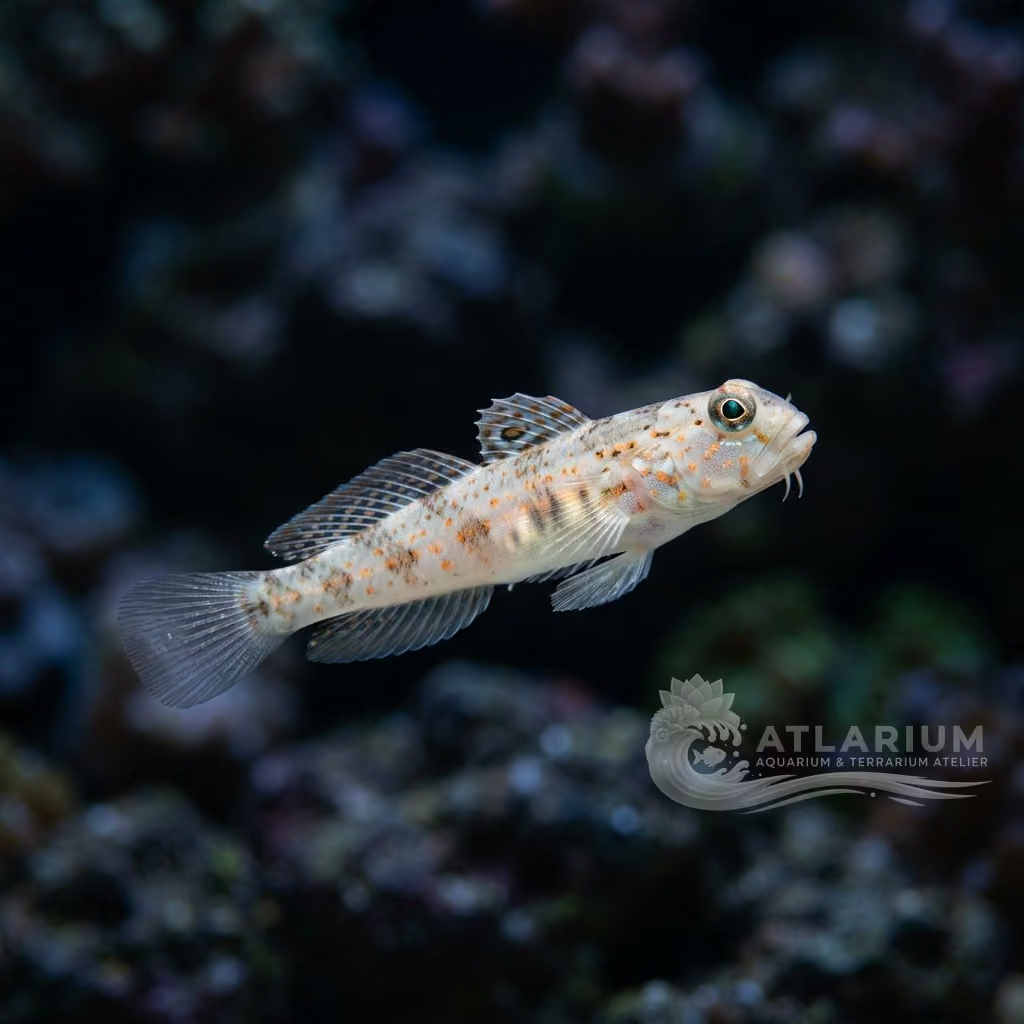
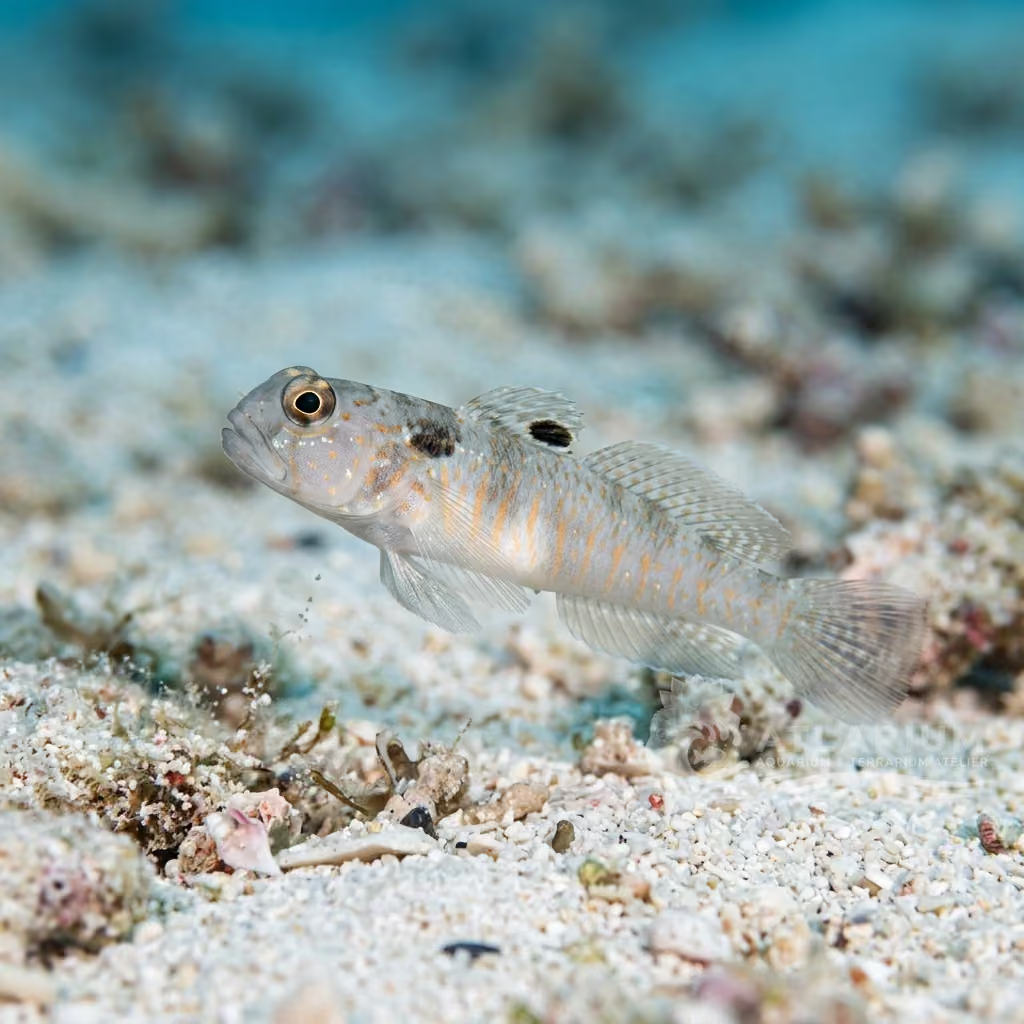
Barsnout goby
Elacatinus illecebrosus
A tropical cleaner goby associated with large stony corals in the Caribbean. A peaceful species for 40L setups, providing natural parasite control for tankmates.
Temperatura da água
23 - 27 °C
Valor de pH
8.1 - 8.4
Tipo de água
Marinho
Nível do tanque
Parte inferior
Tamanho adulto
4 cm
Volume mínimo do tanque
>= 40 L
Grupo mínimo
>= 1
KH
8 - 12 dKH

Descrição da espécie
Geographical Origin and Habitat: The fish species Elacatinus illecebrosus is native to tropical waters of the Western Central Atlantic, widely distributed along the coral reefs of the Caribbean Sea and Central American coasts. It predominantly populates exposed coral reefs, clear water zones, and colonies of large stony corals or tube sponges that serve as cleaning stations, preferring areas rich in vegetation, rocks, or crevices where it can find shelter from natural predators. The geographical distribution of this organism reflects its ecological adaptability to different natural aquatic habitats.
Taxonomy and Morphology: From a systematic perspective, Elacatinus illecebrosus belongs to the family Gobiidae, order Gobiiformes. It was officially classified by Böhlke & Robins, 1968. Morphologically, it is distinguished by an elongated, slender body reaching a maximum length of 4 centimeters, featuring fused pelvic fins modified to cling tightly to reef substrates, structural features adapted for swimming and hunting in its natural environment.
Social Behavior: This fish exhibits a behavior that is predominantly active diurnal, peaceful, stationary, and specialized in cleaning services for larger fish. Towards conspecifics and other species, it behaves in a extremely social and peaceful; it lives in stable pairs or small groups within cleaning stations, welcoming host fish without fear manner. It plays an active role in its habitat, occupying a specific ecological niche.
Coloration and Sexual Dimorphism: The coloration of this species is characterized by a dark body color accented by brilliant neon blue or white longitudinal stripes and a distinct vertical black bar on its snout. Regarding sexual dimorphism, there are no obvious external morphological differences between the sexes; males may sometimes appear slightly more slender than females.

Cuidado, criação e companheiros de tanque
Aquarium Setup: To properly house Elacatinus illecebrosus, a stable aquarium with a minimum volume of 40 liters for a stable pair in the aquarium is recommended. The tank must be set up with a reef aquarium with porous live rocks, colonies of soft or hard corals (such as Montastraea), and zones with moderate water flow to ensure a stimulating and safe environment.
Diet and Feeding: The diet of this fish is predominantly carnivorous, parasitophagous in nature, and opportunistic. In the aquarium, it readily accepts very fine frozen foods such as cyclops, calanus, brine shrimp nauplii, and high-quality crushed commercial flakes or pellets. Integrating the diet with vitaminized feeds helps keep the specimen healthy.
Water Quality: The stability of water parameters is fundamental for the long-term health of Elacatinus illecebrosus. Ideal values include a temperature of 24-26 °C, pH of 8.1-8.4, specific gravity of 1.023-1.025 specific gravity, and KH of 8-12 dKH. It is essential to perform regular water changes to maintain ammonia and nitrites at zero, and limit nitrates.
Compatibility and Cohabitation: In terms of compatibility, this species proves to be absolutely peaceful and ideal for coral reef aquariums. It can be housed with peaceful non-predatory reef fish such as small anthias, cardinalfish, clownfish, and all types of corals. Conversely, cohabitation with predatory or aggressive fish like groupers, lionfish, large wrasses, hawkfish, or stinging anemones that could capture it is absolutely not recommended, as they could harm or prey on it.
Aquarium Breeding: Breeding Elacatinus illecebrosus in the aquarium is moderate; it spawns regularly if housed in a quiet and well-managed reef aquarium. The reproductive cycle involves eggs are deposited in small crevices or empty shells; the male guards and fans the eggs until the planktonic larvae hatch. The development of fry requires stable conditions and suitable feeds for the early stages of growth.
Risks and Diseases: The main health risks for this species are related to risk of malnutrition if not fed fine-sized foods, and a tendency to jump out of the aquarium if startled. It is sensitive to skin parasites like Cryptocaryon (marine ich), Oodinium, and bacterial fin infections. Rapid fluctuations in chemical parameters can cause stress and immune weakening.

Origem e distribuição geográfica
The fish species Elacatinus illecebrosus is native to tropical waters of the Western Central Atlantic, widely distributed along the coral reefs of the Caribbean Sea and Central American coasts. It predominantly populates exposed coral reefs, clear water zones, and colonies of large stony corals or tube sponges that serve as cleaning stations, preferring areas rich in vegetation, rocks, or crevices where it can find shelter from natural predators. The geographical distribution of this organism reflects its ecological adaptability to different natural aquatic habitats.
Origem
Oceanos tropicais e recifesAmérica Central e Caribe

Perfil de peixe
- Temperamento
- Territorial
- The overall temperament of the Sharknose Goby can be best described as peaceful. Their disposition makes them a unique addition to the appropriate aquatic community, provided their specific needs are respected. Stressful conditions, such as poor water quality or overcrowding, can drastically alter their typical behavioral patterns. A quiet environment and a stable routine will bring out the most confident and engaging personality from this species.
- Dieta
- Carnivore
- Feeding the Sharknose Goby properly requires acknowledging its natural role as a cleaner/carnivorous. A staple diet of premium flakes or pellets should be supplemented with nutrient-rich treats to replicate natural foraging. It is advisable to soak dry foods beforehand to prevent digestive issues and swim bladder complications. Consistently offering a diverse menu will significantly boost their immune system and overall vitality.
- Expectativa de vida
- 1-1.5 years
- Tamanho adulto
- 4 cm
- Proporção sexual
- Flexible
- Maintaining an appropriate sex ratio is vital, and a balanced distribution of males and females often works best for the Sharknose Goby. In many cases, keeping a ratio heavily skewed towards females can help disperse male aggression during the breeding season. It is important to monitor the group dynamics closely to quickly identify and isolate any bullied individuals. A well-structured environment with plenty of visual barriers will support a harmonious mixed-sex group.
- Frequência de alimentação
- 2-3 times daily
- Establishing a consistent feeding routine is important, with 1-2 small meals per day being ideal for the Sharknose Goby. Aquarists should carefully monitor the fish during feeding time to ensure every individual gets its share. Any uneaten food should be promptly removed with a net or siphon to preserve the pristine aquatic environment. During periods of breeding or elevated temperatures, the feeding frequency may be slightly increased.
- Carga biológica
- Low
- Maintaining this marine species requires understanding its low bioload profile. The Sharknose Goby will thrive when the filtration system is carefully matched to its specific waste production. Frequent testing of the water chemistry is highly recommended to ensure no dangerous spikes occur. Excellent water quality is the foundation for preventing disease and promoting a vibrant, active fish.
- Fluxo
- Strong
- In terms of water movement, the Sharknose Goby thrives best in environments with moderate flow. Replicating the hydrodynamic conditions of their native habitat is key to reducing stress and promoting natural behaviors. Powerheads or spray bars can be strategically placed to create adequate currents without overwhelming the fish. Careful placement of hardscape and plants can also provide sheltered resting zones away from the main flow.
- Risco de salto
- Yes
- Aquarists should be aware that the Sharknose Goby presents a moderate jump risk, especially when initially introduced or startled. A tightly fitting lid or a mesh screen cover is absolutely essential to prevent accidental escapes. Keeping the water parameters stable and avoiding aggressive tankmates will minimize the stress that often triggers jumping behavior. Ensuring the tank is kept in a relatively quiet environment can also help keep them securely in the water.
- Reprodução
- Oviparous
- The reproductive strategy of the Sharknose Goby involves being a demersal egg layer. Breeding this species in captivity can be a rewarding challenge that requires dedicated conditioning of the broodstock. Specific triggers such as changes in temperature, diet, or water chemistry are often necessary to induce spawning. Once breeding occurs, specialized care for the fry, including appropriately sized live foods, is critical for their survival and development.
- Compatibilidade e companheiros de tanque
- Peaceful
- When considering tankmates, the Sharknose Goby is generally considered reef safe and cleans parasites off other fish. It is important to avoid housing them with overly aggressive or large predatory fish that could bully them or outcompete them for food. Careful observation during the initial introduction period is highly recommended to ensure harmony within the community. Selecting species that occupy different levels of the water column can further reduce territorial disputes.
- Nível do tanque
- Bottom
- This species is predominantly a all levels dweller within the aquarium setup. Providing the appropriate spatial layout with open swimming areas or dense vegetation where they feel secure is highly beneficial. By understanding their preferred depth, aquarists can carefully select complementary species that occupy other regions of the tank. This spatial separation helps to reduce competition for food and minimizes unnecessary territorial disputes.

Modelos e parâmetros científicos
FishBase
Acesso aos dados científicos oficiais da espécie
FishBase v25.04Dados sincronizados em: 15/06/2026
- Nível trófico
- 3,4 ± 0,3 se
- Resiliência
- Alta (menos de 15 meses)
- Unicidade filogenética (PD50)
- 0.5
- Relação bayesiana comprimento-peso
- a = 0.00741, b = 3.09
- VulnerabilidadeVulnerabilidade baixa (10 / 100)

Espécies relacionadas
Recomendações agrupadas por parentes próximos, escolhas de acompanhantes e cuidados semelhantes.