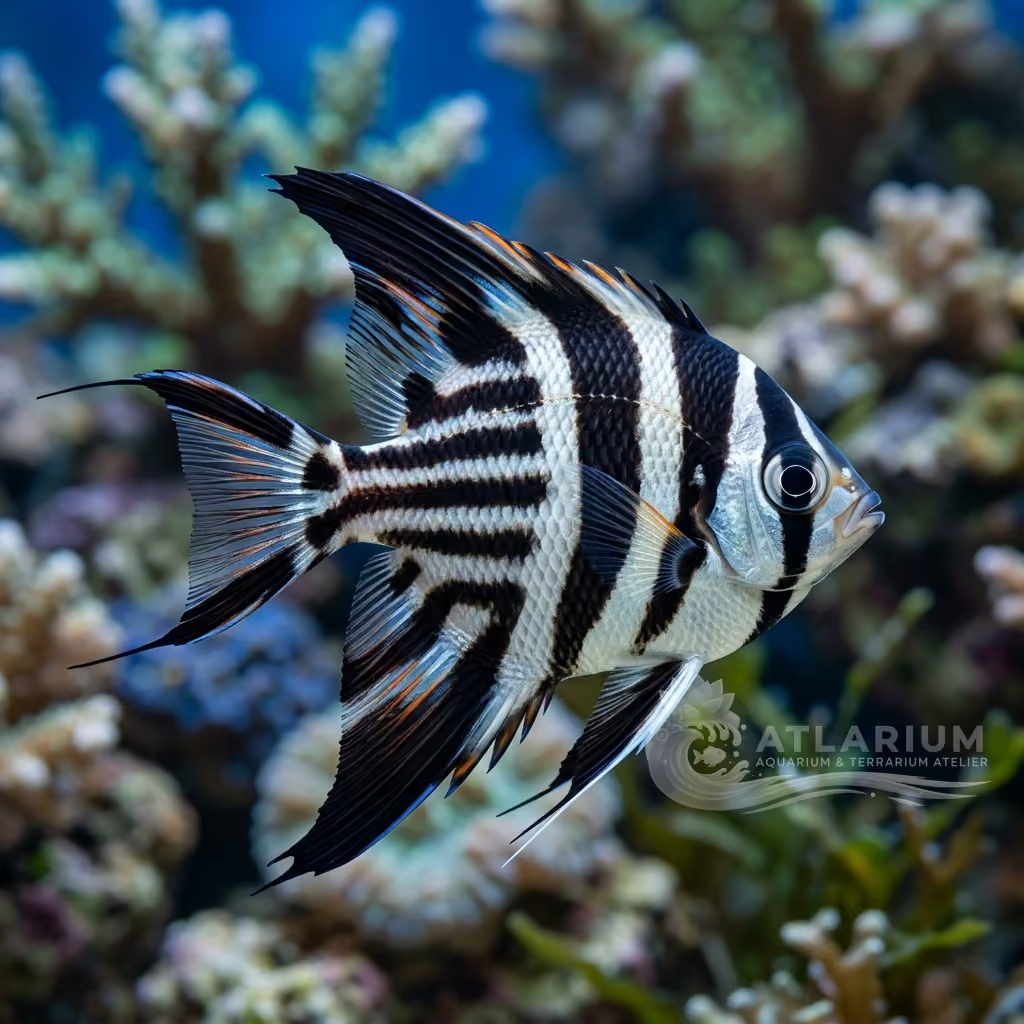
Singapore Angelfish
Chaetodontoplus mesoleucus
Often confused with butterflyfish, this peaceful angelfish features an elegant white and black split coloration. It excels in established reef tanks, constantly grazing on sponges and benthic algae.
Temperatura da água
23 - 28 °C
Valor de pH
8.1 - 8.4
Tipo de água
Marinho
Nível do tanque
Todos os níveis
Tamanho adulto
18 cm
Volume mínimo do tanque
>= 300 L
Grupo mínimo
>= 1
KH
8 - 12 dKH

Descrição da espécie
Geographical Origin and Habitat: This species is widely distributed in the Indo-West Pacific, from southern Japan to Indonesia, the Philippines, and the Great Barrier Reef. It inhabits silty coastal reefs and lagoons rich in sponge growth.
Taxonomy and Morphology: Belonging to the family Pomacanthidae and the genus Chaetodonoplus. Features a deep, laterally compressed, disc-like body shape with a small mouth. It can reach a maximum adult length of about 18 centimeters.
Social Behavior: Often shy and reclusive when first introduced, but becomes more active as it acclimates. Typically found singly or in pairs, constantly grazing on reef surfaces.
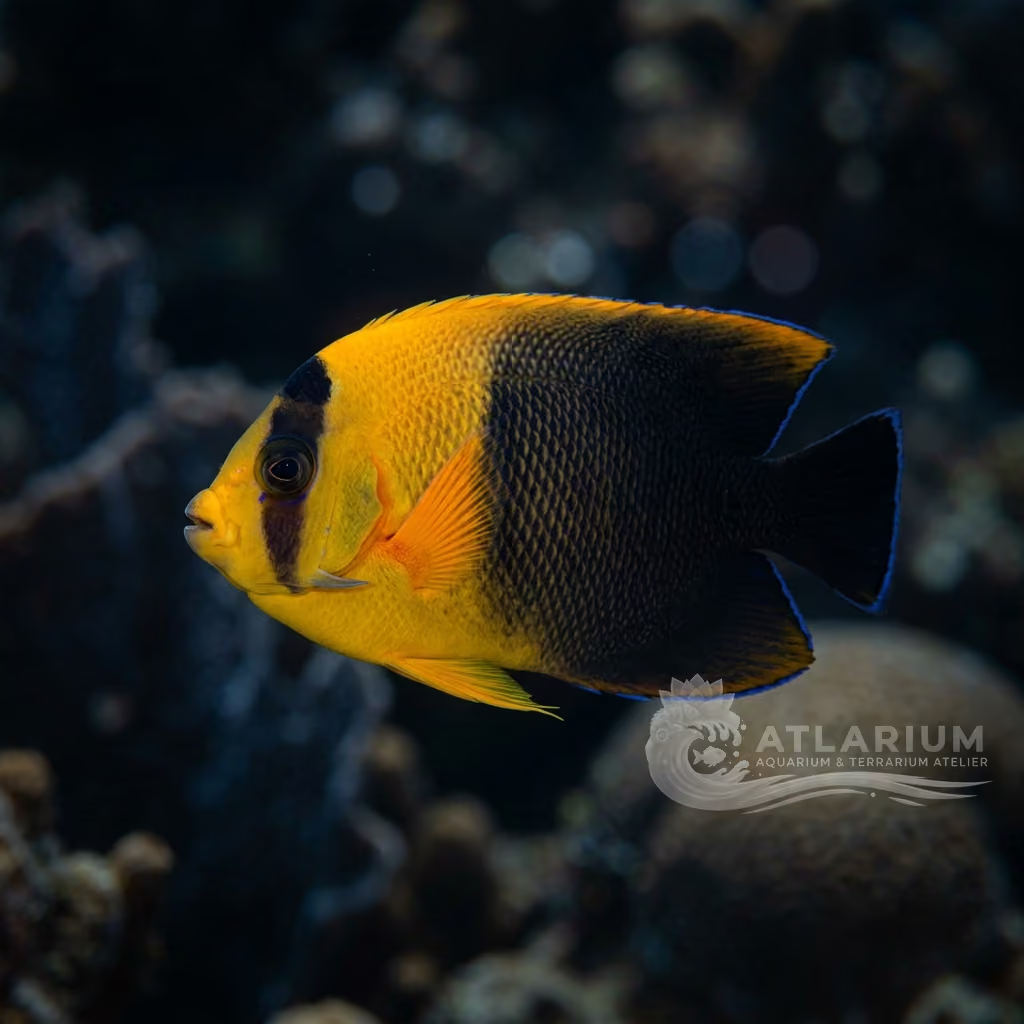
Coloration and Sexual Dimorphism: The front half of the body is greyish-white, while the rear half is dark brown to black with fine vertical yellow and white vermiculations. The tail is bright yellow. No external sexual dimorphism is present.

Cuidado, criação e companheiros de tanque
Aquarium Setup: Requires an established tank of at least 350 liters with extensive live rock for grazing. Provide numerous hiding places and shaded areas to help reduce its initial shyness.
Diet and Feeding: Omnivorous, feeding primarily on sponges, tunicates, and algae in the wild. Feed prepared foods containing sponge material, spirulina, nori algae, and frozen mysis or brine shrimp.
Water Quality: Demands pristine and stable water conditions: temperature of 23.0 to 27.0 °C, pH of 8.1 to 8.4, and specific gravity of 1.020 to 1.025. Efficient filtration and skimming are critical.
Compatibility and Cohabitation: Generally peaceful toward non-angelfish tankmates. Use caution in reef aquariums, as it is known to nip at stony corals, soft corals, zoanthids, and clam mantles.
Aquarium Breeding: Not commonly achieved in captivity. They are pelagic spawners, releasing gametes into the water column. The larvae require specialized micro-plankton diets that are difficult to cultivate.
Risks and Diseases: Highly susceptible to marine Ich and velvet during the initial acclimation phase. A strict quarantine period is strongly recommended to ensure it begins feeding before entry.

Origem e distribuição geográfica
This species is widely distributed in the Indo-West Pacific, from southern Japan to Indonesia, the Philippines, and the Great Barrier Reef. It inhabits silty coastal reefs and lagoons rich in sponge growth.
Origem
Oceanos tropicais e recifesSul e Sudeste AsiáticoLeste Asiático

Perfil de peixe
- Temperamento
- Semi-aggressive
- The Singapore Angelfish generally exhibits a peaceful but sometimes semi-aggressive temperament within a community aquarium. It is notoriously shy and retiring when first introduced, often hiding among the rocks for several days until it feels secure. Once fully acclimated and established, it will confidently patrol its territory and may occasionally chase away similarly shaped or colored fish. It is easily intimidated by large, overly aggressive tank mates, which can cause it to stop eating entirely. Therefore, careful observation of its social interactions is essential for maintaining a harmonious tank environment.
- Dieta
- Omnivore
- In its natural habitat, the vermiculated angelfish primarily grazes on benthic tunicates, sponges, and various filamentous marine algae. Replicating this specialized diet in captivity is absolutely crucial for maintaining its vibrant colors and overall immune health. Aquarists must provide high-quality commercial angelfish preparations that specifically contain marine sponge extract and spirulina. Supplementing their diet with meaty foods like frozen mysis shrimp and finely chopped fresh seafood will encourage a healthy appetite. Offering a diverse and rotating menu prevents nutritional deficiencies and helps acclimatize stubborn eaters.
- Expectativa de vida
- 10-15 years
- Tamanho adulto
- 18 cm
- Proporção sexual
- Solitary
- In a home aquarium setting, it is generally recommended to keep the Singapore Angelfish either singly or in a bonded pair. Keeping two unbonded males together will almost certainly result in severe territorial disputes and aggression. If kept in a pair, the aquarium must be sufficiently large to provide individual territories for both fish. A one-to-one ratio of male to female is the most successful combination for advanced aquarists attempting to maintain multiple specimens. Observing their interactions carefully is vital to prevent bullying within the pairing.
- Frequência de alimentação
- Twice daily
- Because of its highly active foraging nature, this angelfish requires frequent, small meals throughout the day to remain healthy. It is highly recommended to feed them at least two to three times daily with a variety of appropriate foods. Regular grazing opportunities should also be provided by cultivating a healthy crop of natural algae on the aquarium's live rock. If the fish appears thin or refuses prepared foods initially, the feeding frequency should be temporarily increased using highly enticing live foods. Consistent, multiple daily feedings help prevent the fish from aggressively nipping at any corals present in the tank.
- Carga biológica
- High
- The Singapore Angelfish has a moderate biological footprint, meaning it will contribute notably to the aquarium's waste output. It requires a robust filtration system capable of maintaining pristine water conditions to thrive. Frequent water changes are highly recommended to prevent the accumulation of harmful nitrates and phosphates. Protein skimmers are essential to handle the dissolved organics produced by this moderately heavy eater. Proper waste management ensures a healthy environment and minimizes stress on this sensitive species.
- Fluxo
- Strong
- This species naturally inhabits reef slopes and drop-offs where it experiences moderate to somewhat strong water currents. Replicating these flow conditions in the aquarium helps oxygenate the water and encourages the fish to remain highly active. A moderate flow rate will also aid in preventing the accumulation of detritus on the rockwork, which keeps the environment clean. However, it is equally important to provide slower flow areas behind rocks where the fish can rest comfortably. Using variable wavemakers can perfectly simulate the dynamic ocean surges they encounter in the wild.
- Risco de salto
- Yes
- While the Singapore Angelfish is not notorious for jumping, there is always a slight risk when the fish becomes startled or chased. Rapid changes in lighting or sudden movements outside the tank can cause this normally cautious fish to dart upward. A tightly fitting lid or a mesh screen is strongly advised to prevent any accidental escapes from the aquarium. Such protective covers also help keep other potential jumpers safe without restricting necessary gas exchange. Taking this simple precaution ensures the long-term safety of your valuable marine specimen.
- Reprodução
- Oviparous
- Breeding the Singapore Angelfish in a standard home aquarium is considered exceptionally difficult and rarely accomplished by hobbyists. In the wild, they are pelagic spawners that release their buoyant eggs directly into the open water column at dusk. The tiny, fragile larvae require massive volumes of water and specialized microscopic foods to survive their long planktonic stage. Only specialized aquaculture facilities and public aquariums typically possess the extensive resources needed to raise the fry successfully. Therefore, almost all specimens available in the aquarium trade are sustainably wild-caught rather than captive-bred.
- Compatibilidade e companheiros de tanque
- Not reef safe
- This species is generally considered unsafe for delicate reef aquariums due to its natural propensity to graze on corals. It will frequently nip at large-polyp stony corals, soft corals, zoanthids, and occasionally the fleshy mantles of decorative clams. They are best suited for a Fish-Only-With-Live-Rock (FOWLR) setup alongside peaceful to moderately assertive tank mates. It is crucial to avoid housing them with overly aggressive predators like triggers or large groupers that might relentlessly harass them. Keeping them with dissimilar species ensures minimal territorial friction and a much more peaceful community dynamic.
- Nível do tanque
- All levels
- This angelfish predominantly occupies the lower to middle regions of the aquarium water column. It spends the vast majority of its time actively navigating through the rockwork and grazing on the surfaces of live rock. The fish appreciates an intricate aquascape with numerous caves, overhangs, and crevices to explore. Although it may occasionally swim near the surface during feeding time, it feels most secure closer to the bottom. Providing ample structure in the lower half of the tank will perfectly mimic its natural reef habitat.

Espécies relacionadas
Recomendações agrupadas por parentes próximos, escolhas de acompanhantes e cuidados semelhantes.