Scribbled Angelfish
Chaetodontoplus duboulayi
Known as the scribbled angelfish, this striking species boasts a uniquely intricate maze-like pattern. Semi-aggressive and active, it demands an immense aquarium with sprawling rock formations.
Temperatura da água
23 - 28 °C
Valor de pH
8.1 - 8.4
Tipo de água
Marinho
Nível do tanque
Parte inferior e intermediária
Tamanho adulto
25 cm
Volume mínimo do tanque
>= 500 L
Grupo mínimo
>= 1
KH
8 - 12 dKH

Descrição da espécie
Geographical Origin and Habitat: This species is found in the tropical and subtropical waters of the Southwestern Pacific, primarily along the northern coast of Australia, the island of New Guinea, and the Coral Sea. It inhabits shallow coastal reefs, sandy slopes, and rubble zones rich in sponge growth at depths of 5 to 20 meters, often in slightly turbid waters.
Taxonomy and Morphology: Belonging to the family Pomacanthidae. It features a deep, laterally compressed body and a prominent spine on the preoperculum. Adults can grow to a substantial length of 25 to 28 centimeters. Juveniles display a distinct coloration pattern, transitioning slowly to adult colors as they mature.
Social Behavior: Shy as juveniles, but they become bold and dominant as they mature. They are typically found in pairs or small haremic groups consisting of one male and several females. In captivity, they exhibit strong intraspecific territoriality and may behave aggressively toward other large angelfish.
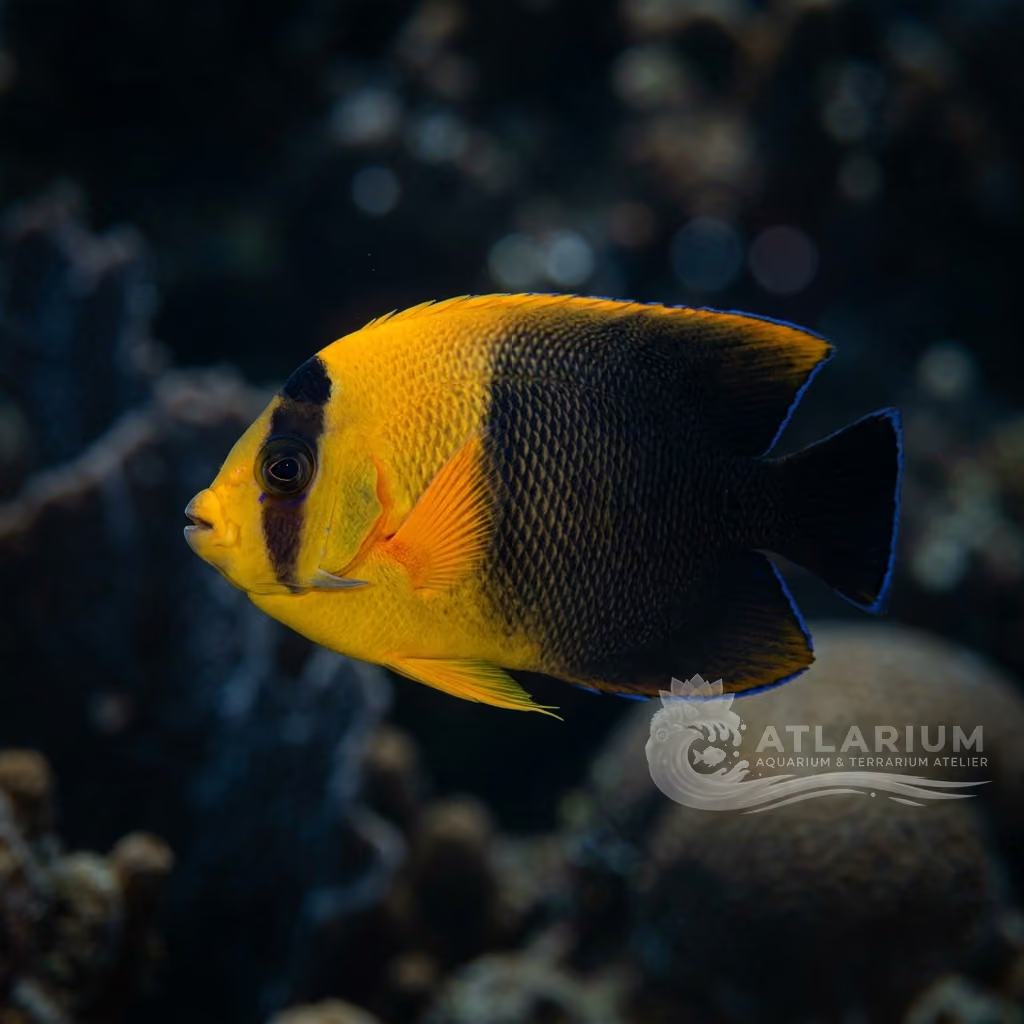
Coloration and Sexual Dimorphism: Features a dark blue body highlighted by a broad yellow band behind the eye, a yellow tail fin, and a yellow stripe along the base of the dorsal fin. The flanks are covered with a dense network of thin, undulating blue-and-yellow lines. Males display more intricate, denser, and brighter scribbled markings than females.

Cuidado, criação e companheiros de tanque
Aquarium Setup: Requires a very large tank, with a minimum capacity of 130-150 gallons (approx. 500-600 liters) for a single adult specimen. The aquascape must feature sturdy live rock structures with large caves and arches for hiding, while still providing ample open water space for this active swimmer.
Diet and Feeding: An omnivore that feeds primarily on sponges, tunicates, and benthic algae in the wild. In the home aquarium, provide a varied diet containing commercial angelfish preparations containing sponge matter, nori, spirulina, and high-quality frozen foods like mysis, krill, and chopped clams. Feed twice daily.
Water Quality: Demands pristine water quality. A highly efficient filtration system, a powerful protein skimmer, and regular water changes are essential. Maintain water parameters at: temperature 24-27°C, pH 8.1-8.4, specific gravity (SG) 1.021-1.025, and keep nitrates below 10 ppm with minimal phosphate.
Compatibility and Cohabitation: Likely to show aggression toward conspecifics or other closely related angelfish species. This fish is not reef-safe, as it will nip at large-polyp stony (LPS) corals, clam mantles, and soft coral polyps. Suitable tankmates include active, larger fish like surgeonfish, triggerfish, and wrasses.
Aquarium Breeding: Breeding in home aquaria is exceptionally difficult and rarely achieved. They are pelagic spawners that release eggs and sperm simultaneously into the water column during evening courtship rituals. Raising the larvae requires specialized setups and microscopic live food cultures like copepods.
Risks and Diseases: Quite sensitive during the initial acclimation period. Prone to marine parasites such as Cryptocaryon irritans and Amyloodinium ocellatum under stress. Also susceptible to Head and Lateral Line Erosion (HLLE) if water quality is neglected or diet lacks vitamin C. Quarantine is highly recommended.

Origem e distribuição geográfica
This species is found in the tropical and subtropical waters of the Southwestern Pacific, primarily along the northern coast of Australia, the island of New Guinea, and the Coral Sea. It inhabits shallow coastal reefs, sandy slopes, and rubble zones rich in sponge growth at depths of 5 to 20 meters, often in slightly turbid waters.
Origem
Oceanos tropicais e recifesAmérica do NorteÁfrica e MadagascarSul e Sudeste AsiáticoLeste AsiáticoAustrália, Nova Guiné e Oceania

Perfil de peixe
- Temperamento
- Semi-aggressive
- The Scribbled Angelfish is generally classified as semi-aggressive and can be quite territorial, particularly toward other angelfish or similarly shaped species. They are relatively peaceful when young but tend to become more dominant and bold as they mature and establish their territory. While they rarely bother smaller, unrelated fish, they may bully new additions that share their niche. Providing ample space and introducing them to the tank after peaceful species can help mitigate aggressive behavior.
- Dieta
- Omnivore
- In the wild, the Scribbled Angelfish feeds primarily on sponges, tunicates, and benthic algae. In the home aquarium, they must be offered a varied diet that includes specialized sponge-infused marine angelfish formulas, mysis shrimp, and krill. High-quality marine algae, such as nori, spirulina, and seaweed flakes, should also be provided to meet their herbivorous needs. Offering vitamin-enriched foods is highly beneficial to maintain their vibrant coloration and strong immune system.
- Expectativa de vida
- 10-15 years
- Tamanho adulto
- 25 cm
- Proporção sexual
- Harem
- In their natural habitat, Scribbled Angelfish are protogynous hermaphrodites that typically form harems consisting of a single dominant male and a few females. In captivity, they are most commonly kept as single specimens unless the aquarium is exceptionally large, as males will fight aggressively. If a pair is desired, it is best to introduce a known male and a smaller female simultaneously to establish a hierarchy. Keeping multiple males in the same tank should be avoided entirely to prevent fatal territorial conflicts.
- Frequência de alimentação
- Twice daily
- To support their active lifestyle and grazing nature, Scribbled Angelfish should be fed small portions two to three times daily. Providing multiple small feedings helps mimic their natural behavior of grazing throughout the day and reduces waste accumulation from uneaten food. Feeding them on a consistent schedule also aids in acclimation and helps curb aggression towards tank mates. Algae sheets can be left in the tank on a clip for them to nibble on between meals.
- Carga biológica
- Medium to High
- The Scribbled Angelfish is a large and active species that generates a significant biological load in the aquarium. To manage their waste output and maintain pristine water conditions, a high-quality protein skimmer and efficient mechanical filtration are essential. Regular water changes and a mature biological filter are necessary to prevent ammonia and nitrate spikes. Providing a large water volume also helps dilute waste and maintain stable parameters.
- Fluxo
- Strong
- Scribbled Angelfish prefer moderate water flow within the aquarium, which mimics the coastal and inner reef environments they inhabit in the wild. While they require well-oxygenated water, they should not be subjected to turbulent or extremely strong currents that force them to struggle while swimming. Creating areas of both moderate flow for swimming and calmer zones for resting is highly recommended. Adequate water movement also helps keep organic debris suspended so the filtration system can remove it.
- Risco de salto
- Yes
- While not classified as high-risk jumpers like wrasses or jawfish, Scribbled Angelfish can leap out of the water if startled or chased. They are particularly prone to jumping during the acclimation phase when they are unfamiliar with their new surroundings and tank mates. To ensure their safety, a secure, tight-fitting lid or mesh cover is strongly recommended for the aquarium. Providing plenty of hiding spaces in the rockwork also reduces their stress and tendency to bolt upward.
- Reprodução
- Not bred in captivity
- Breeding the Scribbled Angelfish in captivity is highly challenging and rarely achieved by home aquarists. They are pelagic spawners that release their gametes into the water column, requiring specialized, tall tanks to facilitate successful courtship and egg release. The resulting larvae are extremely small, delicate, and require specific micro-plankton cultures to survive the initial developmental stages. However, commercial breeders have successfully reared this species in specialized facilities, making captive-bred individuals increasingly available.
- Compatibilidade e companheiros de tanque
- Not reef safe
- The Scribbled Angelfish is compatible with a wide range of medium-sized, active marine fish such as tangs, wrasses, and clownfish. However, they should not be housed with other large angelfish, particularly members of the same genus, unless kept in a very large aquarium. They are generally not considered reef-safe as they will nip at large polyp stony (LPS) corals, zoanthids, soft corals, and clam mantles. They are best suited for fish-only-with-live-rock (FOWLR) systems or carefully managed semi-reef setups.
- Nível do tanque
- Middle/Bottom
- The Scribbled Angelfish is a versatile swimmer that utilizes all levels of the aquarium but spends much of its time in the bottom-middle zones. They are closely associated with live rock formations, where they graze for food and seek shelter when threatened. While they will swim into the open water to feed or interact, they return to the lower rockwork for security. A layout with numerous arches, caves, and overhangs is ideal to accommodate their natural swimming preferences.

Espécies relacionadas
Recomendações agrupadas por parentes próximos, escolhas de acompanhantes e cuidados semelhantes.