Line-spot Flasher Wrasse
Paracheilinus lineopunctatus
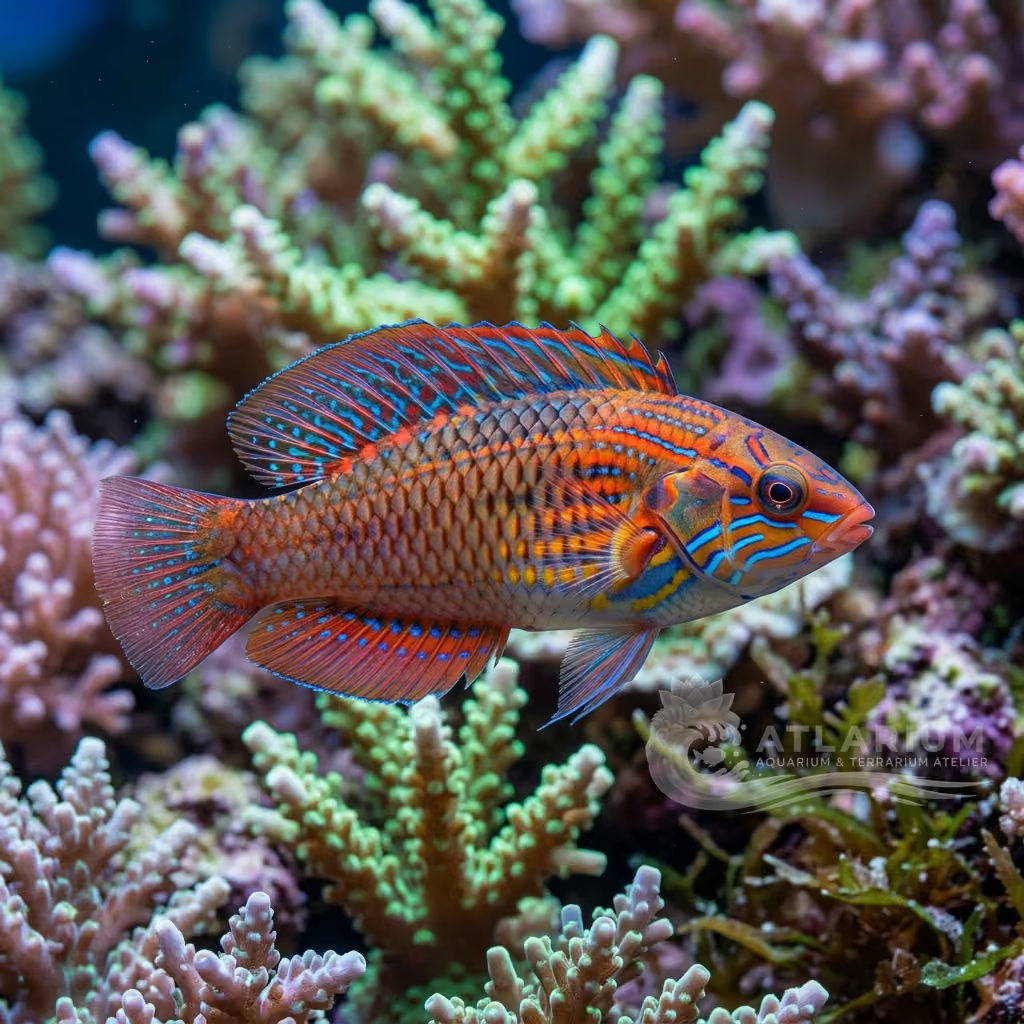
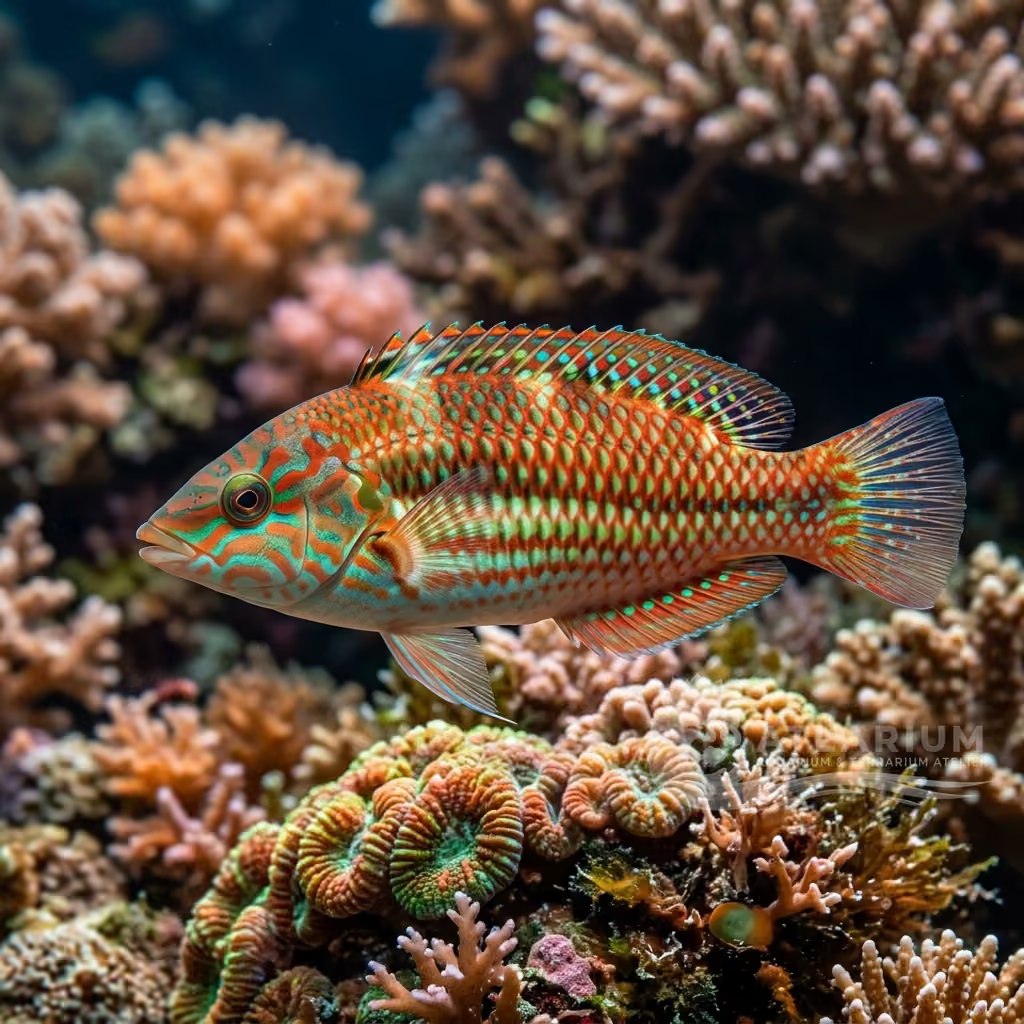
A spectacular, seldom-traded marine wrasse from the Philippines. Recognized by dashed lines and reddish dots, it demands ample open water and a fine sand bed for peaceful resting.
Temperatura da água
22 - 26 °C
Valor de pH
8.1 - 8.4
Tipo de água
Marinho
Nível do tanque
Todos os níveis
Tamanho adulto
7 cm
Volume mínimo do tanque
>= 200 L
Grupo mínimo
>= 3
KH
8 - 12 dKH

Descrição da espécie
Geographical Origin and Habitat: Endemic to the Philippine archipelago within the Coral Triangle. Inhabits seaward coral reefs and current-swept channels, typically at depths of 15 to 35 meters, where it stays close to branching corals and rubble fields.
Taxonomy and Morphology: Member of the family Labridae, genus Paracheilinus. Features a slender, streamlined body. Males possess dorsal fins with multiple thin, thread-like filaments extending upwards. Adult maximum size is about 7 cm.
Social Behavior: Schooling species that lives in small harems led by a single dominant male. Males spend substantial energy swimming in the water column, showing off their colors and expanding their fins to court females.
Coloration and Sexual Dimorphism: Males exhibit dotted and dashed red and blue longitudinal lines, scattered spots on the sides, and a rounded tail. Females are smaller, plain pinkish-orange, with faint bluish markings.

Cuidado, criação e companheiros de tanque
Aquarium Setup: Needs an aquarium of at least 200 liters with plenty of open swimming room. A fine sand bed of 2-3 cm is necessary for night-time shelter, alongside live rock caves. A tight-fitting lid is essential to prevent jumping.
Diet and Feeding: Planktivore. In captivity, feed frequently (2-3 times daily) with small frozen foods like copepods, rotifers, brine shrimp, and finely chopped mysis. Can be trained to accept quality dry micro-granules or flakes.
Water Quality: Reef parameters are required: temperature 22-26°C, pH 8.1-8.4, specific gravity (SG) 1.020-1.025, GH 15-25, KH 8-12. Provide good water movement and high dissolved oxygen using a protein skimmer.
Compatibility and Cohabitation: 100% reef safe. Ideal for coral reef community tanks. Do not house with aggressive fishes or large, fast-swimming competitors. Keep only one male with multiple females of the same species.
Aquarium Breeding: Undocumented in home aquariums. They are protogynous hermaphrodites and pelagic spawners. Mating occurs in open water during a rapid upward spawning run towards the surface.
Risks and Diseases: High jumping risk if the tank is uncovered. Acclimation stress. The absence of a fine sand bed can lead to chronic stress and physical damage to the snout. Vulnerable to marine ich (Cryptocaryon) and velvet.

Origem e distribuição geográfica
Endemic to the Philippine archipelago within the Coral Triangle. Inhabits seaward coral reefs and current-swept channels, typically at depths of 15 to 35 meters, where it stays close to branching corals and rubble fields.
Origem
Oceanos tropicais e recifesSul e Sudeste Asiático

Perfil de peixe
- Temperamento
- Peaceful
- They have an incredibly peaceful and shy disposition. Males flash their fins but rarely harm tank mates. They are easily bullied by more boisterous tank species.
- Dieta
- Carnivore
- They are planktivores that feed on zooplankton. In captivity, they readily accept frozen mysis and brine shrimp. High-quality marine flakes can also be offered daily.
- Expectativa de vida
- 3-5 years
- Tamanho adulto
- 7 cm
- Proporção sexual
- Harem
- Keep a single male with multiple females for natural behavior. Multiple males will fight unless the tank is massive. One male to three females is the ideal ratio.
- Frequência de alimentação
- 2-3 times daily
- They have a fast metabolism and need frequent feeding. Offer small meals two to three times per day. Consistent feeding maintains their vibrant colors and health.
- Carga biológica
- Low
- This species produces a low biological load. Their small size means they generate minimal waste. Standard protein skimming and regular water changes are adequate.
- Fluxo
- Strong
- They prefer moderate to strong water movement. Good flow keeps their zooplankton food suspended for foraging. Ensure there are lower flow areas for resting at night.
- Risco de salto
- Yes
- They have a notorious reputation for jumping. A tight-fitting lid or mesh screen is absolutely mandatory. Even tiny gaps can provide enough space to escape.
- Reprodução
- Oviparous
- They are protogynous hermaphrodites, with females becoming males. The dominant fish typically becomes a brightly colored male. Captive breeding is rare but courtship is common.
- Compatibilidade e companheiros de tanque
- Reef safe
- They are highly peaceful reef community fish. Avoid housing them with aggressive or large predatory species. They mix well with other peaceful wrasses in large tanks.
- Nível do tanque
- All levels
- These wrasses swim in the middle to upper levels. They actively cruise open water looking for suspended food. At night, they seek shelter in bottom rock crevices.

Modelos e parâmetros científicos
FishBase
Acesso aos dados científicos oficiais da espécie
FishBase v25.04Dados sincronizados em: 15/06/2026
- Nível trófico
- 3,4 ± 0,45 se
- Resiliência
- Alta (menos de 15 meses)
- Unicidade filogenética (PD50)
- 0.5
- Relação bayesiana comprimento-peso
- a = 0.01072, b = 3.03
- VulnerabilidadeVulnerabilidade baixa (10 / 100)

Espécies relacionadas
Recomendações agrupadas por parentes próximos, escolhas de acompanhantes e cuidados semelhantes.