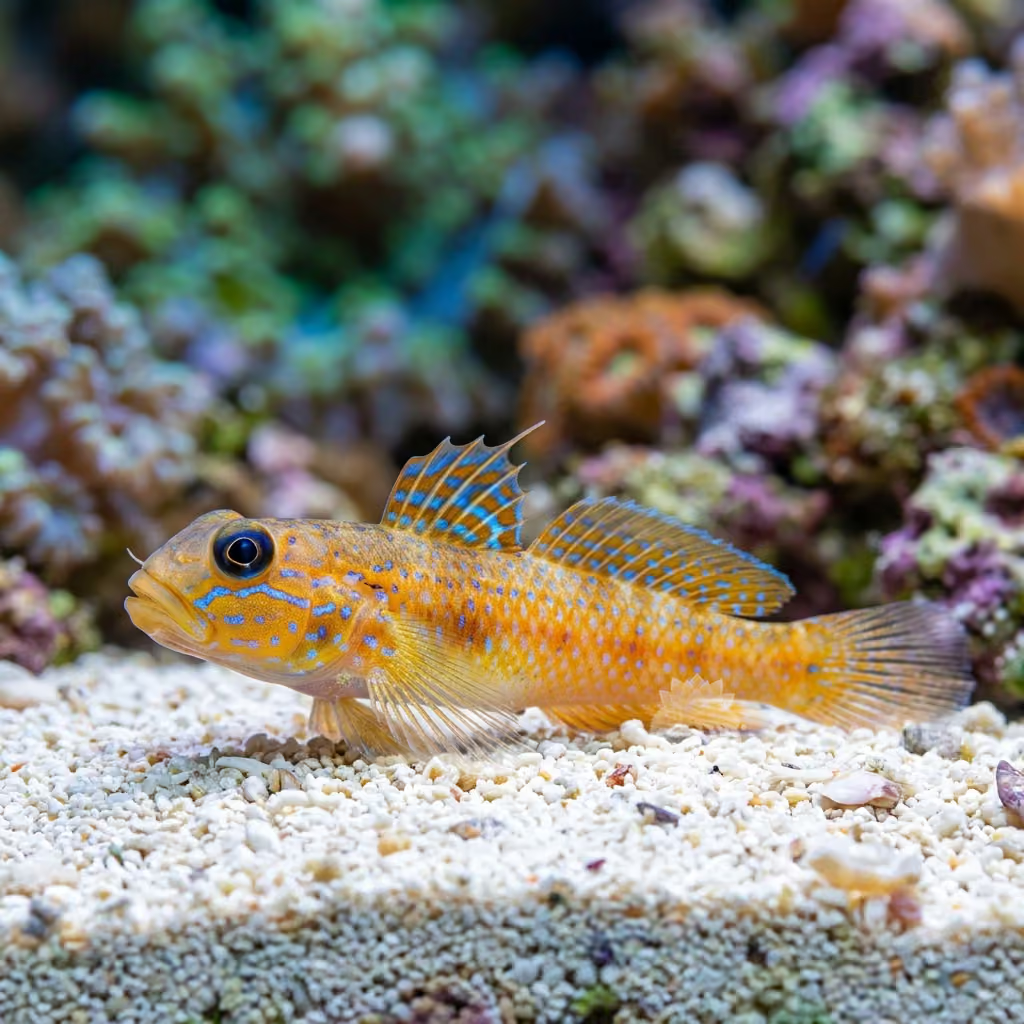
Helfrich's firefish
Nemateleotris helfrichi
Helfrich's Firefish is a spectacular, delicate deep-water dartfish. Known for its lavender-purple hues, this shy beauty requires pristine water, dim lighting, and a tight-fitting lid.
Temperatura da água
22 - 25 °C
Valor de pH
8.1 - 8.4
Tipo de água
Marinho
Nível do tanque
Parte inferior e intermediária
Tamanho adulto
6 cm
Volume mínimo do tanque
>= 80 L
Grupo mínimo
>= 1
KH
8 - 12 dKH

Descrição da espécie
Geographical Origin and Habitat: Helfrich's firefish is native to the central and western Pacific Ocean, distributed across regions such as the Ryukyu Islands, Palau, the Society Islands, and the Tuamotus. Unlike other firefish, it is a deep-water species, typically inhabiting steep outer reef slopes, drop-offs, and deep caves at depths ranging from 25 to over 90 meters, in clear, cool waters.
Taxonomy and Morphology: Belongs to the Gobiidae family (often classified under Ptereleotridae) and the genus Nemateleotris. It features an elongated, slender body that reaches a maximum length of about 6 centimeters. The first spine of the dorsal fin is dramatically elongated, forming a distinctive, erectile antenna-like 'dart' filament.
Social Behavior: An extremely shy, peaceful, and reclusive fish. In their natural habitat, they often live in pairs or small, loose groups close to the substrate. When threatened, they instantly retreat into small holes or rock crevices, flicking their long dorsal fin back and forth as a means of signaling.
Coloration and Sexual Dimorphism: Features a stunning and iconic coloration: the body has a delicate lavender to pale purple hue that transitions into a brilliant lemon-yellow on the head. A bold black or dark purple stripe runs across the forehead. The fins are adorned with bright purple, red, and yellow margins. There is no visible sexual dimorphism; males and females look identical.

Cuidado, criação e companheiros de tanque
Aquarium Setup: Requires an aquarium of at least 60 to 80 liters with a setup rich in live rock to provide numerous small caves and tight crevices. A deep, fine sand bed is highly recommended. Because it is a deep-water species, it prefers subdued or dim lighting, and plenty of shaded areas to reduce stress caused by bright reef lights.
Diet and Feeding: A specialized planktivore. In captivity, it must be fed multiple times a day with very fine, high-quality frozen foods, such as copepods, cyclops, baby brine shrimp, minced mysis, and lobster eggs. It rarely accepts dry food initially, though it may eventually adapt to tiny, sinking micropellets.
Water Quality: Demands pristine and stable water parameters. The ideal water temperature is slightly cooler than typical tropical reef tanks, ranging from 22 to 25 °C. Maintain specific gravity between 1.021 and 1.026, and pH between 8.1 and 8.4. Regular water changes and efficient filtration are mandatory to prevent nitrogenous waste buildup.
Compatibility and Cohabitation: Perfect for peaceful reef aquariums with quiet, docile tankmates. It must never be housed with aggressive, highly active, or fast-feeding fish (such as dottybacks, large wrasses, or aggressive tangs) that will bully it or outcompete it for food. It can be kept in bonded, compatible pairs.
Aquarium Breeding: Breeding in home aquariums is exceptionally difficult. They are cave-spawning egg-layers; a bonded pair will spawn deep inside a burrow and guard the nest. The primary bottleneck is rearing the pelagic larvae, which are microscopic, highly fragile, and require specific live micro-foods to survive.
Risks and Diseases: The greatest risk is its propensity to jump out of the aquarium; they are easily startled and will dart upward. The aquarium must be completely sealed with a tight lid or fine netting. They are highly sensitive to acclimation stress, temperature shocks, and skin parasites if their immune system is compromised.

Origem e distribuição geográfica
Helfrich's firefish is native to the central and western Pacific Ocean, distributed across regions such as the Ryukyu Islands, Palau, the Society Islands, and the Tuamotus. Unlike other firefish, it is a deep-water species, typically inhabiting steep outer reef slopes, drop-offs, and deep caves at depths ranging from 25 to over 90 meters, in clear, cool waters.
Origem
Cosmopolita ou apresentadoLeste AsiáticoOceanos tropicais e recifes

Perfil de peixe
- Temperamento
- Peaceful
- Helfrich's Firefish is famously shy and retiring, requiring a calm and tranquil tank environment. When completely comfortable, they display stunning confidence and hover elegantly in the open. Any signs of bullying will cause them to disappear into the rocks, possibly starving.
- Dieta
- Carnivore
- Their diet must consist of finely shredded, protein-rich marine foods. Frozen calanus, baby brine shrimp, and micro-mysis are excellent choices. They will also eagerly accept high-quality marine micro-pellets formulated for small carnivores.
- Expectativa de vida
- 3-5 years
- Tamanho adulto
- 6 cm
- Proporção sexual
- Flexible
- There are no discernible visual differences between males and females of this species. Because of extreme territoriality toward their own kind, keeping a single specimen is strongly recommended. Acquiring an established, bonded pair is the only safe way to keep more than one.
- Frequência de alimentação
- Twice daily
- Because of their small stomach capacity, offering tiny amounts of food twice daily is required. Ensuring the food actually reaches them before other tankmates eat it is critical. Overfeeding should be avoided to maintain pristine water parameters.
- Carga biológica
- Low
- Helfrich's Firefish is a diminutive species that adds a nearly undetectable bioload to a marine aquarium. They process very small amounts of food, meaning minimal waste is introduced into the water. This makes them ideal candidates for small, delicate reef systems.
- Fluxo
- Moderate
- They originate from deeper reef environments and prefer gentle to moderate water movement. Strong, blasting currents will force them into hiding and exhaust them quickly. A steady, gentle laminar flow brings food to them naturally.
- Risco de salto
- Yes
- This highly prized fish is extremely prone to jumping out of the aquarium. An escape-proof, perfectly fitted mesh screen is absolutely mandatory. Even a momentary fright can cause them to launch themselves vertically out of the water.
- Reprodução
- Oviparous
- Captive breeding is exceptionally rare due to the complexity of rearing their pelagic larvae. They are monogamous burrow-dwellers that guard their egg clutches fiercely. Almost all specimens in the hobby are responsibly collected from the wild.
- Compatibilidade e companheiros de tanque
- Peaceful
- They are completely reef safe and possess a very peaceful, non-confrontational demeanor. They must not be housed with large, aggressive, or fast-swimming species that could intimidate them. Conspecific aggression is high, so they should not be kept with other dartfish.
- Nível do tanque
- Middle/Bottom
- They generally hover just above the substrate or lower rockwork, always within striking distance of a hiding spot. They rely heavily on a specific 'home' crevice that they dart into when frightened. An aquarium with abundant live rock and hiding places is essential.

Modelos e parâmetros científicos
FishBase
Acesso aos dados científicos oficiais da espécie
FishBase v25.04Dados sincronizados em: 15/06/2026
- Nível trófico
- 3,4 ± 0,45 se
- Unicidade filogenética (PD50)
- 0.5625
- Relação bayesiana comprimento-peso
- a = 0.00389, b = 3.12
- VulnerabilidadeVulnerabilidade baixa (10 / 100)

Espécies relacionadas
Recomendações agrupadas por parentes próximos, escolhas de acompanhantes e cuidados semelhantes.