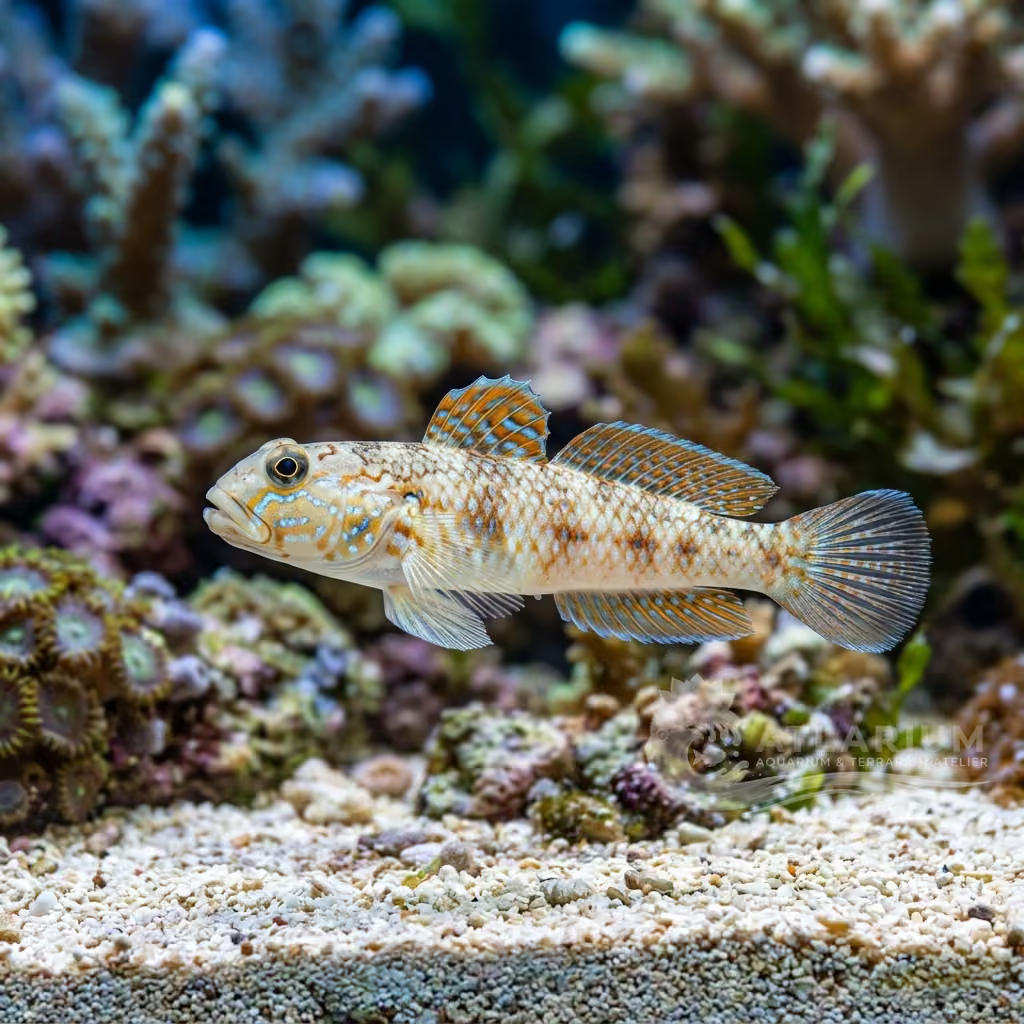
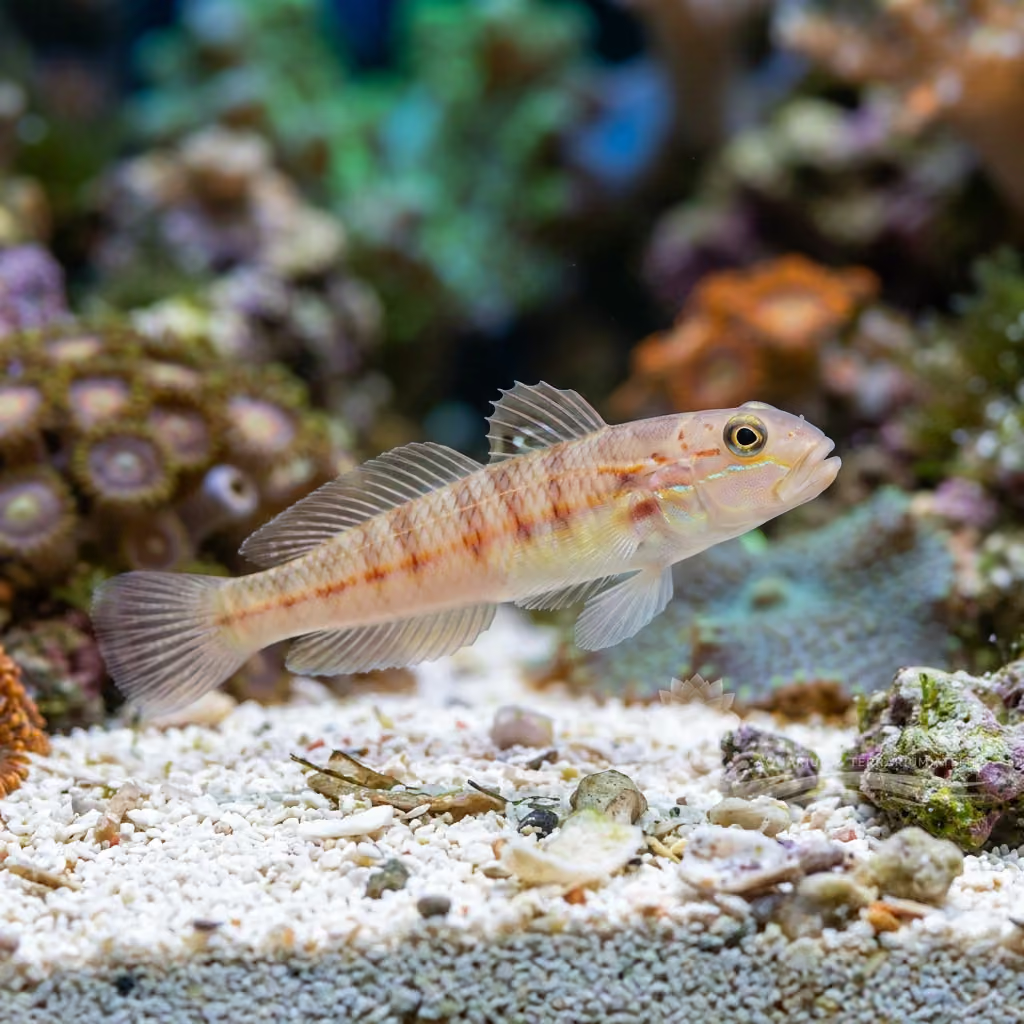
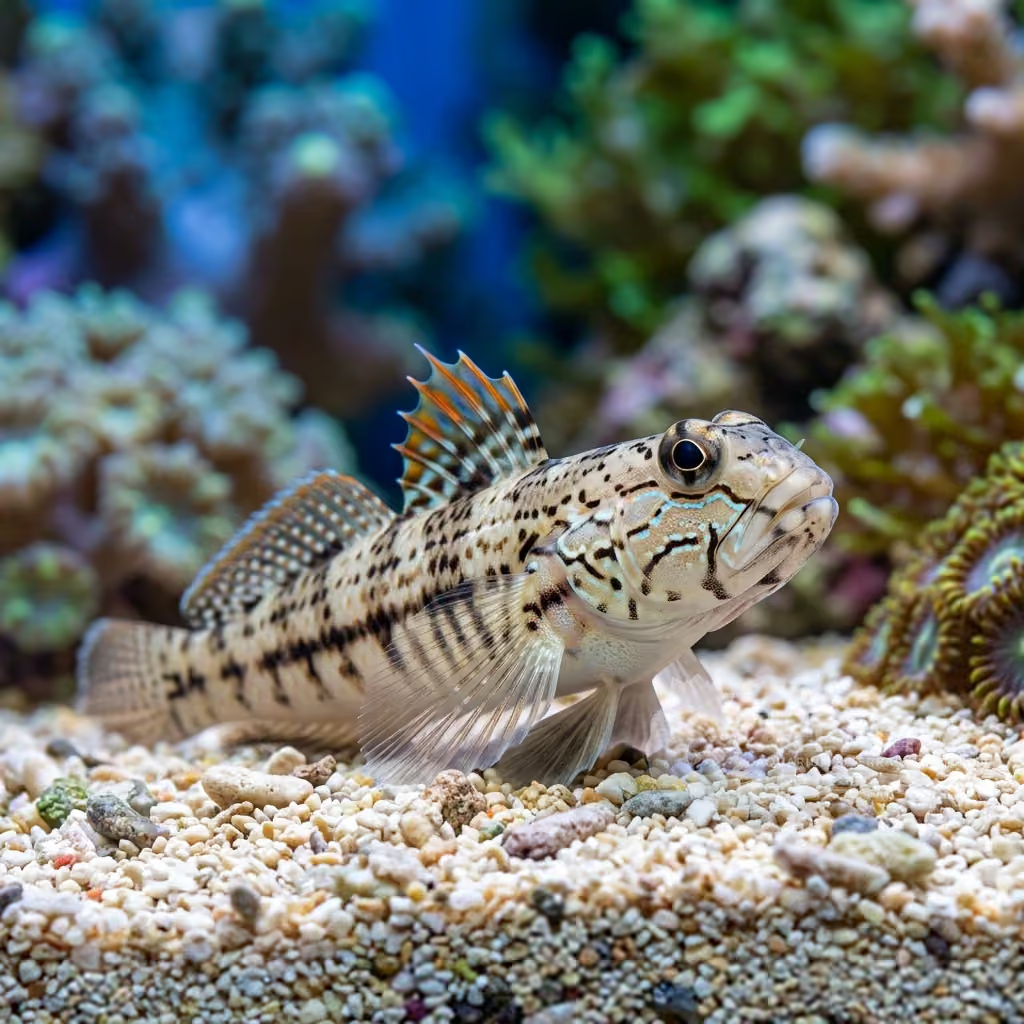
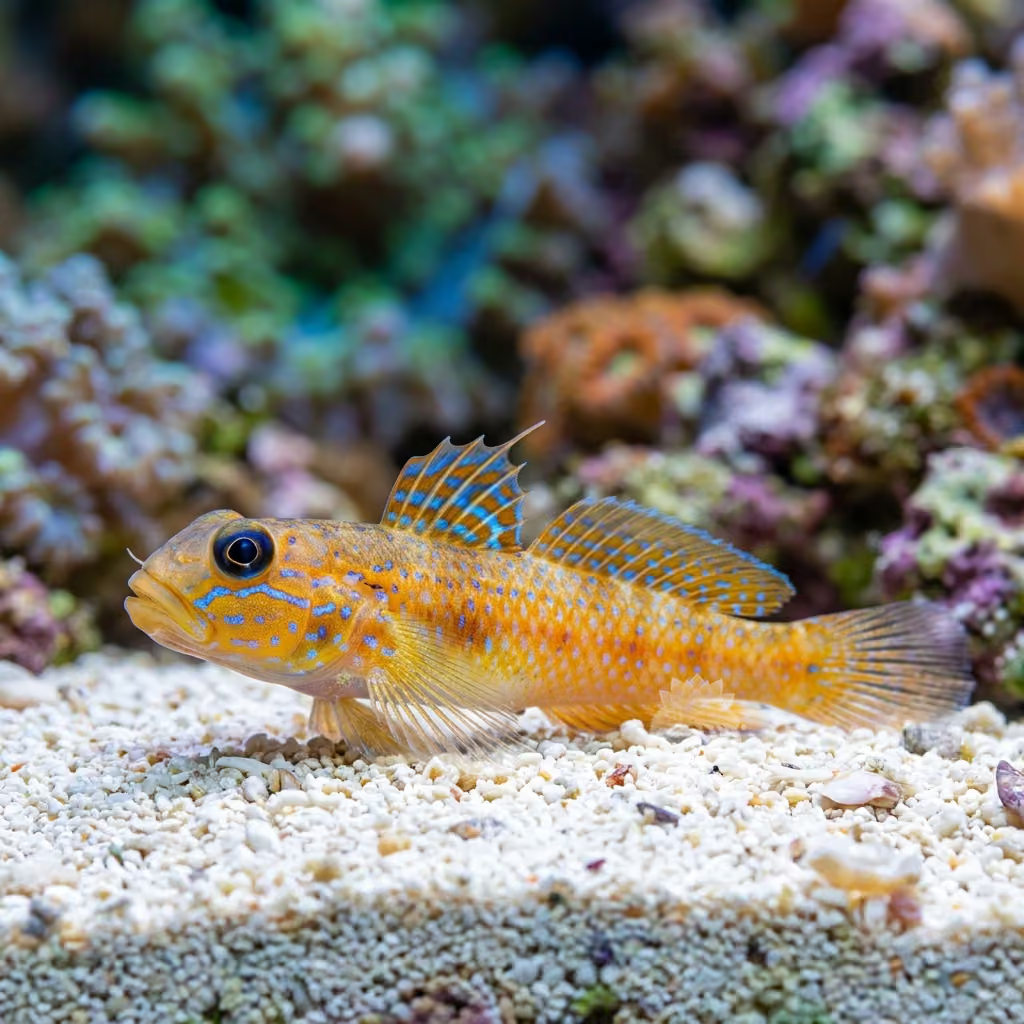
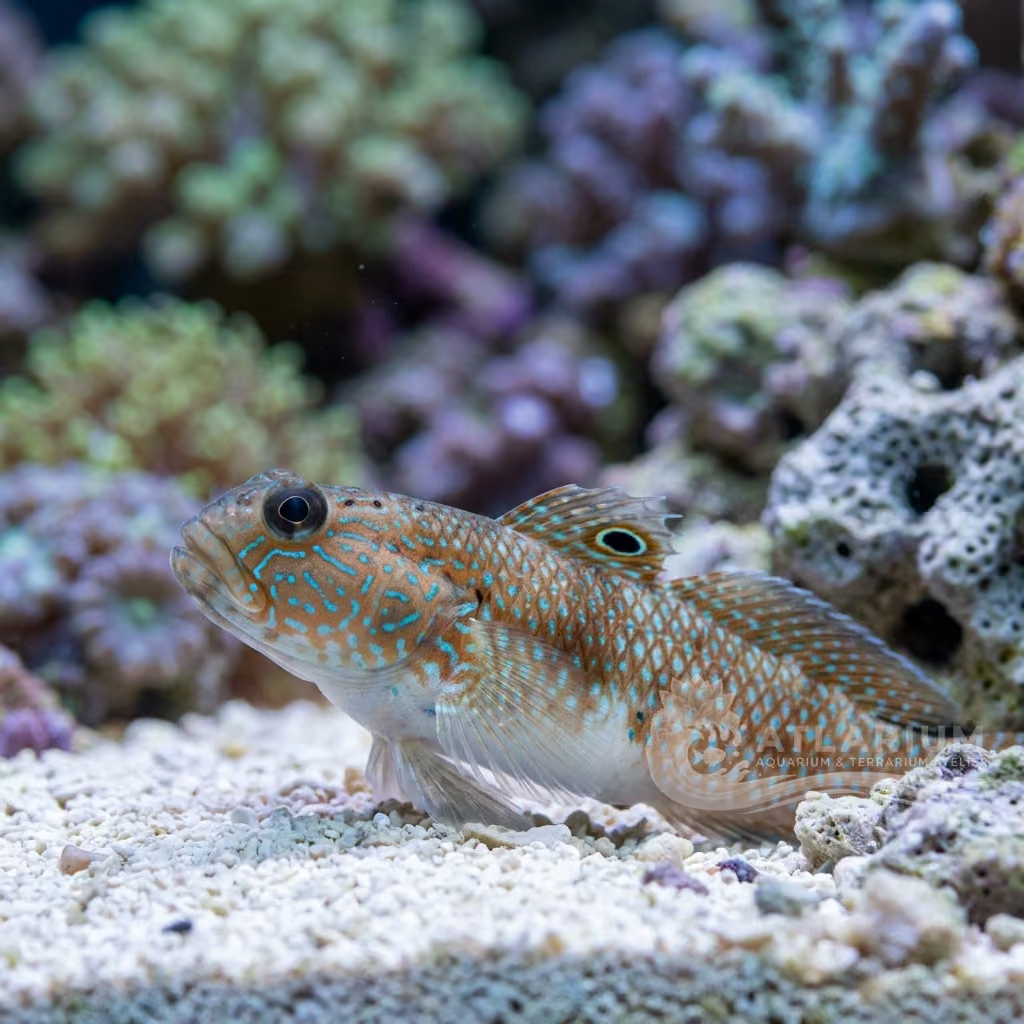
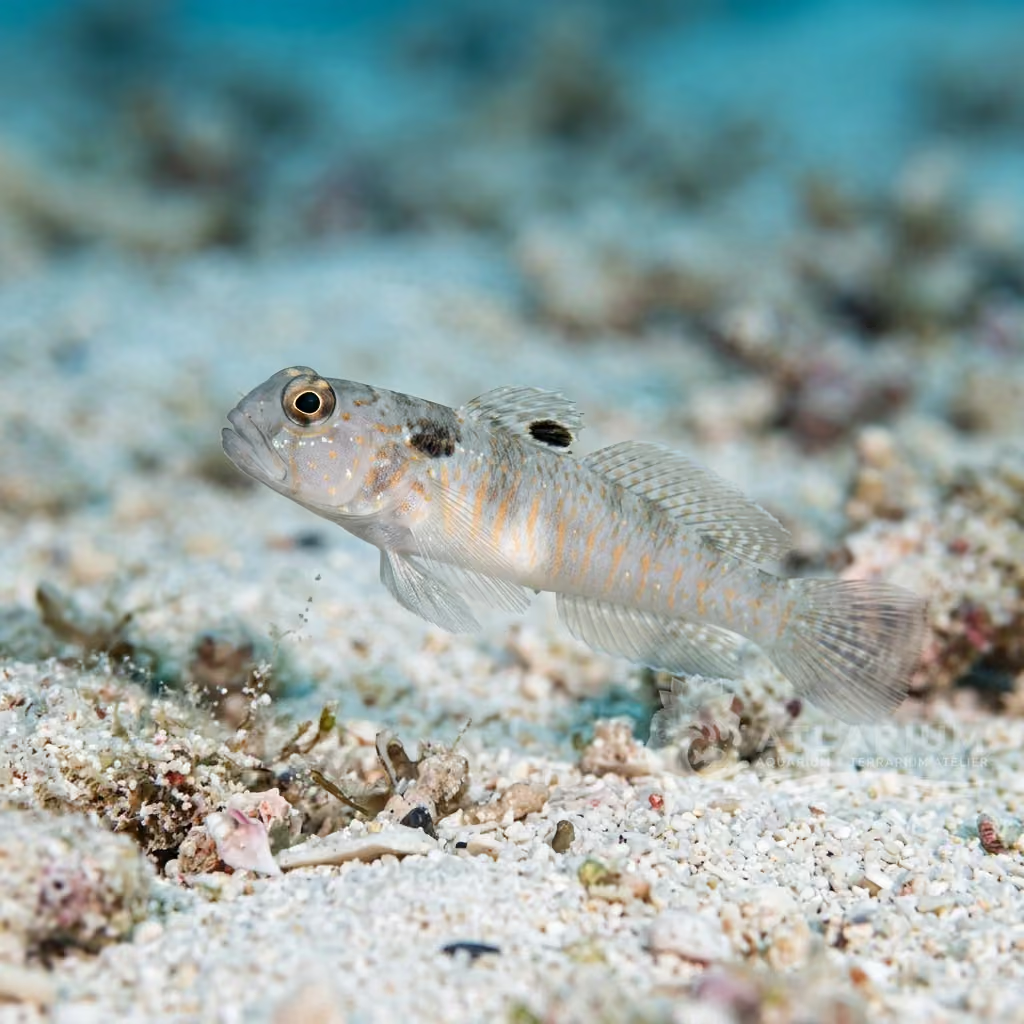
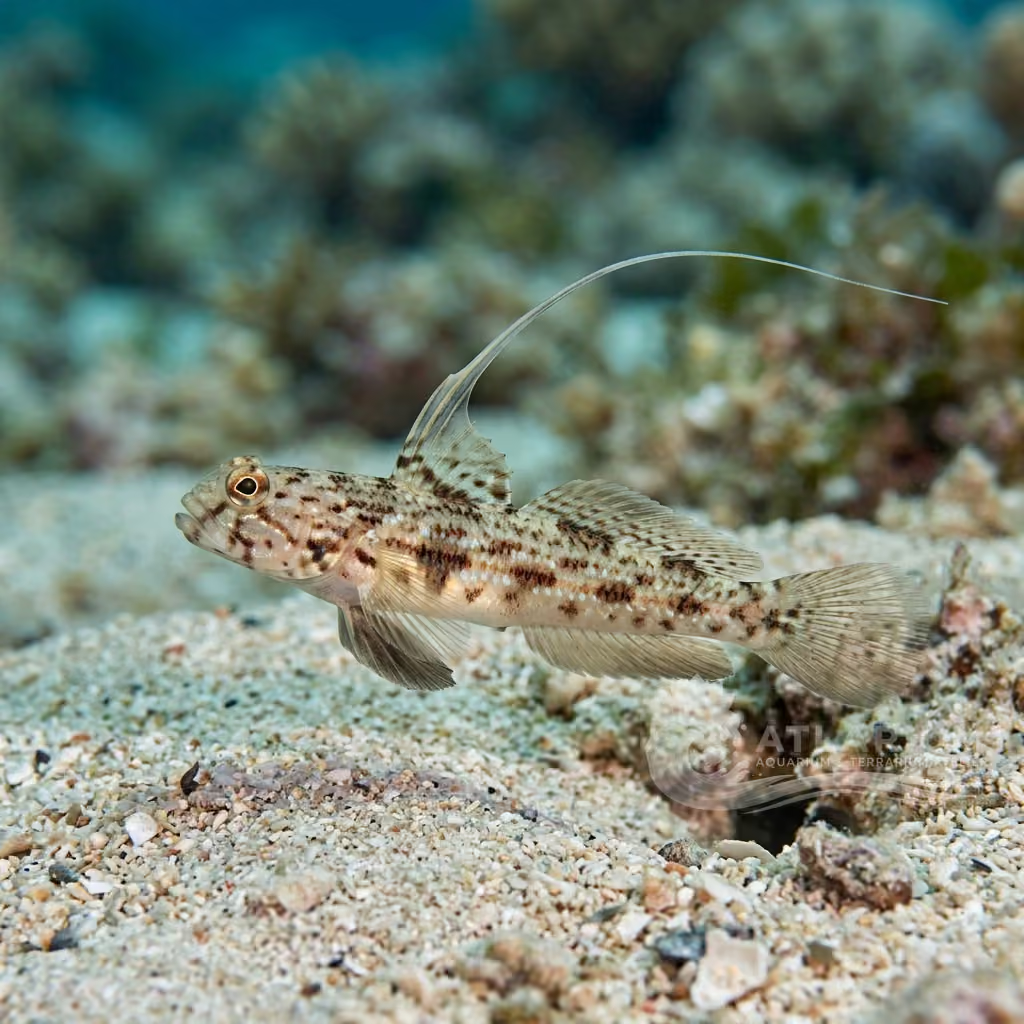
Twostripe goby
Valenciennea helsdingenii
A beautiful marine goby known for its two prominent black and red longitudinal stripes. It constantly filters sand through its gills to clean the substrate.
Temperatura da água
22 - 27 °C
Valor de pH
8.1 - 8.4
Tipo de água
Marinho
Nível do tanque
Parte inferior
Tamanho adulto
14 cm
Volume mínimo do tanque
>= 200 L
Grupo mínimo
>= 1
KH
8 - 12 dKH

Descrição da espécie
Geographical Origin and Habitat: Native to the tropical Indo-Pacific, from the Red Sea and East Africa to the Marquesas, and north to southern Japan. It inhabits sandy or rubble patches near coral reefs at depths between 5 and 40 meters.
Taxonomy and Morphology: Belongs to the family Gobiidae, genus Valenciennea. It features an elongated body, a large downward-facing mouth adapted for digging, and eyes set high on the head. The tail is often lyre-shaped.
Social Behavior: Monogamous species that is usually found in pairs. They construct deep burrows under rocks for shelter at night or when threatened. Generally peaceful but territorial towards other sand-sifting gobies.
Coloration and Sexual Dimorphism: The body is white-grey with two distinct parallel black or dark red stripes running from the snout to the caudal fin. Adult males may have longer filaments on the dorsal and caudal fins.

Cuidado, criação e companheiros de tanque
Aquarium Setup: Requires a tank of at least 70-80 gallons (250-300 liters) with a large sand bed. The substrate must be fine, clean sand (4-6 cm deep). Place live rocks directly on the bottom glass to prevent collapses from digging.
Diet and Feeding: Feeds by sifting sand for micro-invertebrates. Must be fed frequently (2-3 times daily) with frozen foods like mysis, brine shrimp, copepods, and sinking pellets to prevent starvation in clean tanks.
Water Quality: Requires stable and well-oxygenated water. Target parameters: pH 8.1-8.4, specific gravity 1.020-1.025, temperature 24-26°C (75-79°F). Quality filtration and regular water changes.
Compatibility and Cohabitation: Extremely peaceful. Excellent reef safe tankmate. Do not house with other sand-sifting gobies of the same genus unless they are a mated pair.
Aquarium Breeding: May spawn inside their burrow. The male guards the nest, but raising the pelagic larvae is highly difficult in home aquaria.
Risks and Diseases: Starvation is the leading cause of death if the sand bed lacks micro-fauna or if feeding is insufficient. They are notorious sleepers and jumpers; a tight-fitting mesh lid is mandatory.

Origem e distribuição geográfica
Native to the tropical Indo-Pacific, from the Red Sea and East Africa to the Marquesas, and north to southern Japan. It inhabits sandy or rubble patches near coral reefs at depths between 5 and 40 meters.
Origem
Oceanos tropicais e recifesÁfrica e MadagascarLeste Asiático

Perfil de peixe
- Temperamento
- Semi-aggressive
- They are peaceful, hard-working fish that provide immense utility and entertainment. While they work tirelessly sifting sand all day, they retreat to their burrows at night or when frightened. They only show aggression when defending their chosen burrow from other similar benthic species.
- Dieta
- Carnivore
- Their natural diet consists of small benthic invertebrates and crustaceans living within the sand. In the aquarium, they sift mouthfuls of sand to extract food, but this must be supplemented with frozen mysis, brine shrimp, and sinking carnivore pellets. A deep, mature sand bed is crucial for their long-term survival and nutritional health.
- Expectativa de vida
- 5-7 years
- Tamanho adulto
- 14 cm
- Proporção sexual
- Flexible
- It is generally best to keep them either singly or as a confirmed male-female pair. Two males will often fight vigorously over territory and burrows, which can lead to stress and starvation. Finding a true mated pair is the most rewarding way to observe their complex social and architectural behaviors.
- Frequência de alimentação
- 3-4 times daily
- They should be fed twice daily with high-quality meaty marine foods. Because they are bottom feeders, it is important to ensure the food actually reaches the substrate before aggressive mid-water fish consume it. Target feeding with a baster near their burrows is a highly effective way to guarantee they get enough to eat.
- Carga biológica
- Medium to High
- These sand-sifting marine gobies have a moderate bioload that is easily managed in established reef or FOWLR systems. They actually help maintain water quality by constantly turning over the sand bed and consuming uneaten food. A good protein skimmer and regular water changes will easily offset the waste they produce.
- Fluxo
- Moderate
- They prefer a moderate to strong water flow, typical of the sandy reef flats they originate from. Good circulation ensures that detritus and organic matter are kept in suspension rather than settling entirely on the sand. However, they will construct small burrows under rocks to shelter themselves from intense currents.
- Risco de salto
- Yes
- These gobies are notorious jumpers and will quickly find the smallest gap in an aquarium lid. A secure, tight-fitting mesh cover is an absolute necessity to prevent tragic carpet surfing incidents. Their jumping behavior is often triggered at night or when they feel threatened by a larger fish.
- Reprodução
- Oviparous
- Breeding in the home aquarium is very rare, though mated pairs will actively maintain a shared burrow. They are demersal spawners, and the male typically guards the eggs hidden deep within the cave. Rearing the microscopic fry is exceptionally difficult due to their specific zooplankton dietary requirements.
- Compatibilidade e companheiros de tanque
- Peaceful
- They are excellent community fish that largely ignore other tank mates. However, they can be territorial toward conspecifics or similar sand-sifting species unless kept as a mated pair. They are completely reef-safe, though their constant digging can occasionally bury corals placed too low on the substrate.
- Nível do tanque
- Bottom
- They are strictly bottom-dwelling fish that spend their entire day hovering just above or resting on the sand bed. You will constantly see them taking in mouthfuls of sand and filtering it out through their gills. They rely entirely on the substrate for food, shelter, and security.

Modelos e parâmetros científicos
FishBase
Acesso aos dados científicos oficiais da espécie
FishBase v25.04Dados sincronizados em: 15/06/2026
- Nível trófico
- 3,4 ± 0,41 se
- Resiliência
- Média (1,4 - 4,4 anos)
- Unicidade filogenética (PD50)
- 0.5
- Relação bayesiana comprimento-peso
- a = 0.01023, b = 3.01
- VulnerabilidadeVulnerabilidade baixa (15 / 100)

Espécies relacionadas
Recomendações agrupadas por parentes próximos, escolhas de acompanhantes e cuidados semelhantes.