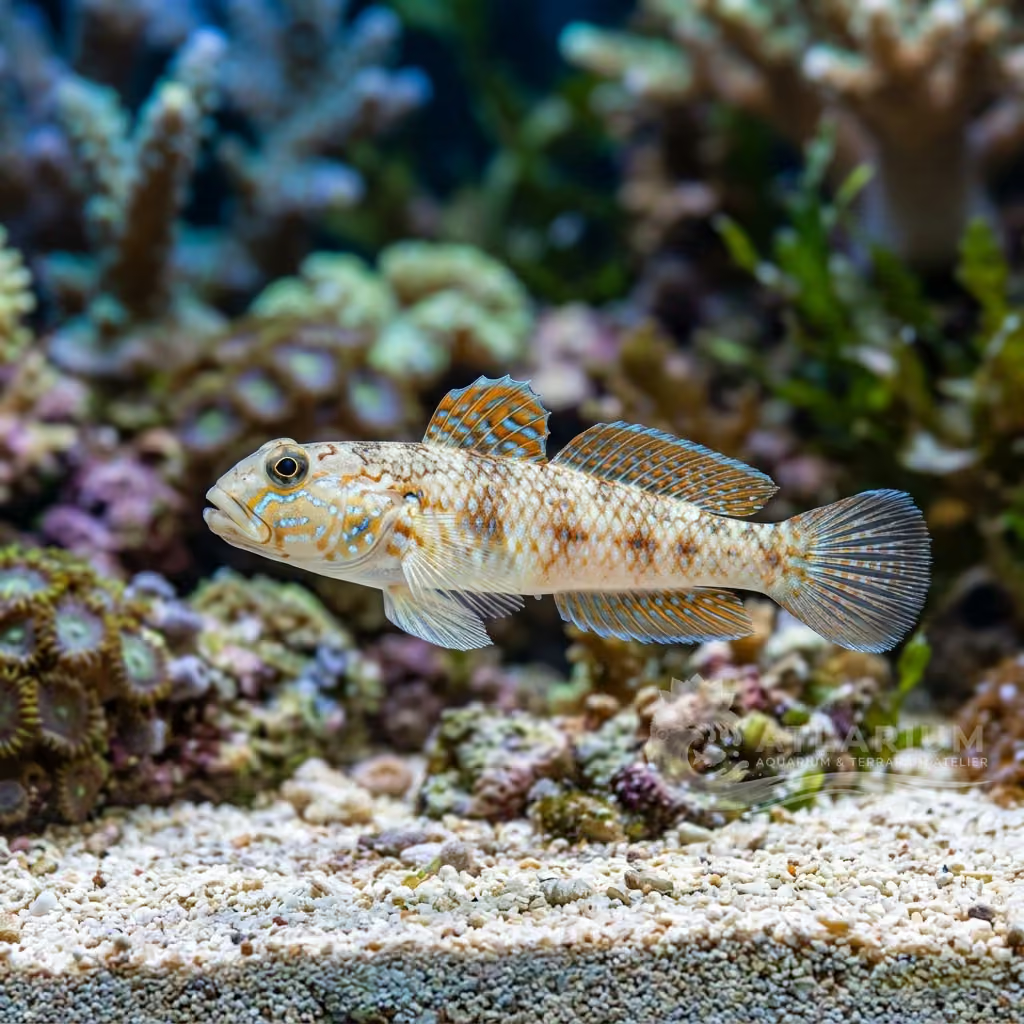
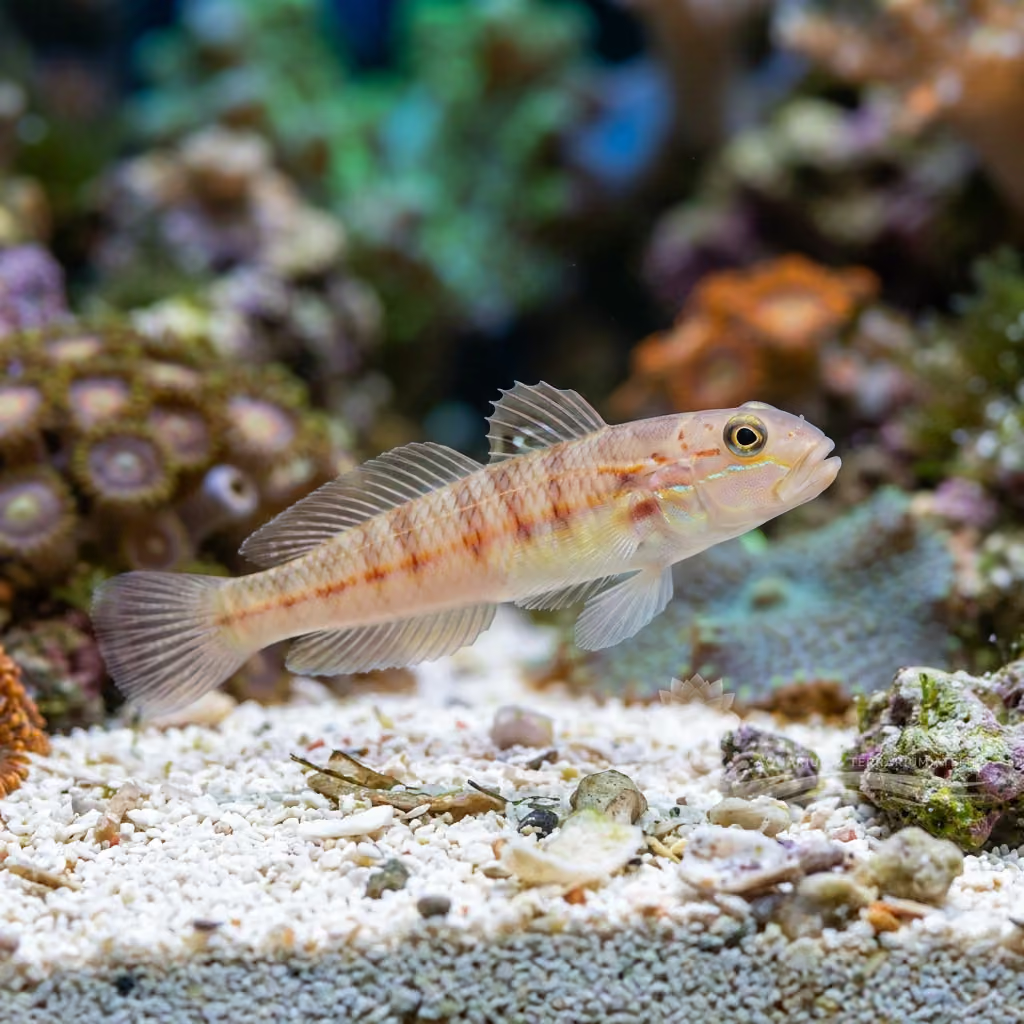
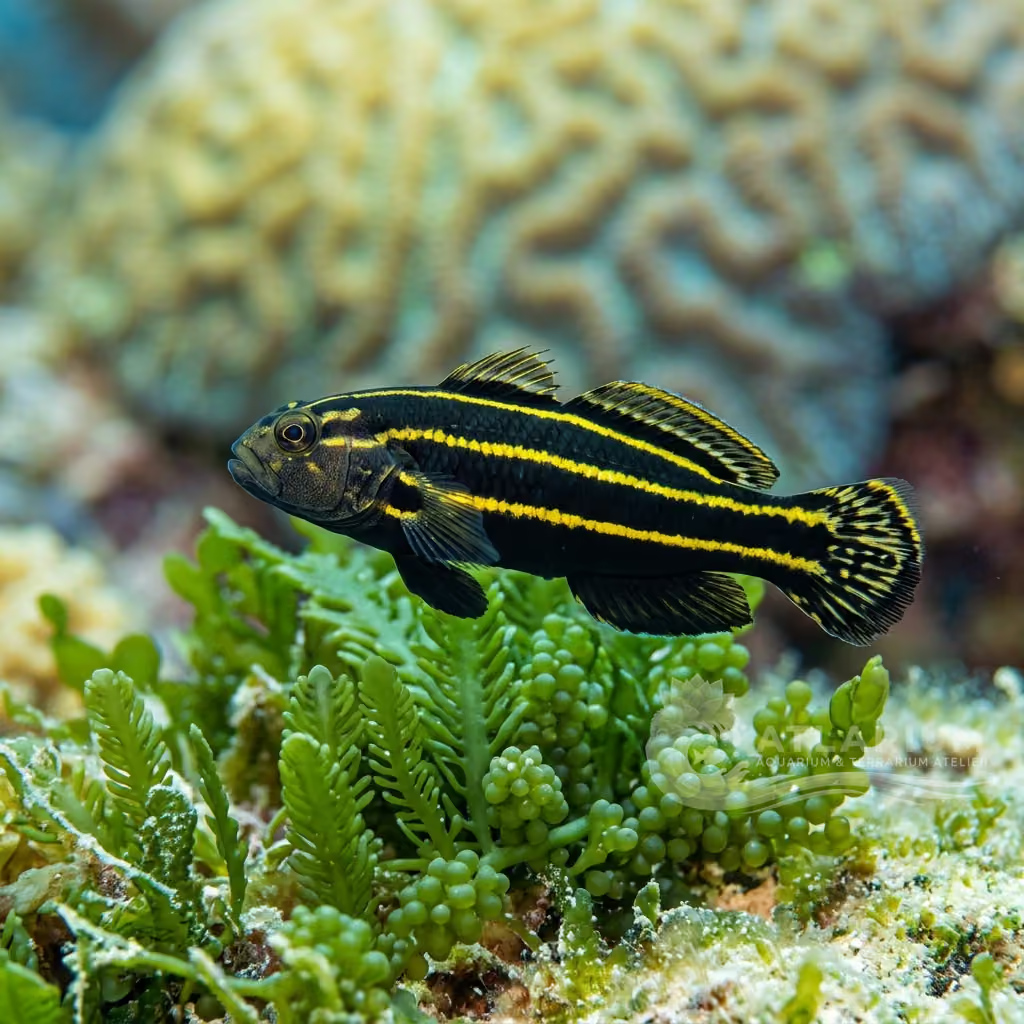
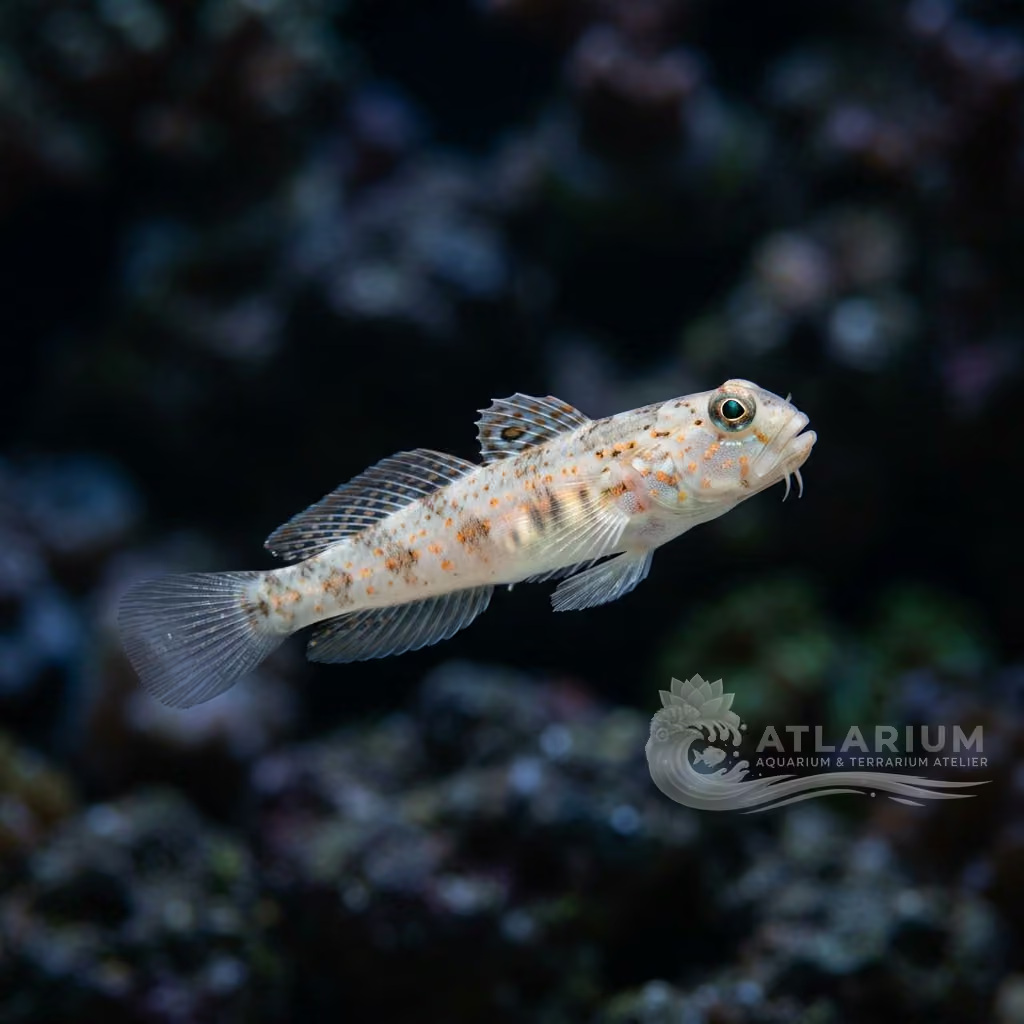
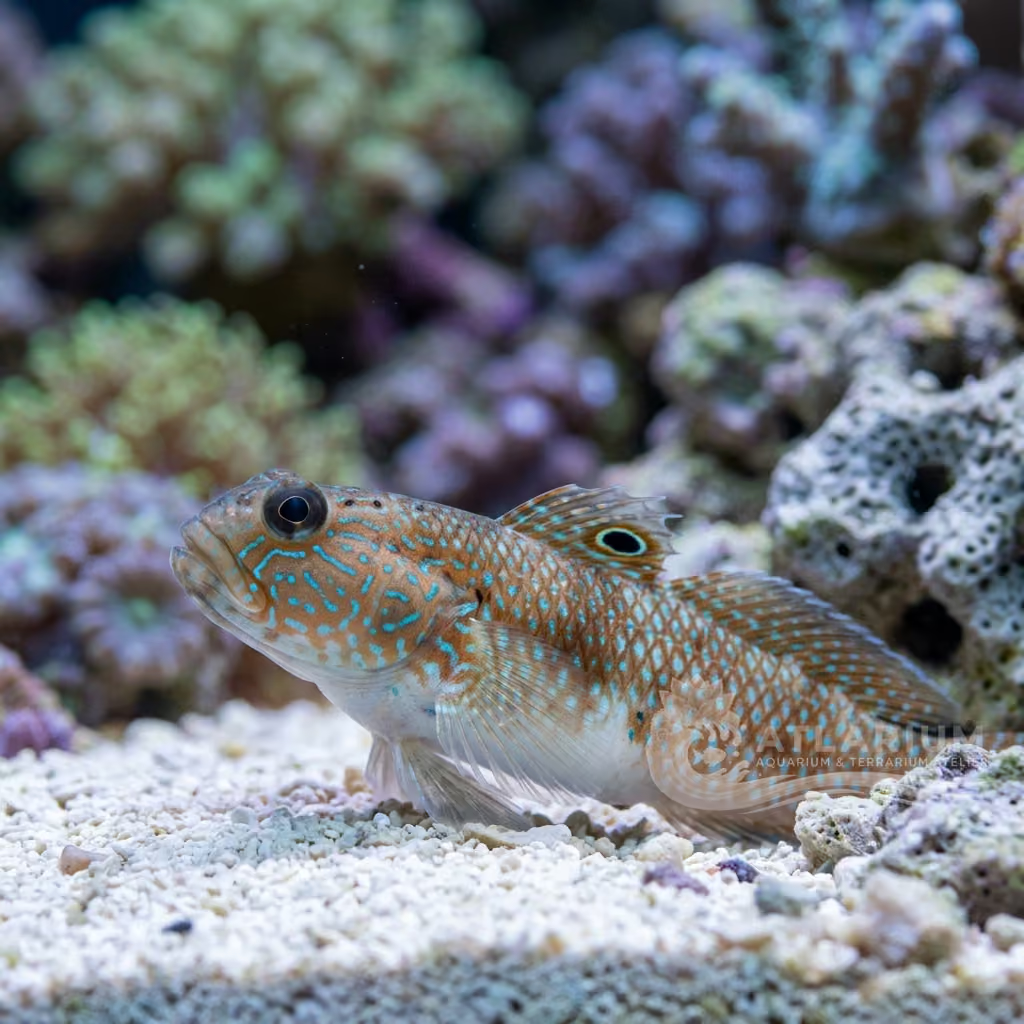
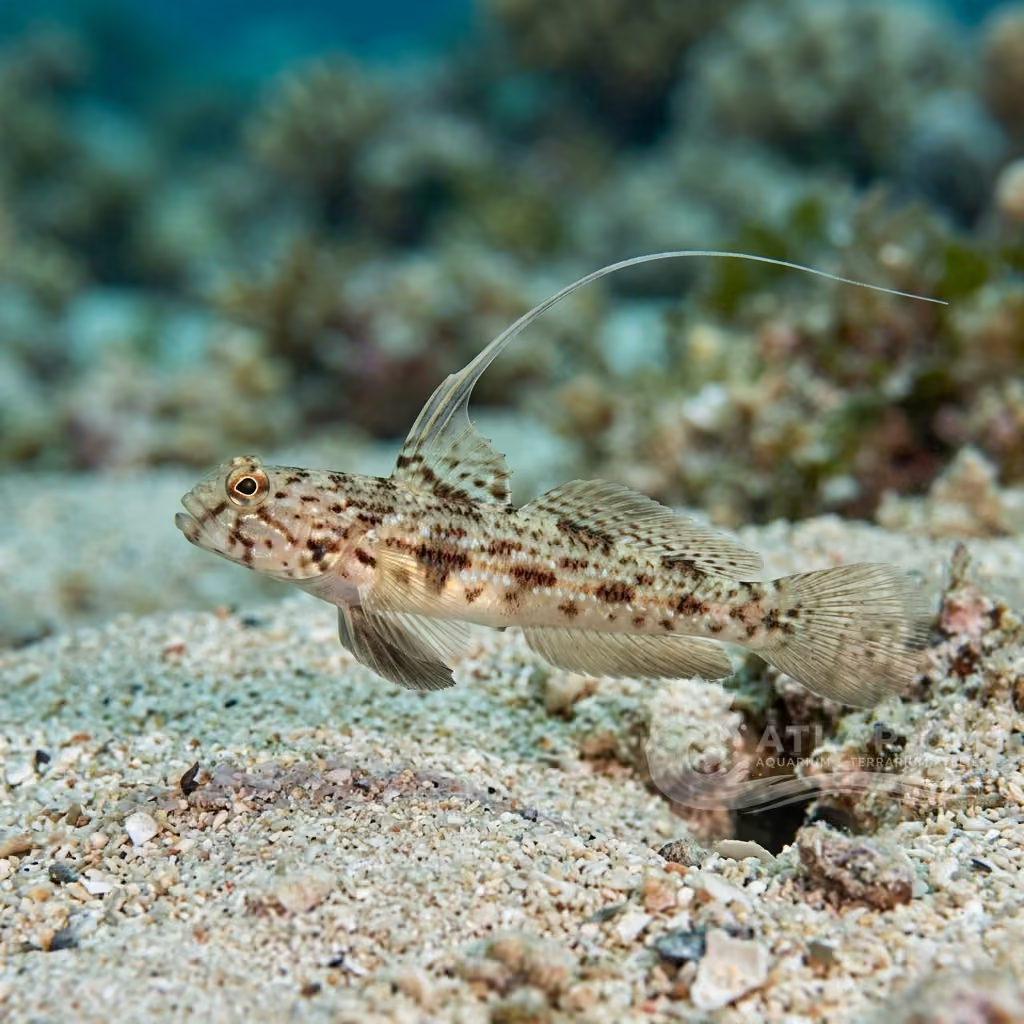
Sixspot Sleeper Goby
Valenciennea sexguttata
The Sixspot Sleeper Goby is an excellent sand-sifting marine fish, popular for keeping the substrate clean by continuously filtering sand through its gills.
Temperatura da água
22 - 28 °C
Valor de pH
8 - 8.5
Tipo de água
Marinho
Nível do tanque
Parte inferior
Tamanho adulto
14 cm
Volume mínimo do tanque
>= 120 L
Grupo mínimo
>= 1
KH
8 - 12 dKH

Descrição da espécie
Geographical Origin and Habitat: Widespread throughout the tropical Indo-Pacific, from the Red Sea and East Africa to Samoa, north to the Yaeyama Islands in southern Japan, and south to the Great Barrier Reef. It inhabits shallow, clear sandy areas of lagoons, coastal reefs, and bays at depths between 3 and 25 meters.
Taxonomy and Morphology: Belongs to the family Gobiidae, genus Valenciennea. It has an elongated, cylindrical body, eyes set high on the head for detecting predators, and pelvic fins that form a small cup-like structure. Reaches a maximum adult length of about 13-14 cm.
Social Behavior: Monogamous and peaceful. They usually live in pairs, excavating a burrow under a rock or coral rubble where they sleep and seek safety. They spend daylight hours mouthful-by-mouthful sifting sand through their gills to consume tiny organisms (sifting behavior).
Coloration and Sexual Dimorphism: Features a solid white to pale silvery-gray body. It is distinguished by six bright iridescent neon-blue spots on each side of the head and cheek areas, and a faint golden or pinkish line running horizontally along the flank. There is no visible external sexual dimorphism.

Cuidado, criação e companheiros de tanque
Aquarium Setup: Requires an established marine tank of at least 150-200 liters. A deep layer (5-8 cm) of fine, non-abrasive live sand is absolutely vital for their sifting behavior and survival. Ensure all rockwork is placed directly on the bottom glass before adding sand to prevent rock collapses from digging.
Diet and Feeding: Benthic carnivore. Feeds by sifting sand for micro-crustaceans and worms. Must be fed frequently with small frozen foods like mysis, enriched brine shrimp, copepods, and lobster eggs. Slowly acclimates to sinking pellets. They can easily starve in clean, sterile sand beds.
Water Quality: Demands stable marine reef conditions: temperature 24°C to 28°C, pH 8.1 to 8.4, and specific gravity 1.020 to 1.025. Proper filtration and protein skimming are necessary to handle suspended sand particles and maintain clear, well-oxygenated water.
Compatibility and Cohabitation: Peaceful towards other reef fish. Can show territorial aggression towards other sand-sifting gobies unless kept as a mated pair. 100% reef-safe, but they may accidentally drop sand onto corals placed on the substrate, potentially irritating them.
Aquarium Breeding: Monogamous spawners. The pair deposits adhesive eggs on the roof of their burrow. The male guards the entrance, sealing it with sand and rubble to protect the eggs until they hatch. Raising the planktonic larvae is extremely difficult in home aquaria.
Risks and Diseases: Starvation is the leading cause of mortality in captivity if kept in immature tanks or with inadequate feeding. They are notorious jumpers when startled, so a secure screen lid is mandatory. Susceptible to common marine skin parasites like Ich.

Origem e distribuição geográfica
Widespread throughout the tropical Indo-Pacific, from the Red Sea and East Africa to Samoa, north to the Yaeyama Islands in southern Japan, and south to the Great Barrier Reef. It inhabits shallow, clear sandy areas of lagoons, coastal reefs, and bays at depths between 3 and 25 meters.
Origem
Oceanos tropicais e recifesÁfrica e MadagascarLeste AsiáticoAustrália, Nova Guiné e Oceania

Perfil de peixe
- Temperamento
- Peaceful
- Overall, it has a timid and peaceful temperament toward completely different fish species. It tends to ignore other tank inhabitants, focusing entirely on its sand-sifting duties. It can be easily intimidated by aggressive or hyperactive tank mates, which may cause it to hide and refuse food. A calm environment allows its natural, industrious behavior to shine.
- Dieta
- Omnivore
- This species is a carnivorous sand-sifter that relies heavily on benthic microfauna. It constantly scoops mouthfuls of sand, sifting out small crustaceans, worms, and organic matter through its gills. While they will accept prepared frozen foods like mysis and brine shrimp, a mature sandbed teeming with copepods is essential for long-term survival. Supplementary feeding multiple times a day may be required if the tank lacks sufficient natural food.
- Expectativa de vida
- 3-5 years
- Tamanho adulto
- 14 cm
- Proporção sexual
- Flexible
- They are best kept individually or in confirmed male-female pairs. Two males will inevitably fight, often to the death, over territory in the same tank. Pairing them can be tricky since they are not strongly sexually dimorphic. Acquiring an established pair from a reputable source is the safest way to house two individuals together.
- Frequência de alimentação
- Twice daily
- Due to their active metabolism and constant foraging, these gobies need to feed frequently. They should be offered small amounts of food at least two to three times daily if the natural microfauna is limited. A well-established refugium can help supply a continuous source of pods. Without adequate feedings, they are prone to slowly starving in captivity.
- Carga biológica
- Medium
- This marine goby has a relatively low bioload compared to larger predatory fish. Its constant sand-sifting behavior actually helps process detritus and uneaten food in the substrate. Maintaining a healthy sandbed is crucial for biological filtration with this species. Therefore, a mature aquarium with a deep sand bed will easily handle the minimal waste it produces.
- Fluxo
- Strong
- These gobies appreciate moderate to gentle water flow that does not disturb the sandbed excessively. High, sweeping currents can blow away their carefully constructed burrows and strip the sand of organic matter. A steady but diffused flow helps oxygenate the water while keeping their benthic environment stable. Ensuring lower flow near the bottom of the tank is highly recommended.
- Risco de salto
- Yes
- Like most gobies, this species is notorious for its jumping abilities, especially when startled. They can easily launch themselves out of an open-top aquarium or through small gaps in the lid. A tight-fitting lid or fine mesh screen is absolutely mandatory to prevent tragedy. Extra caution should be taken during the first few weeks of acclimation when they are most skittish.
- Reprodução
- Oviparous
- Breeding in captivity is possible but rearing the fry is extremely challenging. They are demersal spawners, typically laying their adhesive eggs on the ceiling of a burrow or a protected cave. The male guards and aerates the clutch until they hatch into pelagic larvae. Because the larvae are microscopic and require specialized rotifer diets, few successfully raise them in home aquariums.
- Compatibilidade e companheiros de tanque
- Peaceful
- It is generally peaceful and reef-safe, ignoring corals and most other fish. However, it can be fiercely territorial toward other sand-sifting gobies or fish with a similar body shape. Keeping them in established male-female pairs is recommended to avoid conspecific aggression. They make excellent tank mates for quiet, non-aggressive species.
- Nível do tanque
- Bottom
- This fish is almost exclusively a bottom-dweller, spending its day hovering just above the substrate. It continuously interacts with the sandbed, digging and sifting to find food. It will construct a burrow under liverock, where it retreats when threatened and sleeps at night. Providing plenty of open sandy areas and secure rockwork is essential.

Modelos e parâmetros científicos
FishBase
Acesso aos dados científicos oficiais da espécie
FishBase v25.04Dados sincronizados em: 15/06/2026
- Nível trófico
- 3,2 ± 0,3 se
- Resiliência
- Alta (menos de 15 meses)
- Unicidade filogenética (PD50)
- 0.5
- Relação bayesiana comprimento-peso
- a = 0.01023, b = 3.01
- VulnerabilidadeVulnerabilidade baixa (10 / 100)

Espécies relacionadas
Recomendações agrupadas por parentes próximos, escolhas de acompanhantes e cuidados semelhantes.