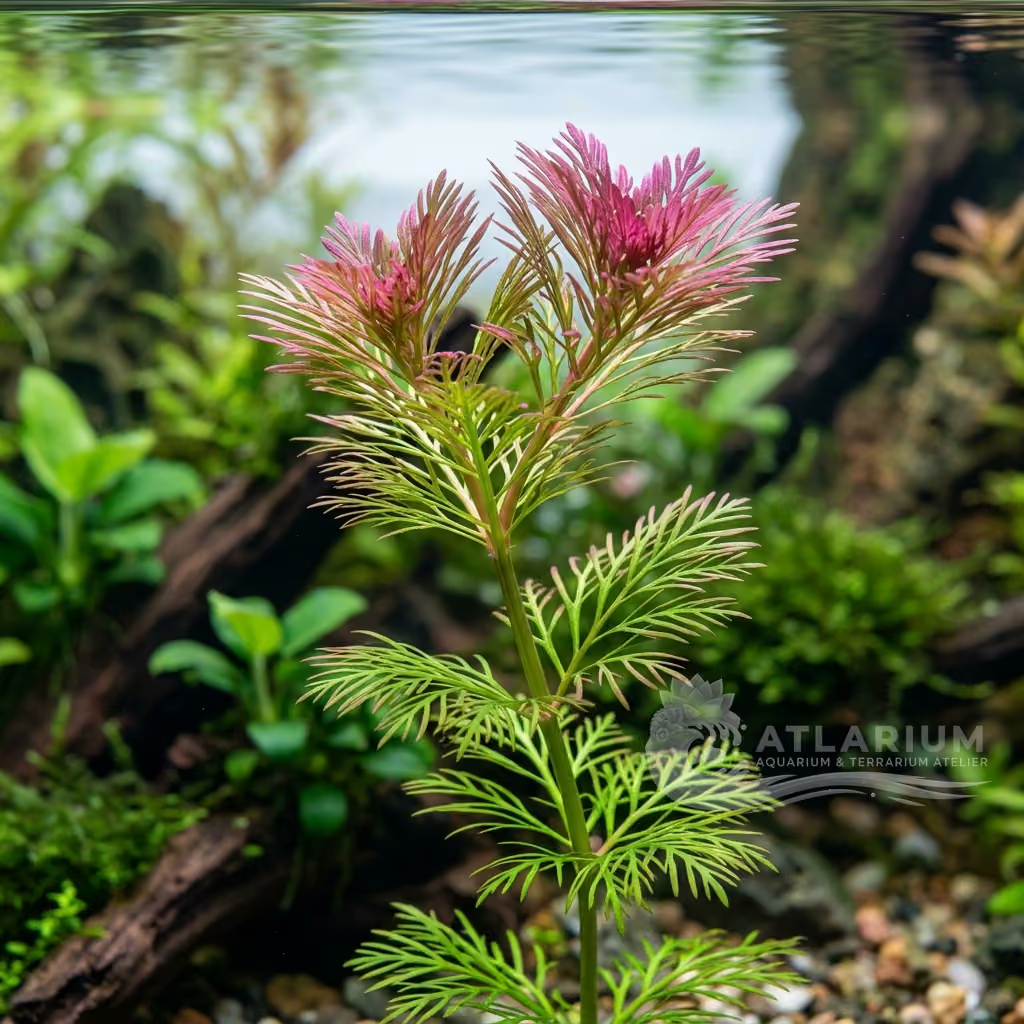
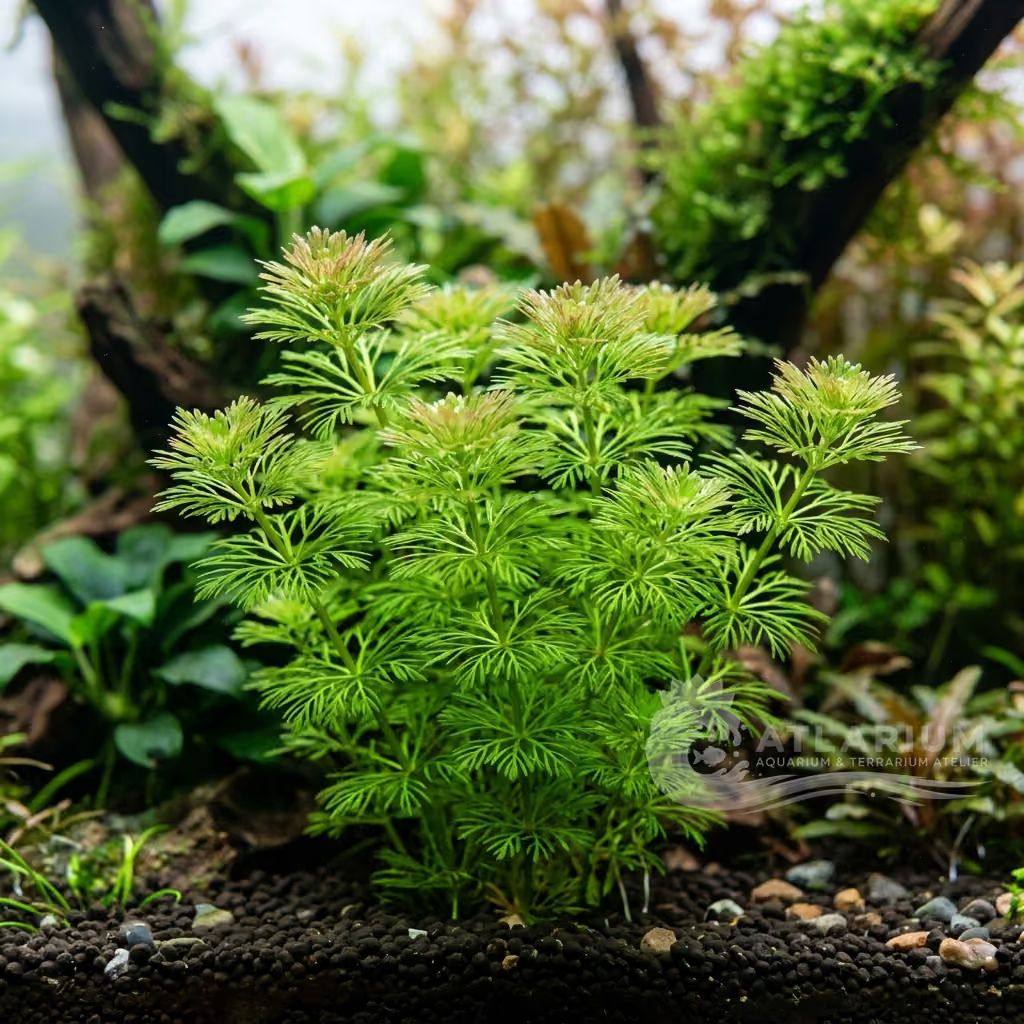
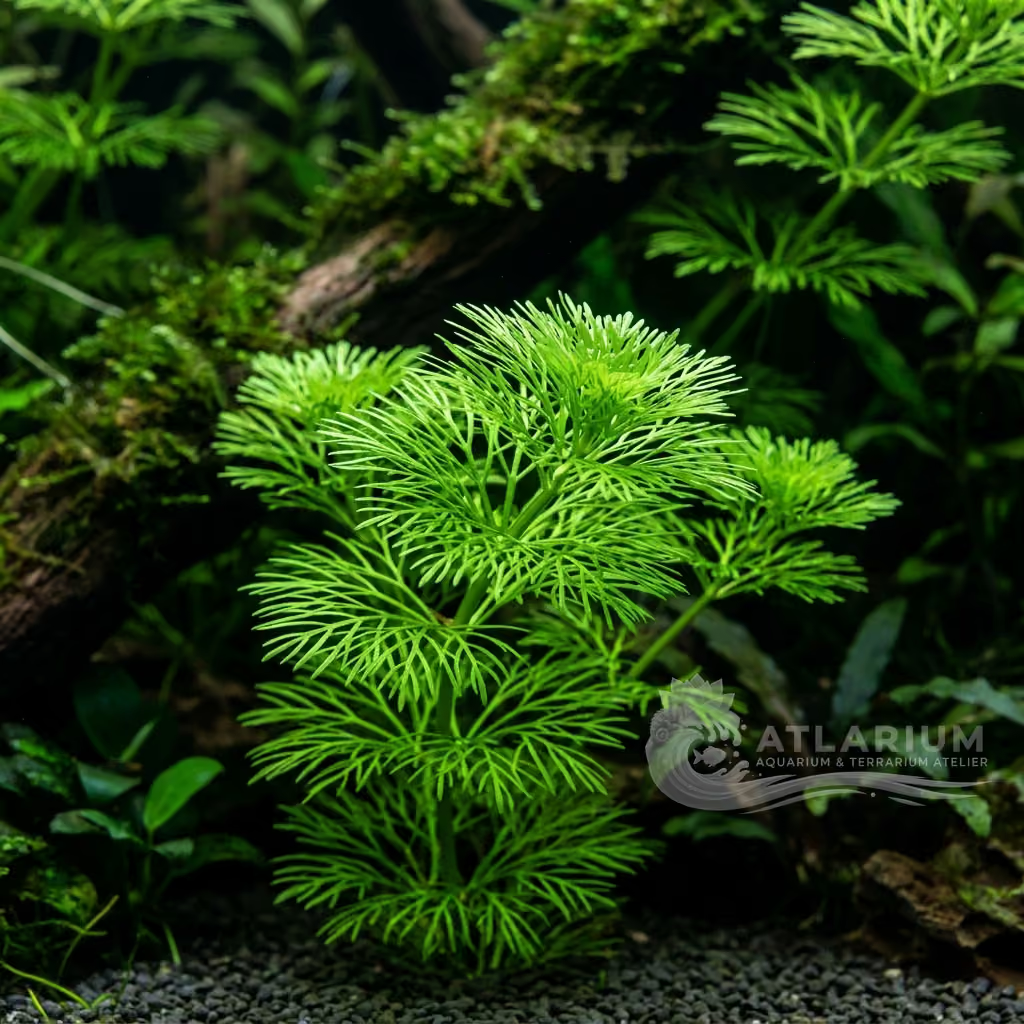
Hydrocotyle sp. "Japan"
Hydrocotyle sp. "Japan"
Popularized by Japanese aquascaping, this fast-growing clover-like plant demands intense light and CO2 to creep along the substrate and form a striking carpet.
Water Temperature
10 - 30 °C
pH Value
5.5 - 7.5
Water type
Freshwater
Light
Medium - High
CO2
Medium - High
Expected height
5 cm
Expected width
15 cm
GH
0 - 21 dGH
KH
0 - 14 dKH

Species description
Geographical Origin and Habitat: This plant, also known as Hydrocotyle tripartita, comes from Australia and the subtropical regions of Asia. In nature, it colonizes the damp banks of streams, river shores, and marshy areas subject to flooding. It made its entry into the aquascaping hobby through Japanese channels (hence the trade name 'Japan'), where it was appreciated for its extraordinary ability to creep and climb on wet surfaces.
Taxonomy & Genetics: Placed in the family Araliaceae, this form is considered a compact-growing and small-leaved variant of Hydrocotyle tripartita. Although a separate botanical species has not yet been described, the plant stably maintains its small leaf size and marked branching tendency in submerged culture. Its genetics allow for extraordinarily rapid growth rates under optimal stimuli.
Physical Structure: It features a very thin creeping stem (stolon) that propagates in all directions. From each node of the stem, tiny roots and petioles develop, bearing a single leaf. The leaf has a very characteristic tripartite shape, deeply divided into three distinct lobes (hence the scientific name tripartita). Under strong light, the stems tend to bend downward, intertwining to form a dense carpet.
Color & Texture: The color is an intense and bright emerald green, extremely fresh and lively. The leaf texture is soft and delicate, and the leaves appear translucent under aquarium lighting. The tiny size of the leaves (often less than 1 cm in diameter) makes it ideal for creating a sense of microscopic scale and naturalness in nano aquariums or complex layouts.

Care, breeding and tankmates
Lighting & CO2: Although it can survive in moderate light, it requires intense lighting and a constant supply of CO2 (15-25 mg/l) to remain compact and creep along the substrate. If the light is weak, the plant responds by stretching vertically and climbing on neighboring plants or decor in a messy way.
Nutrition & Substrate: It is a fast consumer of nutrients, particularly iron, potassium, and nitrogen. It benefits greatly from regular liquid fertilization in the
Water Chemistry: Tolerates a wide spectrum of chemical conditions. The ideal pH is between 5.5 and 7.5, with soft to moderately hard water. The tolerated temperature ranges from 10°C to 30°C, making it suitable even for cold-water tanks or outdoor summer cultivation in Wabi-Kusa bowls.
Space Management & Placement: Extremely versatile. It can be planted in the foreground to create a carpet, inserted in the midground to climb rocks and wood, or even wedged into hardscape crevices as a temporary epiphyte plant. Its rapid growth requires constant space monitoring.
Pruning: Pruning must be done regularly to prevent the carpet from becoming too thick and the lower part from rotting due to lack of light. It is pruned simply by shearing the bush with wavy aquascaping scissors. Cut parts root with extreme ease if replanted or left floating on the bottom.
Risks & Diseases: The main risk is that the plant becomes invasive, invading space intended for slower species. Also, due to its dense and intricate growth, it can accumulate organic debris between the stems, attracting filamentous algae if water flow and the presence of cleaning shrimp are not adequate.

Geographic origin and distribution
This plant, also known as Hydrocotyle tripartita, comes from Australia and the subtropical regions of Asia. In nature, it colonizes the damp banks of streams, river shores, and marshy areas subject to flooding. It made its entry into the aquascaping hobby through Japanese channels (hence the trade name 'Japan'), where it was appreciated for its extraordinary ability to creep and climb on wet surfaces.
Origin
Australia, New Guinea, and OceaniaSouth and Southeast AsiaEast Asia

Plant profile
- Placement
- Midground
- This plant is incredibly versatile, primarily used as a carpeting foreground or draped over rocks and driftwood in the midground. When planted in the substrate, it should be pushed down gently to encourage lateral spreading. It forms beautiful, cascading bushes.
- Botanical form
- runner
- It features distinct, deeply lobed, clover-like leaves that are slightly smaller than standard H. tripartita. The leaves are bright light green and grow densely along creeping runners. The compact nature of this variant makes it highly sought after.
- Growth
- Fast
- Under high light and CO2, its growth rate is extremely fast and aggressive. It can easily overrun slower-growing plants if left unchecked. Frequent maintenance is required to keep it within its designated boundaries.
- Substrate
- Low
- Hydrocotyle sp. "Japan" is an incredibly versatile creeper with low substrate demands, capable of attaching to rocks and wood just as easily as it roots into soil. When planted in the substrate, it favors fine gravel or standard aqua soil where its fine roots can effortlessly lock into the top few centimeters. The root nodes spread continuously along the surface, drawing moderate nutrients from the base while largely feeding from the water column. A shallow 2 cm layer of substrate is more than enough to secure this plant as it cascades or carpets the foreground.
- Column fertilization
- Recommended
- It absorbs a large amount of nutrients directly from the water column. Dosing nitrogen, potassium, and iron regularly ensures healthy runners and prevents yellowing or pinholes. It responds visibly to improved water column fertility.
- Root fertilization
- None
- While it feeds heavily from the water, it also roots vigorously into the substrate. A nutrient-rich aquasoil provides an excellent base for it to establish a thick, healthy carpet. Substrate fertilization promotes stronger root anchoring.
- Trimming
- Regular
- Trimming can be aggressive; it can be cut like a hedge or thinned out by pulling up overlapping runners. Regular thinning is crucial to prevent the bottom layers from dying off due to light deprivation. Replanting the cuttings easily creates new clusters.
- Propagation
- Cuttings
- Propagation is extremely easy by snipping any part of the runner that has a node and a leaf. These cuttings can be directly pressed into the substrate. It will also naturally propagate rapidly on its own via runners.
- Sensitivity
- Moderate
- It is very hardy but can grow leggy and upwards if lighting is insufficient. It prefers cooler to moderate temperatures; excessively warm water may slow its growth. Algae can become an issue if the dense mats trap too much detritus.
- Layout role
- Foreground, Midground, Epiphyte, Nano
- Its primary role is to provide a uniquely textured, bright green carpet or cascading accent. It is a staple in Nature Aquarium layouts, often used to soften the transition between hardscape and the foreground. Its clover-like appearance adds a whimsical touch.

Related species
Recommendations grouped by close relatives, companion choices, and similar care.