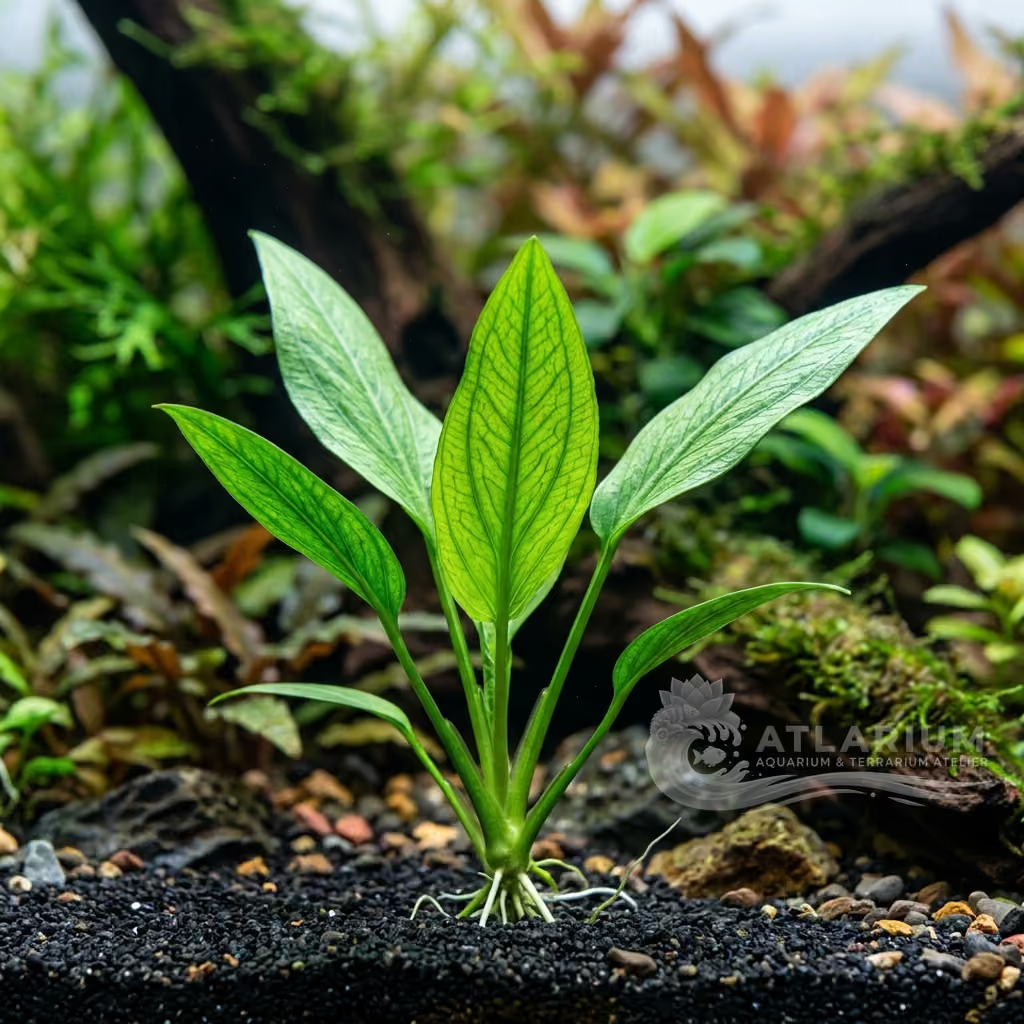
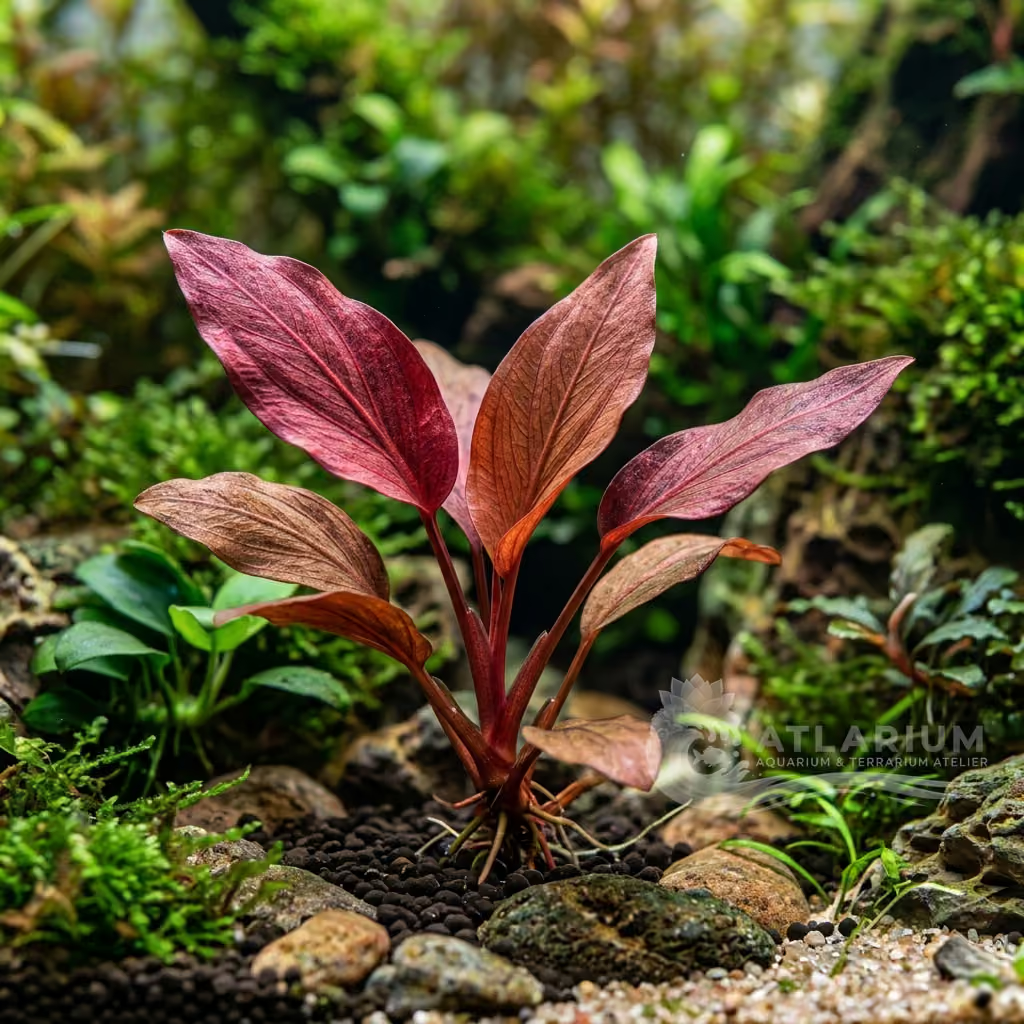
Hydrocotyle verticillata
Hydrocotyle verticillata
Distinctive whorled pennywort native to the Americas. Produces miniature umbrella-like leaves and forms a striking, unique foreground carpet under strong light.
Water Temperature
4 - 27 °C
pH Value
5 - 7.5
Water type
Freshwater
Light
Medium - High
CO2
Medium - High
Expected height
10 cm
Expected width
10 cm
GH
2 - 21 dGH
KH
0 - 15 dKH

Species description
Geographical Origin and Habitat: Native to the Americas, ranging from North America down to South America. It is commonly found in coastal wetlands, marshes, swampy shorelines, and shallow, slow-flowing waters.
Taxonomy & Genetics: Belonging to the family Araliaceae, it is commonly known as whorled pennywort. Genetically highly adaptable, it exhibits different leaf stem lengths depending on light intensity.
Physical Structure: Features a creeping horizontal runner (stolon) that roots at each node. The leaves are peltate, meaning the petiole attaches to the center of the circular leaf blade, resembling a small green umbrella.
Color & Texture: Bright green to deep emerald green with a smooth, glossy surface. The growth pattern creates a distinct geometric texture in the aquascape, contrasting nicely with fine-leaved plants.

Care, breeding and tankmates
Lighting & CO2: Requires medium to high lighting. Under weak light, the leaf stems will grow excessively tall and leggy. While CO2 is not mandatory, it significantly boosts growth rate and promotes a denser, shorter carpet.
Nutrition & Substrate: Prefers a nutrient-rich substrate. Using root fertilizer tabs near the runners is highly beneficial.
Water Chemistry: Extremely hardy. Tolerates water temperatures from 4°C to 27°C (39°F - 80°F), making it suitable for outdoor ponds. Prefers a pH of 5.0 to 7.5 and is adaptable to various water hardness levels.
Space Management & Placement: Best suited for the foreground or midground. As it spreads horizontally via runners, it must be monitored to prevent it from encroaching on other plants.
Pruning: Pruning is done by cutting the creeping runners that grow out of bounds. Tall leaf stems can be cut off at the base to encourage the growth of shorter, new leaves.
Risks & Diseases: Iron deficiency will cause the leaves to turn yellow (chlorosis). In low light conditions, the plant loses its carpet-like form and grows sparse.

Geographic origin and distribution
Native to the Americas, ranging from North America down to South America. It is commonly found in coastal wetlands, marshes, swampy shorelines, and shallow, slow-flowing waters.
Origin
North AmericaAmazon, Orinoco, and GuianasExtra-Amazon South AmericaCentral America and Caribbean

Plant profile
- Placement
- Foreground
- It is typically used as a foreground or midground plant, depending on the size of the aquarium. The stems grow straight up from a creeping runner, resembling little umbrellas. It looks best when planted in groups to form a peculiar, mushroom-like forest.
- Botanical form
- runner
- This plant is characterized by its perfectly round, peltate (shield-shaped) leaves attached to the stem at their center. The leaves look like miniature parasols or mushrooms standing in the water. The stems can grow quite tall depending on light intensity.
- Growth
- Fast
- Its growth rate is moderate, significantly slower than many other creeping plants. It takes time to establish and spread across the substrate. However, once established, it forms a steady and continuous network of runners.
- Substrate
- High
- The Whorled Pennywort (Hydrocotyle verticillata) demands a deep, highly nutritious substrate to properly support its vigorous creeping growth and iconic umbrella-shaped leaves. Its robust runner system buries itself directly into the substrate, requiring a fine to medium-grained aqua soil to easily push through and establish roots at each node. A substrate depth of at least 4-6 cm is necessary to accommodate the extensive underground stems and prevent the plant from detaching. Without adequate root-zone fertilization, the distinctive vertical leaf stems will remain stunted and pale.
- Column fertilization
- Recommended
- It benefits from regular water column fertilization to ensure the leaves remain healthy and free of holes. Potassium and trace elements are particularly important. However, it relies less heavily on the water column than floating or stem plants.
- Root fertilization
- Recommended
- Root fertilization is highly beneficial for this species. It develops a strong network of runners and roots that draw heavily from the substrate. A nutrient-rich aquasoil or root tabs will greatly enhance its growth and overall health.
- Trimming
- Regular
- Trimming is usually minimal. You can control its spread by cutting the runners and removing unwanted shoots. If the 'umbrellas' grow too tall, the individual stems can be snipped off at the base, though the cut stem will not regrow.
- Propagation
- Cuttings
- Propagation is straightforward by cutting the creeping runner. Ensure the cut section has at least one healthy leaf and root node. Replant the section into the substrate, and it will continue to spread from that point.
- Sensitivity
- Moderate
- It requires moderate to high light to stay relatively short; in low light, the stems will stretch significantly towards the surface. It can be sensitive to very soft or highly acidic water. It prefers stable conditions and clean water.
- Layout role
- Midground, Foreground, group
- Its unique, umbrella-like appearance makes it an excellent accent plant. It provides a striking structural contrast to grass-like or fine-leaved foreground plants. It is often used sparingly to create focal points or interesting textures in the midground.

Related species
Recommendations grouped by close relatives, companion choices, and similar care.