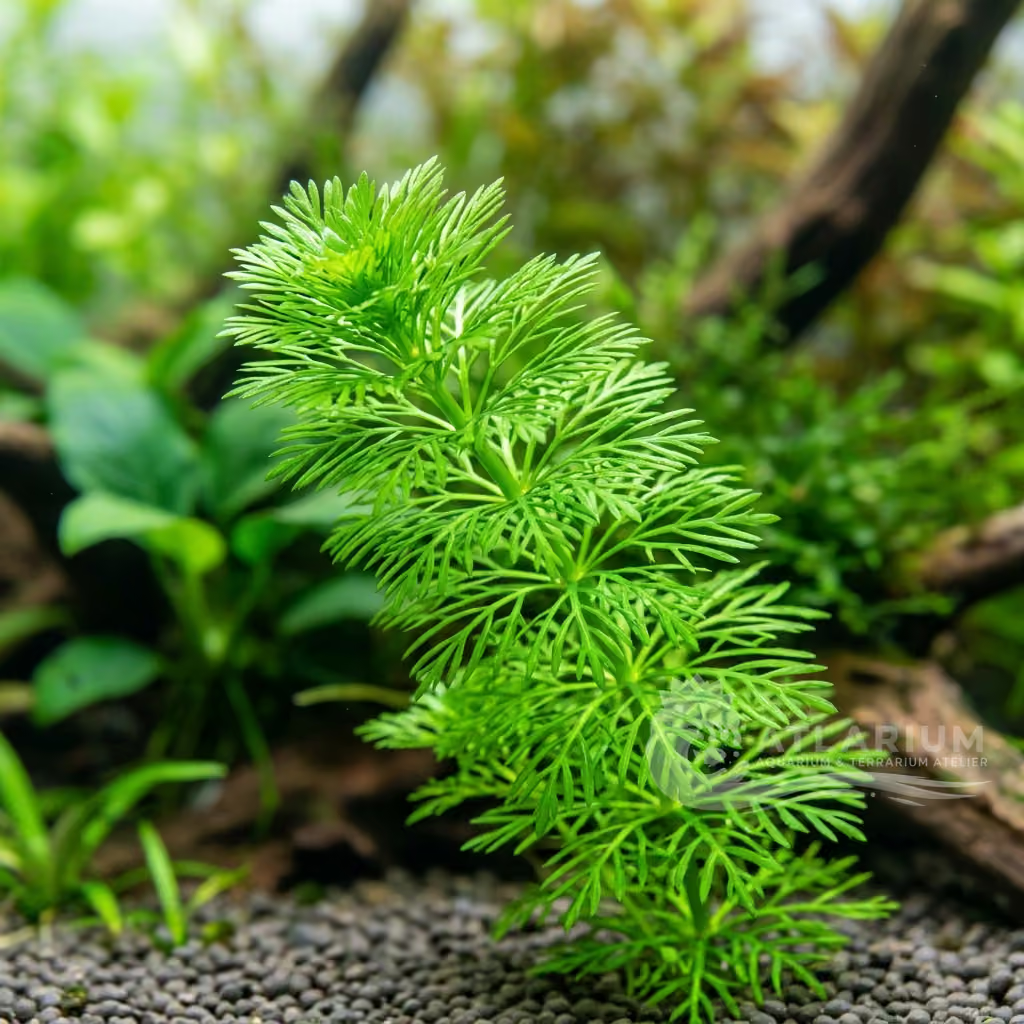
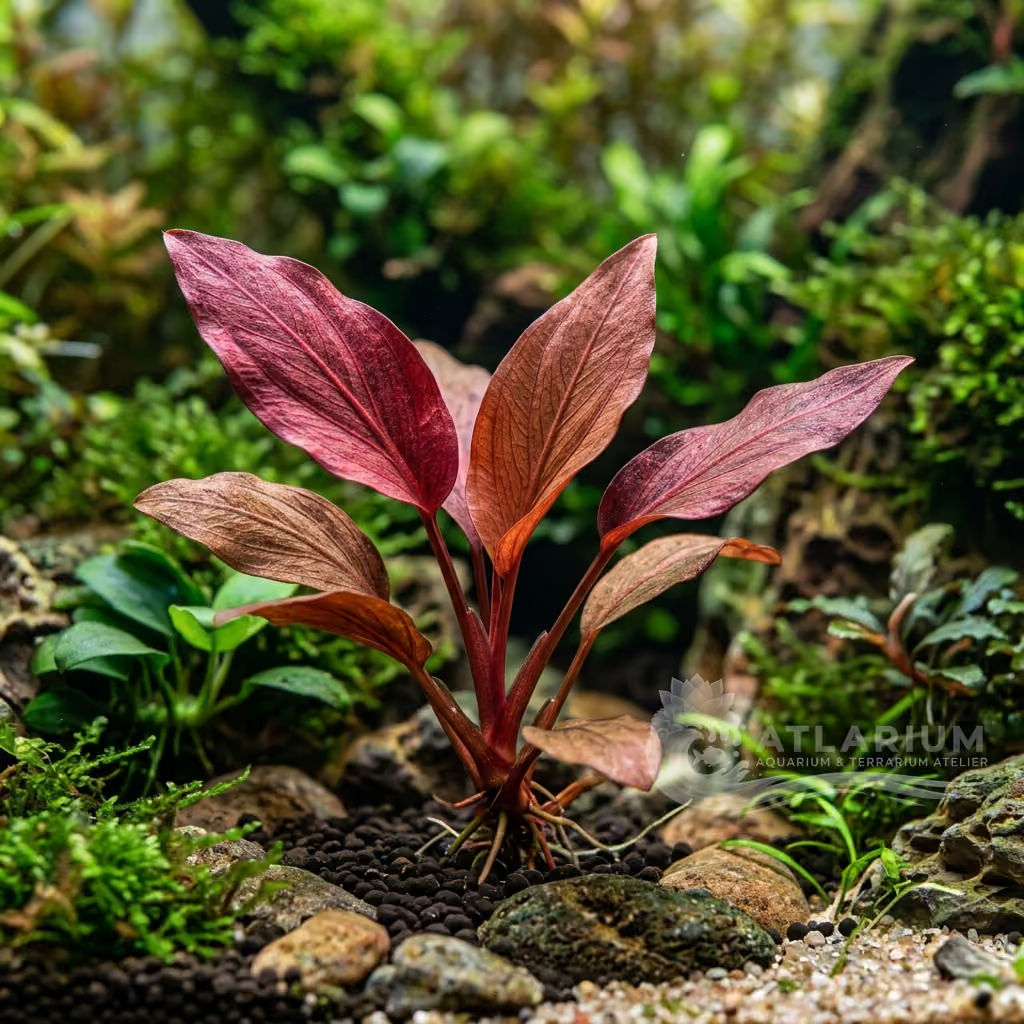
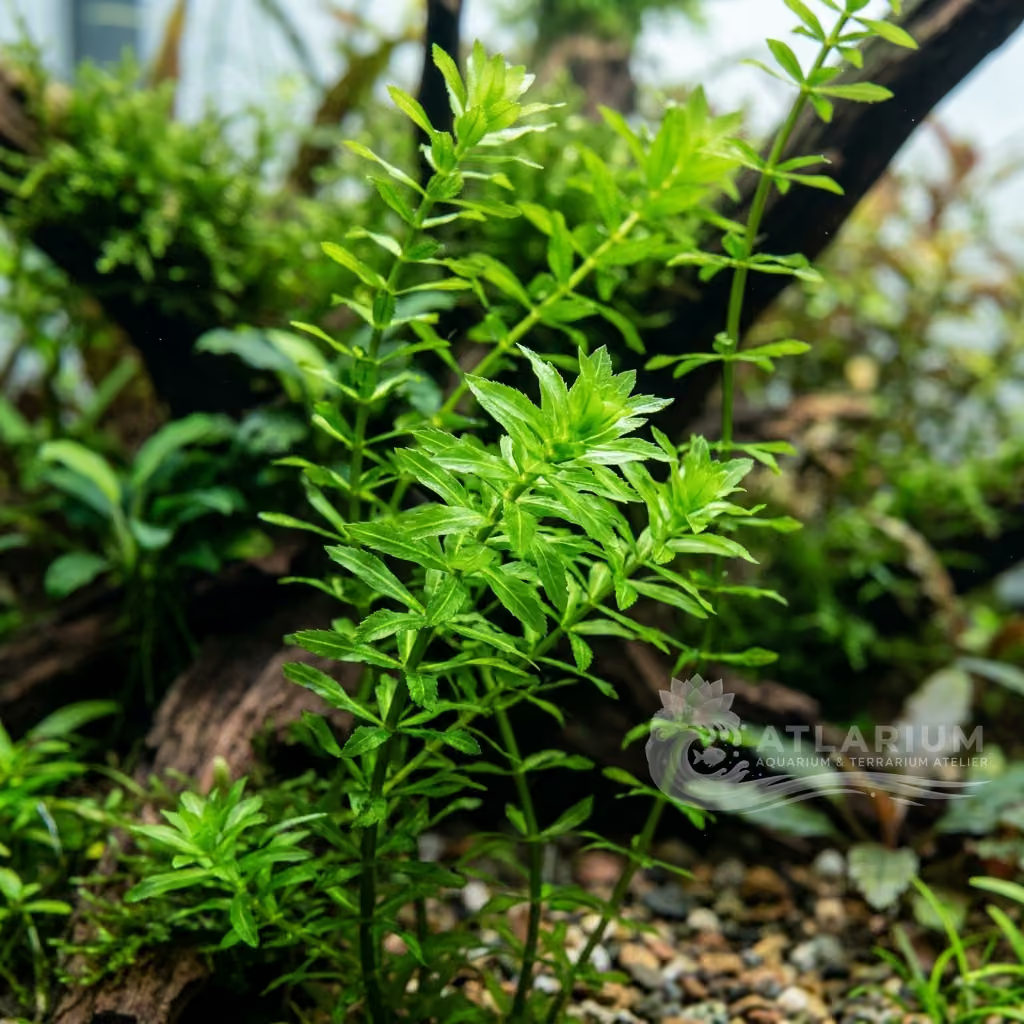
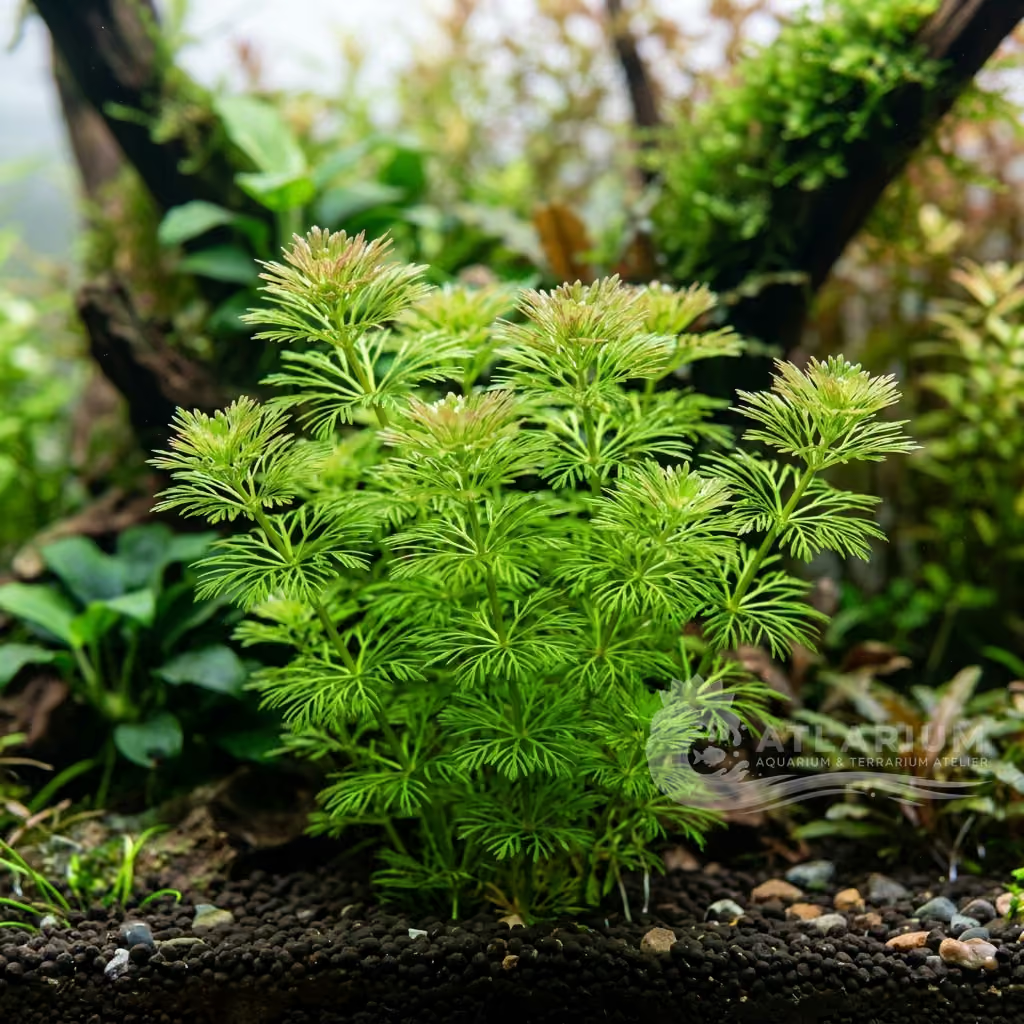
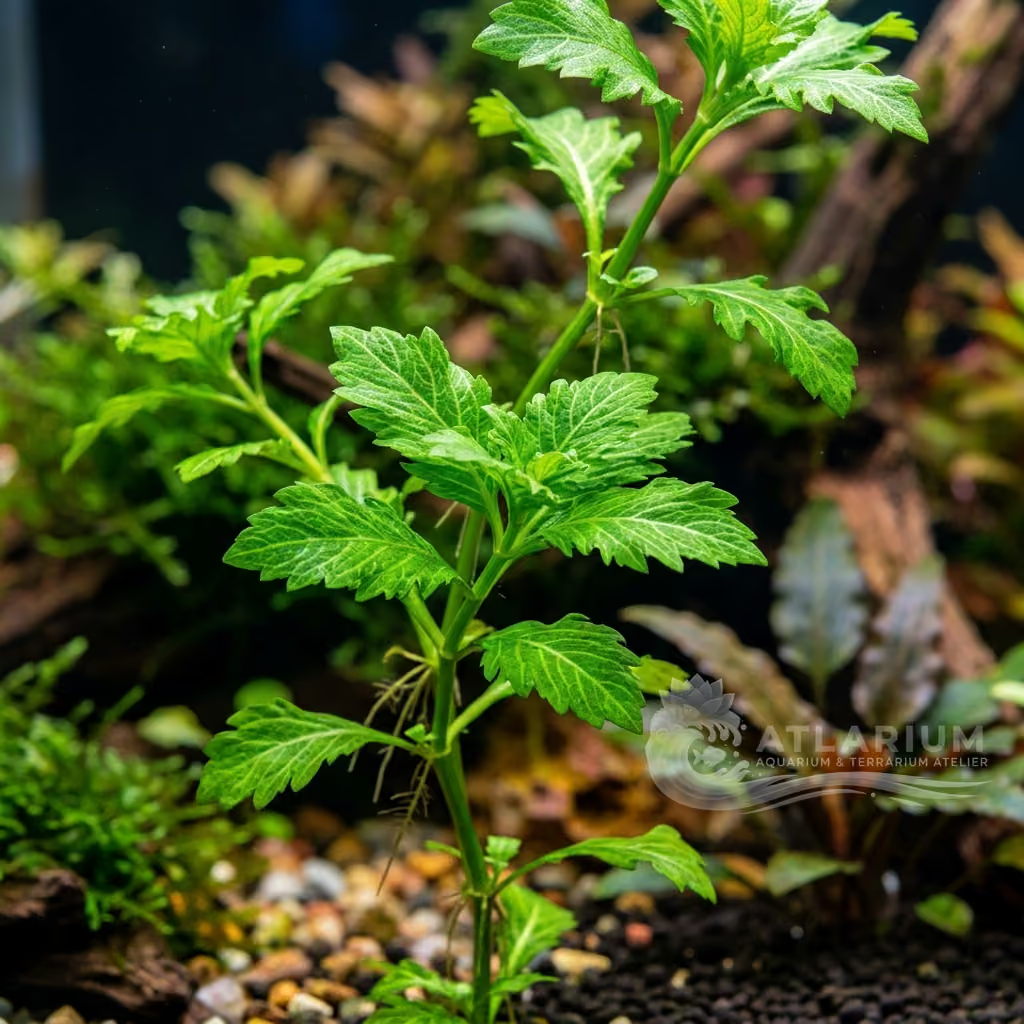
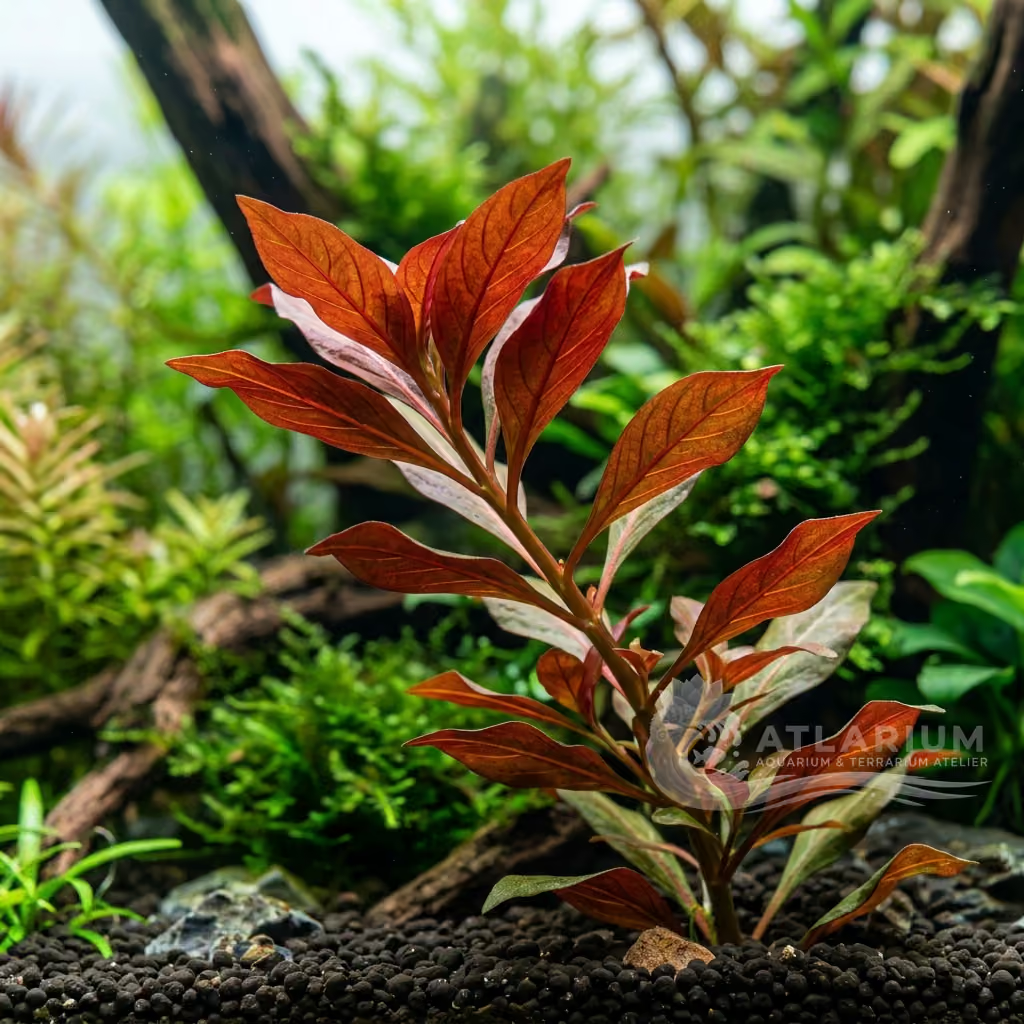
Hygroryza aristata
Hygroryza aristata
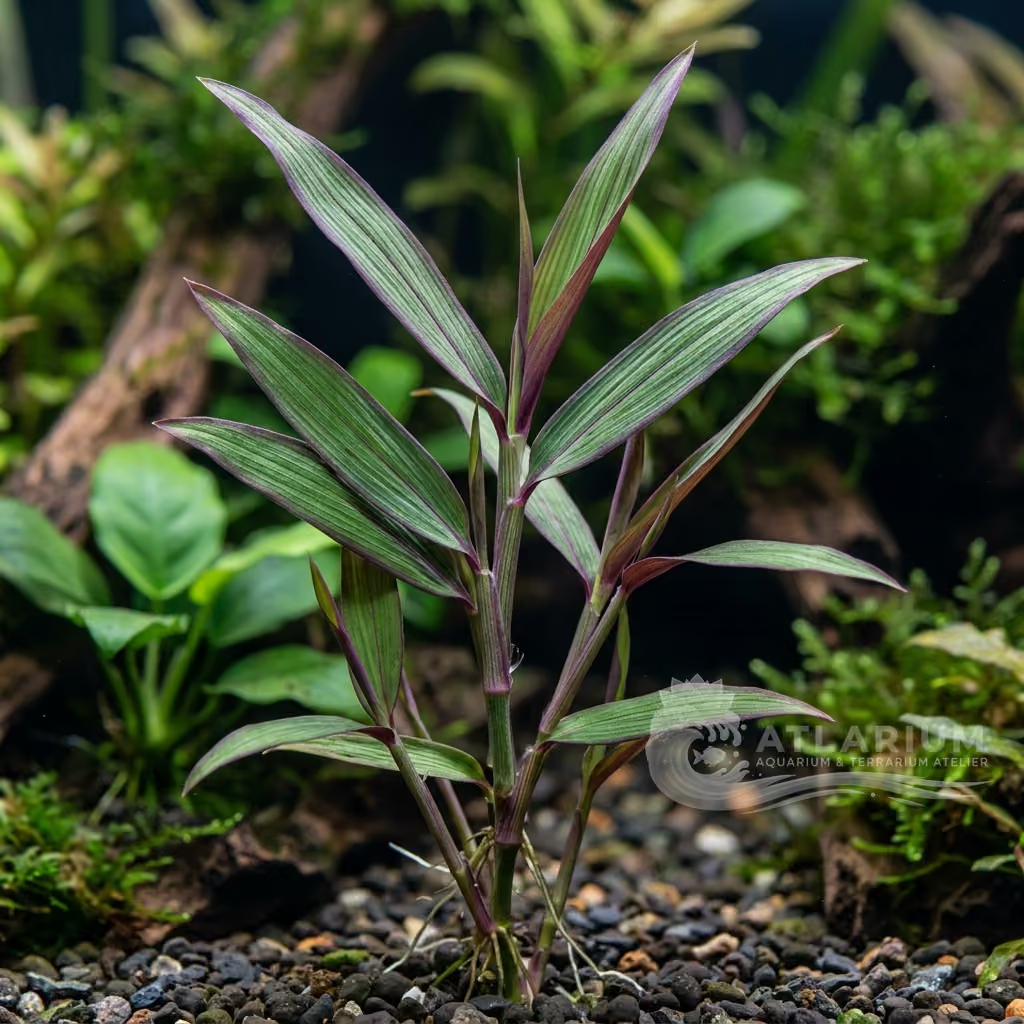
An attractive Asian floating grass with inflated leaf stalks and trailing, feathery roots. It provides excellent cover for fry and shades the tank, thriving without CO2 but needing high light.
Water Temperature
18 - 32 °C
pH Value
5 - 8
Water type
Freshwater
Light
Medium - High
CO2
Low - High
GH
4 - 20 dGH
KH
0 - 14 dKH

Species description
Geographical Origin and Habitat: This unique aquatic grass is native to the tropical and subtropical regions of Asia, including India, Bangladesh, Sri Lanka, and Southeast Asia. In nature, it populates the surface of calm and warm water bodies such as ponds, rice paddies, marshes, and shallow lakes. It often forms dense floating carpets that extend along the shores, providing shelter and breeding sites for fish and small amphibians.
Taxonomy & Genetics: Belongs to the Poaceae family (Grasses) and is the only known species placed in the genus Hygroryza. This plant has developed unique evolutionary adaptations for floating life not found in almost any other freshwater grass. Genetically, it possesses great hardiness and a metabolism optimized to absorb nutrients directly from the water under strong sunlight.
Physical Structure: It features creeping stems that float on the water surface, from which alternate lanceolate leaves branch off. The most evident structural characteristic is the swollen and hollow leaf sheaths (petioles), filled with aeriferous tissue (aerenchyma) that acts as a natural float. From the underside of the stem, a dense and branched root system of a brownish-red or purplish
Color & Texture: The leaves are a bright green color, with a wrinkled or satin-like upper surface and margins sometimes equipped with tiny stiff hairs. The swollen sheaths have a spongy texture and show light green or pinkish hues. The hanging roots are dark, almost black in conditions of strong light, creating a dense underwater forest that is highly decorative and appreciated in the aquarium.

Care, breeding and tankmates
Lighting & CO2: Requires intense lighting to grow vigorously and maintain a bright green color. Because its leaves are exposed to the open air, it draws carbon dioxide directly from the atmosphere, making CO2 injection in the
Water Chemistry: unnecessary. However, it needs good air circulation between the water surface and the aquarium cover to prevent stagnation of hot humidity that could cause the leaves to rot.
Nutrition & Substrate: It does not require any substrate for planting, as it floats freely. It absorbs massive amounts of nutrients, particularly nitrates and phosphates, directly from the water through its dense root system. Regular liquid fertilization of the water column with macro and microelements is essential to prevent the leaves from yellowing and the roots from deteriorating.
Water Chemistry: Tolerates soft to moderately hard water, with a pH range between 5.0 and 8.0. The ideal water temperature is between 18°C and 32°C. Being a tropical plant, it does not tolerate prolonged cold temperatures and dies quickly if exposed to frost, making it suitable for outdoor ponds only during the warm summer months.
Space Management & Placement: It is a floating plant that moves freely on the surface pushed by the filter flow. It is important to control its expansion to prevent it from completely covering the surface of the aquarium, shading the plants below too much. It can be confined to specific areas using nylon lines or floating rings.
Pruning: Pruning is done simply by cutting the stems with sharp scissors or manually removing excess portions. The plant propagates easily by stem fragmentation: any portion containing at least two nodes with floating leaves will give rise to a new plant in a short time.
Risks & Diseases: The main risk is represented by the presence of aquarium covers that are too sealed, which create condensation and dripping on the leaves, leading them to rot. In addition, the hanging roots can be damaged or grazed by large herbivorous fish, although moderate grazing by small fish is harmless.

Geographic origin and distribution
This unique aquatic grass is native to the tropical and subtropical regions of Asia, including India, Bangladesh, Sri Lanka, and Southeast Asia. In nature, it populates the surface of calm and warm water bodies such as ponds, rice paddies, marshes, and shallow lakes. It often forms dense floating carpets that extend along the shores, providing shelter and breeding sites for fish and small amphibians.
Origin
South and Southeast Asia

Plant profile
- Placement
- Midground
- This is a floating plant and should be placed directly on the water surface. It does not require any planting in the substrate. It is best used in open-top aquariums or setups with good ventilation to prevent condensation from rotting the leaves. Keep it away from strong surface agitation.
- Botanical form
- Stem
- It is the only grass species used as an aquatic floating plant. It features inflated, spongy leaf sheaths that keep it buoyant on the surface. The leaves are broad, somewhat rough, and a vibrant green color. Long, highly decorative roots dangle beneath it into the water column.
- Growth
- Medium
- Under strong light and high nutrient conditions, it exhibits an extremely fast growth rate. It will rapidly spread to cover the entire surface of the aquarium if left unchecked. Its speed makes it a fantastic tool for outcompeting algae. Frequent harvesting is required to prevent it from blocking light to lower plants.
- Substrate
- None
- As the only grass species used as a floating aquatic plant, Hygroryza aristata does not require any substrate for anchoring or growth. Its long, feathery roots dangle freely in the water column, acting as highly efficient filters that absorb excess nutrients directly from the water. These trailing roots also provide excellent cover and spawning grounds for fish and shrimp, thriving strictly as a surface-dwelling species.
- Column fertilization
- Recommended
- Liquid column fertilization is absolutely essential since it has no access to the substrate. Regular dosing of a comprehensive fertilizer ensures the floating leaves remain healthy and green. It will quickly deplete the water column of nitrates if not supplemented. Watch its growth as an indicator of nutrient levels.
- Root fertilization
- None
- Root fertilization in the substrate is completely irrelevant for this floating plant. Its long, dangling roots are designed entirely to extract nutrients from the water column. Therefore, root tabs or soil provide zero benefit to Hygroryza aristata. Focus entirely on water column dosing.
- Trimming
- Occasional
- Trimming involves simply removing excess plants from the surface. It is crucial to thin out the floating mat regularly so that light can penetrate to the plants below. You can also trim the long dangling roots if they become tangled in hardscape. Discard or compost the removed portions.
- Propagation
- Cuttings
- Propagation is entirely natural and very rapid. It sends out side shoots along the water surface that quickly develop into new, independent plants. You can easily separate these new shoots to start a new colony. A single healthy stem can multiply into dozens within a few weeks.
- Sensitivity
- Moderate
- It is highly sensitive to condensation dripping onto its leaves, which can cause them to rot rapidly. It prefers gentle to stagnant surface water; strong currents will damage it or push it underwater. It can also suffer from aphid infestations in open-top setups. Maintain good airflow above the water.
- Layout role
- Floating
- It provides excellent shade for plants that prefer lower light or for shy fish species. The long, dangling roots create a beautiful, jungle-like aesthetic under the surface. It helps create a sense of depth and wildness at the top level of the aquascape. It is also a superb natural spawning mop for fish.

Related species
Recommendations grouped by close relatives, companion choices, and similar care.