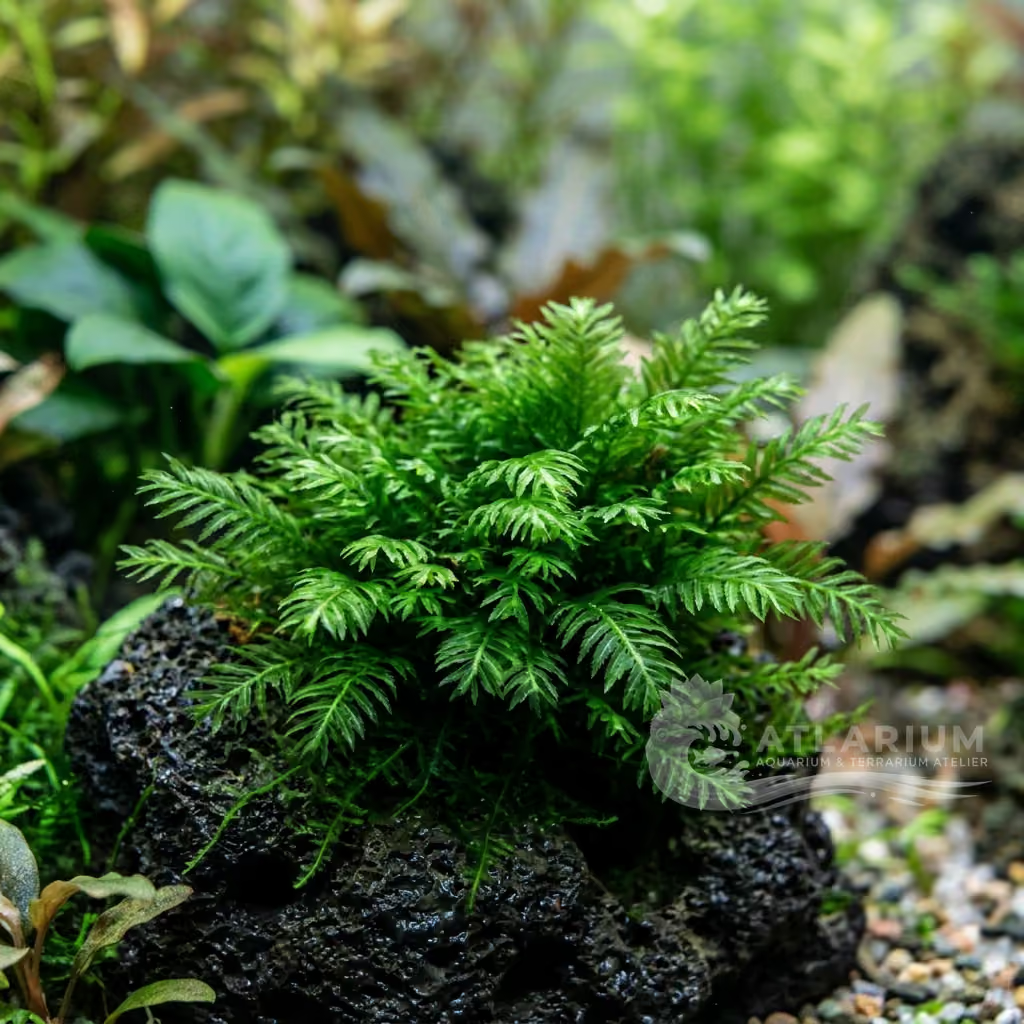
Eleocharis sp. "Belém"
Eleocharis sp. "Belém"
A beautiful carpeting grass native to the tidal marshes of Brazil. Known for its uniquely curved leaves, it strictly requires strong lighting and CO2 to form a mat.
Water Temperature
18 - 27 °C
pH Value
5.5 - 7
Water type
Freshwater
Light
Medium - High
CO2
Medium - High
Expected height
4 cm
Expected width
12 cm
GH
0 - 20 dGH
KH
0 - 14 dKH

Species description
Geographical Origin and Habitat: Named after the city of Belém in the state of Pará, Brazil, located near the mouth of the Amazon River. It grows in wet areas constantly saturated with water, marshes, and damp sandy areas subject to seasonal tides.
Taxonomy & Genetics: It belongs to the Cyperaceae family and the genus Eleocharis. It is a dwarf variant not yet formally described taxonomically, distinguished by the characteristic downward-curving growth of its leaves.
Physical Structure: It develops very short and thin leaves that, instead of growing straight, bend gently in an arc toward the substrate. This habit allows it to form a compact and very tidy lawn.
Color & Texture: It has a bright emerald green coloration. The texture is soft yet defined, giving a three-dimensional grassy appearance to the foreground of the aquarium.

Care, breeding and tankmates
Lighting & CO2: Requires strong lighting to induce the leaves to remain short and curved. CO2 injection is highly recommended to promote carpet density.
Nutrition & Substrate: Needs a rich, fertilized substrate (aquasoil). Potassium and iron supply is essential to maintain the bright green coloration.
Water Chemistry: Prefers soft water (KH 1-8) and acidic to neutral pH (5.5-7.2). It adapts to temperatures between 18 and 28 °C.
Space Management & Placement: Place in the foreground. Thanks to its arched growth, it stays lower than other Eleocharis, making it ideal for small tanks.
Pruning: Pruned by trimming the leaves with curved aquascaping scissors, stimulating lateral propagation via runners.
Risks & Diseases: Risk of suffocation by filamentous algae if circulation near the substrate is poor or nutrients are imbalanced.

Geographic origin and distribution
Named after the city of Belém in the state of Pará, Brazil, located near the mouth of the Amazon River. It grows in wet areas constantly saturated with water, marshes, and damp sandy areas subject to seasonal tides.
Origin
Amazon, Orinoco, and GuianasExtra-Amazon South America

Plant profile
- Placement
- Midground
- This plant is universally utilized in the foreground of the aquarium to create lush, grass-like carpets. It can also be planted strategically between rocks or hardscape to soften transitions. Due to its short stature, it should not be shaded by larger background plants. It works exceptionally well in nano tanks and large aquascapes alike.
- Botanical form
- runner
- Eleocharis sp. 'Belém' forms fine, hair-like blades that grow from a central basal rosette. It propagates via lateral runners beneath the substrate surface, creating interconnected networks. The blades are bright green, highly flexible, and wave gently in the water current. Its root system is delicate but dense, anchoring the plant firmly into fine-grained substrates.
- Growth
- Medium
- The growth rate is generally moderate to fast, provided optimal conditions with high light and CO2 are met. Once the plant acclimates to the aquarium environment, it sends out numerous runners. Under lower light, the growth can slow down significantly, and the blades might grow taller as they reach for light. Consistent conditions will ensure a steady and even spread.
- Substrate
- High
- Eleocharis sp. "Belém" is an exceptional, low-growing hairgrass variety that relies heavily on a high-nutrient substrate to achieve its signature downward-curving carpet. It thrives best in fine aquatic soils that do not compress its incredibly delicate root structures. A substrate depth of about 4 centimeters is ideal to encourage the uninterrupted sideways spread of its runners. An active soil that steadily releases nutrients directly to the roots is paramount for sustaining its lush and compact growth habit over time.
- Column fertilization
- Recommended
- While heavily reliant on substrate nutrients, column fertilization still plays a crucial role in its development. Dosing liquid fertilizers containing potassium and micronutrients ensures the blades remain bright green. If the water column lacks iron, new growth may appear pale or yellowish. A comprehensive liquid fertilization routine is necessary for the best visual results.
- Root fertilization
- None
- Root feeding is the primary method Eleocharis sp. 'Belém' uses to gather nutrients, making a specialized soil or root tabs highly beneficial. The fine roots easily penetrate active aquasoils, which supply long-term nutrients. If grown in inert sand or gravel, root capsules must be added to prevent nutrient deficiencies. A rich substrate promotes much faster runner development.
- Trimming
- Occasional
- Trimming is essential to maintain a neat, compact carpet and prevent the lower layers from dying off due to lack of light. Use curved spring scissors to trim the blades down to about 1-2 cm above the substrate. The plant responds very well to aggressive trimming and will grow back thicker. Be sure to net out the floating clippings, as they can quickly mess up the filter.
- Propagation
- Runners
- Propagation occurs naturally through runners that branch out from the parent plant. To speed up the carpeting process, you can carefully uproot a small patch, separate it into smaller plugs, and replant them a few centimeters apart. Over time, these plugs will grow together. Healthy plants will constantly push new runners as long as space and nutrients are available.
- Sensitivity
- Moderate
- This plant is relatively hardy but can be sensitive to aggressive chemical treatments, particularly algaecides containing copper. It also struggles if detritus accumulates heavily within its dense blades, leading to suffocation and algae. Good water circulation is necessary to keep the carpet clean. It is generally resistant to most common water parameter fluctuations if kept within standard planted tank ranges.
- Layout role
- Foreground, Nano
- Its primary role is as a foreground carpeting plant, providing a scale-enhancing, meadow-like appearance. It contrasts beautifully with larger-leaved midground plants or dark hardscape materials like dragon stone. By planting it on sloped substrates, aquascapers can create an illusion of depth. It is a staple choice for Iwagumi style layouts.

Related species
Recommendations grouped by close relatives, companion choices, and similar care.