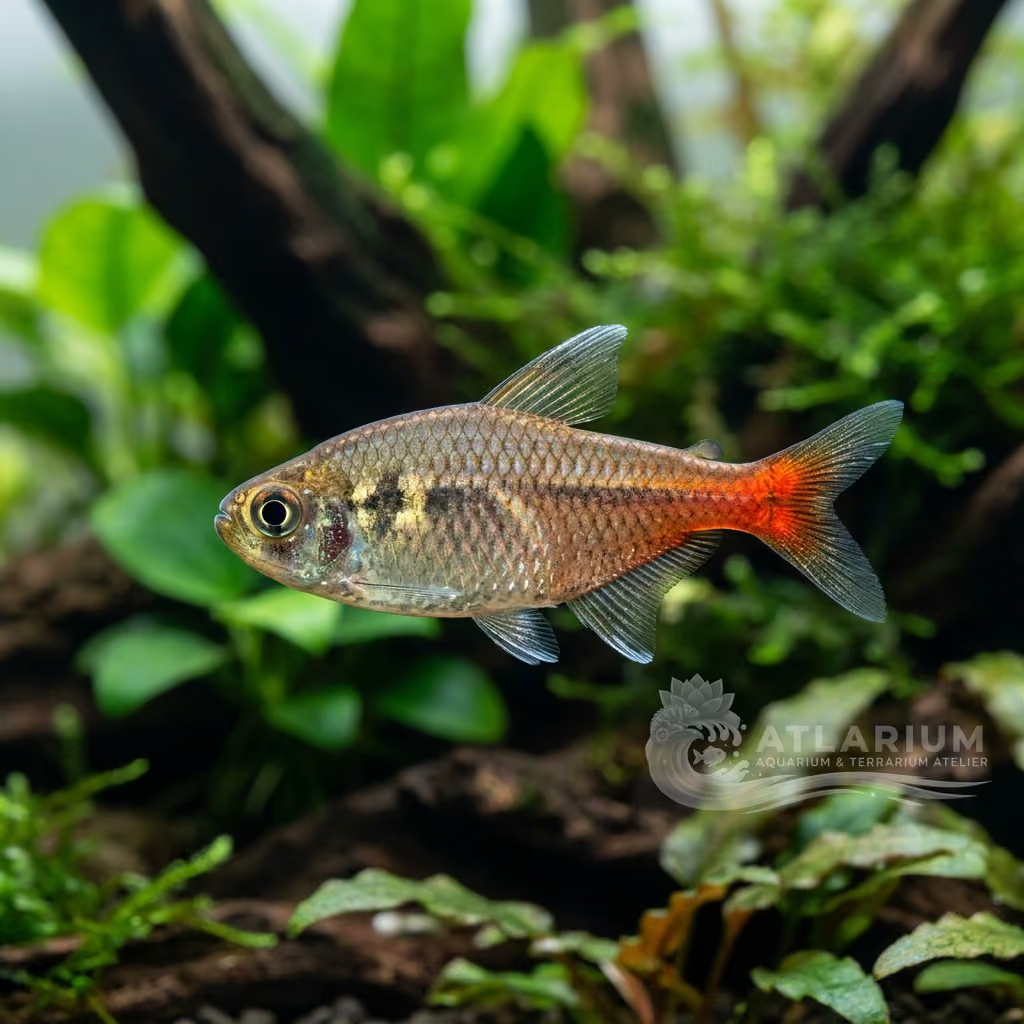
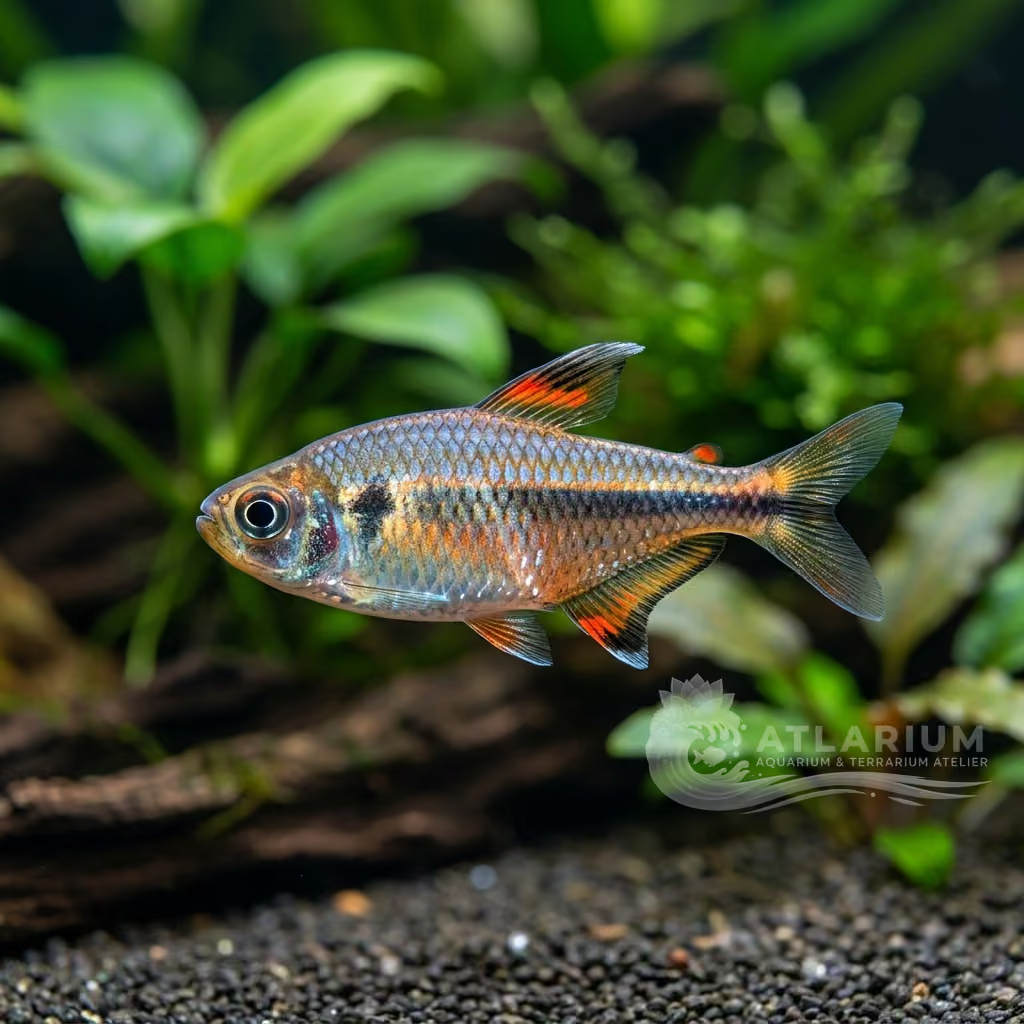
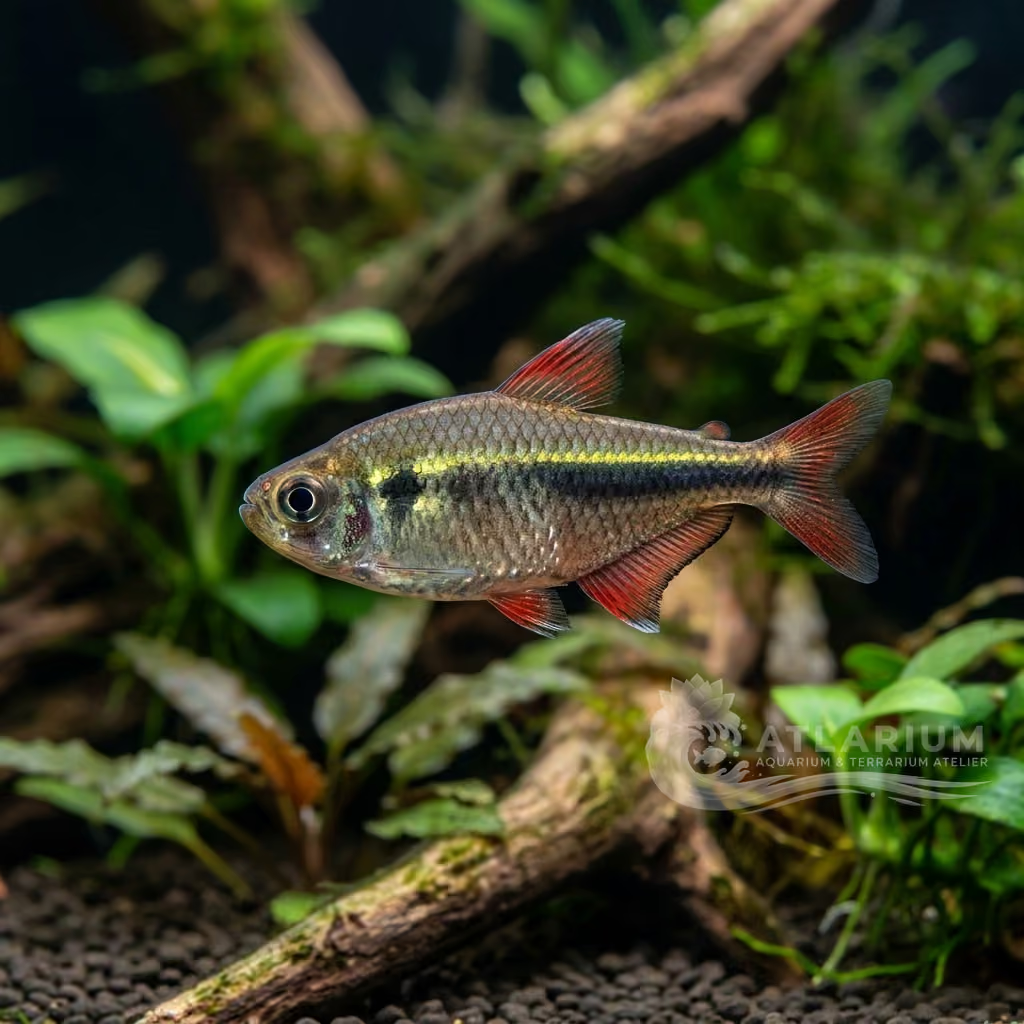
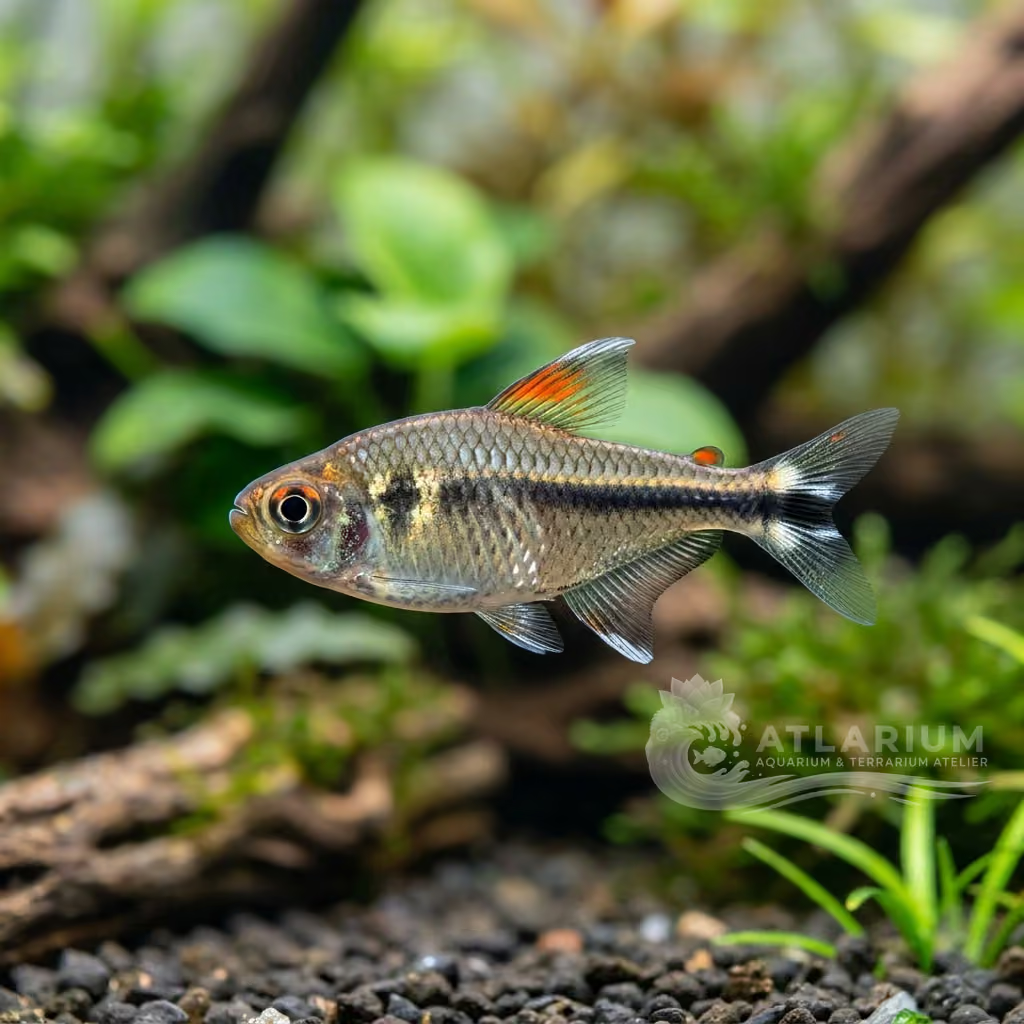
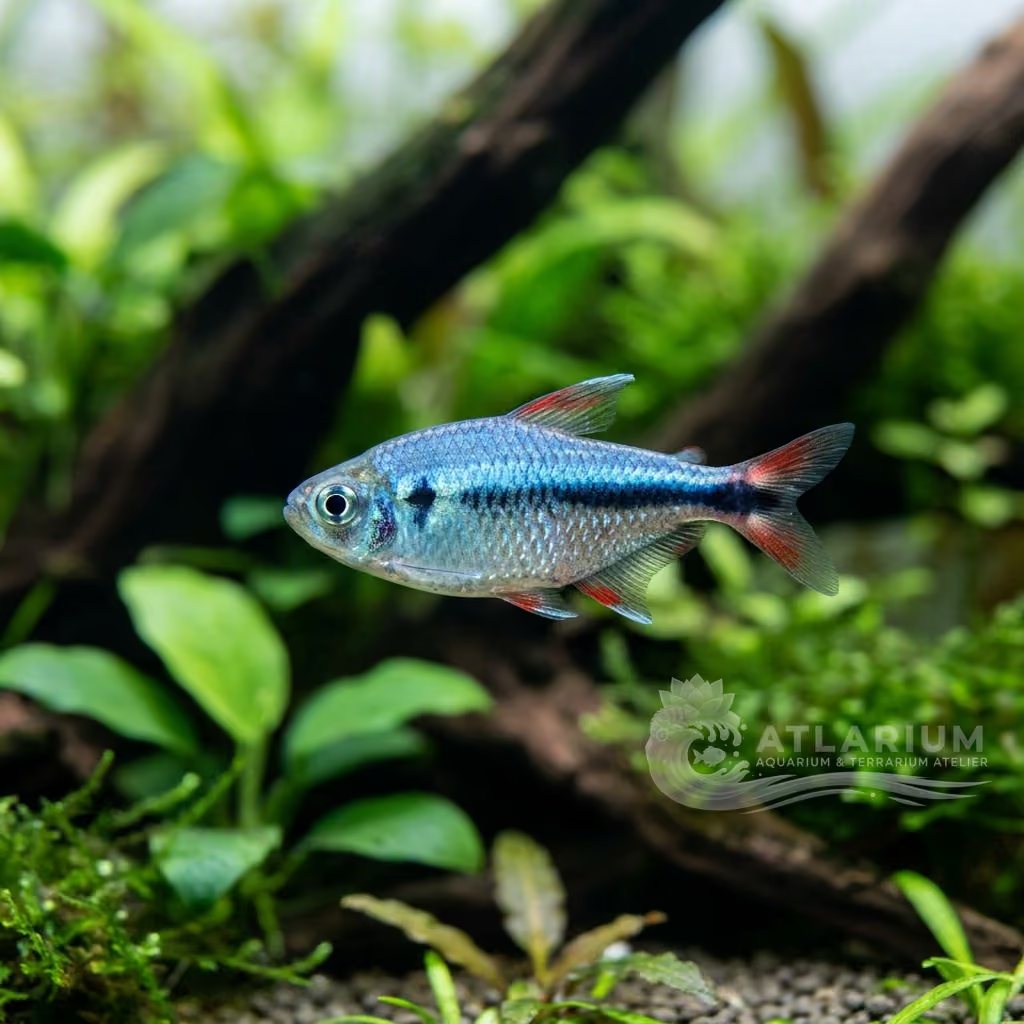
Sabrefin killifish
Terranatos dolichopterus
An annual killifish from Venezuela with elongated sabre-like dorsal and anal fins in males — a dramatic display for a fish of barely 3 cm. Native to temporary pools of the Orinoco basin. Advanced annual species: eggs must undergo diapause in peat for months before rehydration. Shy and territorial. Requires live food — almost always refuses dry. Species-only tank with peat substrate for spawning. Lid mandatory: jumper. For experienced killifish breeders.
Water Temperature
21 - 26 °C
pH Value
6 - 6.5
Water type
Freshwater
Tank level
Bottom and middle
Adult size
4 cm
Minimum tank volume
>= 30 L
Minimum group
>= 2
GH
0 - 7 dGH
KH
1 - 3 dKH
TDS
10 - 135 ppm
Conductivity
16 - 211 uS/cm

Species description
Geographical Origin and Habitat: Endemic exclusively to the vast Orinoco River basin, specifically restricted to the intensely hot, isolated savannas (Llanos) of Venezuela. Terranatos dolichopterus (the Sabretooth Killifish) represents the absolute extreme of evolutionary adaptation. It naturally colonizes shallow, temporary, sun-baked mud pools, deeply flooded grassy plains, and isolated ditches that form strictly during the rainy season. These micro-habitats are devoid of water movement, intensely warm, heavily sunlit, and fundamentally ephemeral—completely drying out to baked mud during the dry season.
Taxonomy and Morphology: Scientifically classified within the Rivulidae family, it is the sole, monotypic species in the Terranatos genus. Taxonomically, "Terranatos" translates dramatically from Latin as "born from the earth," perfectly describing the sudden emergence of fry from parched dirt when the rains arrive. "Dolichopterus" means "long-finned." Morphologically, males represent a breathtaking spectacle: possessing a sleek, cylindrical body dominated by outrageously elongated, flowing, sabre-like dorsal and anal fins that can extend past the tail itself.
Social Behavior: They are strictly annual, highly active, and fiercely territorial micro-predators. Because their entire lifespan is biologically limited to 6-9 months before their habitat evaporates, they live in a state of absolute, frantic urgency. Males are intensely, violently aggressive towards each other, constantly engaging in spectacular, flared-fin battles to secure the best spawning mud and monopolize females. They MUST be kept in a strict, carefully managed harem (1 male to 3 or 4 females) to disperse male aggression.
Coloration and Sexual Dimorphism: Sexual dimorphism is absolute, extreme, and spectacular. Females are small, possess entirely normal, short, transparent fins, and exhibit a heavily camouflaged, mottled pale-brown or sandy coloration. Males are the undisputed kings of the annual killifish world. The male's body blazes with an intensely dark, velvety burgundy, purplish, or jet-black base, heavily speckled with iridescent neon-blue dots. The defining feature is their massive, trailing, sabre-like fins, which are banded in vivid black and white.

Care, breeding and tankmates
Aquarium Setup: The aquarium architecture must meticulously replicate a shallow, temporary Venezuelan mud pool. A dedicated species tank (minimum 40 liters for a trio) is absolutely mandatory; they are not community fish. The absolute, non-negotiable requirement is the substrate: a deep (3-5 cm) layer of pure, boiled peat moss (coir) covering the entire bottom. The tank MUST have dim lighting (using floating plants) and zero water flow. A tight-fitting lid is essential as they are powerful, frantic jumpers.
Diet and Feeding: In their temporary pools, they are apex micro-predators with ravenous appetites and accelerated metabolisms, feeding exclusively on massive swarms of aquatic insects and mosquito larvae. In captivity, they are obligate carnivores that will virtually always refuse dry flakes or commercial pellets. To fuel their massive fin growth and frantic breeding pace, their diet MUST be heavily, often exclusively, based on high-quality live foods: massive daily feedings of live daphnia, mosquito larvae, bloodworms, and tubifex worms.
Water Quality: Originating from isolated savanna pools, they are absolute specialists. They demand very warm tropical temperatures (24-28°C / 75-82°F) and strictly require very soft, highly acidic water (pH 5.5 - 6.5) heavily saturated with humic acids released by their peat substrate. Because they inhabit totally stagnant, temporary pools, the aquarium MUST NOT have power filters or powerheads. Gentle filtration via a tiny, matured sponge filter set to a mere trickle is the only acceptable method.
Compatibility and Cohabitation: Compatibility is virtually zero. Because they are highly aggressive, intensely fragile, require completely stagnant water, and have a frantic, 8-month lifespan, Terranatos dolichopterus MUST be kept in a strict, dedicated species-only breeding setup. They cannot compete for food with normal aquarium fish, and their massive, trailing fins will instantly be shredded to the bone by any other species (even Tetras). Do not mix them with any other fish.
Aquarium Breeding: This is the sole purpose of keeping them; breeding is an absolute necessity to maintain the species, as the adults will die within months. They are annual peat-divers. The male drives the female to the bottom, where they literally plunge entirely into the deep peat substrate to bury heavily encased, drought-resistant eggs. After several weeks, the aquarist MUST remove the peat, squeeze it damp-dry, seal it in a dark plastic bag, and incubate it for exactly 4 to 6 months before re-wetting it to trigger explosive hatching.
Risks and Diseases: The absolute greatest physical risk is their biological clock; aquarists must understand these fish will die of old age in under a year, regardless of care. The second major risk is failure to properly harvest, dry, and incubate the peat substrate, resulting in the loss of the genetic line. Medically, their massive, trailing fins are highly prone to velvet (Oodinium) and severe bacterial rot if the water quality deteriorates or if the peat becomes fouled with uneaten live food.

Geographic origin and distribution
Endemic exclusively to the vast Orinoco River basin, specifically restricted to the intensely hot, isolated savannas (Llanos) of Venezuela. Terranatos dolichopterus (the Sabretooth Killifish) represents the absolute extreme of evolutionary adaptation. It naturally colonizes shallow, temporary, sun-baked mud pools, deeply flooded grassy plains, and isolated ditches that form strictly during the rainy season. These micro-habitats are devoid of water movement, intensely warm, heavily sunlit, and fundamentally ephemeral—completely drying out to baked mud during the dry season.
Origin
Amazon, Orinoco, and Guianas

Fish profile
- Temperament
- Aggressive
- They are generally peaceful but can be shy and easily intimidated by boisterous fish. Males will display beautifully to each other in harmless mock battles to establish hierarchy. Providing a quiet, dimly lit environment will encourage them to venture out naturally.
- Diet
- Carnivore
- They are strict micropredators that rely almost entirely on live foods in the wild. In captivity, they require a diet of live baby brine shrimp, microworms, and daphnia to thrive. Dry flakes or pellets are almost always ignored, making live food cultures a necessity.
- Life expectancy
- 0.67-1 years
- Adult size
- 4 cm
- Sex ratio
- Specific M:F ratio
- A ratio of one male to two or three females is ideal to prevent females from being harassed. Males can be aggressive toward one another, so keeping multiple males requires a larger footprint with hiding spots. Providing a densely planted tank helps break lines of sight.
- Feeding frequency
- Twice daily
- Due to their short lifespan and rapid growth rate, they require frequent feedings to fuel their metabolism. Feeding them small portions twice a day is usually sufficient. Live foods will remain in the tank until eaten, reducing the risk of water fouling.
- Bioload
- Low
- This tiny killifish contributes a very minimal bioload to the aquarium. Despite their low waste output, pristine water conditions must be maintained as they are sensitive to fluctuating parameters. Regular, small water changes are ideal for keeping their environment stable.
- Flow
- Strong
- They originate from temporary pools and swamps with virtually no water movement. The aquarium should have very gentle to zero flow to mimic their natural habitat. A small air-driven sponge filter is usually the best choice, providing biological filtration with minimal current.
- Jump risk
- Yes
- They are known to be proficient jumpers, capable of leaping from the water to catch prey. A tight lid is absolutely mandatory to prevent them from jumping out of the tank. Floating plants can reduce their inclination to jump by providing a sense of security.
- Reproduction
- Oviparous
- They are annual killifish that lay their eggs in peat moss as their native pools dry up. The peat containing the eggs must be removed, dried slightly, and stored for several months before rewetting to stimulate hatching. This unique diapause requirement makes breeding them fascinating.
- Compatibility & tankmates
- Species only
- Best kept in a dedicated species-only aquarium due to their specialized life cycle and small size. Aggressive, large, or overly active fish will easily stress them and may prey upon them. They coexist peacefully with small snails, but dwarf shrimp may be hunted.
- Tank level
- Middle/Bottom
- They predominantly occupy the mid to lower levels of the aquarium. They are often found hovering just above the substrate or darting among plant leaves. A layout with plenty of leaf litter and bottom cover suits their natural behavior perfectly.

Scientific Parameters & Models
FishBase
Window to the official scientific data of the species
FishBase v25.04Data synced on: 06/15/2026
- Trophic level
- 3.1 ± 0.4 se
- Resilience
- High (less than 15 months)
- Phylogenetic uniqueness (PD50)
- 1
- Bayesian Length-Weight
- a = 0.01122, b = 3.04
- VulnerabilityLow vulnerability (10 / 100)

Related species
Recommendations grouped by close relatives, companion choices, and similar care.