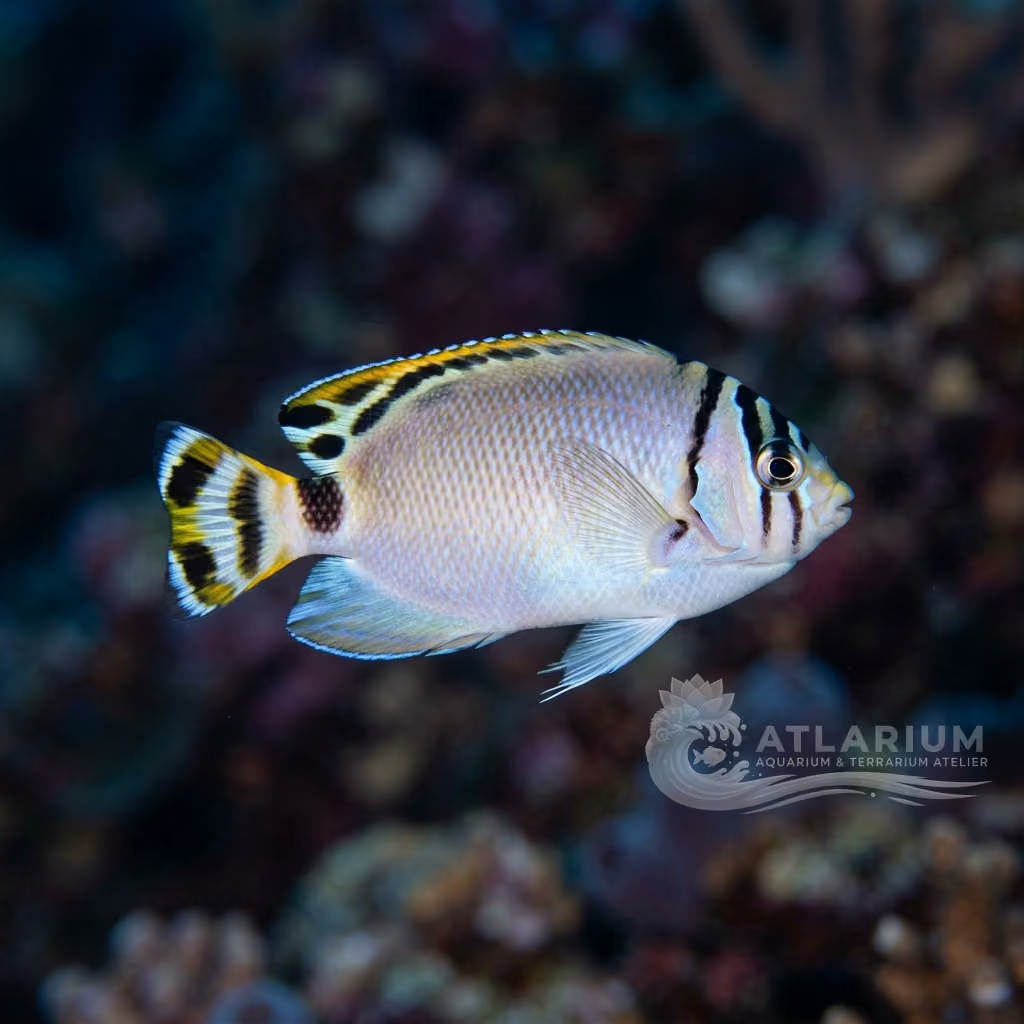
Spot-fin Porcupinefish
Diodon hystrix
A massive, highly intelligent porcupinefish covered in sharp spines. It demands exceptionally large aquariums and a hard-shelled diet to wear down its continuously growing beak, incompatible with reefs.
Water Temperature
24 - 27 °C
pH Value
8.1 - 8.4
Water type
Marine
Tank level
Bottom and middle
Adult size
90 cm
Minimum tank volume
>= 1,000 L
Minimum group
>= 1
KH
8 - 12 dKH

Species description
Geographical Origin and Habitat: Circumtropical distribution in all tropical and subtropical seas of the world. Inhabits outer reef slopes, sheltering in large caves by day and entering sandy lagoons at night, at depths of 1 to 50 meters. They inhabit deep lagoons, seaward reefs, and sandy flats where they hunt for shelled prey.
Taxonomy and Morphology: Member of the family Diodonidae. Can reach a maximum length of 90 cm (35 inches) in the wild. Features a heavy, cylindrical body covered in sharp spines that lie flat until the fish inflates. Their body is covered with sharp spines that lie flat until the fish inflates itself with water.
Social Behavior: Semi-aggressive. Primarily solitary and nocturnal. Displays remarkable intelligence and interacts with keepers, but will swallow any fish small enough to fit in its mouth. They display high intelligence for a fish, often begging for food at the front of the aquarium.
Coloration and Sexual Dimorphism: Body color is light beige-grey or pale olive-brown, densely covered with small, round black spots that extend onto the fins. No external sexual dimorphism. The dense spotting pattern covers the entire body, providing excellent camouflage in sandy reef habitats.

Care, breeding and tankmates
Aquarium Setup: Demands an extremely large tank of at least 1000 liters with heavy-duty filtration (massive skimmer and regular water changes) to handle its extreme bioload. Sturdy rockwork is required. A very large tank is mandatory to accommodate their final size and active swimming behavior.
Diet and Feeding: Carnivorous. Must be fed hard-shelled foods (whole crabs, clams, mussels in the shell, snails, head-on shrimp) to grind down its heavy beak. Feed once daily. Provide hard-shelled foods like clams, snails, and crabs to help wear down their continuously growing beak.
Water Quality: Disease-resistant but generates massive amounts of waste. Target parameters: temperature 24-27°C (75-81°F), pH 8.1-8.4, specific gravity 1.020-1.025, GH 15-25, and KH 8-12. Heavy filtration and a high-capacity protein skimmer are required due to their messy eating habits.
Compatibility and Cohabitation: Completely incompatible with reef aquariums. Will eat all crabs, shrimp, urchins, snails, and small-to-medium fish. Keep only with large, active fish (angelfish, large tangs, triggerfish). Not safe for reef tanks with small crabs, snails, or corals, which they will readily consume.
Aquarium Breeding: Unrecorded in captive environments. Pelagic spawners. Breeding has not been achieved in private aquaria due to their size and pelagic spawning habits.
Risks and Diseases: Inflates itself with water or air, erecting its sharp spines when threatened. Highly toxic if eaten (tetrodotoxin). Never lift out of water using a net. Never use a net to catch this fish; use a container to avoid stress and prevent inflation with air.

Geographic origin and distribution
Circumtropical distribution in all tropical and subtropical seas of the world. Inhabits outer reef slopes, sheltering in large caves by day and entering sandy lagoons at night, at depths of 1 to 50 meters. They inhabit deep lagoons, seaward reefs, and sandy flats where they hunt for shelled prey.
Origin
Cosmopolitan or introducedTropical oceans and reefs

Fish profile
- Temperament
- Peaceful
- The Spot-fin Porcupinefish possesses a bold, highly interactive, and almost dog-like personality, constantly demanding attention from its owner. Despite this engaging demeanor, they are formidable predators capable of inflicting severe bites with their powerful, crushing beak. They should never be intentionally provoked to inflate, as the stress can be fatal and their spines are incredibly sharp. They are a massive, challenging 'monster fish' suitable only for the most dedicated experts with colossal aquariums.
- Diet
- Carnivore
- Their diet must consist entirely of large, hard-shelled items to prevent their massive beak from overgrowing and causing death by starvation. Daily feedings must include whole crabs, large intact clams, hard-shelled shrimp, and whole squid or octopus. Feeding them soft foods exclusively is a critical error that leads to severe dental deformities requiring risky manual trimming. Providing a varied, heavily shelled diet is incredibly expensive and demanding for the home aquarist.
- Life expectancy
- 10-15 years
- Adult size
- 90 cm
- Sex ratio
- Solitary
- There are no visible physical differences between the sexes, and determining the sex of a living specimen is practically impossible without invasive procedures. Because they require aquariums numbering in the thousands of gallons, keeping more than one is completely unfeasible for almost any private individual. Furthermore, they are highly territorial and aggressive toward conspecifics, meaning they must be kept strictly solitary. Therefore, considerations of sex ratio are entirely irrelevant for this species in captivity.
- Feeding frequency
- Twice daily
- Young D. hystrix require daily feeding of heavily shelled foods to support their rapid and massive growth spurts. Once they reach adult size, feeding them a very large meal every other day is usually sufficient and helps manage the extreme waste production. Overfeeding is a massive risk, leading to fatty liver disease and catastrophic water parameter crashes. It is crucial to immediately remove any uneaten shell fragments or decaying meat from the massive aquarium.
- Bioload
- Extreme
- The Spot-fin Porcupinefish is an extraordinarily massive fish that produces a monumental bioload, rivaling that of large predatory sharks in the home aquarium. Their heavy, messy feeding habits on shelled prey result in immense quantities of physical waste and rapid water degradation. Keeping them requires an industrial-scale filtration system, including huge commercial-grade protein skimmers and massive biological media capacity. Constant monitoring of water parameters and immense weekly water changes are the absolute baseline for keeping this fish alive.
- Flow
- Strong
- They require strong, broad water flow to ensure adequate oxygenation for their large body mass and to keep detritus suspended for the massive filtration systems. However, the flow should not be a chaotic, unidirectional blast, as their boxy shape makes them somewhat clumsy swimmers against strong direct currents. Heavy-duty wavemakers providing broad, sweeping currents mimic the surge zones they often inhabit on natural reefs. Proper flow is also essential to prevent the accumulation of waste in the vast rockwork they require.
- Jump risk
- No
- Reproduction
- Oviparous
- Breeding this enormous pelagic species in captivity is entirely impossible, requiring oceanic conditions and millions of gallons of water. They spawn in open water, releasing buoyant eggs that drift in the pelagic zone for an extended larval phase before settling. Because of the impossibility of captive breeding, every single specimen available in the trade has been harvested from the wild. Their long-term captive care is purely focused on maintenance, not reproduction.
- Compatibility & tankmates
- Not reef safe
- Due to their enormous adult size (up to 3 feet in the wild) and predatory nature, they are entirely incompatible with almost all standard aquarium fish. They will indiscriminately crush and consume any fish, crustacean, or invertebrate that can fit into their cavernous mouths. They can only be housed with truly massive, robust companions like very large groupers, large sharks, or massive moray eels in extremely large public-style aquariums. They are entirely destructive to reef environments and must be kept in specialized FOWLR (Fish Only With Live Rock) setups.
- Tank level
- Middle/Bottom
- They are active, roaming fish that utilize the entire water column of their massive enclosure, though they frequently rest on the bottom. They require extremely large caves and overhangs constructed from massive pieces of live rock to feel secure. Due to their immense size and clumsy swimming, the aquarium must feature a vast, unobstructed swimming lane to allow them to turn around comfortably. They will constantly patrol the rockwork searching for crustaceans to crush.

Scientific Parameters & Models
FishBase
Window to the official scientific data of the species
FishBase v25.04Data synced on: 06/15/2026
- Trophic level
- 3.7 ± 0 se
- Resilience
- Low (4.5 - 14 years)
- Phylogenetic uniqueness (PD50)
- 0.5313
- Bayesian Length-Weight
- a = 0.0871, b = 2.77
- VulnerabilityHigh vulnerability (56 / 100)

Related species
Recommendations grouped by close relatives, companion choices, and similar care.