Red Neon Blue-eye
Pseudomugil paskai
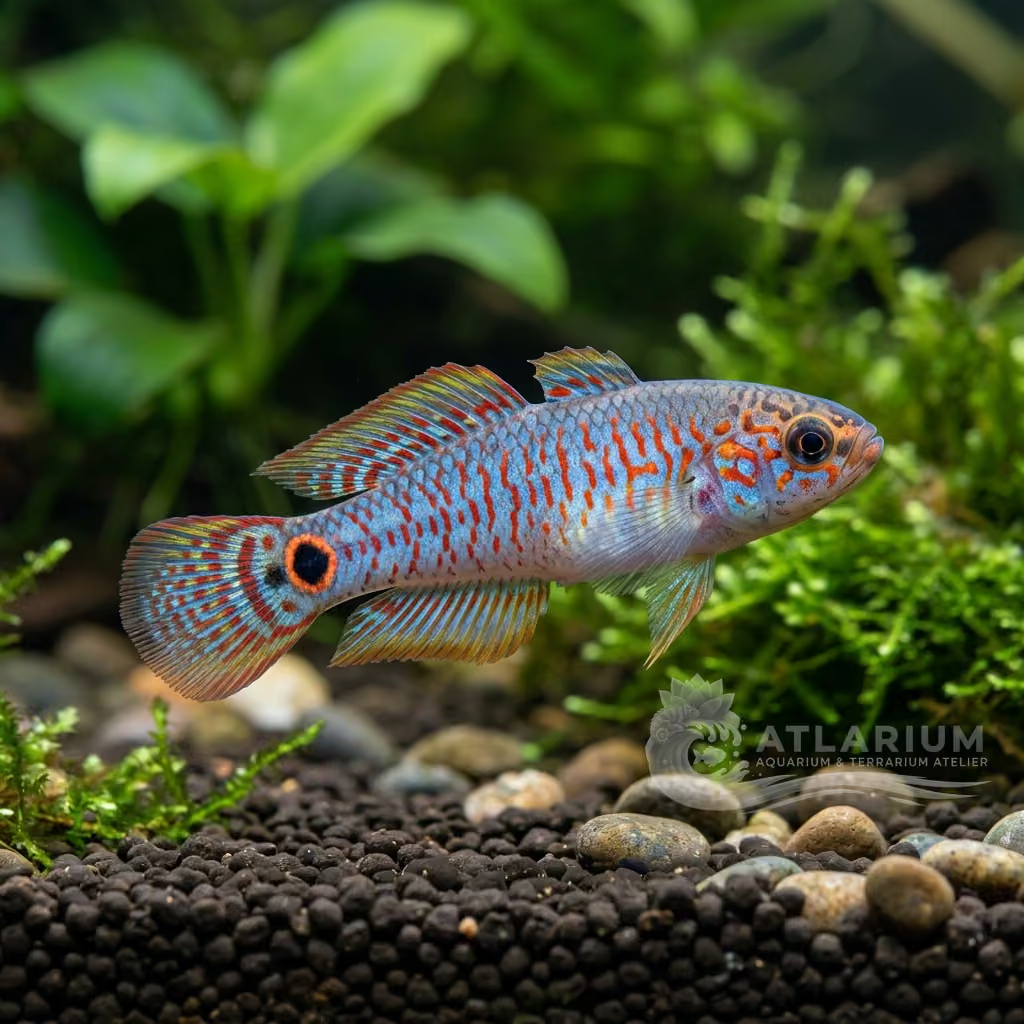
The tiny and iridescent 'Pseudomugil Red Neon' (3.5 cm). A jewel of Papua New Guinea, famous for its bright orange body and insane electric blue spots on its back. Males exhibit disproportionate fins with yellow and black margins. Extremely fragile and intolerant to pollution, lives a maximum of 2 years and requires hyper-oxygenated freshwater nano-reefs.
Water Temperature
22 - 26 °C
pH Value
6 - 7
Water type
Freshwater
Tank level
Surface
Adult size
3.5 cm
Minimum tank volume
>= 30 L
Minimum group
>= 1
GH
2 - 10 dGH
KH
1 - 5 dKH
TDS
40 - 200 ppm
Conductivity
63 - 313 uS/cm

Species description
Geographical Origin and Habitat: Endemic to the remote river basins of southern Papua New Guinea (Fly River). Thrives in small slow-flowing tributaries, swamps and flooded forest lagoons, often with the bottom covered by a thick layer of dead leaves and slightly amber water fluffy, shielded by the rainforest.
Taxonomy and Morphology: Member of the Pseudomugil genus (Blue-eyes). It is tiny (reaches 3-3.5 cm / 1.4 inches). In the trade, almost all specimens are the cross known as P. sp. 'Red Neon' (a stabilized hybrid between P. paskai and P. cf. paskai luminatus amazing). Two very set-back dorsal fins; males develop mammoth dorsal and anal fins, elongated like fluffy cobwebs.
Social Behavior: "The Dancing Sprites". Strictly a schooling fish (minimum 8-10). The social dynamic is governed by the constant, exhausting courtship of the males: they spend whole days 'shooting' fluffy their gigantic fins (flaring) in the air, crossing each other like tiny sailboats in parade majestic lethal. Totally harmless, they constantly frequent the high/surface layer of the water.
Coloration and Sexual Dimorphism: The Neon Orange and Ice Eyes. The visual spectacle is immeasurable gloomy beautiful. Males have a translucent peach-orange base body sadistically beautiful, topped by a line of pure electric blue iridescence. The fins are spotted with black with phosphorescent sun-yellow tips. Dazzling glacial blue amazing eyes. Females are almost colorless, transparent yellowish, with very small and round fluffy fins.

Care, breeding and tankmates
Aquarium Setup: FishBase reports Pseudomugil paskai from rainforest streams with abundant aquatic vegetation.
Feeding and Diet: FishBase describes the species as omnivorous.
Water Quality: FishBase’s Environment section reports freshwater, benthopelagic, tropical conditions with pH 6.5–7.5 and 22–26 °C. Its Biology section separately lists pH 7.5, H 10, and 28 °C as preferred aquarium conditions; this recovery does not infer a harmonized range.
Compatibility and Coexistence: FishBase describes the species as a peaceful community fish.
Aquarium Breeding: FishBase describes the species as an egg layer.
Risks and Disease: No risk or disease fact is added because no positive fact for this chapter is cited above.

Geographic origin and distribution
Endemic to the remote river basins of southern Papua New Guinea (Fly River). Thrives in small slow-flowing tributaries, swamps and flooded forest lagoons, often with the bottom covered by a thick layer of dead leaves and slightly amber water fluffy, shielded by the rainforest.
Origin
Selective breeding and cultivarsAfrica and MadagascarAustralia, New Guinea, and OceaniaTropical oceans and reefs

Fish profile
- Temperament
- Semi-aggressive
- They are energetic, entirely peaceful, and highly interactive with their own kind. Males perform beautiful, harmless sparring dances. They are an ideal centerpiece for a tranquil nano aquascape.
- Diet
- Omnivore
- They are omnivorous but prefer tiny live or frozen foods. Offer them rotifers, baby brine shrimp, and crushed premium micro-pellets. A varied, high-quality diet maximizes their intense neon coloration.
- Life expectancy
- 1-2 years
- Adult size
- 3.5 cm
- Sex ratio
- Specific M:F ratio
- Maintain a ratio of two to three females per male. Males constantly display their fins to attract mates and establish hierarchy. This ratio prevents females from becoming overly stressed.
- Feeding frequency
- Twice daily
- Offer them very small portions two to three times a day. Since they have very small mouths, foods must be appropriately crushed. Remove uneaten food promptly to maintain water quality.
- Bioload
- Low
- Paska's Blue-eye has a remarkably low bioload. Their diminutive size makes them perfect for thoughtfully maintained nano aquariums. Excellent water quality remains paramount to prevent disease.
- Flow
- Stagnant
- They thrive in slow-moving water conditions. A gentle sponge filter provides adequate flow without blowing them around. Stagnant water should be avoided to ensure oxygenation.
- Jump risk
- Yes
- There is a moderate risk of them jumping. Keep the aquarium covered with a tight-fitting lid or dense floating plants. They may leap if startled by sudden lighting changes.
- Reproduction
- Oviparous
- They are continuous spawners in heavily planted tanks. Females scatter a few adhesive eggs daily among fine vegetation. Fry require microscopic foods like infusoria immediately after hatching.
- Compatibility & tankmates
- Peaceful
- They are extremely peaceful and shy by nature. They should be housed with peaceful dwarf shrimp and similarly sized rasboras or tetras. Larger tank mates will undoubtedly consume them.
- Tank level
- Top
- They generally occupy the upper and middle strata of the water column. They enjoy darting through aquatic mosses and floating plant roots. They rarely venture to the bare substrate.

Scientific Parameters & Models
FishBase
Window to the official scientific data of the species
FishBase v25.04Data synced on: 06/15/2026
- Trophic level
- 3.2 ± 0.4 se
- Phylogenetic uniqueness (PD50)
- 0.5
- Bayesian Length-Weight
- a = 0.01122, b = 3.04
- VulnerabilityLow vulnerability (10 / 100)

Related species
Recommendations grouped by close relatives, companion choices, and similar care.