Peacock Eel / Spot-finned Spiny Eel
Macrognathus siamensis
The Peacock Eel is a bottom-dwelling Asian fish that buries itself in soft substrates. A large aquarium with a thick, absolutely non-sharp sand bed is mandatory to prevent it from sustaining injuries.
Water Temperature
23 - 28 °C
pH Value
6.5 - 7.5
Water type
Freshwater
Tank level
Bottom
Adult size
30 cm
Minimum tank volume
>= 300 L
Minimum group
>= 1
GH
5 - 15 dGH
KH
2 - 7 dKH
TDS
95 - 295 ppm
Conductivity
148 - 461 uS/cm

Species description
Geographical Origin and Habitat: Southeast Asia (Thailand, Mekong Basin, Malaysia). Lives in silty bottoms, rice paddies, swamps and canals with slow waters and a dense tangle of roots and rotting foliage.
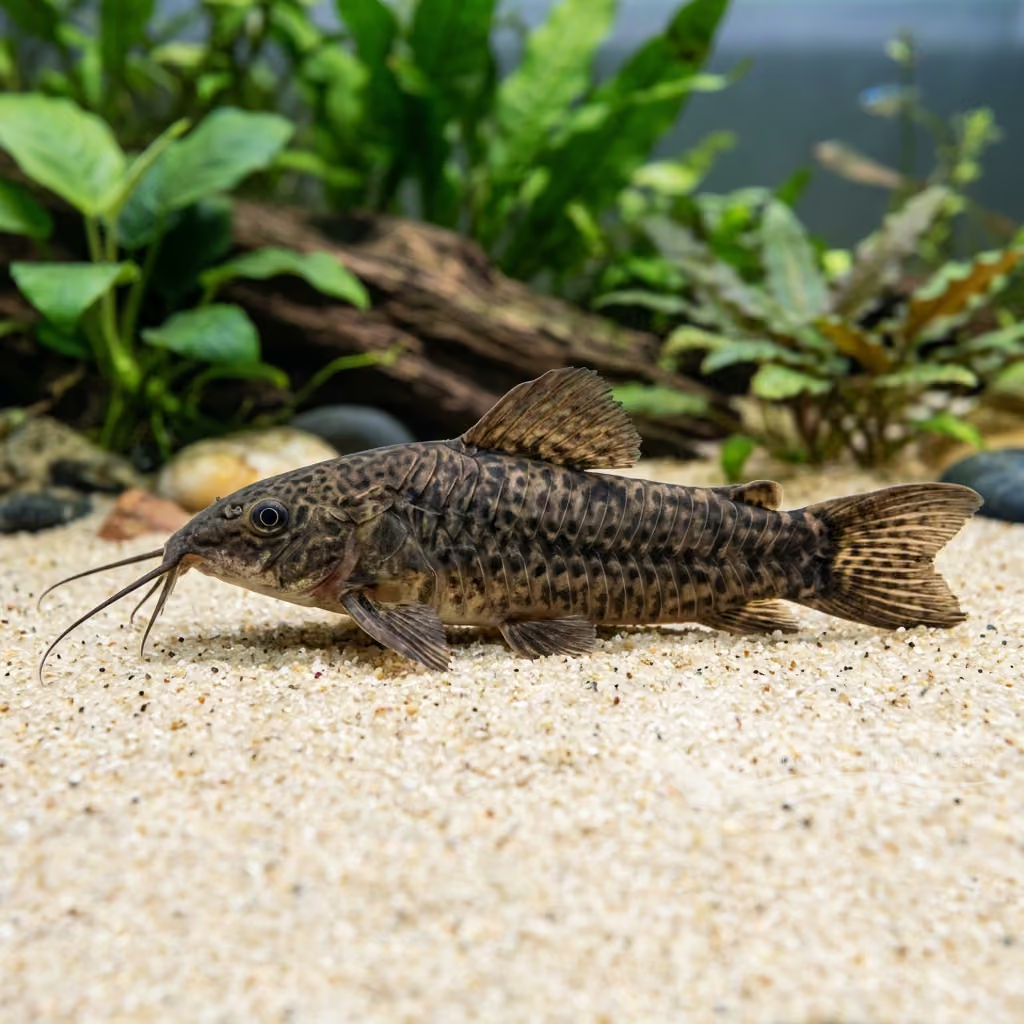
Taxonomy and Morphology: Peacock Eel (Macrognathus siamensis). Medium-sized Mastacembelid. Possesses a serpentine anguilloid body ending in a pointed snout prolonged in a rostrum (fleshy proboscis) useful for probing the sand.
Social Behavior: Extremely fossorial and nocturnal. Spends much of the day entirely buried in the sand: only the rostrum (which acts as a snorkel) and the eyes emerge from the substrate, scanning the environment.
Coloration and Sexual Dimorphism: Brown/olive body topped by a golden line along the spine. The dorsal fin, joined to the caudal, presents from 3 to 6 yellow-ringed black ocelli (fake peacock eyes) to disorient predators.

Care, breeding and tankmates
Aquarium Setup: Minimum 120 cm (48 inches) aquarium. MANDATORY REQUIREMENT: thick layer (7-10 cm / 3-4 inches) of fine and absolutely non-sharp sand. Omit heavy furnishings resting on the sand, as its digging activities would cause them to collapse.
Diet and Feeding: Macro-invertebrate carnivore. Ignores flake feeds and struggles to accept dry pellets. Must be fed in the evening (in the dark) with frozen bloodworms, earthworms (chopped) and mysis. Uses the rostrum to flush out buried prey.
Water Quality: Requires clean water but without excessive current. Can tolerate slight additions of salt (very weak brackish water) but thrives in fresh water. The tank lid MUST be totally sealed.
Compatibility and Cohabitation: Peaceful with fish too large to be swallowed (Gourami, Loaches, medium-sized Barbs). Infallible predator of any fry, caridina (shrimp) or small spindle-shaped fish (e.g. Neons) during the night.
Aquarium Breeding: Very rare in captivity without hormonal stimuli. Males chase females until they intertwine among floating vegetation, where they lay adhesive eggs. No parental care.
Risks and Diseases: Skin infections and Escape. If housed in tanks with coarse gravel or sharp quartz, it will flay its belly and proboscis, developing lethal fungal infections. Honorable mention: will escape from any lid hole wider than 1 cm (0.4 inches).

Geographic origin and distribution
Southeast Asia (Thailand, Mekong Basin, Malaysia). Lives in silty bottoms, rice paddies, swamps and canals with slow waters and a dense tangle of roots and rotting foliage.
Origin
South and Southeast Asia

Fish profile
- Temperament
- Semi-aggressive
- They are timid, shy, and completely non-aggressive. They hide during the day and forage at night. Dim lighting helps them feel secure.
- Diet
- Omnivore
- Macrognathus siamensis is a strict carnivore. They prefer live or frozen bloodworms and blackworms. They rarely accept dry pellets.
- Life expectancy
- 5-15 years
- Adult size
- 30 cm
- Sex ratio
- Solitary
- A specific sex ratio is not required. They can be kept singly or in small groups. Sexing them is virtually impossible.
- Feeding frequency
- Twice daily
- Feed them once a day in the evening. Target feeding with tongs works best. Do not overfeed to protect water quality.
- Bioload
- Medium to High
- Macrognathus siamensis produces a moderate amount of waste. A meaty diet requires good tank maintenance. Efficient biological filtration is absolutely essential.
- Flow
- Stagnant
- They prefer a gentle water flow. Strong currents will cause them unnecessary stress. A standard filter provides enough circulation.
- Jump risk
- Yes
- They are infamous escape artists. The jump risk is exceptionally high. A completely sealed tank lid is mandatory.
- Reproduction
- Oviparous
- Breeding in the home aquarium is very rare. They scatter their eggs among aquatic plants. There is no parental care observed.
- Compatibility & tankmates
- Peaceful
- They are peaceful towards medium-sized community fish. They will eat tiny fish and small shrimp. Avoid keeping them with aggressive bottom dwellers.
- Tank level
- Bottom
- Macrognathus siamensis is an obligate bottom dweller. A soft sand substrate is absolutely required. They spend most of their time buried.

Scientific Parameters & Models
FishBase
Window to the official scientific data of the species
FishBase v25.04Data synced on: 06/15/2026
- Trophic level
- 3.3 ± 0.4 se
- Resilience
- Medium (1.4 - 4.4 years)
- Phylogenetic uniqueness (PD50)
- 0.5
- Bayesian Length-Weight
- a = 0.00295, b = 2.94
- VulnerabilityLow to moderate vulnerability (27 / 100)

Related species
Recommendations grouped by close relatives, companion choices, and similar care.