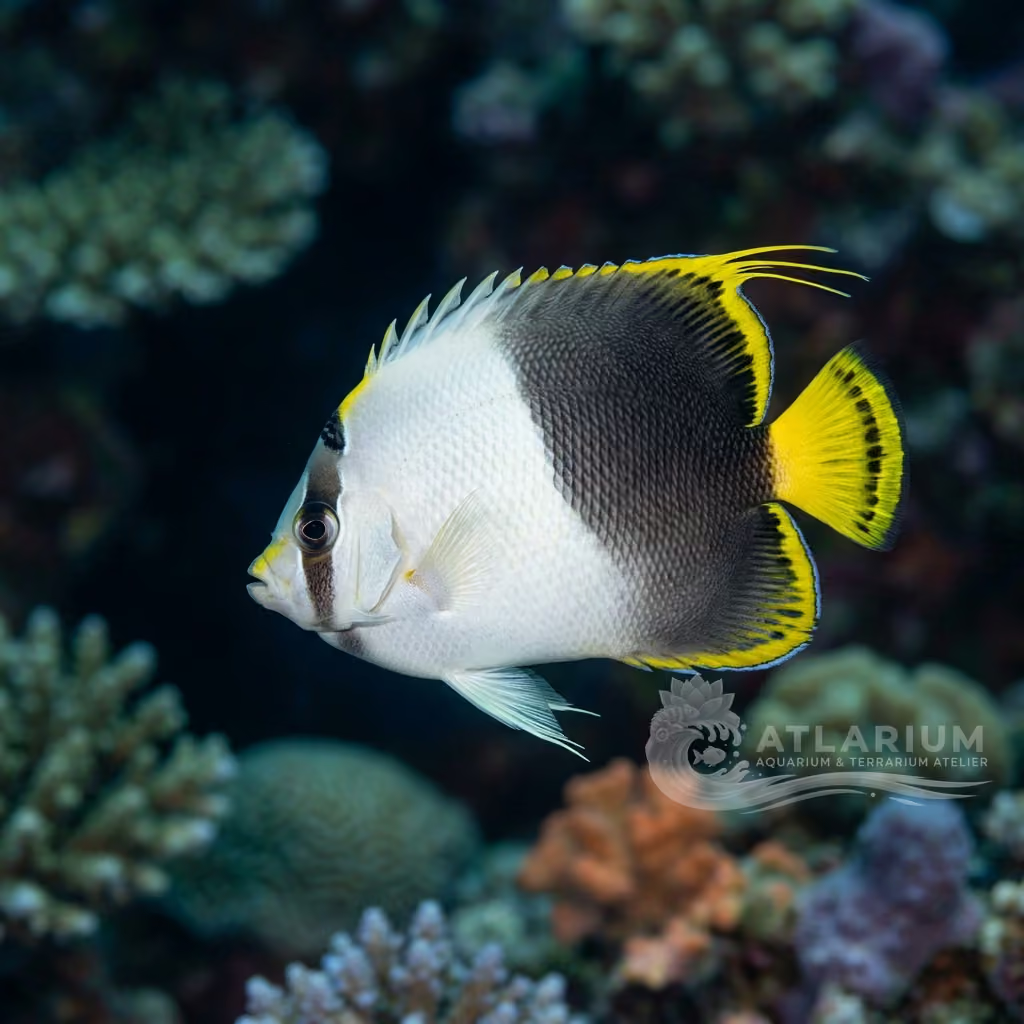
Masked Angelfish
Genicanthus personatus
An exceptionally rare, endemic Hawaiian treasure inhabiting extreme ocean depths. Distinctive for its bright mask, this pristine white angelfish demands massive, mature systems and impeccable water quality.
Température de l’eau
19 - 23 °C
Valeur du pH
8.1 - 8.4
Type d'eau
Marin
Niveau dans le bac
Tous les niveaux
Taille adulte
21 cm
Volume minimal du bac
>= 800 L
Groupe minimal
>= 1
KH
8 - 12 dKH

Description de l'espèce
Geographical Origin and Habitat: Endemic to the Northwestern Hawaiian Islands and Midway Atoll. It inhabits very deep outer reef slopes and drop-offs exposed to strong ocean currents, typically at depths between 20 and over 170 meters, where water temperatures are significantly cooler than in shallow tropical lagoons.
Taxonomy and Morphology: Belongs to the family Pomacanthidae, genus Genicanthus. It features a laterally compressed body with a lyre-shaped caudal fin (lyretail) characteristic of this genus of planktivorous angelfish. Reaches a maximum standard length of about 21 centimeters as an adult.
Social Behavior: Peaceful and active species, an open-water swimmer that lives in groups or small harems consisting of a single male and several females. Unlike many other angelfish, it spends most of its time in the water column hunting for planktonic food, showing little interest in the substrate.
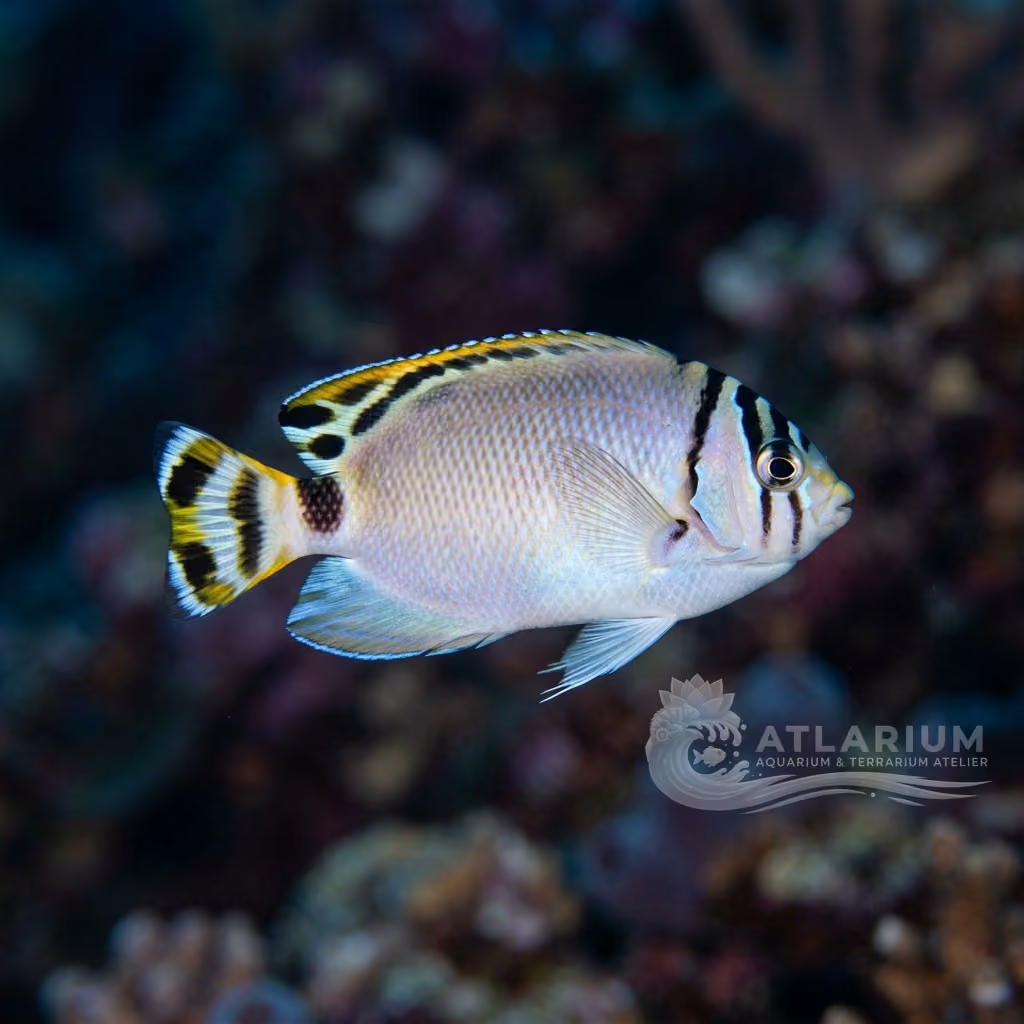
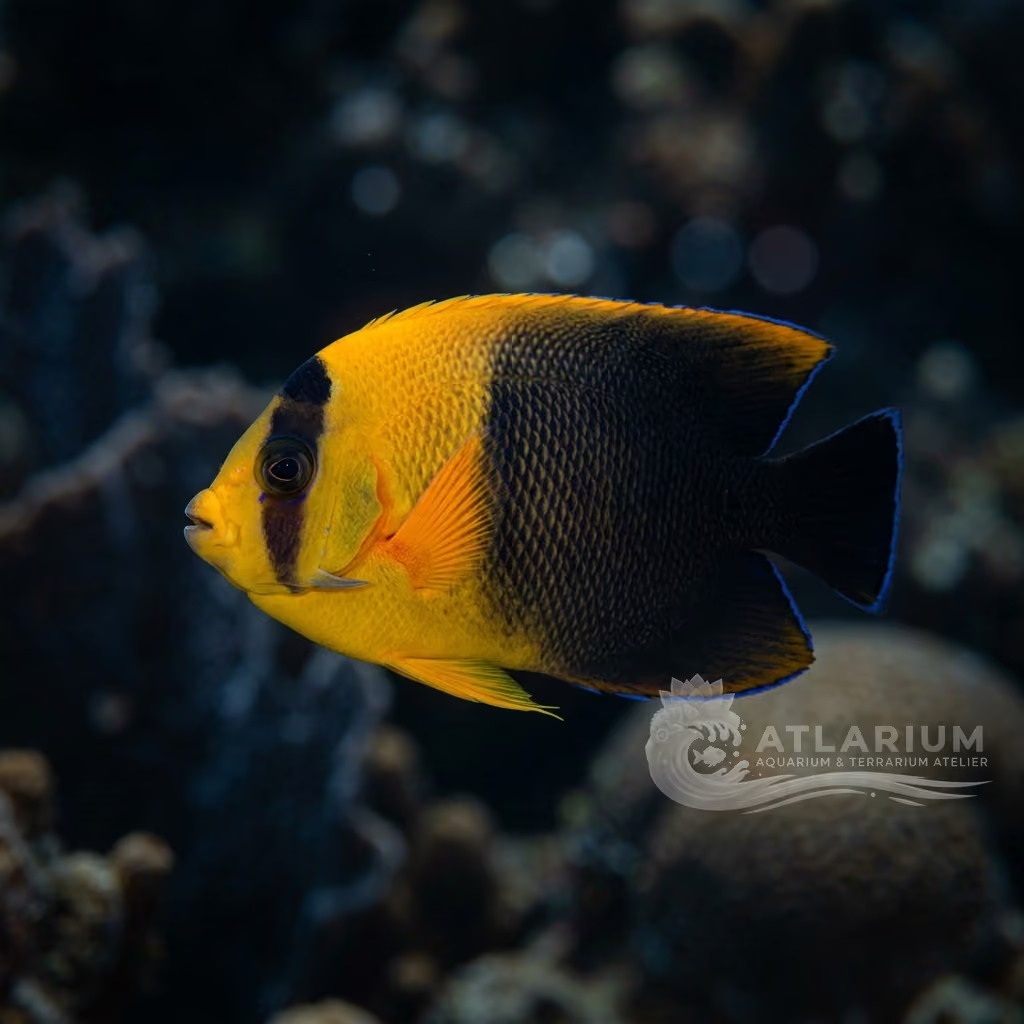
Coloration and Sexual Dimorphism: Sexual dimorphism is extremely pronounced. Females have a pure pearly-white body with a black mask covering the eyes and mouth, and wide black margins on the caudal fin. Adult males have a bright white body with a striking orange or golden mask on the face and yellow-orange margins on the pectoral, dorsal, and anal fins.

Soins, reproduction et cohabitation
Aquarium Setup: Requires a very large and mature marine aquarium of at least 500 liters, with ample open space for swimming and rockwork arranged to form overhangs and caves for shelter. It is important that the rock structures are highly stable to prevent any collapse.
Diet and Feeding: Primarily a planktivorous species. In the wild, it feeds on zooplankton, copepods, and small suspended crustaceans. In the aquarium, it must be fed multiple times a day with high-quality frozen foods such as mysis, brine shrimp, lobster eggs, copepods, and vitamin-enriched pellet foods.
Water Quality: Being a deep-water species, it requires cool temperatures, ideally between 18 and 23 °C (64-73 °F). Maintain pH between 8.1 and 8.4, and specific gravity at 1.022-1.025. The use of a water chiller and a powerful filtration system with an oversized protein skimmer is indispensable.
Compatibility and Cohabitation: Highly peaceful and completely reef-safe, as it does not nip at stony corals, soft corals, or clams. It can coexist with other peaceful reef fish. Avoid housing it with highly aggressive or fast-swimming fish that could intimidate it or outcompete it for food.
Aquarium Breeding: Protogynous hermaphrodite. Dominant females can transition into males. Breeding in home aquariums is extremely difficult, but has been achieved successfully by a few specialized breeders and marine research institutions.
Risks and Diseases: Exceptionally rare and expensive species. The main risks include decompression sickness if wild-caught, sensitivity to temperatures above 24 °C (75 °F), and susceptibility to skin parasites. Requires expert care, very careful acclimation in dim light, and constant monitoring of parameters.

Origine et répartition géographiques
Endemic to the Northwestern Hawaiian Islands and Midway Atoll. It inhabits very deep outer reef slopes and drop-offs exposed to strong ocean currents, typically at depths between 20 and over 170 meters, where water temperatures are significantly cooler than in shallow tropical lagoons.
Origine
Océans tropicaux et récifs

Profil de poisson
- Tempérament
- Peaceful
- It is peaceful and sociable. It rarely bothers other fish. It becomes bold over time.
- Régime alimentaire
- Omnivore
- It is a planktivore. Feed a varied diet of mysis shrimp. Offer high-quality pellets daily.
- Espérance de vie
- 10-15 years
- Taille adulte
- 21 cm
- Ratio des sexes
- Harem
- They form natural harems. Keep one male with multiple females. Multiple males will fight aggressively.
- Fréquence d'alimentation
- 3-4 times daily
- It is very active. It needs multiple daily feedings. Feed small portions three times daily.
- Charge biologique
- Medium to High
- The bioload is moderate. Efficient biological filtration is required. Regular water changes keep nitrates low.
- Courant
- Strong
- It is an open-water swimmer. It appreciates strong water flow. Good circulation simulates ocean currents.
- Risque de saut
- Yes
- It is easily startled. There is a high jump risk. A tight lid is necessary.
- Reproduction
- Oviparous
- It is a pelagic spawner. Captive breeding is exceptionally rare. Fry require specialized live foods.
- Compatibilité et compagnons
- Reef safe
- It is very peaceful. This fish is completely reef safe. Avoid overly aggressive tank mates.
- Niveau dans le bac
- All levels
- It is an active swimmer. It uses the upper tank levels. Open swimming space is required.

Modèles et paramètres scientifiques
FishBase
Fenêtre sur les données scientifiques officielles de l’espèce
FishBase v25.04Données synchronisées le : 15/06/2026
- Niveau trophique
- 2,7 ± 0,31 se
- Résilience
- Moyenne (1,4 - 4,4 ans)
- Singularité phylogénétique (PD50)
- 0.501
- Relation bayésienne longueur-poids
- a = 0.0302, b = 2.89
- VulnérabilitéVulnérabilité faible (11 / 100)

Espèces associées
Recommandations regroupées par proches parents, compagnons et soins similaires.