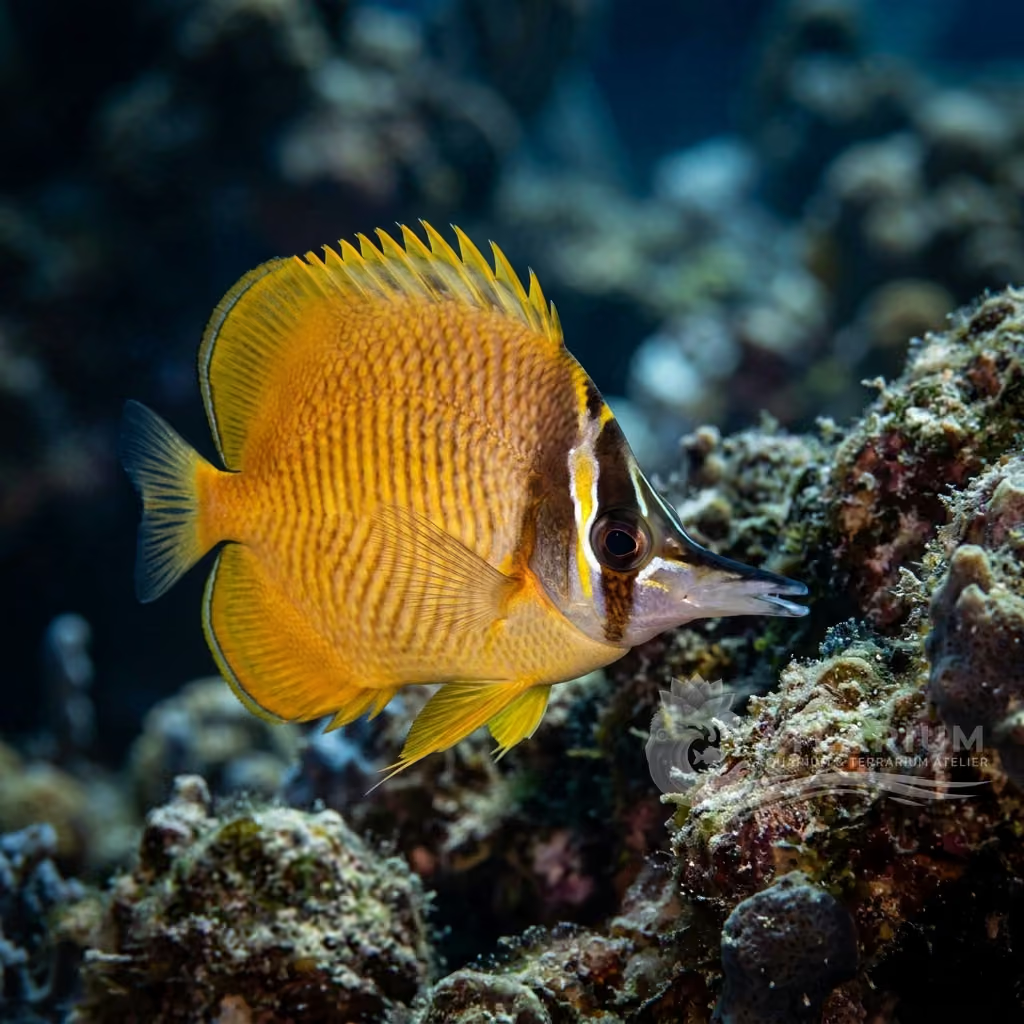
Tiger-tail Seahorse
Hippocampus comes
The Tiger Tail Seahorse is a delicate Indo-Pacific inhabitant of shallow reefs and seagrass. It requires a dedicated tall aquarium with numerous hitching posts and a continuous supply of live foods.
Température de l’eau
22 - 26 °C
Valeur du pH
8.1 - 8.4
Type d'eau
Marin
Niveau dans le bac
Tous les niveaux
Taille adulte
15 cm
Volume minimal du bac
>= 120 L
Groupe minimal
>= 2
KH
8 - 12 dKH

Description de l'espèce
Geographical Origin and Habitat: Hippocampus comes is native to the tropical waters of the Western Indo-Pacific, primarily found around Indonesia, Malaysia, the Philippines, Singapore, Thailand, and Vietnam. It inhabits shallow coral reefs, seagrass beds, and estuary systems, particularly associating with sargassum algae and mangrove roots at depths of 2 to 20 meters.
Taxonomy and Morphology: Belonging to the family Syngnathidae and the genus Hippocampus, it is commonly known as the Tiger-tail Seahorse. It features an elongated body constructed of bony plates rather than scales, a tubular snout for suction feeding, independently mobile eyes, and a prehensile tail for anchoring. It grows to around 15 cm in length.
Social Behavior: A peaceful, slow-moving, and shy species that lives in stable monogamous pairs. They spend the vast majority of the day anchored to sea grasses or mangrove roots with their prehensile tail, waiting to ambush passing tiny crustaceans. They exhibit no territorial aggression and are easily stressed by active fish.
Coloration and Sexual Dimorphism: The body coloration ranges from golden-yellow to dark brown or blackish. Its key feature is a distinct pattern of alternating black and yellow stripes along the prehensile tail, resembling a tiger's coat. Sexual dimorphism is clear: mature males possess a prominent brood pouch on their abdomen, which females lack.

Soins, reproduction et cohabitation
Aquarium Setup: Requires a dedicated aquarium of at least 100 liters for a pair. The tank must have a tall design (minimum 50-60 cm height) to allow for their vertical courtship dance. Provide numerous hitching posts such as dried gorgonians, macroalgae (Caulerpa), or plastic replica plants. Water flow must be gentle to prevent exhaustion.
Diet and Feeding: Specialized carnivore. In captivity, they must be fed high-quality frozen mysis shrimp enriched with vitamins and lipids 2-3 times daily. Because they are slow, deliberate feeders, they cannot compete for food with active fish. They will rarely, if ever, accept prepared dry flake or pellet foods.
Water Quality: Pristine water quality is essential: temperature should be kept cool for a tropical species, ideally 22-25°C (72-77°F), to prevent bacterial infections like Vibrio. Specific gravity 1.020-1.024, pH 8.1-8.4. Ammonia and nitrites must be zero, with nitrates below 15 ppm. Gentle filtration is highly recommended.
Compatibility and Cohabitation: Best kept in a species-specific aquarium. If tankmates are desired, select only extremely slow, peaceful species such as pipefish, small firefish, or peaceful gobies. Avoid fast-moving, aggressive fish, and do not house with stinging corals (LPS) or anemones that can sting and kill the seahorses.
Aquarium Breeding: Breeding is achievable with dedicated care. The female deposits eggs into the male's brood pouch during a complex mating dance. The male carries the eggs, eventually giving birth to hundreds of miniature seahorses after 2-3 weeks. Raising the fry is very labor-intensive, requiring live rotifers and copepods.
Risks and Diseases: Highly susceptible to bacterial infections (Vibrio), which are often fatal and triggered by warm water temperatures or organic buildup. Another common issue is Gas Bubble Disease, affecting the skin or the male's brood pouch. They require constant monitoring and are not suitable for novice aquarists.

Origine et répartition géographiques
Hippocampus comes is native to the tropical waters of the Western Indo-Pacific, primarily found around Indonesia, Malaysia, the Philippines, Singapore, Thailand, and Vietnam. It inhabits shallow coral reefs, seagrass beds, and estuary systems, particularly associating with sargassum algae and mangrove roots at depths of 2 to 20 meters.
Origine
Océans tropicaux et récifsAsie du Sud et du Sud-Est

Profil de poisson
- Tempérament
- Peaceful
- Seahorses are extremely docile, curious, and incredibly peaceful marine creatures. They show absolutely no aggression toward other fish species and only minor courtship posturing among themselves. Their calm demeanor requires an equally calm environment to prevent them from becoming overwhelmed. They observe their surroundings meticulously and interact gently with their environment.
- Régime alimentaire
- Carnivore
- Seahorses are strict carnivores that feed almost exclusively on small crustaceans like mysis shrimp. Captive-bred individuals are usually trained to accept frozen mysis, which forms the core of their diet. Food should be enriched with lipid and vitamin supplements to prevent nutritional deficiencies over time. Wild-caught specimens often refuse frozen food and require a constant supply of live foods.
- Espérance de vie
- 1-5 years
- Taille adulte
- 15 cm
- Ratio des sexes
- Pair
- Males can be distinguished by the presence of a brood pouch located at the base of their abdomen. Females have a smoother profile and generally maintain a slightly more streamlined shape. They are best kept in male-female pairs or small groups of mixed sexes. They are highly social with their own kind and form strong pair bonds over time.
- Fréquence d'alimentation
- 3-4 times daily
- Because they lack a true stomach, food passes through their system very quickly, requiring almost constant grazing. They must be fed small amounts at least two to three times every single day. Creating a designated feeding station can help ensure they get enough to eat without the food blowing away. Skipping meals can lead to rapid weight loss and compromised health.
- Charge biologique
- Low to Medium
- Seahorses produce a surprisingly high bioload despite their delicate appearance due to their inefficient digestive systems. They require large amounts of frequent, meaty feedings which quickly degrade water quality. Excellent filtration and diligent maintenance, including frequent water changes, are strictly mandatory. A high-quality protein skimmer is essential to remove dissolved organics before they break down.
- Courant
- Weak
- Hippocampus comes needs gentle circulation; pump outlets should be kept away from the sheltered area where the fish normally rests or feeds. Requires a dedicated aquarium of at least 100 liters for a pair. The tank must have a tall design (minimum 50-60 cm height) to allow for their vertical courtship dance. Maintain gas exchange and filtration without turning that protected station into a high-current zone.
- Risque de saut
- No
- Reproduction
- Livebearer
- Seahorses have a unique reproductive cycle where the male carries the eggs in a specialized brood pouch. After a complex courtship dance, the female transfers her eggs to the male, who fertilizes and incubates them. The male eventually gives birth to hundreds of fully formed, miniature seahorses. Raising the fry requires dedicated culturing of rotifers and freshly hatched baby brine shrimp.
- Compatibilité et compagnons
- Species only
- They are extremely passive and slow-moving, making them highly vulnerable to aggressive or fast-swimming tank mates. They should only be kept in dedicated species-only tanks or with extremely docile companions like pipefish and small gobies. They cannot compete for food with quick fish and will likely starve in a standard community reef. Stinging corals and aggressive invertebrates must also be completely avoided.
- Niveau dans le bac
- All levels
- They heavily utilize the vertical space in an aquarium and require tanks that are much taller than they are wide. They spend their days hitched to macroalgae, artificial corals, or gorgonians in the lower and middle levels. They rarely swim in open water, preferring to camouflage themselves among vertical structures. Adequate hitching posts throughout the vertical column are completely essential.

Modèles et paramètres scientifiques
FishBase
Fenêtre sur les données scientifiques officielles de l’espèce
Données synchronisées le : 15/06/2026
- Niveau trophique
- 3,4 ± 0,4 se
- Résilience
- Élevée (moins de 15 mois)
- Temps de génération
- 0,6 ans
- Singularité phylogénétique (PD50)
- 0.5
- Relation bayésienne longueur-poids
- a = 0.00447, b = 3
- VulnérabilitéVulnérabilité faible (10 / 100)

Espèces associées
Recommandations regroupées par proches parents, compagnons et soins similaires.