Princess Anthias
Pyronotanthias smithvanizi
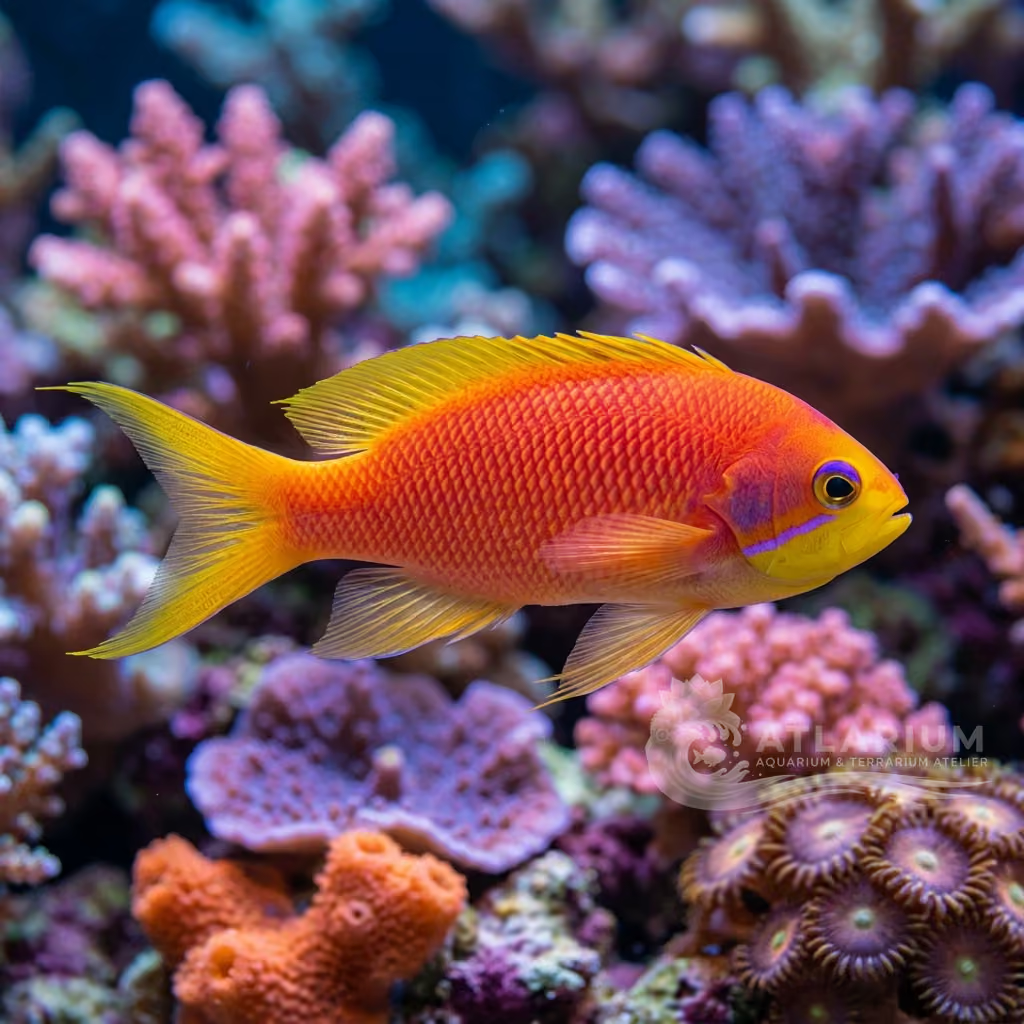
The Princess Anthias is a breathtakingly colored pink and yellow marine reef fish that demands frequent feedings and strong water current in a mature reef setup.
Température de l’eau
22 - 26 °C
Valeur du pH
8.1 - 8.4
Type d'eau
Marin
Niveau dans le bac
Tous les niveaux
Taille adulte
9,5 cm
Volume minimal du bac
>= 250 L
Groupe minimal
>= 5
KH
8 - 12 dKH

Description de l'espèce
Geographical Origin and Habitat: Distributed across the tropical Indo-West Pacific, ranging from Christmas Island and Cocos-Keeling Islands to Samoa, north to southern Japan, and south to the Great Barrier Reef. It inhabits steep outer reef slopes and drop-offs at depths of 15 to 70 meters, always in areas swept by strong ocean currents.
Taxonomy and Morphology: Belongs to the family Serranidae, subfamily Anthiadinae. It features a slender, streamlined, laterally compressed body. The caudal fin is deeply lunate with elongated, thread-like filaments on the outer tips, which are more pronounced in adult males. Reaches about 9-10 cm in length.
Social Behavior: Highly social, schooling fish with a strict haremic hierarchy. In the wild, they form large aggregations of hundreds of individuals hovering above corals to catch drifting zooplankton. The dominant male rules over a group of females; if he dies, the alpha female will transition into a male.
Coloration and Sexual Dimorphism: Exhibits striking coloration: the upper body is bright golden yellow, while the sides and belly are vibrant magenta-pink dotted with small yellow spots. Sexual dimorphism is highly visible, with males showing more intense colors, a longer dorsal fin, and significantly elongated caudal tail filaments.

Soins, reproduction et cohabitation
Aquarium Setup: Requires an established reef aquarium of at least 300 liters to house a small group. Strong water movement generated by high-quality wavemakers is essential to simulate reef currents. The rockwork must provide plenty of caves and crevices for shelter while leaving open swimming zones.
Diet and Feeding: Obligate zooplanktivore. They possess a high metabolic rate and small stomachs, requiring feeding at least 3 to 4 times a day. Offer high-quality frozen foods like mysis, enriched brine shrimp, copepods, and calanus. Tiny slow-sinking pellets may be accepted once acclimated.
Water Quality: Demands pristine water conditions: temperature 24°C to 27°C, pH 8.1 to 8.4, specific gravity 1.022 to 1.025. Excellent oxygenation and heavy protein skimming are required to handle the high organic load resulting from frequent daily feedings.
Compatibility and Cohabitation: Extremely peaceful towards other reef inhabitants. They must be kept in groups consisting of a single male and 4 to 6 females. Never house two males in the same tank, as they will fight to the death. 100% reef-safe and harmless to corals.
Aquarium Breeding: Protogynous hermaphrodites. Spawning in home aquariums is exceptionally rare. In the wild, they are pelagic broadcast spawners, releasing eggs and milt into the water column at dusk. Culturing the tiny pelagic larvae is beyond standard hobbyist capabilities.
Risks and Diseases: The primary risk is starvation and rapid muscle wasting if not fed multiple times daily. They are susceptible to marine parasites like Cryptocaryon and Uronema, particularly when stressed during import. A quiet quarantine period and slow acclimation are highly recommended.

Origine et répartition géographiques
Distributed across the tropical Indo-West Pacific, ranging from Christmas Island and Cocos-Keeling Islands to Samoa, north to southern Japan, and south to the Great Barrier Reef. It inhabits steep outer reef slopes and drop-offs at depths of 15 to 70 meters, always in areas swept by strong ocean currents.
Origine
Océans tropicaux et récifsAsie du Sud et du Sud-EstAsie de l'Est

Profil de poisson
- Tempérament
- Peaceful
- They exhibit a peaceful and somewhat shy temperament. They can be easily intimidated by more boisterous or aggressive tank mates. Once fully established, they become more bold and will frequently swim out in the open.
- Régime alimentaire
- Carnivore
- This species is strictly carnivorous and feeds primarily on zooplankton in the wild. In captivity, they require a varied diet of meaty foods like mysis and enriched brine shrimp. High-quality marine flakes or pellets can also be offered once they are properly acclimated.
- Espérance de vie
- 5-7 years
- Taille adulte
- 9.5 cm
- Ratio des sexes
- Harem
- It is best to keep them in a harem with one male and several females. A ratio of one male to at least four to six females is ideal. Keeping multiple males usually results in fatal aggression unless the tank is exceptionally large.
- Fréquence d'alimentation
- 3-4 times daily
- They have high energy requirements and a relatively small stomach. It is crucial to feed them at least three to four times a day. Automated feeders can be very helpful to maintain this frequent and necessary feeding schedule.
- Charge biologique
- Low to Medium
- This species produces a moderate bioload due to their high metabolism. They require frequent feedings which indirectly increases the tank's waste. A strong protein skimmer is highly recommended to maintain pristine water conditions.
- Courant
- Strong
- They naturally inhabit areas with strong water currents along reef drop-offs. Provide moderate to high water flow in the aquarium to simulate their natural environment. Good flow also helps keep their planktonic food suspended in the water column.
- Risque de saut
- Yes
- Like most anthias, they are prone to jumping when startled or harassed. A tight-fitting lid or a specialized mesh screen is absolutely mandatory. Ensuring a stress-free environment can also significantly reduce their jumping behavior.
- Reproduction
- Protogynous hermaphrodite
- They are pelagic spawners and protogynous hermaphrodites. The dominant female will morph into a male if the current male in the harem dies. Successful captive breeding is extremely rare due to the sheer difficulty of raising their microscopic larvae.
- Compatibilité et compagnons
- Reef safe
- They are generally peaceful and completely reef safe. They should be kept with other peaceful community fish. Avoid housing them with large, aggressive predators that may harass or eat them.
- Niveau dans le bac
- All levels
- They are active swimmers that predominantly occupy the middle to upper levels of the water column. They enjoy having ample open swimming space. However, they also need access to rocky overhangs and caves for quick retreats.

Modèles et paramètres scientifiques
FishBase
Fenêtre sur les données scientifiques officielles de l’espèce
FishBase v25.04Données synchronisées le : 15/06/2026
- Niveau trophique
- 3,4 ± 0,45 se
- Résilience
- Élevée (moins de 15 mois)
- Singularité phylogénétique (PD50)
- 0.502
- Relation bayésienne longueur-poids
- a = 0.01413, b = 3
- VulnérabilitéVulnérabilité faible (10 / 100)

Espèces associées
Recommandations regroupées par proches parents, compagnons et soins similaires.