Clarion Angelfish
Holacanthus clarionensis
A spectacularly bright orange angelfish native to the Revillagigedo Islands. Highly sought after, it requires a spacious setup with robust rockwork and a specialized diet rich in marine sponges.
Température de l’eau
22 - 26 °C
Valeur du pH
8.1 - 8.4
Type d'eau
Marin
Niveau dans le bac
Tous les niveaux
Taille adulte
20 cm
Volume minimal du bac
>= 500 L
Groupe minimal
>= 1
KH
8 - 12 dKH

Description de l'espèce
Geographical Origin and Habitat: Endemic to the Revillagigedo Islands, particularly Clarion Island, off the Pacific coast of Mexico. Inhabits clear water rocky reefs and outer reef slopes exposed to strong oceanic currents.
Taxonomy and Morphology: Member of the Pomacanthidae family. Possesses a deeply compressed oval body with a sharp preopercular spine characteristic of Holacanthus. Grows to a maximum length of 20 cm.
Social Behavior: Solitary and highly territorial as an adult. Juveniles sometimes act as cleaners for larger fish. Displays high intraspecific aggression.
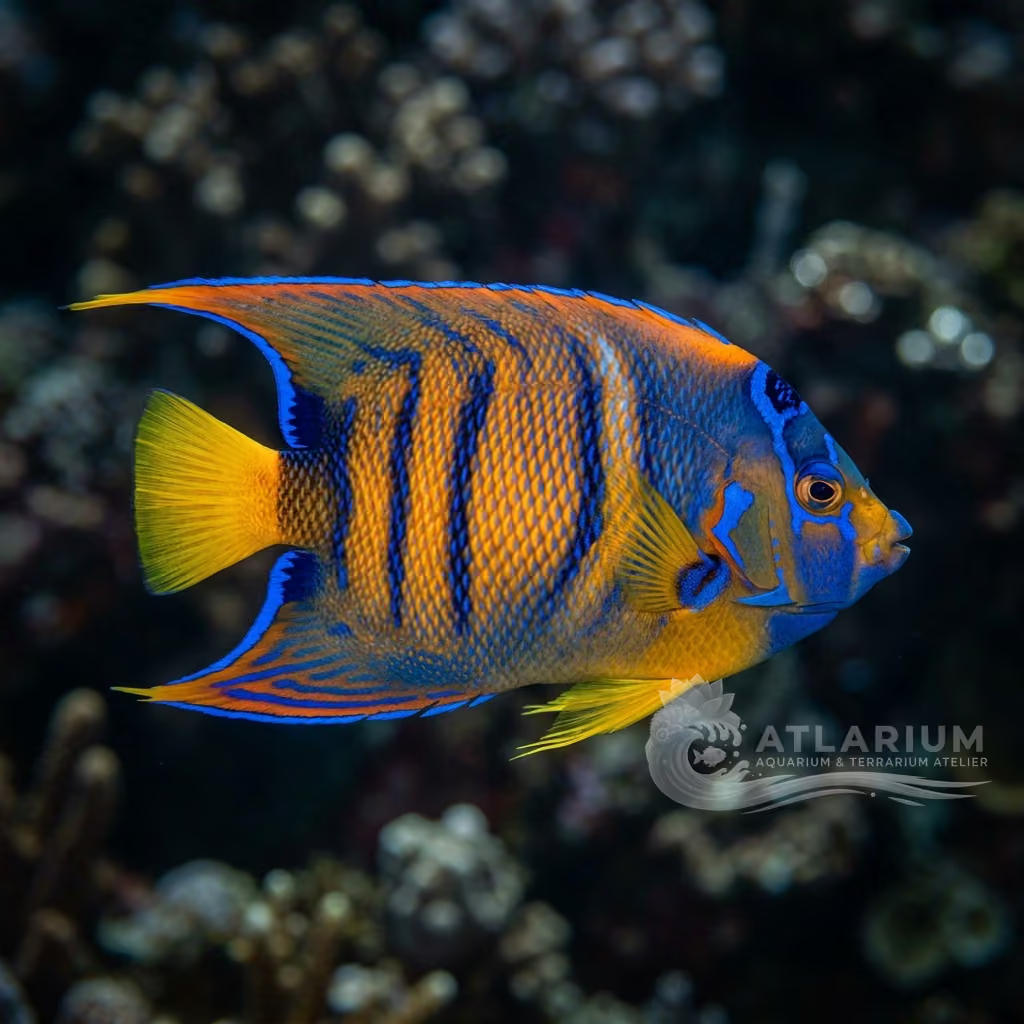
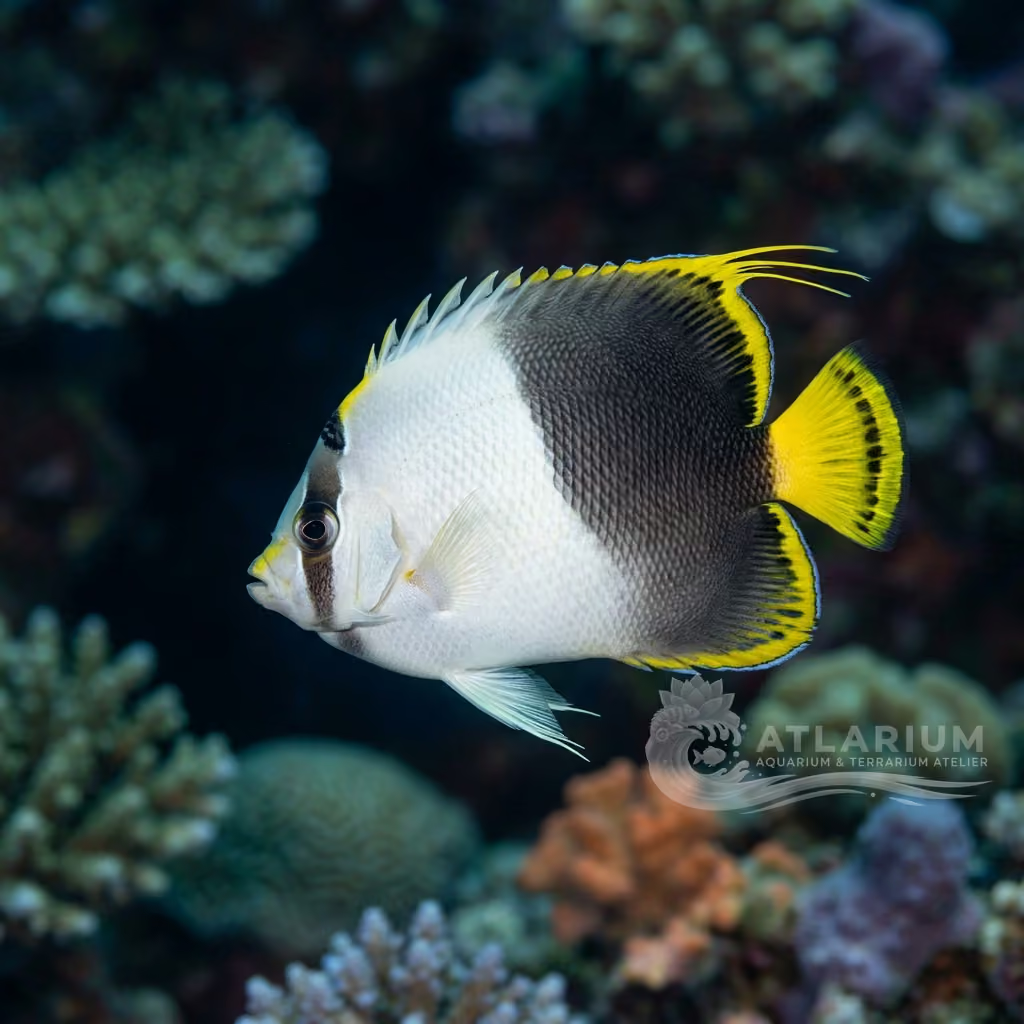
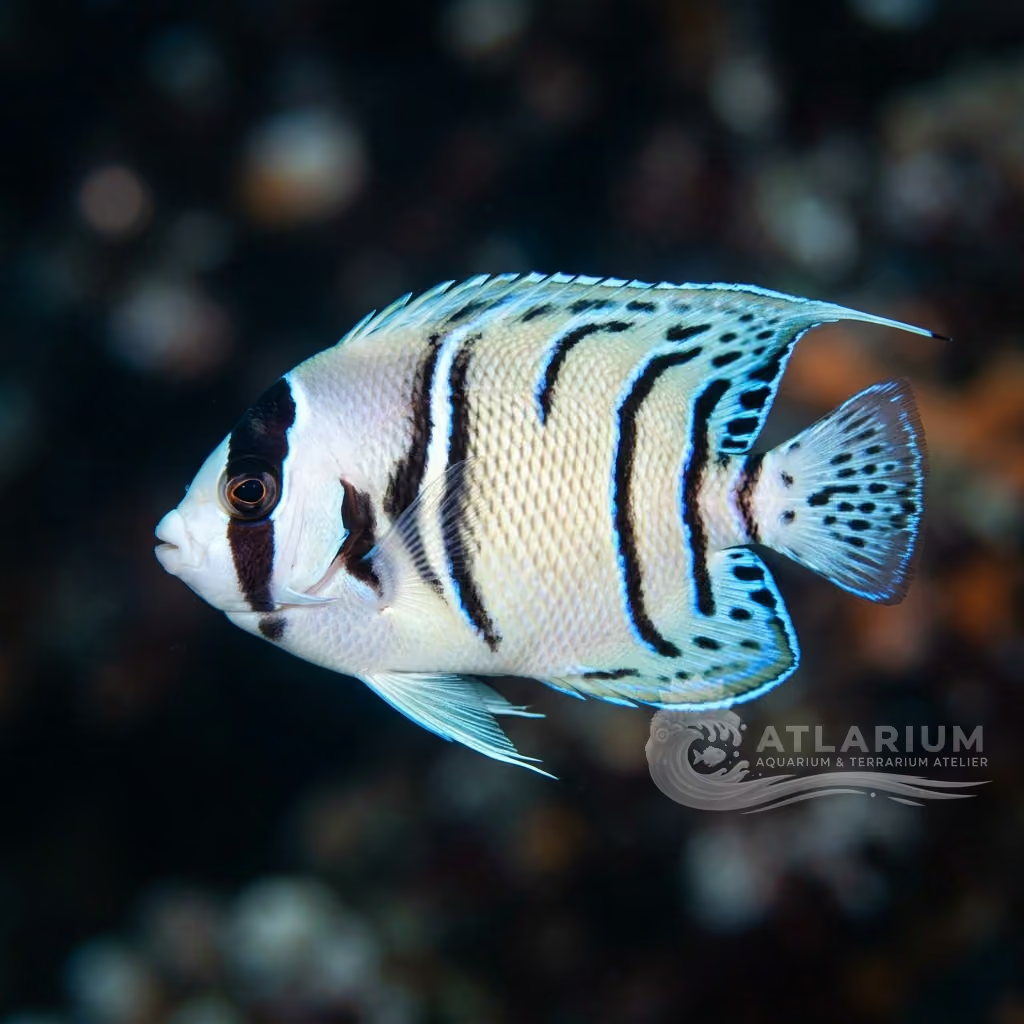
Coloration and Sexual Dimorphism: Juveniles are bright orange with vertical blue bands. Adults lose most of their bands, becoming brilliant orange-gold with olive-brown shading on the posterior body, outlined in electric blue. No sexual dimorphism.

Soins, reproduction et cohabitation
Aquarium Setup: Needs a tank of at least 500 liters with robust rockwork forming caves and territories to reduce stress. A wide open swimming area is also required.
Diet and Feeding: Specialized omnivore. Primarily feeds on sponges, tunicates, and algae in the wild. Provide high-quality commercial sponge-based angelfish foods, sheet algae, and frozen mysis.
Water Quality: Requires pristine water and high oxygen levels. Maintain temperature at 22-26°C, pH 8.1-8.4, and salinity at SG 1.020-1.025. Strong skimming is necessary.
Compatibility and Cohabitation: Avoid keeping with other large angelfish or similarly colored species. Peaceful yet active tankmates like tangs and wrasses are suitable.
Aquarium Breeding: Extremely rare in captivity. They are pelagic spawners that release eggs into the water column during dusk.
Risks and Diseases: Prone to marine ich (Cryptocaryon) and Head and Lateral Line Erosion (HLLE) if water quality or diet is subpar.

Origine et répartition géographiques
Endemic to the Revillagigedo Islands, particularly Clarion Island, off the Pacific coast of Mexico. Inhabits clear water rocky reefs and outer reef slopes exposed to strong oceanic currents.
Origine
Océans tropicaux et récifsAmérique centrale et Caraïbes

Profil de poisson
- Tempérament
- Territorial
- Semi-aggressive and territorial. Establish them as the last addition. They will dominate smaller timid fish.
- Régime alimentaire
- Omnivore
- Requires a specialized diet including sponges and algae. Offer high-quality frozen angelfish preparations. Supplement with nori.
- Espérance de vie
- 10-15 years
- Taille adulte
- 20 cm
- Ratio des sexes
- Solitary
- Usually kept as a single specimen. Pairs can be attempted in very large tanks. Two males will fight to the death.
- Fréquence d'alimentation
- Twice daily
- Feed at least two to three times daily. Small frequent meals are best. Ensure food contains marine sponges.
- Charge biologique
- Medium
- Angelfish produce a high bioload due to their size and diet. A strong protein skimmer is highly recommended. Regular maintenance is key.
- Courant
- Strong
- Moderate to strong flow is preferred. This simulates their natural reef environment. Allow some calm areas behind rocks.
- Risque de saut
- Yes
- They are not prone to jumping. However, a covered tank is always safer. Avoid startling them with sudden lights.
- Reproduction
- Oviparous
- Captive breeding is very difficult. They release eggs and sperm into the water column. Larvae are challenging to raise.
- Compatibilité et compagnons
- Reef safe
- They can nip at corals and clams. Best kept in FOWLR tanks. Avoid keeping with other large angelfish.
- Niveau dans le bac
- All levels
- They roam across all levels of the aquarium. They need plenty of live rock for grazing. Adequate swimming space is essential.

Modèles et paramètres scientifiques
FishBase
Fenêtre sur les données scientifiques officielles de l’espèce
FishBase v25.04Données synchronisées le : 15/06/2026
- Niveau trophique
- 2,6 ± 0 se
- Résilience
- Moyenne (1,4 - 4,4 ans)
- Singularité phylogénétique (PD50)
- 0.5078
- Relation bayésienne longueur-poids
- a = 0.0302, b = 2.89
- VulnérabilitéVulnérabilité faible (10 / 100)

Espèces associées
Recommandations regroupées par proches parents, compagnons et soins similaires.