Yellowfin Angelfish
Centropyge flavipectoralis
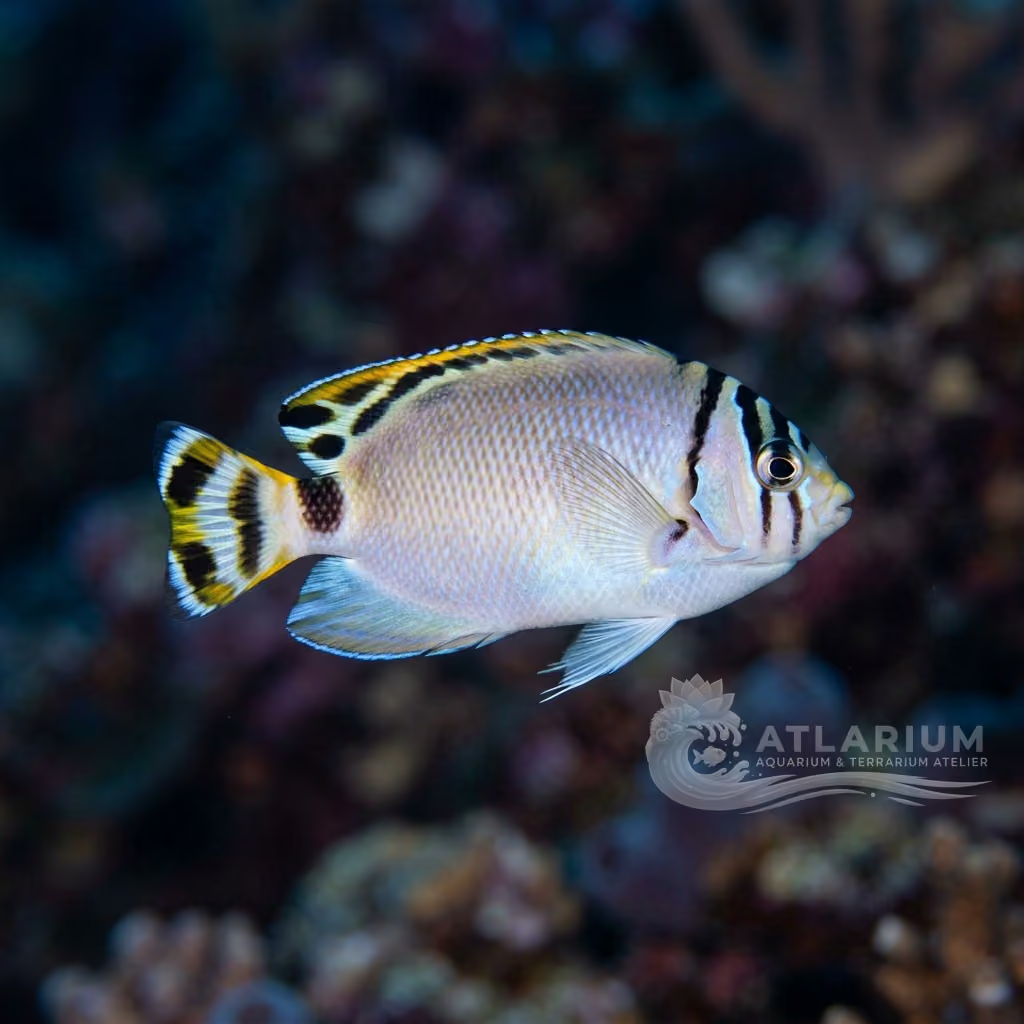
A striking dwarf angelfish defined by its deeply dark body perfectly contrasted by iridescent yellow pectoral fins, offering a captivating presence in reef aquariums.
Température de l’eau
22 - 26 °C
Valeur du pH
8.1 - 8.4
Type d'eau
Marin
Niveau dans le bac
Fond et milieu
Taille adulte
10 cm
Volume minimal du bac
>= 150 L
Groupe minimal
>= 1
KH
8 - 12 dKH

Description de l'espèce
Geographical Origin and Habitat: Centropyge flavipectoralis, commonly known as the yellowfin angelfish, is native to the tropical Indian Ocean. Its range is documented along the coastal reefs of Sri Lanka, the Maldive Islands, southern India, and the Andaman Sea. It inhabits coastal rubble slopes, silty reef environments, and sandy areas with scattered coral outcrops at depths between 3 and 30 meters, preferring warm waters with moderate current.
Taxonomy and Morphology: Belonging to the family Pomacanthidae and classified under the genus Centropyge. This dwarf angelfish reaches a maximum adult size of approximately 10 centimeters. It features an oval, laterally compressed body typical of the family. It is equipped with a sharp, prominent spine on the lower edge of the preopercle margin, which can easily catch on aquarium nets during handling.
Social Behavior: It has a shy and secretive temperament, spending most of its time near the rocky substrate or darting into caves. It lives in stable pairs or small harems composed of a dominant male and multiple females. It exhibits territorial behavior toward other dwarf angelfish of similar size or shape, but remains peaceful toward non-related species.
Coloration and Sexual Dimorphism: The body coloration is dark, ranging from dark blue-brown to charcoal grey, with fine vertical iridescent blue stripes on the flanks. Its most striking feature is its bright yellow pectoral fins, which create a beautiful contrast against the dark body. No clear sexual dimorphism is present, although mature males are generally slightly larger than females.

Soins, reproduction et cohabitation
Aquarium Setup: Requires a minimum tank size of 150-200 liters for a single specimen. The aquarium should be decorated with a large amount of mature live rock structured to create numerous caves, passages, and dark crevices for shelter. Having algae-covered rock surfaces is beneficial, as the fish will graze on them throughout the day.
Diet and Feeding: An omnivore with a herbivorous preference. In the wild, it grazes on filamentous algae, microalgae, detritus, and small invertebrates. In captivity, feed a varied diet of spirulina, marine algae, dried nori, and high-quality angelfish preparations containing sponge, supplemented with frozen mysis and brine shrimp. Offer small feedings 2-3 times daily.
Water Quality: Demands clean, stable marine water parameters: temperature between 24 °C and 28 °C, pH of 8.1-8.4, specific gravity of 1.020-1.025, and a dKH of 8-12. An efficient biological filtration system and a protein skimmer are necessary to maintain low levels of nitrates and phosphates, which can stress the fish.
Compatibility and Cohabitation: Reef compatibility is caution. It may nip at the polyps of stony corals (SPS and LPS) and clam mantles if underfed. Suitable tankmates include peaceful reef dwellers such as gobies, firefish, anthias, and medium-sized tangs. Do not house with other Centropyge species unless in a very large aquarium to prevent fighting.
Aquarium Breeding: Mating in captivity is very difficult. They are protogynous hermaphrodites, where the dominant female changes sex to male. Spawning involves a brief courtship dance at dusk where pelagic eggs are released into the water. Raising the delicate larvae is highly complex, requiring specialized live copepod cultures.
Risks and Diseases: Prone to parasitic infections like marine ich (Cryptocaryon irritans) and velvet (Amyloodinium ocellatum). Stress during shipping or poor water quality can trigger Head and Lateral Line Erosion (HLLE). To reduce risks, ensure a quarantine period for new arrivals and supplement food with vitamins and HUFAs.

Origine et répartition géographiques
Centropyge flavipectoralis, commonly known as the yellowfin angelfish, is native to the tropical Indian Ocean. Its range is documented along the coastal reefs of Sri Lanka, the Maldive Islands, southern India, and the Andaman Sea. It inhabits coastal rubble slopes, silty reef environments, and sandy areas with scattered coral outcrops at depths between 3 and 30 meters, preferring warm waters with moderate current.
Origine
Océans tropicaux et récifsAsie du Sud et du Sud-Est

Profil de poisson
- Tempérament
- Semi-aggressive
- Like most dwarf angelfish, this species exhibits a semi-aggressive and territorial temperament, particularly toward other members of the genus Centropyge or similarly shaped fish. They are generally peaceful toward unrelated tank mates that do not compete for the same food sources or territory. Establishing clear territories using extensive rockwork helps reduce potential conflict and allows the fish to establish its domain.
- Régime alimentaire
- Omnivore
- The Yellow-fin Angelfish is an omnivore with a strong preference for detritus, microalgae, and tiny benthic invertebrates. In an aquarium, they should be offered a varied diet consisting of high-quality spirulina, marine algae, mysis shrimp, brine shrimp, and specialized angelfish preparations containing sponge matter. Natural algae grazing on live rock is highly beneficial and supports their digestive health.
- Espérance de vie
- 5-10 years
- Taille adulte
- 10 cm
- Ratio des sexes
- Harem
- In a home aquarium, Centropyge flavipectoralis is best kept singly unless a very large tank is provided. They naturally live in harems consisting of one dominant male and several females, where all individuals are born female and the most dominant transforms into a male. If attempting to keep a group, it is crucial to introduce one larger male and multiple smaller females simultaneously in a spacious environment to prevent severe aggression.
- Fréquence d'alimentation
- Twice daily
- It is recommended to feed Centropyge flavipectoralis at least two to three times daily in small portions. Regular feedings help replicate their natural grazing behavior and keep them properly nourished. Consistent nutrition also reduces the likelihood of the fish nipping at corals, clam mantles, or other sessile invertebrates within the aquarium.
- Charge biologique
- Medium
- Centropyge flavipectoralis has a moderate biological load for a dwarf angelfish, given its size of up to 10 cm and its continuous grazing behavior. A well-established filtration system is essential, preferably with a high-quality protein skimmer, to manage organic waste and maintain pristine water conditions. Frequent partial water changes are also recommended to keep nitrates and other pollutants low, as dwarf angelfish are sensitive to declining water quality. Incorporating sufficient live rock provides natural biological filtration alongside mechanical means.
- Courant
- Moderate
- This species prefers moderate water flow, which mimics their natural outer reef slope and coral rubble habitats. A healthy current helps keep detritus suspended for filtration while providing a dynamic environment that encourages active swimming. Excessive or turbulent flow should be avoided in their primary resting and hiding areas to allow them comfortable shelter.
- Risque de saut
- Yes
- Centropyge flavipectoralis presents a moderate to high risk of jumping, especially when startled, chased by tank mates, or during night-time activity. They are agile and quick swimmers that can easily leap out of an open-topped aquarium when panicked. To prevent tragic escapes, a secure, tight-fitting lid or a fine mesh screen cover is highly recommended. Adequate hiding spots in the rockwork can also help minimize their startle response.
- Reproduction
- Oviparous
- Breeding Centropyge flavipectoralis in captivity is extremely difficult and rarely achieved by hobbyists. They are protogynous hermaphrodites that perform complex spawning rises in a deep water column during evening hours. Raising the pelagic larvae requires specialized microscopic live foods, such as specific copepods, and precise environmental controls, making commercial breeding highly complex.
- Compatibilité et compagnons
- Not reef safe
- They are generally compatible with a wide range of peaceful to semi-aggressive marine fish, such as damselfish, clowns, wrasses, and gobies. Caution is advised when keeping them in reef tanks, as they may nip at large-polyp stony (LPS) corals, soft corals, and clam mantles if underfed. They should not be housed with other dwarf angelfish unless the aquarium is exceptionally large with distinct territories.
- Niveau dans le bac
- Middle/Bottom
- This species is primarily a bottom-to-middle dweller, spending most of its time near the substrate and rockwork. They are highly active and inquisitive, constantly darting in and out of caves, crevices, and coral rubble in search of food. An open swimming space should be combined with abundant structure to accommodate their natural exploration patterns. They rarely venture near the very top of the tank unless during feeding or courtship rises.

Modèles et paramètres scientifiques
FishBase
Fenêtre sur les données scientifiques officielles de l’espèce
FishBase v25.04Données synchronisées le : 15/06/2026
- Niveau trophique
- 2,8 ± 0,3 se
- Résilience
- Élevée (moins de 15 mois)
- Singularité phylogénétique (PD50)
- 0.5
- Relation bayésienne longueur-poids
- a = 0.0302, b = 2.89
- VulnérabilitéVulnérabilité faible (10 / 100)

Espèces associées
Recommandations regroupées par proches parents, compagnons et soins similaires.