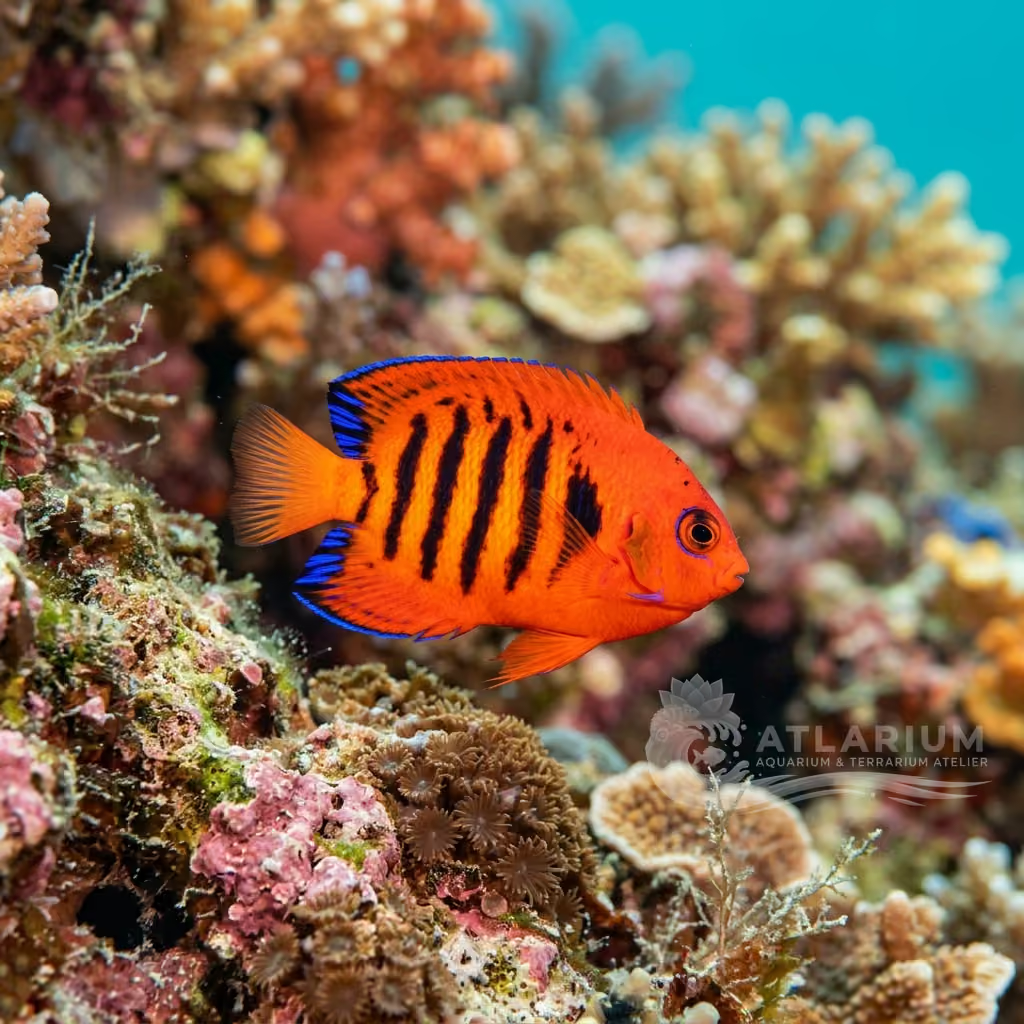
Blackear Angelfish
Centropyge hotumatua
A rare subtropical dwarf angelfish from the South Pacific, Centropyge hotumatua displays a bright orange head and requires cooler water and mature rockwork.
Température de l’eau
21 - 24 °C
Valeur du pH
8.1 - 8.4
Type d'eau
Marin
Niveau dans le bac
Fond et milieu
Taille adulte
8 cm
Volume minimal du bac
>= 250 L
Groupe minimal
>= 1
KH
8 - 12 dKH

Description de l'espèce
Geographical Origin and Habitat: Centropyge hotumatua is a dwarf angelfish native to the subtropical and temperate regions of the Southeastern Pacific Ocean, with populations concentrated around Easter Island (Rapa Nui), the Pitcairn Islands, Rapa Iti, and the Austral Islands. It inhabits rocky reefs and seaward reef slopes at depths ranging from 15 to 50 meters.
Taxonomy and Morphology: It belongs to the family Pomacanthidae. It features an oval, laterally compressed body with the characteristic preopercular spine typical of the genus Centropyge. It reaches a modest maximum length of about 8 centimeters in adulthood, placing it among the smaller dwarf angelfishes. It has large eyes and a small mouth for grazing.
Social Behavior: It is a shy and secretive species that lives in small haremic groups consisting of a dominant male and two to four females. It spends most of its time close to the substrate, moving quickly between volcanic rock crevices and coral formations to escape predators. It displays marked intraspecific territorial behavior.
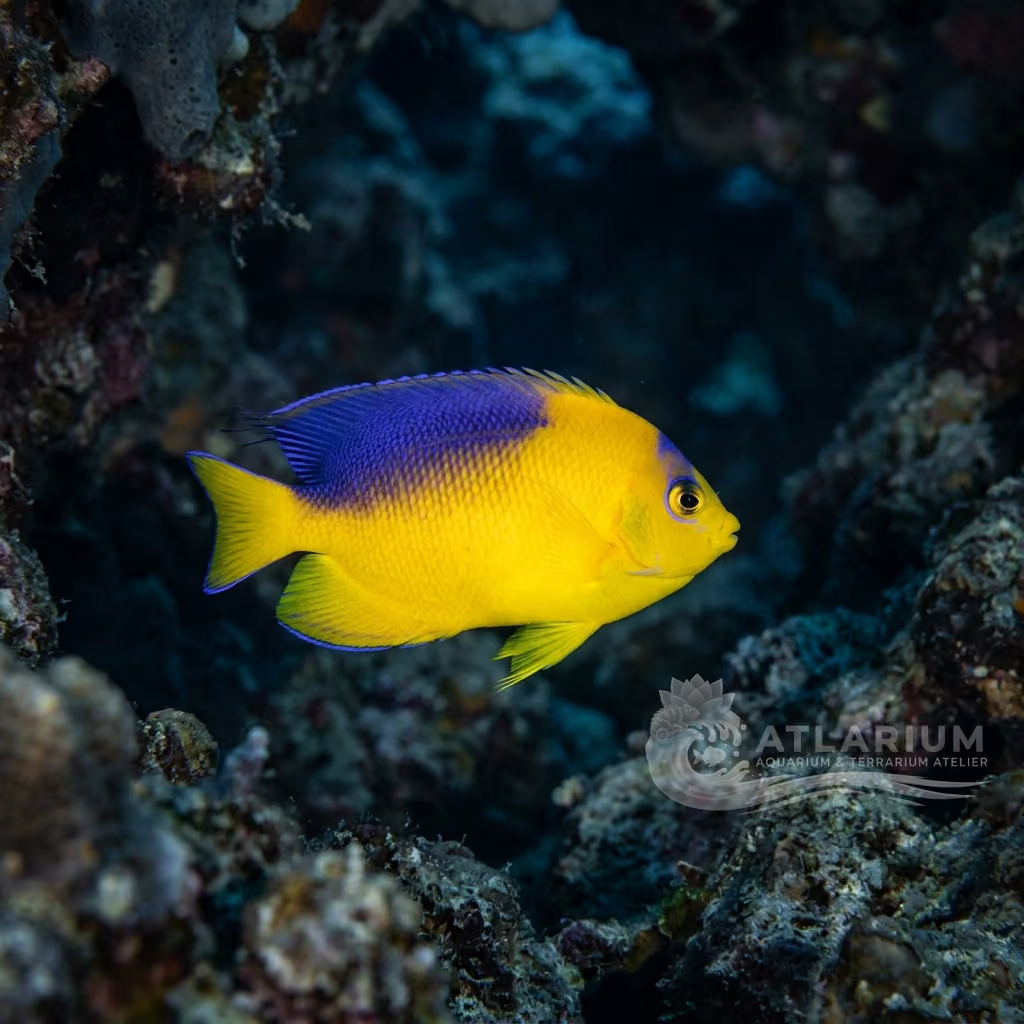
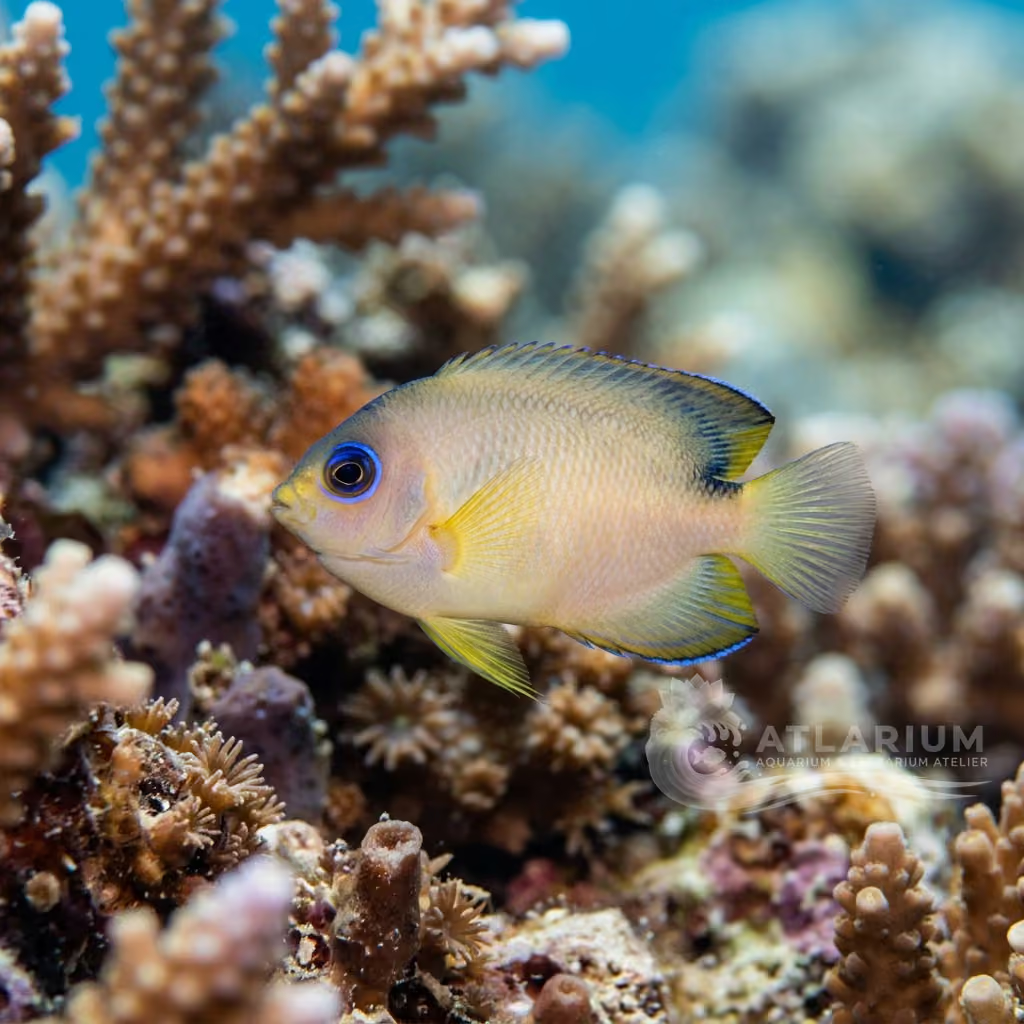
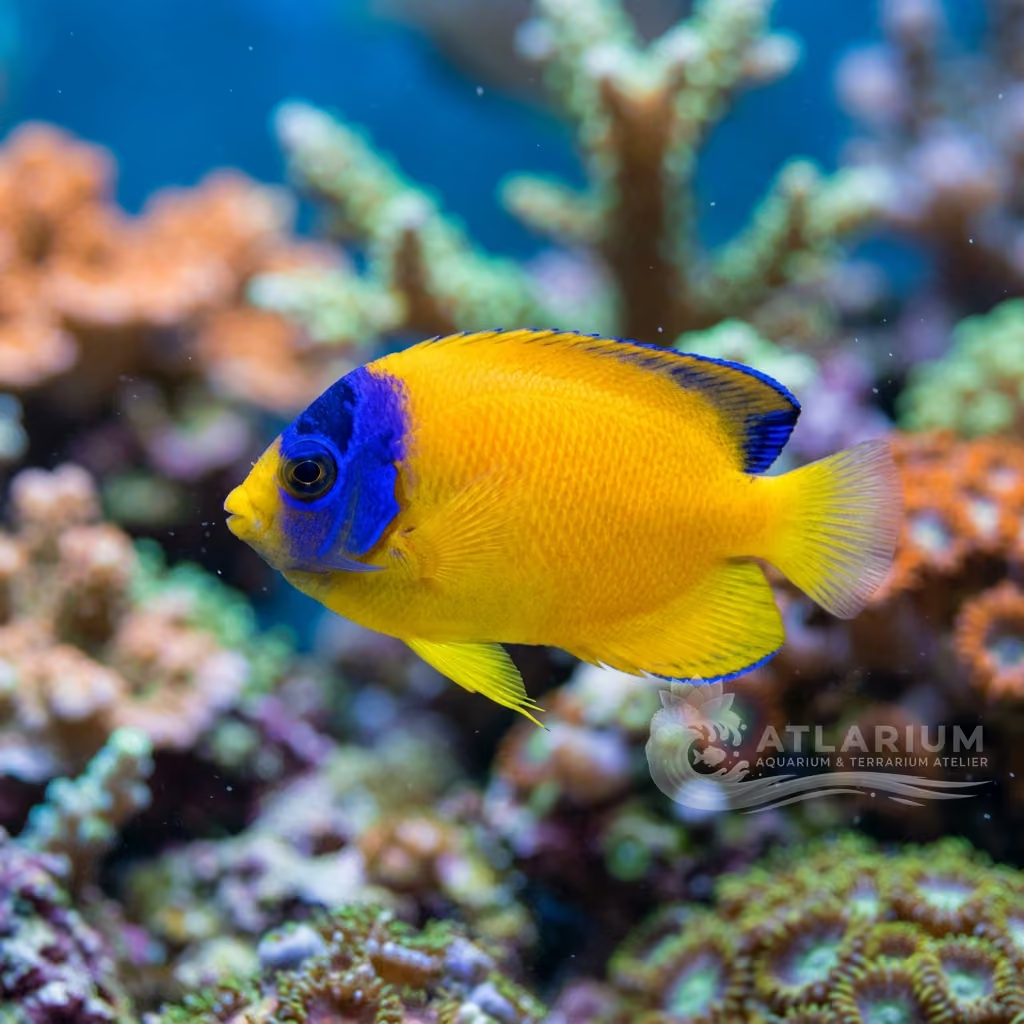
Coloration and Sexual Dimorphism: The coloration is striking: the main body is brownish-gray to dark brown, while the head, throat, and anterior back are bright orange or golden-yellow. It features a bright blue ring around the eye and a prominent black spot outlined in blue behind the eye near the operculum. External sexual dimorphism is minimal.

Soins, reproduction et cohabitation
Aquarium Setup: Requires a mature marine aquarium of at least 200 liters with an abundance of live rock. It is essential to structure the layout with numerous caves, overhangs, and tight crevices where the fish can hide immediately when startled. A tank with a healthy growth of natural microalgae on the rocks will aid in acclimation.
Diet and Feeding: It is an omnivorous grazer. In the aquarium, it feeds on microalgae and organic detritus growing on the rockwork. Provide a varied diet containing spirulina, specialized angelfish preparations containing sponge material, mysis shrimp, brine shrimp, and frozen clams. Feed small portions multiple times a day.
Water Quality: Requires excellent water quality and stable parameters: optimal temperature is slightly cooler than typical tropical reefs, ranging from 22°C to 25°C, pH 8.1-8.4, and specific gravity 1.022-1.025. It is important to keep nitrate levels low and use an efficient protein skimmer along with a mature biological filtration system.
Compatibility and Cohabitation: Like many dwarf angelfish, it is not considered 100% reef-safe. It may nip at large polyp stony (LPS) corals, soft corals, and clam mantles, especially if underfed. It can coexist with peaceful reef fish, but avoid keeping it with aggressive tankmates or other angelfish species of the genus Centropyge.
Aquarium Breeding: Reproduction in captivity is extremely difficult and has only been achieved by specialized breeding facilities. They are protogynous hermaphrodites (starting life as females, with the dominant individual transitioning to male). They are broadcast spawners, and rearing the pelagic larvae requires complex live food protocols.
Risks and Diseases: The primary risks occur during the initial acclimation period, when the fish may refuse artificial food due to stress from transport. Being a subtropical, deeper-water species, it is highly sensitive to elevated water temperatures (above 27°C) and can easily contract parasitic infections if water quality declines.

Origine et répartition géographiques
Centropyge hotumatua is a dwarf angelfish native to the subtropical and temperate regions of the Southeastern Pacific Ocean, with populations concentrated around Easter Island (Rapa Nui), the Pitcairn Islands, Rapa Iti, and the Austral Islands. It inhabits rocky reefs and seaward reef slopes at depths ranging from 15 to 50 meters.
Origine
Océans tropicaux et récifsAmérique du Sud hors AmazonieAustralie, Nouvelle-Guinée et Océanie

Profil de poisson
- Tempérament
- Semi-aggressive
- This dwarf angelfish exhibits a semi-aggressive and highly territorial temperament, particularly toward other members of its genus. It is typically shy and reclusive when first introduced, needing time to acclimate to its surroundings. Once established, it will defend its chosen territory and may harass similar-looking fish or smaller, passive tankmates. It is generally peaceful toward unrelated, active species like wrasses and gobies.
- Régime alimentaire
- Omnivore
- The Hotumatua Angelfish is an omnivorous grazer that feeds on detritus, microalgae, and tiny benthic invertebrates in nature. In the aquarium, they require a diverse diet consisting of high-quality marine algae, spirulina, and specialized angelfish formulas containing sponge matter. They should also be offered frozen foods such as mysis and brine shrimp to ensure proper nutrition. Supplementing their diet with vitamin-enriched foods will help maintain their vibrant yellow and dark purple coloration.
- Espérance de vie
- 5-10 years
- Taille adulte
- 8 cm
- Ratio des sexes
- Harem
- In the wild, these protogynous hermaphrodites form small harems consisting of one dominant male and several females. In the home aquarium, it is best kept as a single specimen to avoid severe territorial aggression. Keeping them in pairs or small groups is only recommended in very large tanks with extensive rockwork, where the largest individual will transition into the dominant male. Introducing all specimens simultaneously as juveniles can minimize the risk of conflict.
- Fréquence d'alimentation
- Twice daily
- It is recommended to feed the Hotumatua Angelfish small portions two to three times daily. Because they are active foragers with small digestive systems, they benefit from frequent, small feedings rather than one large meal. Constant grazing opportunities on live rock also help satisfy their natural feeding habits throughout the day. Under-feeding can lead to nutritional deficiencies and increase the likelihood of them nipping at corals.
- Charge biologique
- Low to Medium
- The Hotumatua Angelfish has a low-medium bioload due to its small adult size of approximately 8 centimeters. While it does not produce a significant amount of waste, it is a constant grazer that requires a mature tank with established live rock. Adequate biological filtration and a reliable protein skimmer are recommended to maintain pristine water conditions. Frequent small water changes will help keep nitrates and phosphates at minimal levels.
- Courant
- Strong
- This species prefers moderate water flow, which mimics the natural movement of their native rocky slopes and reefs. The current should be strong enough to keep the water well-oxygenated and clean, but not so overpowering that it prevents the fish from swimming comfortably. Providing low-flow areas, such as caves and deep crevices, is essential to give them spots to rest. A combination of wavemakers and structured rockwork can create the ideal flow dynamics.
- Risque de saut
- Yes
- The Hotumatua Angelfish poses a moderate to high jump risk, especially when startled, stressed, or during territorial chases. They can easily leap through small openings in the aquarium lid when darting away from a perceived threat. A tight-fitting lid or a fine mesh screen top is absolutely essential to prevent accidental escapes. It is also helpful to keep the lighting dim during acclimation to reduce their stress and jumping behavior.
- Reproduction
- Rare / not documented
- Reproduction in captivity is extremely difficult and rarely documented for the Hotumatua Angelfish. They are broadcast spawners that perform a rising courtship ritual at dusk to release pelagic eggs into the water column. While some dwarf angelfish species have been bred by specialists, raising the microscopic larvae requires highly specialized live foods like copepods. Consequently, there are no commercial breeding programs, and all specimens in the hobby are wild-caught.
- Compatibilité et compagnons
- Territorial
- The Hotumatua Angelfish is considered reef-safe with caution, as it is known to nip at large polyp stony (LPS) corals, zoanthids, and clam mantles. It is highly compatible with active, reef-dwelling species such as wrasses, gobies, and larger, semi-aggressive fish. It should not be housed with other dwarf angelfish or fish of similar shape and color unless the tank is exceptionally large. Careful monitoring is advised when introducing this species to a reef tank to ensure corals are not damaged.
- Niveau dans le bac
- Middle/Bottom
- This species primarily occupies the bottom-middle levels of the aquarium, remaining close to the safety of rockwork. They are shy by nature and spend much of their time darting in and out of crevices, caves, and overhangs. They rarely venture into the upper open-water zones unless feeding or during spawning rituals. Providing plenty of rocky structures is crucial to replicate their natural habitat and make them feel secure.

Modèles et paramètres scientifiques
FishBase
Fenêtre sur les données scientifiques officielles de l’espèce
FishBase v25.04Données synchronisées le : 15/06/2026
- Niveau trophique
- 2,8 ± 0,3 se
- Résilience
- Élevée (moins de 15 mois)
- Singularité phylogénétique (PD50)
- 0.5
- Relation bayésienne longueur-poids
- a = 0.0302, b = 2.89
- VulnérabilitéVulnérabilité faible (10 / 100)

Espèces associées
Recommandations regroupées par proches parents, compagnons et soins similaires.