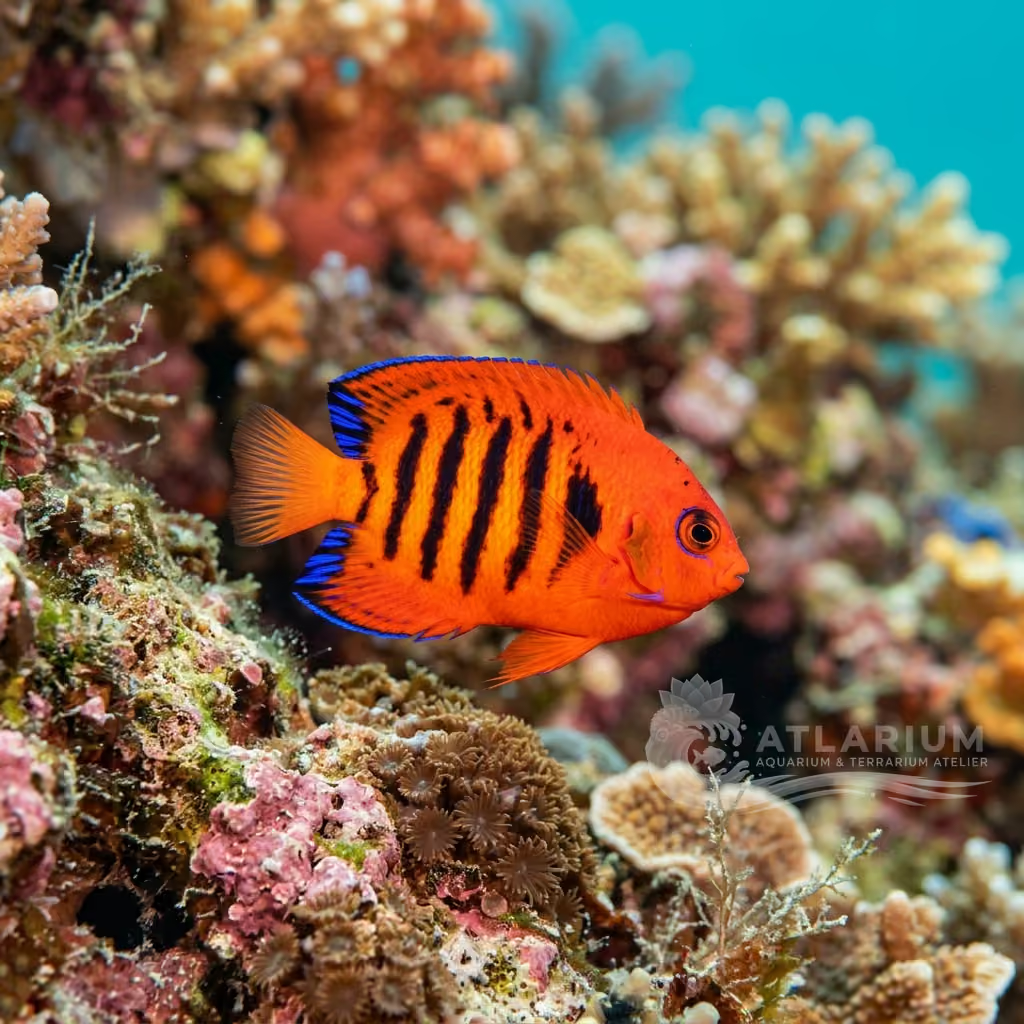
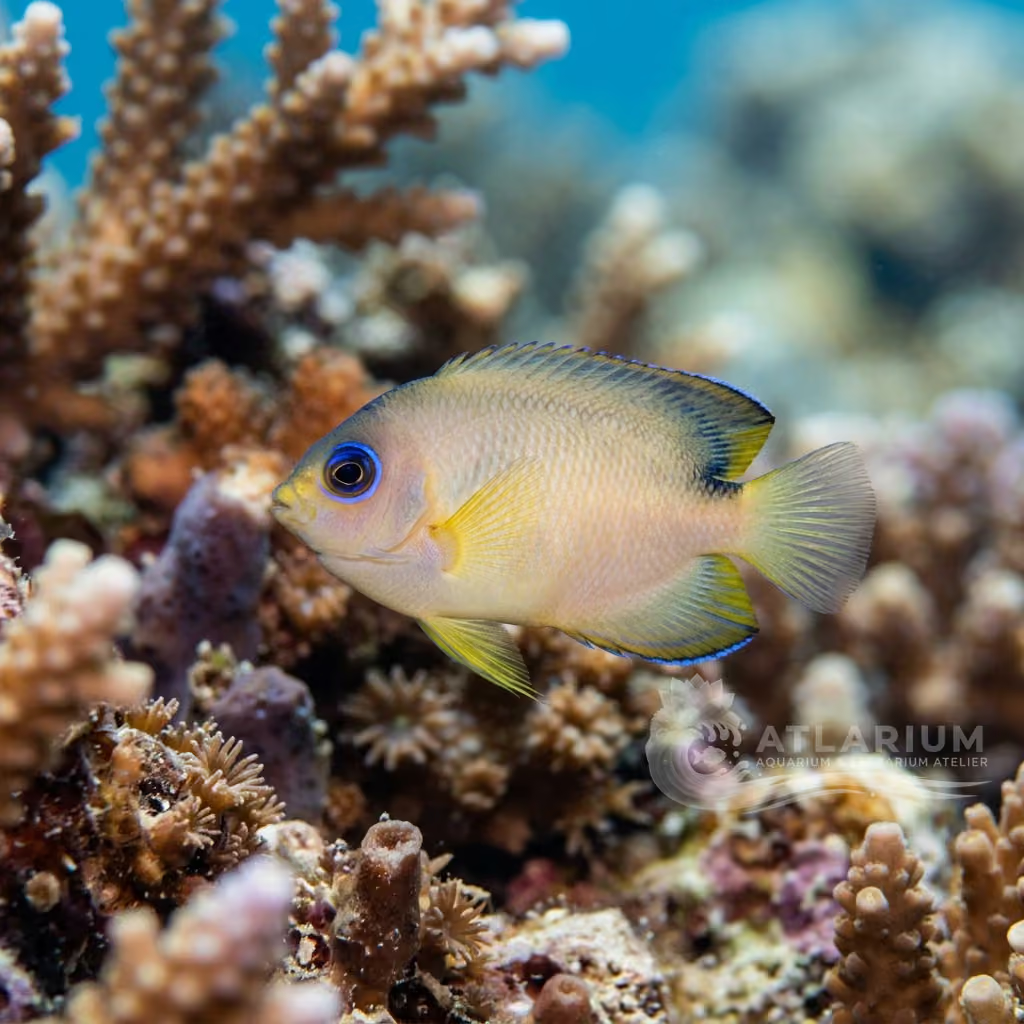
Bicolor Angelfish
Centropyge bicolor
The bicolor angelfish (Centropyge bicolor) is a striking tropical marine species from the Indo-Pacific, easily recognized by its bright yellow front half and deep blue posterior. A territorial protogynous hermaphrodite, it lives in small harems across coral reefs, spending its days grazing on filamentous algae and small crustaceans.
Température de l’eau
24 - 28 °C
Valeur du pH
8.1 - 8.4
Type d'eau
Marin
Niveau dans le bac
Fond et milieu
Taille adulte
15 cm
Volume minimal du bac
250 L
Groupe minimal
>= 1
KH
4 - 6 dKH

Description de l'espèce
Geographical Origin and Habitat: Native to the tropical Indo-Pacific, from East Africa to the Samoan islands and southern Japan. Prefers steep reef slopes, coral drop-offs, and rocky lagoons at depths ranging from 1 to 25 meters, always in the vicinity of abundant hiding places.
Taxonomy and Morphology: Known as the Bicolor Angelfish. It is one of the largest species within the dwarf angelfish genus (Centropyge), reaching a substantial size of 15 cm (6 inches). Possesses the iconic lethal spine on the cheek (preopercle). Laterally compressed and deep body, to navigate through coral branches.
Social Behavior: Fish with a strong and territorial character. In the wild, harems consist of a dominant male patrolling a vast area populated by several females. In the aquarium, it is initially shy, then becomes the proud master of its rocks, chasing away anyone who dares to invade its main refuge.
Coloration and Sexual Dimorphism: Perfectly explanatory name: the front half of the body, pelvic fins, and tail are a bright luminous lemon yellow, while the entire rear half and a band over the eye (like a mask) are a very deep cobalt blue. Protogynous hermaphrodites (born female, the dominant one changes sex to become male).

Soins, reproduction et cohabitation
Aquarium Setup: Tank of at least 250 liters (65 gallons), obligatorily rich in mature Live Rock offering crevices it can dive into at the slightest perception of danger. Needs ample free space for swimming. Intense lighting does not disturb it, provided there are shadows cast by the rocks.
Diet and Feeding: In the wild, it grazes almost exclusively on sponges, tunicates, filamentous algae, and diatoms. In the aquarium, this propensity makes it the worst enemy of corals: it is notorious for relentlessly destroying brain corals (LPS) and Zoanthids. Must receive a rich diet based on angelfish preparations (containing sponge extracts), Nori, spirulina, and mysis.
Water Quality: A decidedly demanding and delicate fish during acclimation. Temperature 24-28 °C (75-82 °F). Stable pH strictly above 8.1. Highly sensitive to nitrate accumulation and salinity fluctuations. It is one of the marine fish that benefits most from the use of UV-C sterilizers to reduce the bacterial load in the tank.
Compatibility and Cohabitation: NOT RECOMMENDED for reef aquariums (Reef Safe: NO). It is preferable to keep it in FO (Fish Only) or FOWLR (Fish Only With Live Rock) aquariums. Extremely aggressive toward other dwarf angelfish. Coexists well with Butterflyfish, Tangs, large Damselfish, and peaceful Triggerfish.
Aquarium Breeding: Not documented in amateur tanks. Reproduces at dusk by rising vertically in the water column and releasing fertilized pelagic eggs, which are dispersed in the open sea by currents. The young go through a planktonic stage that is impossible to sustain in captivity due to a lack of suitable micro-foods.
Risks and Diseases: Famous for having a dramatically low survival rate during the first month of introduction (the "Bicolor curse"). Extremely susceptible to marine velvet disease (Oodinium / Amyloodinium) induced by transport stress. Ensure you buy specimens that are already eating voraciously in the shop.

Origine et répartition géographiques
Native to the tropical Indo-Pacific, from East Africa to the Samoan islands and southern Japan. Prefers steep reef slopes, coral drop-offs, and rocky lagoons at depths ranging from 1 to 25 meters, always in the vicinity of abundant hiding places.
Origine
Océans tropicaux et récifsAfrique et MadagascarAsie de l'Est

Profil de poisson
- Tempérament
- Semi-aggressive
- This species has a semi-aggressive temperament and can be highly territorial, particularly toward other dwarf angelfish or fish with similar color patterns. It is generally peaceful toward unrelated, passive tank mates but will actively defend its established territory. Introducing the Bicolor Angelfish last to the aquarium can help minimize territorial disputes.
- Régime alimentaire
- Omnivore
- The Bicolor Angelfish is an omnivore with a heavy reliance on herbivorous foods such as marine algae and detritus. In the aquarium, their diet should consist of high-quality spirulina, specialized angelfish preparations containing sponge matter, and frozen foods like mysis and brine shrimp. A mature tank with plenty of live rock is crucial to allow them to graze on natural microalgae.
- Espérance de vie
- 5-13 years
- Taille adulte
- 15 cm
- Ratio des sexes
- Harem
- In the aquarium, it is highly recommended to keep the Bicolor Angelfish singly due to intense territorial aggression. If attempting to keep them in groups, a harem structure of one male to several females is required, which is only feasible in very large tanks. Because they are protogynous hermaphrodites, a group of juveniles will eventually establish a hierarchy where the dominant fish transitions into a male.
- Fréquence d'alimentation
- Twice daily
- Due to their high activity levels and continuous grazing behavior, Bicolor Angelfish should be fed small portions two to three times daily. This frequent feeding schedule helps mimic their natural foraging habits on the reef and prevents nutritional deficiencies. The presence of established live rock in the tank provides additional grazing opportunities between meals.
- Charge biologique
- Medium
- The Bicolor Angelfish has a medium bioload due to its active nature and continuous grazing habits. It requires a well-established filtration system, preferably with a protein skimmer, to handle the organic waste it produces. Regular water changes and monitoring of nitrates and phosphates are essential to maintain the pristine water quality this species needs to thrive.
- Courant
- Strong
- Centropyge bicolor needs brisk, oxygen-rich circulation, with the strongest return flow spread through open water rather than aimed continuously at one refuge. Tank of at least 250 liters (65 gallons), obligatorily rich in mature Live Rock offering crevices it can dive into at the slightest perception of danger. Needs ample free space for swimming. Keep solid cover available so the fish can leave the fastest water whenever it chooses.
- Risque de saut
- Yes
- The Bicolor Angelfish poses a moderate risk of jumping, especially when startled, stressed, or chased by tank mates. This behavior is particularly common during the initial acclimation period or when aquarium lights turn off. To prevent escape, a tight-fitting lid or a secure mesh cover is highly recommended.
- Reproduction
- Oviparous
- Breeding this species in captivity is extremely difficult and rarely achieved by home aquarists. They are protogynous hermaphrodites that perform elaborate courtship rituals at dusk, culminating in the release of pelagic eggs into the water column. Raising the minuscule, sensitive larvae requires specialized live food and precise environmental controls that are hard to replicate outside of professional aquaculture facilities.
- Compatibilité et compagnons
- With caution
- The Bicolor Angelfish is reef-compatible with caution, as it is prone to nipping at large-polyp stony (LPS) corals, zoanthids, and clam mantles. It coexists well with active, semi-aggressive tank mates such as wrasses, tangs, and larger clownfish. It should not be housed with other dwarf angelfish or passive, slow-moving species that are easily intimidated.
- Niveau dans le bac
- Middle/Bottom
- This species is primarily active in the bottom and middle zones of the aquarium. It spends most of its time darting through the crevices and pathways of the live rock structure in search of food and shelter. Providing a complex rockwork layout mimics their natural reef environment and helps them feel secure in these swimming zones.

Modèles et paramètres scientifiques
FishBase
Fenêtre sur les données scientifiques officielles de l’espèce
FishBase v25.04Données synchronisées le : 15/06/2026
- Niveau trophique
- 3 ± 0,34 se
- Résilience
- Faible (4,5 - 14 ans)
- Temps de génération
- 0,8 ans
- Singularité phylogénétique (PD50)
- 0.5
- Relation bayésienne longueur-poids
- a = 0.0302, b = 2.89
- VulnérabilitéVulnérabilité faible (11 / 100)

Espèces associées
Recommandations regroupées par proches parents, compagnons et soins similaires.