Bluering angelfish
Pomacanthus annularis
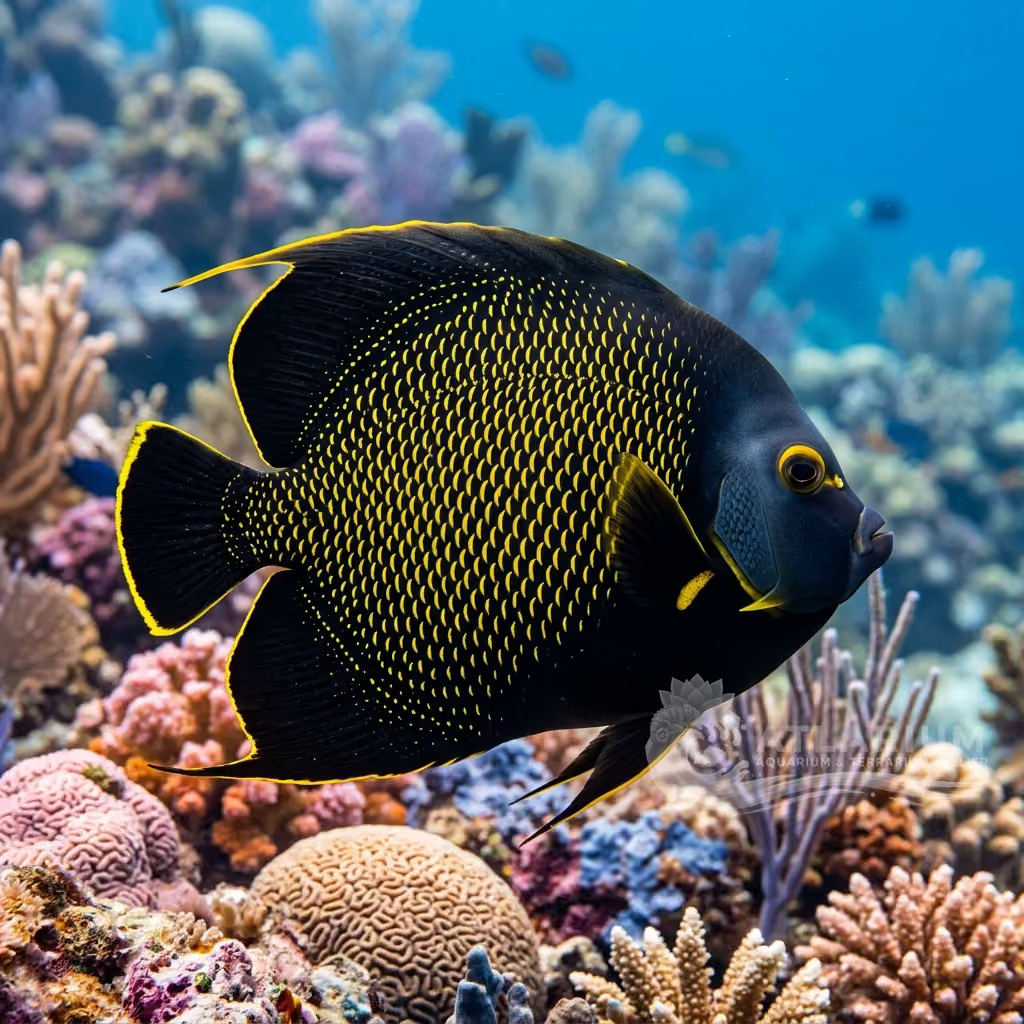
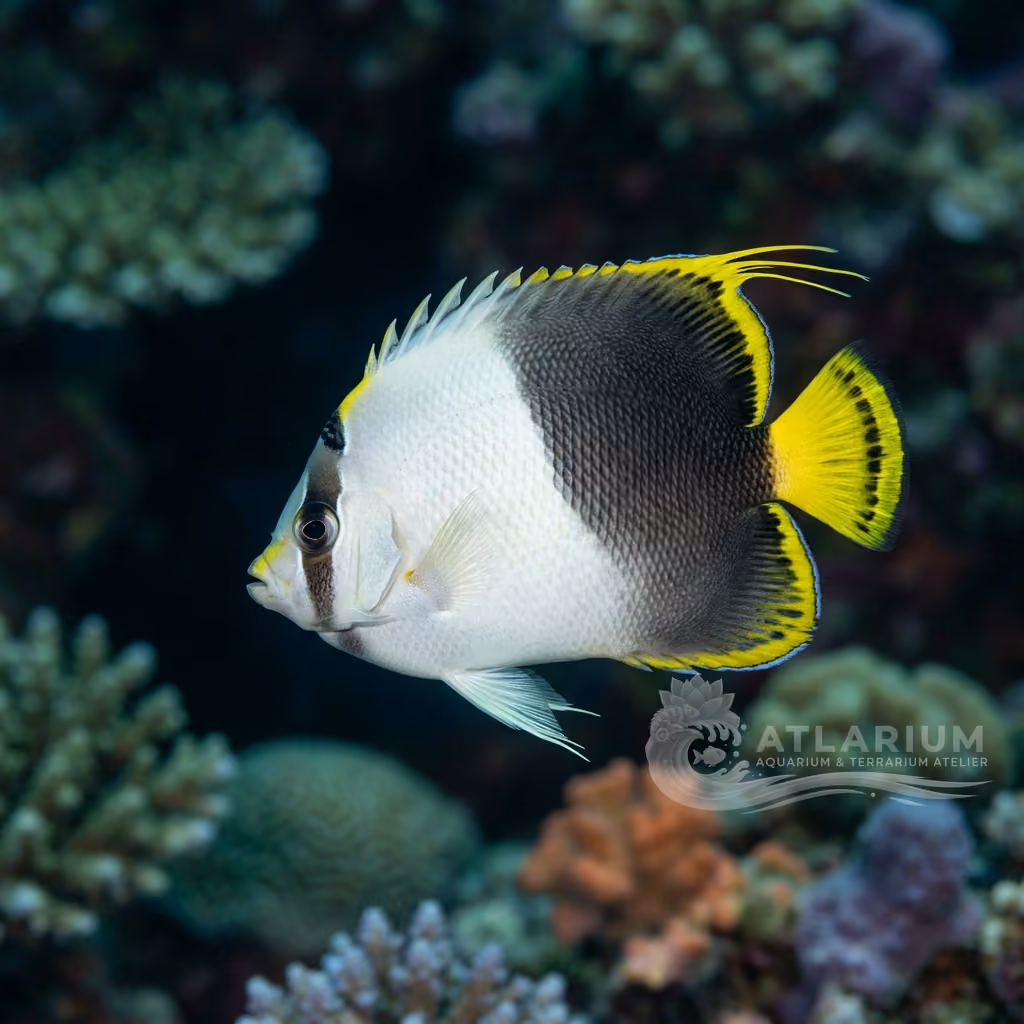
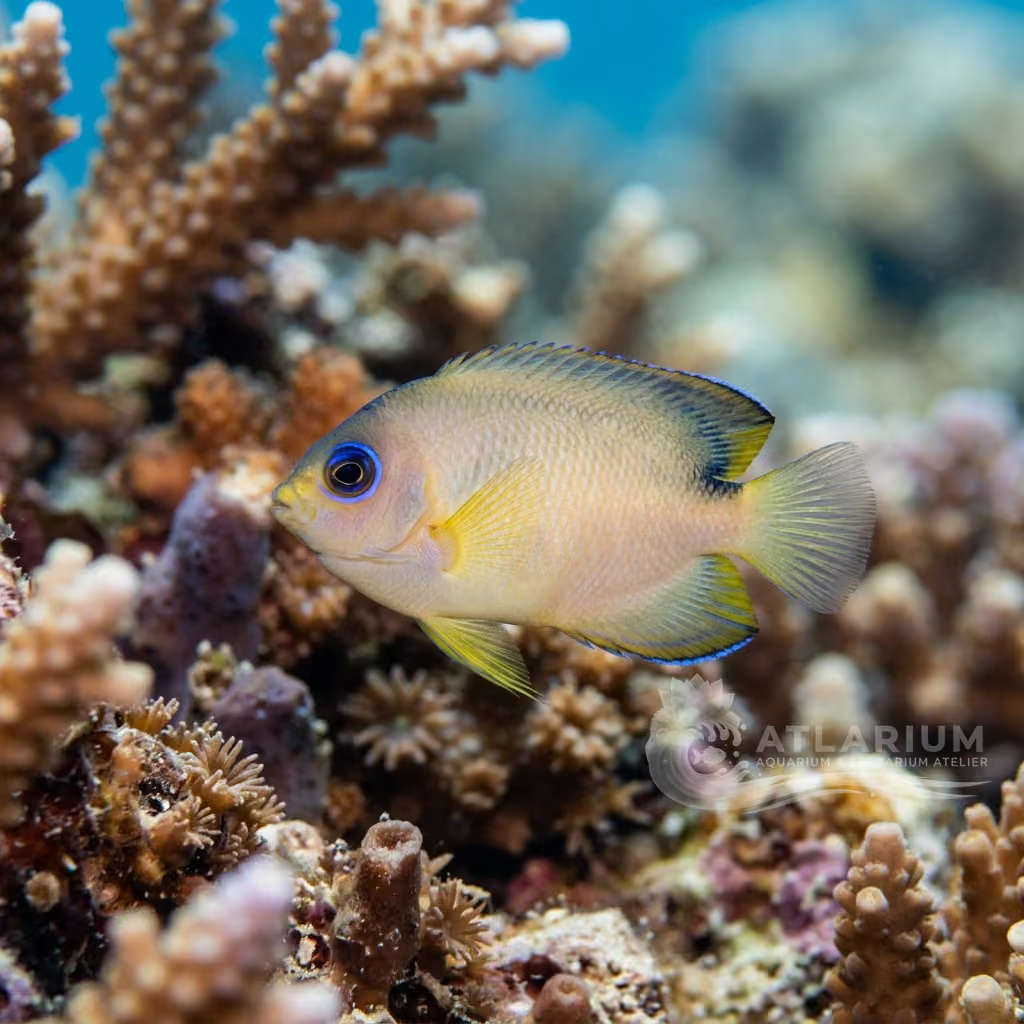
A large, magnificent Indo-Pacific marine angelfish, famed for its golden-brown body with curved blue stripes and a distinct blue ring near the gill cover.
Température de l’eau
24 - 28 °C
Valeur du pH
8.1 - 8.4
Type d'eau
Marin
Niveau dans le bac
Tous les niveaux
Taille adulte
45 cm
Volume minimal du bac
>= 800 L
Groupe minimal
>= 1
KH
8 - 12 dKH

Description de l'espèce
Geographical Origin and Habitat: Pomacanthus annularis, also known as the blue ring angelfish, is widely distributed in the Indo-West Pacific. Its range spans from the coast of East Africa and Madagascar, through India and Sri Lanka, to Indonesia, the Philippines, northern Australia, and southern Japan. It inhabits coastal coral reefs, deep lagoons, and shipwrecks, often in turbid waters rich in sponges and soft corals, at depths up to 60 meters.
Taxonomy and Morphology: Belongs to the family Pomacanthidae and the genus Pomacanthus. It is a large angelfish species capable of reaching a maximum length of 45 cm in the wild, though typically stays around 30 cm in aquariums. It has a deep, laterally compressed body and a sharp preopercular spine. Juveniles undergo a complete morphological and color transition to the adult form.
Social Behavior: Territorial and solitary, or found in stable monogamous pairs. Adults defend large territories and can be aggressive toward other large angelfish. While initially shy and reclusive when introduced to a new aquarium, they acclimate to become bold, active, and dominant fish.
Coloration and Sexual Dimorphism: Adults exhibit a golden-brown or amber body color highlighted by several curved, neon blue lines extending toward the back. A prominent blue ring is situated just above the gill cover. The caudal fin is white with a yellow margin. Juveniles are dark blue with curved white and light blue vertical stripes. There is no visible sexual dimorphism.

Soins, reproduction et cohabitation
Aquarium Setup: Requires a very large aquarium of at least 700-800 liters for an adult specimen. Securely stack live rock to construct massive caves and swim-through tunnels to provide shelter, while leaving a large open area in the front of the tank for active swimming. Strong water movement is recommended.
Diet and Feeding: An omnivore that feeds primarily on sponges, tunicates, and macroalgae in nature. In captivity, feed high-quality angelfish preparations containing sponge matter, spirulina flakes, dried nori seaweed, and frozen foods like mysis, krill, and chopped clams. Feed 2 to 3 times daily.
Water Quality: Requires clean, stable water conditions: temperature of 24 °C to 28 °C, pH of 8.1 to 8.4, specific gravity of 1.020 to 1.025. Keep nitrates low (under 20 ppm) through robust chemical and biological filtration, carbon use, and regular water changes of 15% every two weeks.
Compatibility and Cohabitation: Not reef-safe. It will readily nip at stony corals, soft corals, zoanthids, and clam mantles. It is best suited for a fish-only-with-live-rock (FOWLR) tank with other large, semi-aggressive species such as tangs, large wrasses, triggers, and groupers.
Aquarium Breeding: Breeding in captivity is extremely rare and difficult due to their size, the pelagic nature of their spawning ritual (which requires tall water columns), and the challenges of raising fragile larvae that require live planktonic feeds.
Risks and Diseases: Susceptible to Head and Lateral Line Erosion (HLLE), which is associated with poor diet and excessive use of fine activated carbon. They are also prone to marine Ich and velvet. A thorough quarantine process is highly advised for all new specimens.

Origine et répartition géographiques
Pomacanthus annularis, also known as the blue ring angelfish, is widely distributed in the Indo-West Pacific. Its range spans from the coast of East Africa and Madagascar, through India and Sri Lanka, to Indonesia, the Philippines, northern Australia, and southern Japan. It inhabits coastal coral reefs, deep lagoons, and shipwrecks, often in turbid waters rich in sponges and soft corals, at depths up to 60 meters.
Origine
Océans tropicaux et récifsAfrique et MadagascarAsie du Sud et du Sud-EstAustralie, Nouvelle-Guinée et Océanie

Profil de poisson
- Tempérament
- Semi-aggressive
- This is a bold, assertive, and frequently aggressive fish that will firmly establish itself at the top of the tank's social hierarchy. It will actively chase and harass new additions, especially those possessing a similar body shape or dietary niche. To minimize severe conflicts, it should ideally be one of the last fish introduced to the established aquarium.
- Régime alimentaire
- Omnivore
- In the wild, their diet consists heavily of sponges, tunicates, and various benthic invertebrates. In captivity, they must be offered a specialized angelfish diet containing marine sponge extract to ensure long-term health. This should be heavily supplemented with high-quality frozen mysis shrimp, spirulina, and fresh macroalgae to mimic their natural omnivorous foraging.
- Espérance de vie
- 10-15 years
- Taille adulte
- 45 cm
- Ratio des sexes
- Solitary
- Sexing this species externally is extremely difficult, as males and females exhibit virtually identical vibrant coloration and overall body shape. Due to their extreme territoriality, keeping more than one specimen per tank is strongly discouraged unless the aquarium is hundreds of gallons in volume. In commercial settings, a proven male and female might be paired, but it remains highly risky.
- Fréquence d'alimentation
- 3-4 times daily
- To maintain optimal health and weight, the Blue Ring Angelfish should be fed multiple small meals throughout the day. Offering food two to three times daily helps prevent extreme aggression and ensures they receive adequate, continuous nutrition. A varied feeding schedule also mimics their natural, constant grazing behavior on the reef.
- Charge biologique
- High
- The Blue Ring Angelfish is a large, heavily bodied marine fish that contributes a substantial bioload to the aquarium. It requires excellent water quality, meaning robust protein skimming and highly efficient biological filtration are mandatory. Regular, large water changes are necessary to keep nitrates firmly in check and ensure vibrant health.
- Courant
- Strong
- This species thrives in environments with moderate to strong, turbulent water flow that closely mimics natural coral reef crests and slopes. Adequate flow ensures excellent oxygenation and helps keep detritus safely suspended for the filtration system to remove. Random flow patterns created by wavemakers are highly ideal for providing a stimulating environment.
- Risque de saut
- No
- Reproduction
- Oviparous
- Breeding the Blue Ring Angelfish in a home aquarium is considered exceptionally rare and virtually impossible without specialized, massive commercial facilities. They are pelagic spawners, releasing eggs and sperm directly into the water column where fertilization occurs at the surface. The resulting larvae require highly specific, microscopic planktonic foods that are exceedingly difficult to cultivate.
- Compatibilité et compagnons
- Reef safe with caution
- As an adult, this angelfish is notoriously aggressive and territorial towards other large angelfish and similarly colored species. It is best housed with sturdy, assertive companions like large tangs, triggerfish, and robust wrasses. It is not reef safe, as it will systematically consume LPS corals, zoanthids, and clam mantles.
- Niveau dans le bac
- All levels
- The Blue Ring Angelfish utilizes all levels of the aquarium, actively swimming in the middle to upper water column during the day. It heavily relies on substantial rockwork to graze on and requires large, spacious caves to safely retreat into at night. Providing ample vertical and horizontal swimming space is crucial for their well-being.

Modèles et paramètres scientifiques
FishBase
Fenêtre sur les données scientifiques officielles de l’espèce
FishBase v25.04Données synchronisées le : 15/06/2026
- Niveau trophique
- 2,6 ± 0 se
- Résilience
- Faible (4,5 - 14 ans)
- Singularité phylogénétique (PD50)
- 0.5001
- Relation bayésienne longueur-poids
- a = 0.02754, b = 2.89
- VulnérabilitéVulnérabilité faible à modérée (35 / 100)

Espèces associées
Recommandations regroupées par proches parents, compagnons et soins similaires.