Regal Angelfish
Pygoplites diacanthus
A breathtakingly beautiful marine angelfish known as the Regal Angelfish, notorious for its extreme dietary stubbornness in home aquaria.
Température de l’eau
24 - 28 °C
Valeur du pH
8.1 - 8.4
Type d'eau
Marin
Niveau dans le bac
Tous les niveaux
Taille adulte
25 cm
Volume minimal du bac
500 L
Groupe minimal
>= 1
KH
4 - 6 dKH

Description de l'espèce
Geographical Origin and Habitat: Distributed from the Indian Ocean (including the Red Sea) throughout the Pacific Ocean, including the Maldives, Great Barrier Reef, and Tahiti. Inhabits almost exclusively coral-rich slopes, exposed outer reefs, and clear lagoons, preferring very shallow waters abundant in caves (1-48 meters).
Taxonomy and Morphology: Regal Angelfish. The sole member of the genus Pygoplites. Medium size (maximum 25 cm / 10 inches). The body is highly compressed, less discoidal than the Emperor, and more oblong. Gill spine always present. It is considered among the most beautiful, graceful, yet delicate fish in the world.
Social Behavior: The most elusive, mild, and timid among the large pomacanthids. Lives a withdrawn life, perpetually sneaking and hiding in the maze of rocks. It will NEVER impose itself in the aquarium hierarchy, making it extremely vulnerable to stress if chased by tangs, triggerfish, or other angelfish, which will prevent it from feeding.
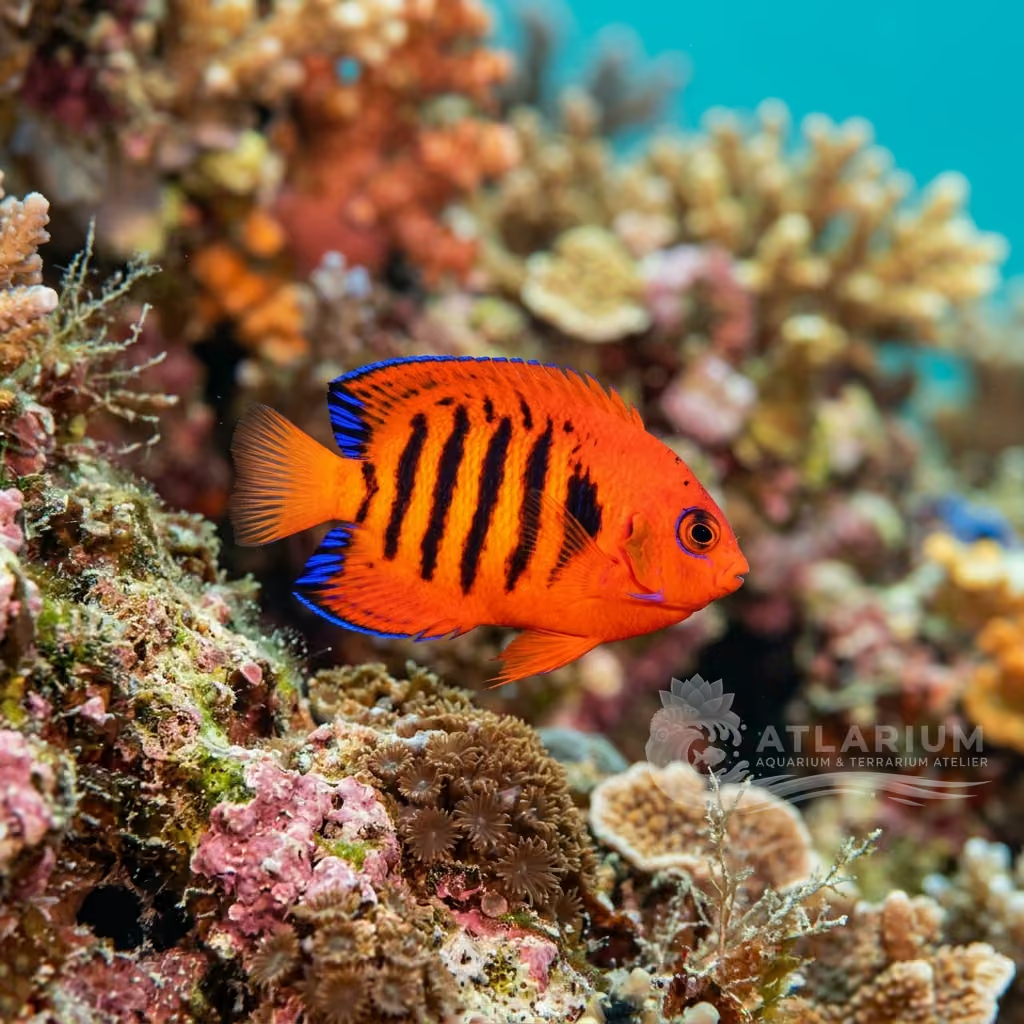
Coloration and Sexual Dimorphism: The livery "explodes" with color: bright yellow-orange background marked by sharp vertical stripes of pure white, edged with black lines, resembling a colorful zebra. The lower part of the anal fin is covered in concentric neon blue horizontal stripes. Red Sea specimens have a bright yellow throat and chest (more prized and robust); Indo-Pacific ones have a white-gray chest.

Soins, reproduction et cohabitation
Aquarium Setup: Aquarium of at least 500 liters (130 gallons), dedicated solely to calm and peaceful fish. The abundance of high-quality, porous live rock to graze on in peace is vital. The tank must offer constant shaded areas. Avoid voracious tankmates (like dominant damselfish) that would terrify it.
Diet and Feeding: The real trial for the keeper: it is an almost exclusive spongivore (sponges and tunicates). In the aquarium, it very often REFUSES commercial food and starves to death in 3 weeks. It is crucial to attempt acclimation by forcing fresh clams opened on the half-shell, live mysis, masago (fish roe), and specific frozen sponge-based angelfish preparations.
Water Quality: Intolerant of any kind of pollution or pH drop. Pristine oceanic parameters are mandatory: pH 8.2-8.4, specific gravity 1.025, temperature 24-27°C (75-81°F). Once settled and eating (which can take weeks), it becomes surprisingly long-lived.
Compatibility and Cohabitation: Considered the "Most Reef Safe" Angelfish among the large formats. Although in rare cases it might nip Zoanthids or clams, it almost always ignores most hard SPS and LPS corals. To be paired exclusively with submissive and peaceful species (Anthias, small Gobies, Blennies, and small wrasses).
Aquarium Breeding: Impossible in private aquariums. In the wild, forms harems with one male and several females that court at dusk with ascending dances, releasing pelagic eggs that hatch as plankton. Commercial stock relies entirely on wild capture.
Risks and Diseases: Has one of the highest post-capture mortality rates in the aquarium hobby (food refusal). It is essential to demand seeing the fish EATING AVIDLY in the store before purchase. Very sensitive to copper medication, preferring the use of chloroquine in case of infections (Ich, Velvet).

Origine et répartition géographiques
Distributed from the Indian Ocean (including the Red Sea) throughout the Pacific Ocean, including the Maldives, Great Barrier Reef, and Tahiti. Inhabits almost exclusively coral-rich slopes, exposed outer reefs, and clear lagoons, preferring very shallow waters abundant in caves (1-48 meters).
Origine
Océans tropicaux et récifsEurope, Méditerranée et Asie occidentaleAsie du Sud et du Sud-Est

Profil de poisson
- Tempérament
- Semi-aggressive
- They are notoriously shy and skittish when first introduced. Once acclimated, they become incredibly bold and active display fish. They possess a graceful, deliberate swimming style that is mesmerizing.
- Régime alimentaire
- Omnivore
- They are specialized omnivores requiring sponges and tunicates in their diet. High-quality marine angelfish preparations containing sponge matter are essential. Finely chopped fresh seafood helps supplement their complex nutritional needs.
- Espérance de vie
- 10-15 years
- Taille adulte
- 25 cm
- Ratio des sexes
- Solitary
- Keeping a single specimen is the safest and most common practice. Mated pairs can be kept only in exceptionally large display aquariums. Putting two males together will result in immediate, fatal combat.
- Fréquence d'alimentation
- Twice daily
- They require feeding multiple times a day with small portions. They are naturally constant grazers on live rock in the wild. Frequent feeding helps divert their attention away from picking at corals.
- Charge biologique
- High
- This stunning marine Angelfish creates a moderate to high bioload. A highly mature reef system with an oversized skimmer is mandatory. Pristine water quality is absolutely critical for their long-term survival.
- Courant
- Moderate
- Pygoplites diacanthus needs steady, moderate circulation distributed across the aquarium rather than a narrow, forceful jet. Aquarium of at least 500 liters (130 gallons), dedicated solely to calm and peaceful fish. The abundance of high-quality, porous live rock to graze on in peace is vital. This preserves useful water exchange while retaining calmer shelter for rest and feeding.
- Risque de saut
- No
- Reproduction
- Oviparous
- Breeding them in home aquariums is considered virtually impossible currently. They are pelagic spawners that release eggs into the open ocean column. Larval rearing requires specialized facilities and microscopic marine plankton.
- Compatibilité et compagnons
- Semi-aggressive
- They are semi-aggressive and generally peaceful towards dissimilar species. They may nip at fleshy large-polyp stony corals and clam mantles. Do not house them with other large, aggressive marine angelfish.
- Niveau dans le bac
- All levels
- They utilize every available level of the aquarium's rockwork. They constantly weave in and out of caves looking for food. They require massive amounts of live rock to feel secure.

Modèles et paramètres scientifiques
FishBase
Fenêtre sur les données scientifiques officielles de l’espèce
FishBase v25.04Données synchronisées le : 15/06/2026
- Niveau trophique
- 2,7 ± 0 se
- Résilience
- Faible (4,5 - 14 ans)
- Singularité phylogénétique (PD50)
- 1
- Relation bayésienne longueur-poids
- a = 0.0302, b = 2.89
- VulnérabilitéVulnérabilité faible (21 / 100)

Galerie d'images
Images sous licence liées à l'espèce ou, lorsqu'elles sont indiquées, au taxon représentatif le plus proche.

Espèces associées
Recommandations regroupées par proches parents, compagnons et soins similaires.