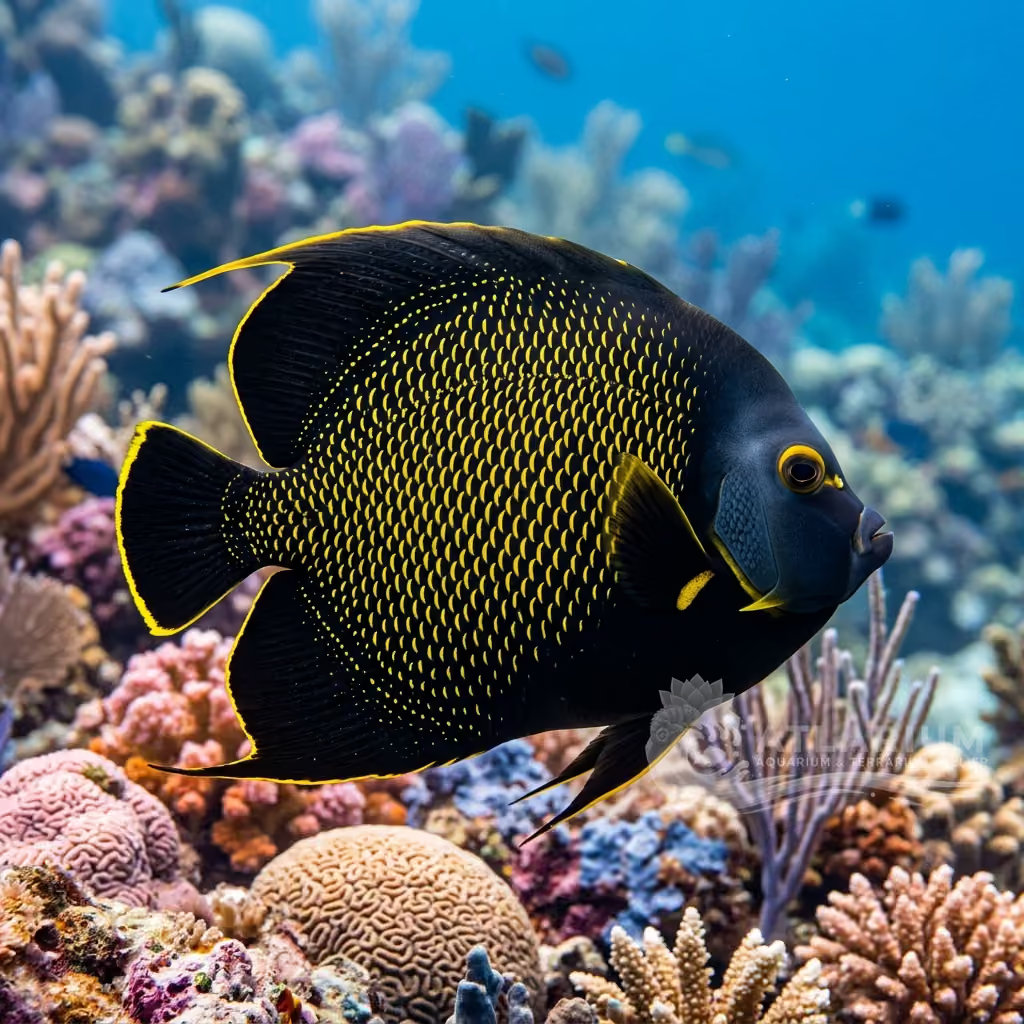
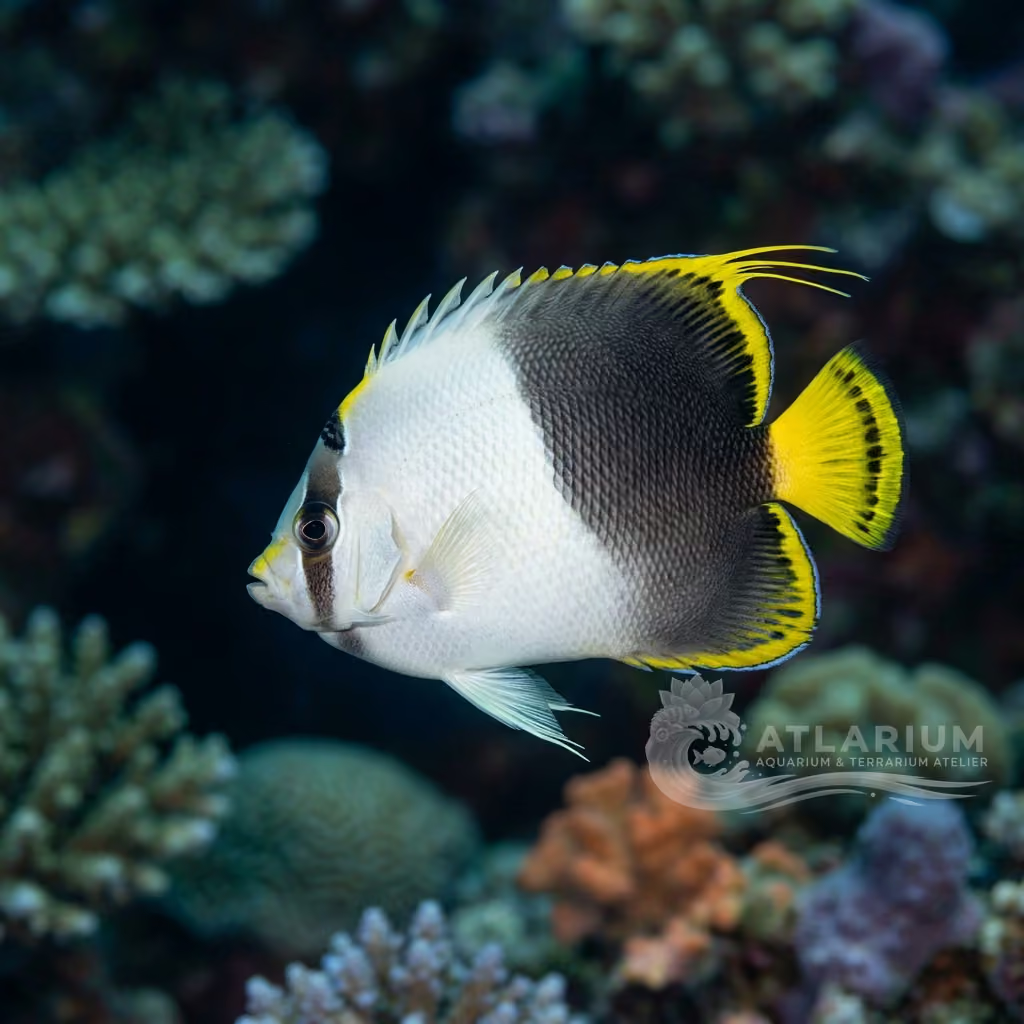
Gray Angelfish
Pomacanthus arcuatus
A large, imposing western Atlantic angelfish known for its greyish-silver disc-shaped body and its large adult size, requiring very spacious aquariums.
Température de l’eau
22 - 28 °C
Valeur du pH
8 - 8.4
Type d'eau
Marin
Niveau dans le bac
Tous les niveaux
Taille adulte
60 cm
Volume minimal du bac
>= 1 000 L
Groupe minimal
>= 1
KH
8 - 12 dKH

Description de l'espèce
Geographical Origin and Habitat: Pomacanthus arcuatus is native to the western Atlantic Ocean, ranging from New England (USA) and the Gulf of Mexico through the Caribbean Sea down to southern Brazil. It inhabits coral reefs, rocky jetties, harbors, and seagrass beds, typically at depths of 2 to 30 meters, often found near structures that offer cover.
Taxonomy and Morphology: Belonging to the family Pomacanthidae and the genus Pomacanthus, it is commonly known as the Gray Angelfish. It features an exceptionally deep, laterally compressed body, giving it a disc-like shape. Adults can grow to an impressive size of up to 50-60 cm. It possesses a sharp preopercular spine and filamentous dorsal and anal fins.
Social Behavior: Typically observed in stable, monogamous pairs that stay together for life. They are curious and relatively bold around divers. In the aquarium, juveniles are territorial and aggressive toward conspecifics, while adults require extensive territory and display a dominant personality within the community.
Coloration and Sexual Dimorphism: Adults are brownish-grey to silver-grey, with each scale edged in dark grey to black. The mouth is white, and the pectoral fins are yellow on the inner side. Juveniles look completely different: jet-black with 5 vertical bright yellow bands. There is no visible external sexual dimorphism between sexes.

Soins, reproduction et cohabitation
Aquarium Setup: Due to its large potential adult size, it requires a monumental aquarium of at least 800-1000 liters. The aquascape must feature large, sturdy rock structures that create high caves and archways, while still leaving the majority of the tank open to allow for unrestricted swimming space.
Diet and Feeding: Omnivorous. In the wild, it feeds on sponges, tunicates, zoanthids, algae, and seagrasses. In captivity, offer a varied diet containing specialized commercial angelfish formula with sponge matter, large frozen items (krill, mysis, chopped clams), and daily portions of dried nori seaweed and spirulina. Feed twice daily.
Water Quality: Requires stable marine parameters: temperature 22-28°C (72-82°F), specific gravity 1.020-1.025, and pH 8.1-8.4. Large biological loads require massive filtration and an oversized protein skimmer to process organic wastes. Perform regular bi-weekly water changes of 15% to maintain water quality.
Compatibility and Cohabitation: Semi-aggressive. Best kept with other large, active fish such as tangs, large wrasses, triggers, and groupers. It is not reef-safe, as it will actively nip and feed on stony corals, soft corals, zoanthids, and clam mantles. It is best suited for a fish-only-with-live-rock (FOWLR) system.
Aquarium Breeding: Breeding in home aquariums is not documented due to the massive tank sizes required for their spawning rise. They are pelagic spawners, releasing gametes into the water column during dusk. Rearing the larvae requires specialized commercial-scale aquaculture facilities and micro-plankton cultures.
Risks and Diseases: Generally hardy once acclimated, but juveniles are susceptible to marine ich (Cryptocaryon) when stressed. Prone to Head and Lateral Line Erosion (HLLE) and color loss if their diet lacks essential vitamins and sponge material. Ensure stable parameters and a highly varied diet to prevent health decline.

Origine et répartition géographiques
Pomacanthus arcuatus is native to the western Atlantic Ocean, ranging from New England (USA) and the Gulf of Mexico through the Caribbean Sea down to southern Brazil. It inhabits coral reefs, rocky jetties, harbors, and seagrass beds, typically at depths of 2 to 30 meters, often found near structures that offer cover.
Origine
Océans tropicaux et récifsAmérique du Sud hors AmazonieAmérique centrale et CaraïbesAmérique du Nord

Profil de poisson
- Tempérament
- Semi-aggressive
- The Gray Angelfish is an exceptionally bold, curious, and frequently pugnacious fish that quickly becomes the tank boss. It will unabashedly assert dominance over newcomers and requires companions that can easily withstand its boisterous nature. Introducing this magnificent fish last into a carefully planned predator or large fish community is highly recommended.
- Régime alimentaire
- Omnivore
- In the wild, Gray Angelfish are omnivorous with a strong preference for marine sponges, tunicates, and algae. In captivity, they must be fed a diverse diet including high-quality sponge-based angelfish preparations, marine algae, and meaty foods like shrimp. Providing a heavily varied diet is critical to preventing color fading and dangerous nutritional deficiencies.
- Espérance de vie
- 15 years
- Taille adulte
- 60 cm
- Ratio des sexes
- Group
- There are no obvious external dimorphic traits to reliably distinguish male Gray Angelfish from females. Due to their immense adult size and highly aggressive territoriality, keeping more than one per aquarium is strongly discouraged. Only in extremely massive, public-sized aquariums can multiple individuals be maintained without fatal conflict.
- Fréquence d'alimentation
- Twice daily
- Given their highly active nature and constant grazing habits, this species should be fed two to three times per day. Offering multiple small meals closely replicates their natural foraging behavior and significantly reduces tank aggression. Providing seaweed clips can allow them to comfortably graze continuously throughout the daylight hours.
- Charge biologique
- Extreme
- The Gray Angelfish is a massive and robust species that places a heavy bioload on any marine system. Due to its significant size and voracious appetite, top-tier biological and mechanical filtration are strictly required. Frequent, large-scale water changes are vital to prevent the rapid accumulation of toxic nitrates and phosphates.
- Courant
- Strong
- The Gray Angelfish prefers moderate to strong water currents that emulate the dynamic flow of the Western Atlantic reefs. Robust water movement thoroughly oxygenates the large aquarium and keeps waste particles suspended for efficient mechanical removal. A varied flow pattern strongly encourages active swimming and promotes better overall muscle health.
- Risque de saut
- No
- Reproduction
- Rare / not documented
- Captive breeding of the Gray Angelfish is an incredibly complex endeavor practically unheard of in standard home aquaria. They naturally spawn in pairs, releasing thousands of pelagic eggs into the open ocean currents at dusk. Rearing the microscopic larvae requires immense commercial facilities with specialized, highly controlled live food cultures.
- Compatibilité et compagnons
- Territorial
- While juveniles are relatively peaceful and often act as cleaners, adults become highly territorial and dominant. They are generally compatible with other large, aggressive fish like snappers, large wrasses, and robust tangs. They are entirely unsuitable for reef tanks as they readily devour a wide array of soft and stony corals.
- Niveau dans le bac
- All levels
- These fish are highly active and utilize every level of the water column, often pacing the entire length of the aquarium. They require expansive, unobstructed swimming space mixed with large, appropriately sized rocky caves for shelter. They will continuously explore the substrate, rockwork, and upper regions in a ceaseless search for food.

Modèles et paramètres scientifiques
FishBase
Fenêtre sur les données scientifiques officielles de l’espèce
FishBase v25.04Données synchronisées le : 15/06/2026
- Niveau trophique
- 3,2 ± 0,1 se
- Résilience
- Très faible (plus de 14 ans)
- Singularité phylogénétique (PD50)
- 0.5001
- Relation bayésienne longueur-poids
- a = 0.0302, b = 2.9
- VulnérabilitéVulnérabilité modérée (44 / 100)

Espèces associées
Recommandations regroupées par proches parents, compagnons et soins similaires.