Queen Angelfish
Holacanthus ciliaris
The Caribbean Boss (18 inches / 45 cm). Stunning blue and yellow with a literal 'crown' on its head. It is extremely territorial and requires flawless nutrition.
Température de l’eau
24 - 28 °C
Valeur du pH
8.1 - 8.4
Type d'eau
Marin
Niveau dans le bac
Tous les niveaux
Taille adulte
45 cm
Volume minimal du bac
>= 500 L
Groupe minimal
>= 1
KH
4 - 6 dKH

Description de l'espèce
Geographical Origin and Habitat: Undisputed queen of the central-western Atlantic Ocean. Ranges from Florida to the Caribbean, down to the coast of Brazil and the Gulf of Mexico. Inhabits rich, colorful, sun-kissed coral reefs, preferring to linger near sea fans and huge colonies of marine sponges.
Taxonomy and Morphology: Known as the Queen Angelfish. It is an enormous pomacanthid, capable of reaching nearly 45 cm (18 inches). The body is deep, majestic, and shaped like a laterally compressed disc. The snout is prominent with brush-like teeth. The dorsal and anal fins end in extremely elongated trailing filaments in adulthood.
Social Behavior: A fish with an imperious nature, solitary or in stable pairs, and aggressive towards those it perceives as a threat. Explores the entire aquarium with calm, arrogant, and proud swimming. It dominates almost all other fish; it is advisable to introduce it as the very last inhabitant after weaker fish have established territories.
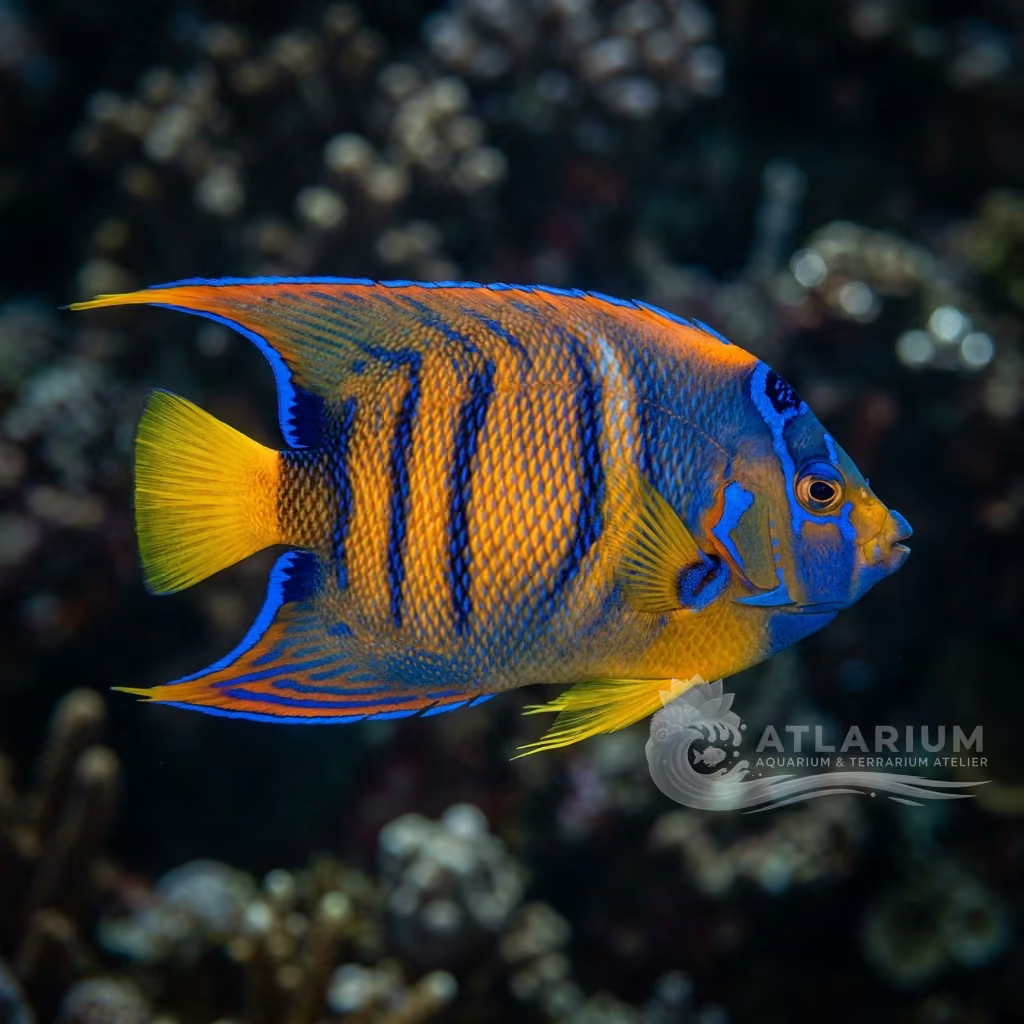
Coloration and Sexual Dimorphism: Drastic change between ages: juveniles are dark metallic blue with curved vertical light blue stripes. Adults are a dazzling blue/green/yellow, with yellow fins bordered in blue. The "royal" distinguishing feature is the crown ("ciliaris") on the forehead: a black spot ringed with brilliant electric blue. No apparent sexual dimorphism.

Soins, reproduction et cohabitation
Aquarium Setup: Demands mammoth tanks: MINIMUM 800-1000 liters (210-260 gallons) to house a single adult. It needs a massive amount of open water swimming space combined with high rock formations (central or atoll rockwork) to provide nocturnal shelter. Intense lighting is necessary to emphasize its dazzling colors.
Diet and Feeding: Specialized spongivore. In the wild, over 90% of its diet consists of siliceous sponges (toxic to many other fish). In captivity, it is crucial to provide the highest quality feeds formulated specifically for large angelfish, containing sponge extracts, in addition to macroalgae, krill, and freshly chopped clams.
Water Quality: Tropical marine water in impeccable conditions. Such a large fish generates terrifying organic loads. pH strictly between 8.1 and 8.4, specific gravity 1.023-1.025, temperature 24-28°C (75-82°F). A high-end protein skimmer and an ozone reactor are highly recommended to maintain the ideal redox potential and crystal clear water.
Compatibility and Cohabitation: Absolutely NOT suitable for common reef aquariums (Reef Safe: NO), as it ruthlessly devastates any LPS coral, gorgonian, and ornamental sponge. Ideal for immense FOWLR aquariums along with other dominant fish: Triggerfish, Large Groupers, large Tangs (Acanthurus), and moray eels.
Aquarium Breeding: Impossible for private hobbyists. In the open Caribbean seas, a single male presides over a vast territory with several females. They reproduce pelagically at dawn or dusk by releasing hundreds of thousands of transparent eggs. They do not protect the eggs in any way.
Risks and Diseases: Subject to Head and Lateral Line Erosion (HLLE) syndrome if the diet is poor in vitamin C, spirulina, and sponges (or if kept with poor quality dusty activated carbon). If purchased as a full adult, it struggles enormously to get used to flake food; it is better to start with a sub-adult.

Origine et répartition géographiques
Undisputed queen of the central-western Atlantic Ocean. Ranges from Florida to the Caribbean, down to the coast of Brazil and the Gulf of Mexico. Inhabits rich, colorful, sun-kissed coral reefs, preferring to linger near sea fans and huge colonies of marine sponges.
Origine
Océans tropicaux et récifsAmérique du Sud hors AmazonieAmérique centrale et CaraïbesAmérique du Nord

Profil de poisson
- Tempérament
- Semi-aggressive
- They possess a bold, dominant, and highly aggressive temperament, truly acting as the 'king' of the aquarium. They will relentlessly chase and harass new additions, especially those with similar colors or diets. They are incredibly intelligent and will quickly learn to recognize their caretakers. Their assertive nature means they must be housed with other large, tough fish that can hold their own.
- Régime alimentaire
- Omnivore
- Their natural diet is highly specialized, consisting heavily of marine sponges, tunicates, and algae. In captivity, they must be fed a specialized commercial angelfish diet that contains sponge matter to ensure long-term survival. They should also be offered varied meaty foods, spirulina, and fresh macroalgae for grazing. Providing a diverse, nutrient-rich diet is critical to preventing nutritional blindness and other deficiencies.
- Espérance de vie
- 15-20 years
- Taille adulte
- 45 cm
- Ratio des sexes
- Harem
- There are no obvious external differences between males and females, though males may grow slightly larger. In the wild, they often form harems consisting of one dominant male and several females. In home aquariums, it is highly advised to keep only one individual per tank due to their severe conspecific aggression. Attempting to pair them in anything smaller than a public aquarium usually results in fatal fighting.
- Fréquence d'alimentation
- Twice daily
- These active grazers should be fed small amounts two to three times per day. They naturally spend their entire day picking at live rock, so frequent meals help simulate this natural behavior. Offering grazing clips with nori or seaweed can help keep them occupied between feedings. Consistent feeding helps curb their aggression toward other tank mates.
- Charge biologique
- High
- Large marine angelfish produce a significant bioload due to their substantial adult size and active metabolism. They require powerful, oversized protein skimmers and robust biological filtration to maintain pristine water conditions. Frequent water changes are necessary to keep nitrate levels as close to zero as possible. Poor water quality will rapidly lead to stress, disease, and loss of their vibrant coloration.
- Courant
- Moderate
- Holacanthus ciliaris needs steady, moderate circulation distributed across the aquarium rather than a narrow, forceful jet. Demands mammoth tanks: MINIMUM 800-1000 liters (210-260 gallons) to house a single adult. It needs a massive amount of open water swimming space combined with high rock formations (central or atoll rockwork) to provide nocturnal shelter. This preserves useful water exchange while retaining calmer shelter for rest and feeding.
- Risque de saut
- Yes
- While their deep bodies make them less prone to jumping than slender fish, a startled angelfish can still breach the surface. They are incredibly powerful and can easily knock off loose glass lids if they panic. A secure, weighted mesh lid or canopy is recommended to keep them safely contained. Minimizing sudden lighting changes will reduce their startle response.
- Reproduction
- Oviparous
- Breeding large marine angelfish in home aquariums is exceptionally rare and requires massive commercial aquaculture facilities. They are pelagic broadcast spawners that release their gametes high in the water column at dusk. The resulting microscopic larvae have complex nutritional requirements that are nearly impossible to meet at home. Most specimens are either wild-caught or raised in specialized breeding facilities.
- Compatibilité et compagnons
- Not reef safe
- They are highly territorial and can be very aggressive toward other large angelfish or fish with similar body shapes. They should generally be the last fish introduced to a large marine community to prevent them from claiming the entire tank. They are notoriously not reef-safe, as they will eagerly nip at and consume most stony and soft corals. Keep them in extremely large fish-only with live rock (FOWLR) setups.
- Niveau dans le bac
- All levels
- These angelfish are bold, open-water swimmers that will command all levels of the aquarium. They constantly patrol the rockwork, swimming in and out of caves while inspecting for food. They require an immense amount of open swimming space to prevent pacing and stress-related behaviors. A massive tank with hundreds of pounds of porous live rock is their ideal environment.

Modèles et paramètres scientifiques
FishBase
Fenêtre sur les données scientifiques officielles de l’espèce
FishBase v25.04Données synchronisées le : 15/06/2026
- Niveau trophique
- 3 ± 0 se
- Résilience
- Faible (4,5 - 14 ans)
- Singularité phylogénétique (PD50)
- 0.5078
- Relation bayésienne longueur-poids
- a = 0.0302, b = 2.89
- VulnérabilitéVulnérabilité faible à modérée (35 / 100)

Espèces associées
Recommandations regroupées par proches parents, compagnons et soins similaires.