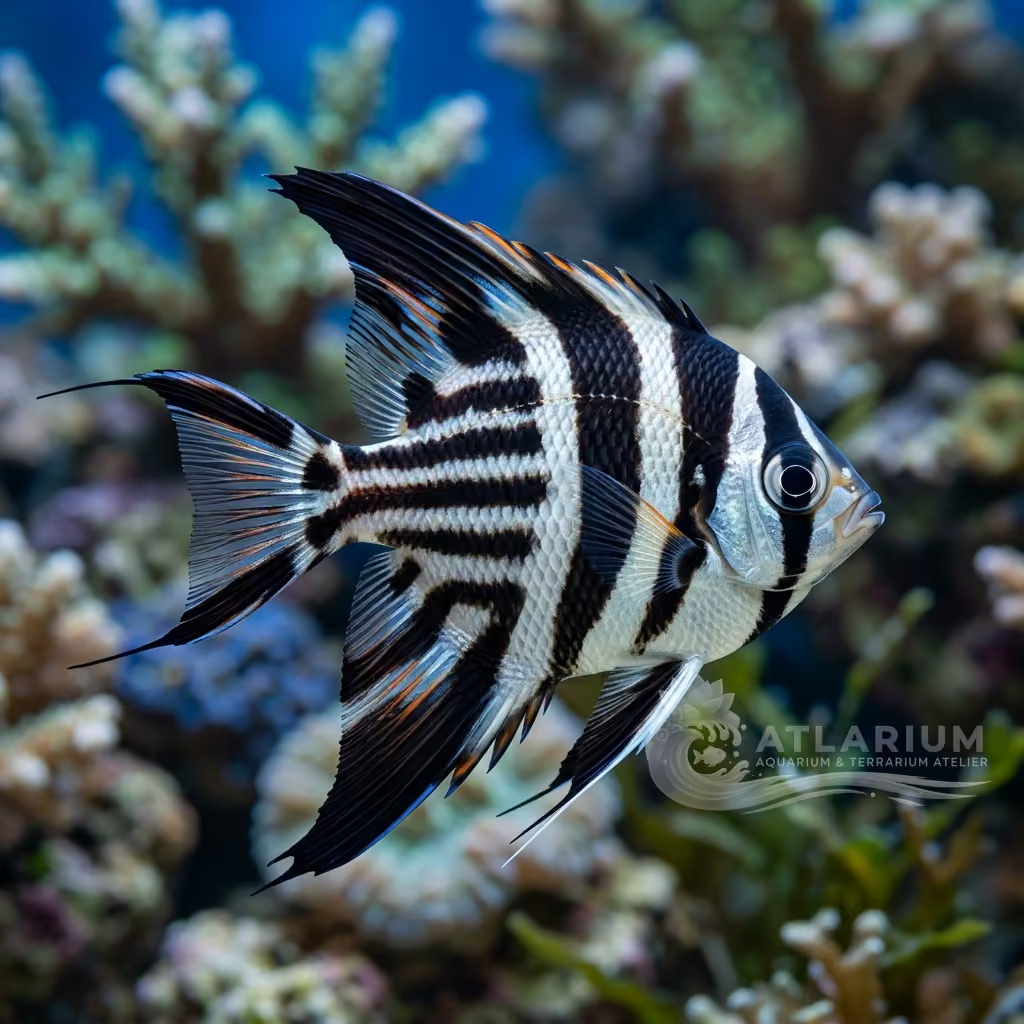
Colin's Angelfish
Centropyge colini
Colin's Angelfish is a rare, delicate deep-water pygmy angelfish. Prefers subdued lighting and heavily structured rockwork with dark caves, feeding primarily on sponges and algae.
Température de l’eau
21 - 25 °C
Valeur du pH
8.1 - 8.4
Type d'eau
Marin
Niveau dans le bac
Fond
Taille adulte
9 cm
Volume minimal du bac
>= 150 L
Groupe minimal
>= 1
KH
8 - 12 dKH

Description de l'espèce
Geographical Origin and Habitat: Western Indo-Pacific, including Cocos-Keeling Islands, Indonesia, Philippines, Papua New Guinea, Palau, Guam, and Fiji. Inhabits steep drop-offs and outer reef slopes at depths of 20 to over 110 meters, living in deep caves and crevices.
Taxonomy and Morphology: Member of the family Pomacanthidae. A small pygmy angelfish with a laterally compressed oval body, reaching a maximum length of 9 cm. Features the characteristic preopercular spine.
Social Behavior: Highly cryptic and diurnal. Lives in small harems consisting of one dominant male and 2–6 females within coral caves. Often swims upside down along cave ceilings.
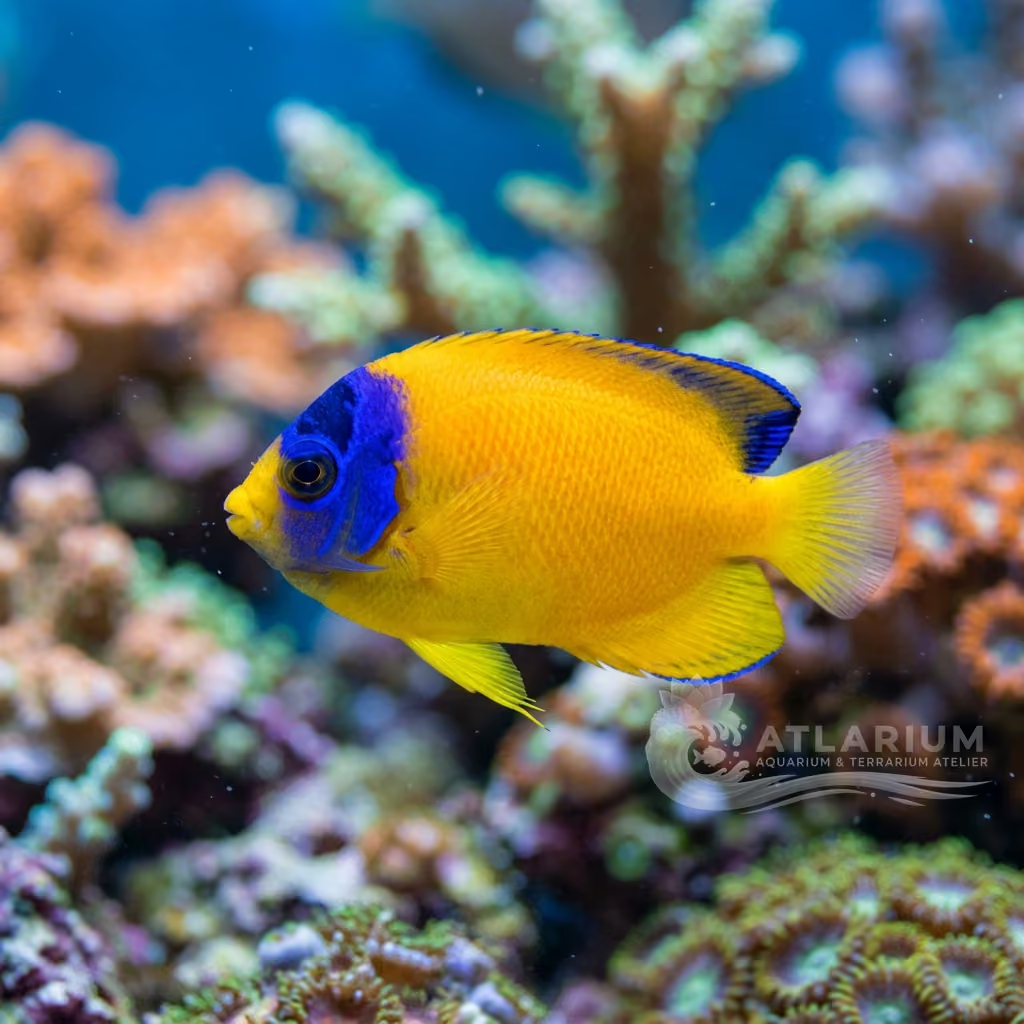
Coloration and Sexual Dimorphism: Body and head are a vivid lemon-yellow, contrasted by a prominent dark purplish-blue saddle running along the back and dorsal fin. A thin purple ring outlines the eye. No obvious sexual dimorphism except size.

Soins, reproduction et cohabitation
Aquarium Setup: Requires an aquarium of at least 150 liters with extensive live rock arranged to create dark caves and overhangs. Prefers subdued lighting to mimic its deep-water habitat. A tight-fitting lid is recommended.
Diet and Feeding: Omnivore. Primarily feeds on sponges, tunicates, and algae in the wild. In aquariums, it must be offered sponge-based angelfish preparations, mysis, brine shrimp, and spirulina several times daily.
Water Quality: Demands cool, clean water and stable parameters. Temperature 21–25°C (70–77°F), pH 8.1–8.4, salinity SG 1.020–1.025, GH 15–25, and KH 8–12. Sensitive to high nitrates.
Compatibility and Cohabitation: Best kept with peaceful, non-aggressive tankmates. Avoid active, boisterous feeders that may scare it. Reef-safe with caution: may nip at LPS corals and clam mantles if underfed.
Aquarium Breeding: Extremely difficult and undocumented in home aquariums. Professional facilities have recently achieved success in raising captive-bred specimens.
Risks and Diseases: High risk of starvation if it refuses food due to stress. Susceptible to decompression issues if wild-caught, and highly prone to marine ich (Cryptocaryon) if water conditions fluctuate.

Origine et répartition géographiques
Western Indo-Pacific, including Cocos-Keeling Islands, Indonesia, Philippines, Papua New Guinea, Palau, Guam, and Fiji. Inhabits steep drop-offs and outer reef slopes at depths of 20 to over 110 meters, living in deep caves and crevices.
Origine
Océans tropicaux et récifsAfrique et MadagascarAsie du Sud et du Sud-EstAustralie, Nouvelle-Guinée et Océanie

Profil de poisson
- Tempérament
- Territorial
- They are highly secretive and easily stressed. Acclimation takes significant time and extreme patience. They are peaceful but extremely timid centerpieces.
- Régime alimentaire
- Omnivore
- They naturally graze on sponges and tunicates. High-quality frozen sponge diets are necessary. Mysis shrimp provide excellent supplementary protein.
- Espérance de vie
- 5-15 years
- Taille adulte
- 9 cm
- Ratio des sexes
- Harem
- They function as protogynous hermaphrodites naturally. Keeping a single specimen is usually best. Bonded pairs require very large, quiet setups.
- Fréquence d'alimentation
- 3-4 times daily
- Multiple small feedings daily are required. Consistent food availability helps them acclimate. Mature live rock provides essential grazing material.
- Charge biologique
- Low
- Colin's angelfish produce a standard moderate bioload. They require pristine deep-water quality conditions. Highly efficient biological filtration is completely vital.
- Courant
- Strong
- They prefer gentle to moderate deep-water currents. Overly turbulent wavemakers cause them severe stress. Steady flow replicates their calm natural habitat.
- Risque de saut
- Yes
- Colin's angelfish carries a moderate jump risk, comparable to other dwarf angelfish species, particularly when newly introduced to a system. Because they naturally inhabit deep-water, dimly lit reef slopes, brightly illuminated or high-traffic aquariums can easily spook them into a panicky, upward dart. If harassed by larger or more dominant reef inhabitants, their flight response may culminate in them breaching the water's surface. Equipping the aquarium with a custom-fitted mesh lid is a necessary precaution to protect these rare and sensitive fish.
- Reproduction
- Oviparous
- They spawn pelagically in the evening hours. Captive breeding is incredibly rare and demanding. Larvae need highly specialized microscopic live foods.
- Compatibilité et compagnons
- With caution
- They are incredibly shy and delicate. Only house them with extremely peaceful mates. Aggressive fish will force them into hiding.
- Niveau dans le bac
- Bottom
- They hug the lowest rocky sections tightly. They rarely venture into the open column. Expansive caves are critical for their security.

Modèles et paramètres scientifiques
FishBase
Fenêtre sur les données scientifiques officielles de l’espèce
FishBase v25.04Données synchronisées le : 15/06/2026
- Niveau trophique
- 2,8 ± 0,3 se
- Résilience
- Élevée (moins de 15 mois)
- Singularité phylogénétique (PD50)
- 0.5
- Relation bayésienne longueur-poids
- a = 0.0302, b = 2.89
- VulnérabilitéVulnérabilité faible (10 / 100)

Espèces associées
Recommandations regroupées par proches parents, compagnons et soins similaires.