Watanabe's Angelfish
Genicanthus watanabei
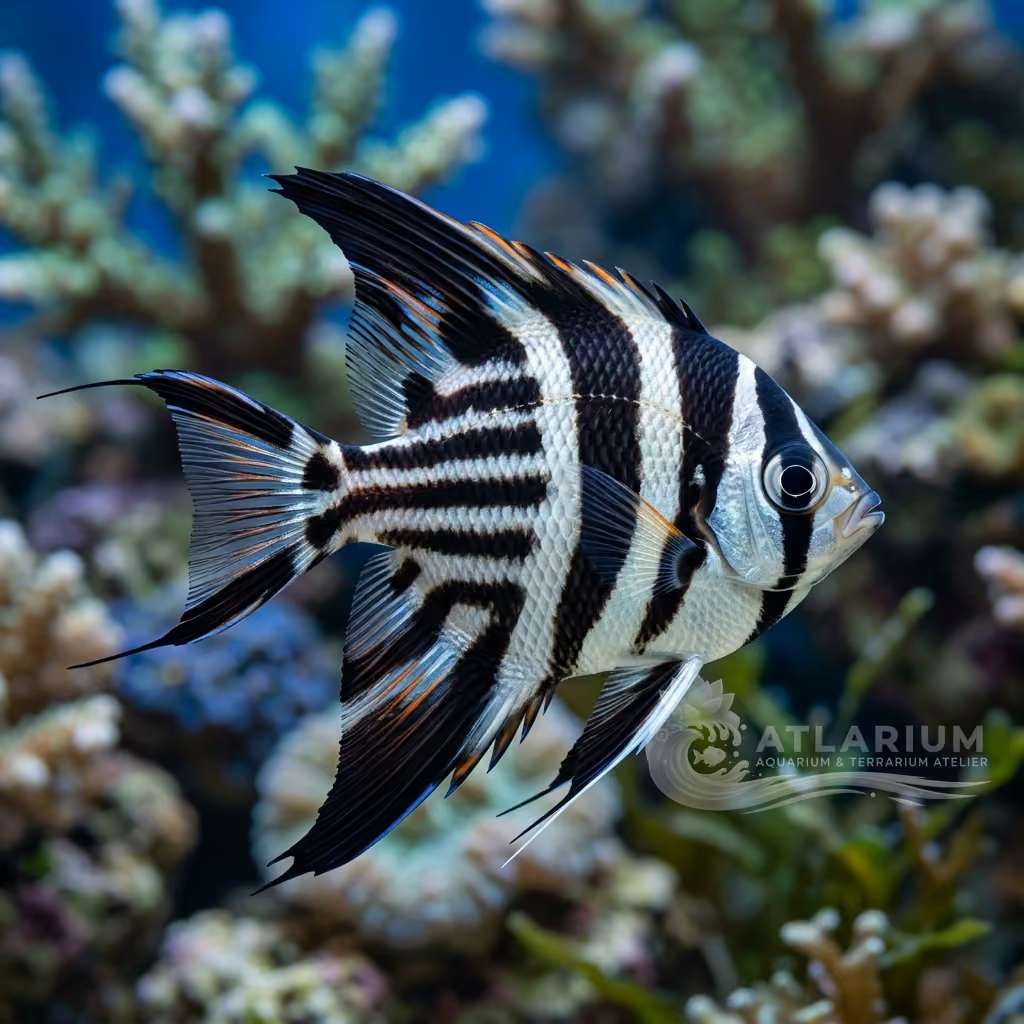
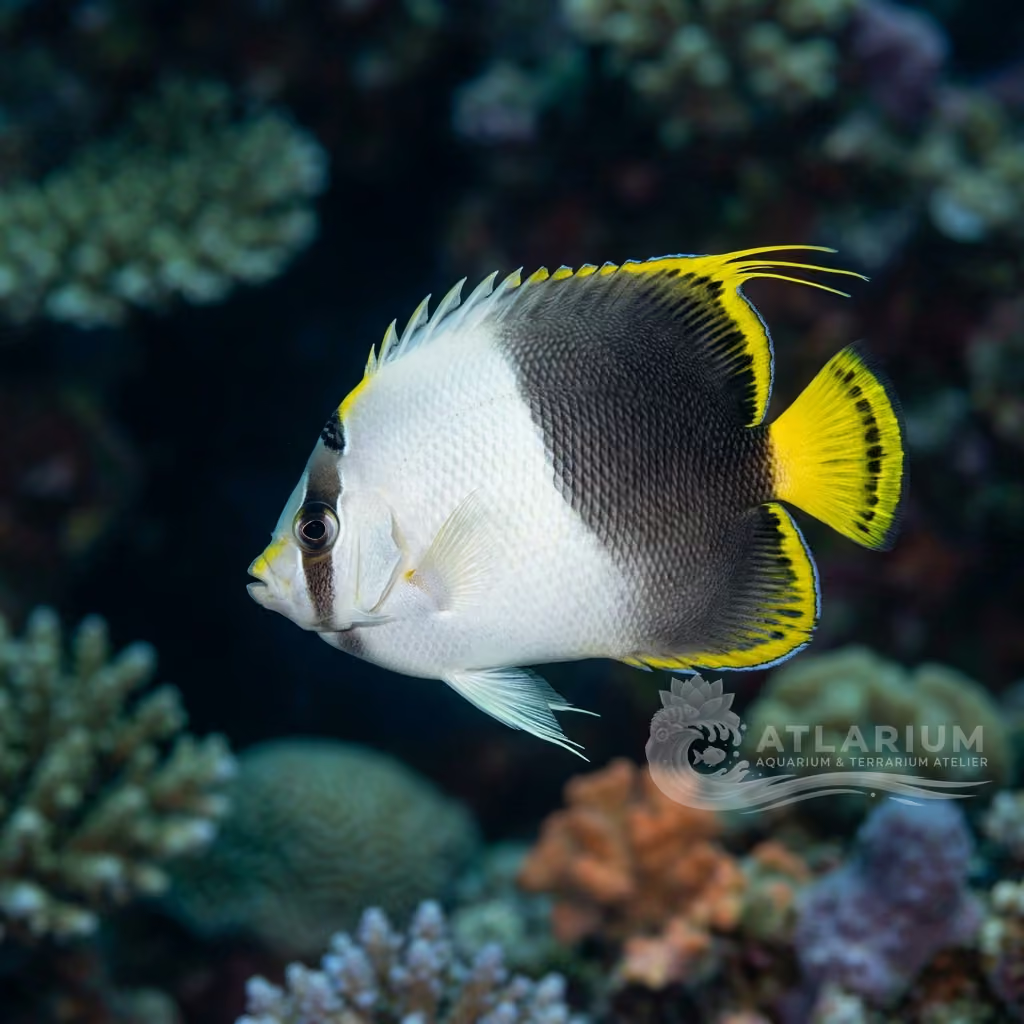
An awe-inspiring deep-reef swimmer, the Watanabe's Angelfish exhibits highly contrasting stripes in males. It is fully reef-safe, actively feeding on passing plankton, and prone to jumping if unsecured.
Température de l’eau
22 - 26 °C
Valeur du pH
8.1 - 8.4
Type d'eau
Marin
Niveau dans le bac
Surface
Taille adulte
15 cm
Volume minimal du bac
>= 500 L
Groupe minimal
>= 1
KH
8 - 12 dKH

Description de l'espèce
Geographical Origin and Habitat: Tropical and subtropical Indo-Pacific, from Taiwan and the Ryukyu Islands to the Cook and Tuamotu Islands. Inhabits current-swept outer reef slopes at depths of 21 to 81 meters. They inhabit deep drop-offs and steep seaward slopes subject to strong oceanic currents.
Taxonomy and Morphology: Member of the family Pomacanthidae. Reaches a maximum length of 15 cm. Features a slender, compressed body with a deeply forked swallowtail caudal fin. Sequential protogynous hermaphrodite. Their body is sleek and adapted for swimming actively against moderate-to-strong currents.
Social Behavior: Peaceful and highly active water-column swimmer. Forages constantly in currents in small haremic groups. Highly prone to jumping when startled. They live in social harems with a single male guarding several females in the water column.
Coloration and Sexual Dimorphism: Striking sexual dichromatism. Males are pale blue with horizontal black stripes on the lower body and a yellow stripe near the anal fin. Females are uniform pale blue with black margins on the fins and head. The dramatic difference in pattern between males and females makes them highly prized by aquarists.

Soins, reproduction et cohabitation
Aquarium Setup: Requires an aquarium of at least 500 liters with vast open swimming space and strong, well-distributed currents. A tight-fitting lid is mandatory as they are exceptional jumpers. Provide a large aquarium with robust water flow to mimic their deep-reef drop-off habitat.
Diet and Feeding: Carnivore/Planktivore. Feeds exclusively on zooplankton in the wild. In captivity, feed 3–4 times daily with mysis, brine shrimp, calanus, copepods, and high-quality pellets. Feed a varied diet rich in planktonic items like calanus, mysis, and high-quality marine flakes.
Water Quality: Demands stable parameters. Temperature 22–26°C, pH 8.1–8.4, salinity SG 1.020–1.025, GH 15–25, and KH 8–12. High biological load requires robust filtration and skimming. Maintain high oxygen levels and pristine water parameters to ensure the long-term health of this species.
Compatibility and Cohabitation: Very peaceful toward other reef fish. Completely reef-safe; it will not nip at corals or sessile invertebrates. Excellent in pairs or small harems. Excellent reef compatibility; they generally do not nip at corals or sessile invertebrates.
Aquarium Breeding: Undocumented in home aquariums. Broadcast spawners releasing pelagic eggs in the wild. Spawning requires deep tanks and specific lighting cycles, making home breeding extremely rare.
Risks and Diseases: High incidence of swim bladder issues if decompression was poorly managed during capture. Susceptible to marine ich (Cryptocaryon) if stressed. Pay close attention to swim bladder issues, which can sometimes occur in deep-water collected specimens.

Origine et répartition géographiques
Tropical and subtropical Indo-Pacific, from Taiwan and the Ryukyu Islands to the Cook and Tuamotu Islands. Inhabits current-swept outer reef slopes at depths of 21 to 81 meters. They inhabit deep drop-offs and steep seaward slopes subject to strong oceanic currents.
Origine
Océans tropicaux et récifsAsie de l'Est

Profil de poisson
- Tempérament
- Peaceful
- It is peaceful and sociable. It rarely bothers other fish. It becomes bold over time.
- Régime alimentaire
- Carnivore
- It is a planktivore. Feed a varied diet of mysis shrimp. Offer high-quality pellets daily.
- Espérance de vie
- 15 years
- Taille adulte
- 15 cm
- Ratio des sexes
- Harem
- They form natural harems. Keep one male with multiple females. Multiple males will fight aggressively.
- Fréquence d'alimentation
- 3-4 times daily
- It is very active. It needs multiple daily feedings. Feed small portions three times daily.
- Charge biologique
- Medium
- The bioload is moderate. Efficient biological filtration is required. Regular water changes keep nitrates low.
- Courant
- Strong
- It is an open-water swimmer. It appreciates strong water flow. Good circulation simulates ocean currents.
- Risque de saut
- Yes
- It is easily startled. There is a high jump risk. A tight lid is necessary.
- Reproduction
- Oviparous
- It is a pelagic spawner. Captive breeding is exceptionally rare. Fry require specialized live foods.
- Compatibilité et compagnons
- Reef safe
- It is very peaceful. This fish is completely reef safe. Avoid overly aggressive tank mates.
- Niveau dans le bac
- Top
- It is an active swimmer. It uses the upper tank levels. Open swimming space is required.

Modèles et paramètres scientifiques
FishBase
Fenêtre sur les données scientifiques officielles de l’espèce
FishBase v25.04Données synchronisées le : 15/06/2026
- Niveau trophique
- 3,4 ± 0,45 se
- Résilience
- Moyenne (1,4 - 4,4 ans)
- Singularité phylogénétique (PD50)
- 0.501
- Relation bayésienne longueur-poids
- a = 0.0302, b = 2.89
- VulnérabilitéVulnérabilité faible (10 / 100)

Espèces associées
Recommandations regroupées par proches parents, compagnons et soins similaires.