Maxima Clam
Tridacna maxima
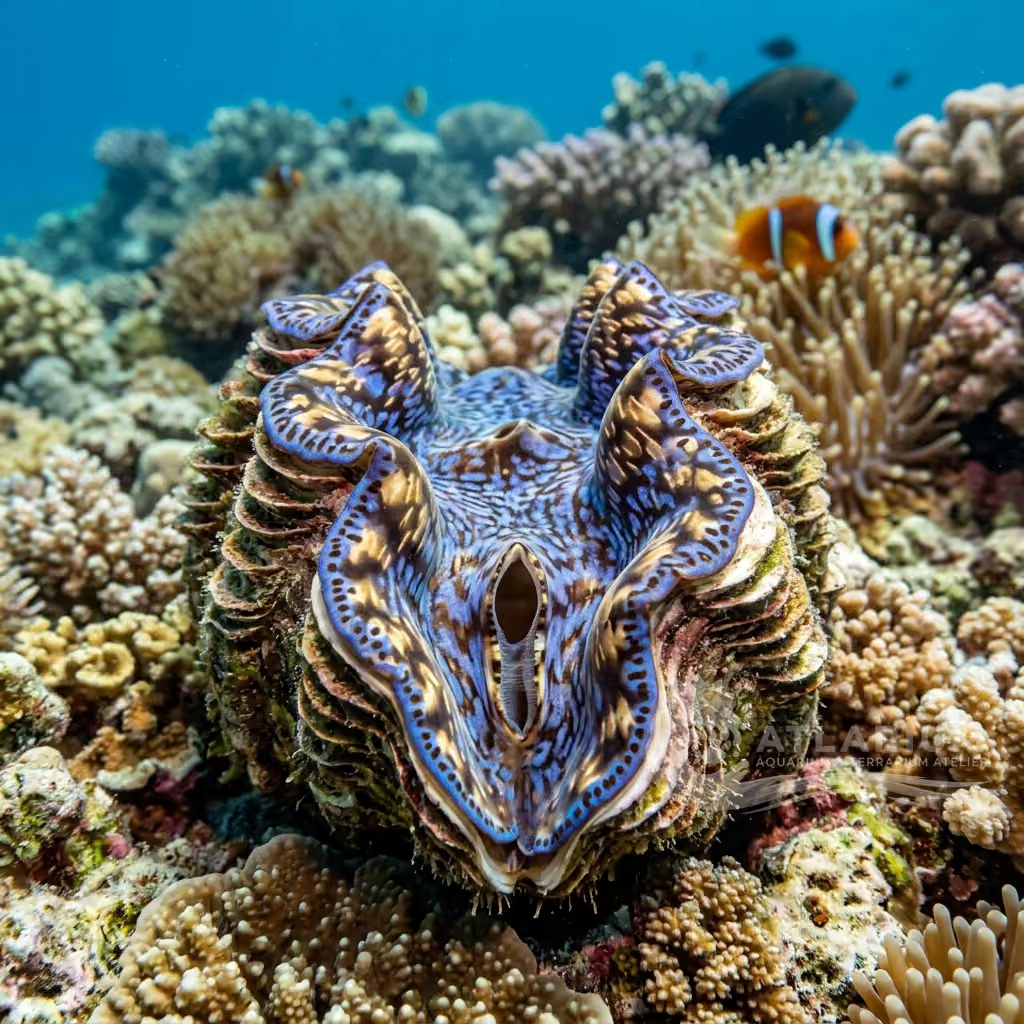
The spectacular Maxima Clam, famous for its brilliantly colored iridescent blue and purple mantle. Requires intense lighting and stability. Geographical Origin and Habitat: Tridacna maxima...
Température de l’eau
24 - 28 °C
Valeur du pH
8.1 - 8.4
Type d'eau
Marin
Type d'invertébré
Bivalve
Taille adulte
40 cm
Groupe minimal
>= 1
KH
8 - 12 dKH
Rôle écologique
Filter feeder
Sensibilité au cuivre
High

Description de l'espèce
Geographical Origin and Habitat: Tridacna maxima is widely distributed throughout the tropical Indo-Pacific, from the Red Sea and East Africa to Polynesia and northern Australia. It lives in shallow, crystal-clear reef flats and lagoons (usually under 10 meters deep), anchoring itself to limestone rocks exposed to strong sunlight.
Taxonomy: Belonging to the family Cardiidae (subfamily Tridacninae), this giant clam grows up to 20-30 cm. It features an elongated shell with prominent radial ribs and wavy scales. Its fleshy mantle extends past the shell edges and hosts symbiotic zooxanthellae. It anchors using a byssal gland.
Social Behavior: Sessile and non-interactive. It is a filter-feeding phototroph that remains fixed to its rock base. It possesses photoreceptors (primitive eyes) along its mantle edge, reacting to shadows or movement by quickly retracting its mantle and closing its shell for defense.
Coloration and Sexual Dimorphism: The mantle is famous for its bright, iridescent colors including electric blue, purple, green, brown, and gold with intricate patterns. Maxima clams are simultaneous hermaphrodites, releasing sperm and eggs at different times; no sexual dimorphism exists.

Soins, reproduction et cohabitation
Tank Setup: A mature marine tank of at least 150-200 liters is required. Place the clam on a flat rock or specialized shell cradle in a high-light area to allow secure byssal attachment.
CRITICAL REQUIREMENT: High-intensity lighting (SPS-capable LED or metal halide) is mandatory for survival.
Diet and Feeding: Primarily photosynthetic. They derive most of their nutrition from the carbon products produced by the symbiotic zooxanthellae in their mantle. However, they also benefit from regular additions of live marine phytoplankton and micro-particulate organic foods in the water column.
Water Quality: Requires pristine reef parameters: temperature 24-26°C, salinity 1.023-1.025, pH 8.1-8.4, Calcium 400-450 ppm, Magnesium 1300-1350 ppm, and KH 8-12. Large clams consume high amounts of calcium and alkalinity. Copper-based medications are immediately lethal.
Compatibility and Tankmates: Safe with corals. Do not house with fish known to nip at clam mantles (e.g. angelfish, butterflyfish, some blennies, or curious wrasses). Avoid keeping with predatory crabs or pyramidellid snails, which are dangerous parasites.
Aquarium Breeding: Spawning can occur in captivity, often triggered by stress or temperature changes, but raising the resulting planktonic veliger larvae is highly complex and requires specialized aquaculture facilities. Not feasible in standard reef setups.
Risks and Diseases: Infestation by parasitic pyramidellid snails (tiny white snails that feed on clam tissue) is a major threat. Bleaching (loss of zooxanthellae) due to insufficient light or high temperatures. Byssal gland infection if pulled violently from its rock.

Origine et répartition géographiques
Tridacna maxima is widely distributed throughout the tropical Indo-Pacific, from the Red Sea and East Africa to Polynesia and northern Australia. It lives in shallow, crystal-clear reef flats and lagoons (usually under 10 meters deep), anchoring itself to limestone rocks exposed to strong sunlight.
Origine
Océans tropicaux et récifsAfrique et Madagascar

Profil d'invertébré
- Régime alimentaire
- Filter feeder
- The primary source of sustenance for Tridacna maxima is intense light, which powers the symbiotic zooxanthellae living within its fleshy mantle. However, it also acts as an aggressive filter feeder, continuously extracting phytoplankton and dissolved nutrients from the water column. Providing specialized liquid phytoplankton diets can significantly boost its vigor.
- Rôle écologique
- Filter feeder
- Within the reef ecosystem, Tridacna maxima functions as a massive bio-filter, constantly sifting immense volumes of water for plankton and suspended particulates. Its heavy shell also eventually contributes to the structural foundation of the reef framework. By sequestering nitrogen and phosphorus, it actively helps maintain pristine water quality.
- Taille adulte
- 40 cm
- Risque de saut
- No
- Sensibilité aux chocs
- Extreme
- Tridacna maxima requires impeccable and hyper-stable water conditions, reacting very poorly to fluctuations in salinity, temperature, and alkalinity. Rapid changes often induce "gaping" or pinched mantle syndrome, both of which are serious stress indicators. A meticulous, slow drip acclimation is vital, as is gradual adjustment to intense aquarium lighting.
- Calcium et minéraux
- Extreme
- As one of the most demanding organisms regarding water chemistry, Tridacna maxima consumes massive amounts of calcium and alkalinity to build its dense scutes and shell. Even a slight dip in these parameters will stunt its growth entirely. Reef keepers must employ a very robust dosing regimen or a calcium reactor to keep up with its metabolic demands.
- Mue
- Shell growth
- As a bivalve, Tridacna maxima does not experience molting in any form. Instead, it demonstrates active growth by continuously depositing brilliant white calcified layers along the upper rim of its shell. Observing this clean, new white growth edge is the premier indicator that the clam is thriving and expanding.
- Reproduction
- Oviparous
- Reproduction of Tridacna maxima in the wild is achieved via massive synchronized broadcast spawning events, releasing millions of gametes into the water column. In a closed aquarium environment, these events are extremely rare and can sometimes dangerously foul the water. Successfully breeding and settling their larvae requires specialized commercial aquaculture facilities.
- Compatibilité et compagnons
- Vulnerable
- Tridacna maxima is entirely defenseless and cannot be housed with nipping fish like certain angelfish, blennies, or triggerfish, which will relentlessly attack its exposed mantle. Care must also be taken to ensure no other corals physically touch or sting it. It coexists peacefully alongside clownfish, tangs, and other completely reef-safe species.

Modèles et paramètres scientifiques
SeaLifeBase
Fenêtre sur les données scientifiques officielles de l’espèce
SeaLifeBase v26.04Données synchronisées le : 15/06/2026
- Résilience
- Moyenne (1,4 - 4,4 ans)

Espèces associées
Recommandations regroupées par proches parents, compagnons et soins similaires.