Starfish Shrimp
Zenopontonia soror
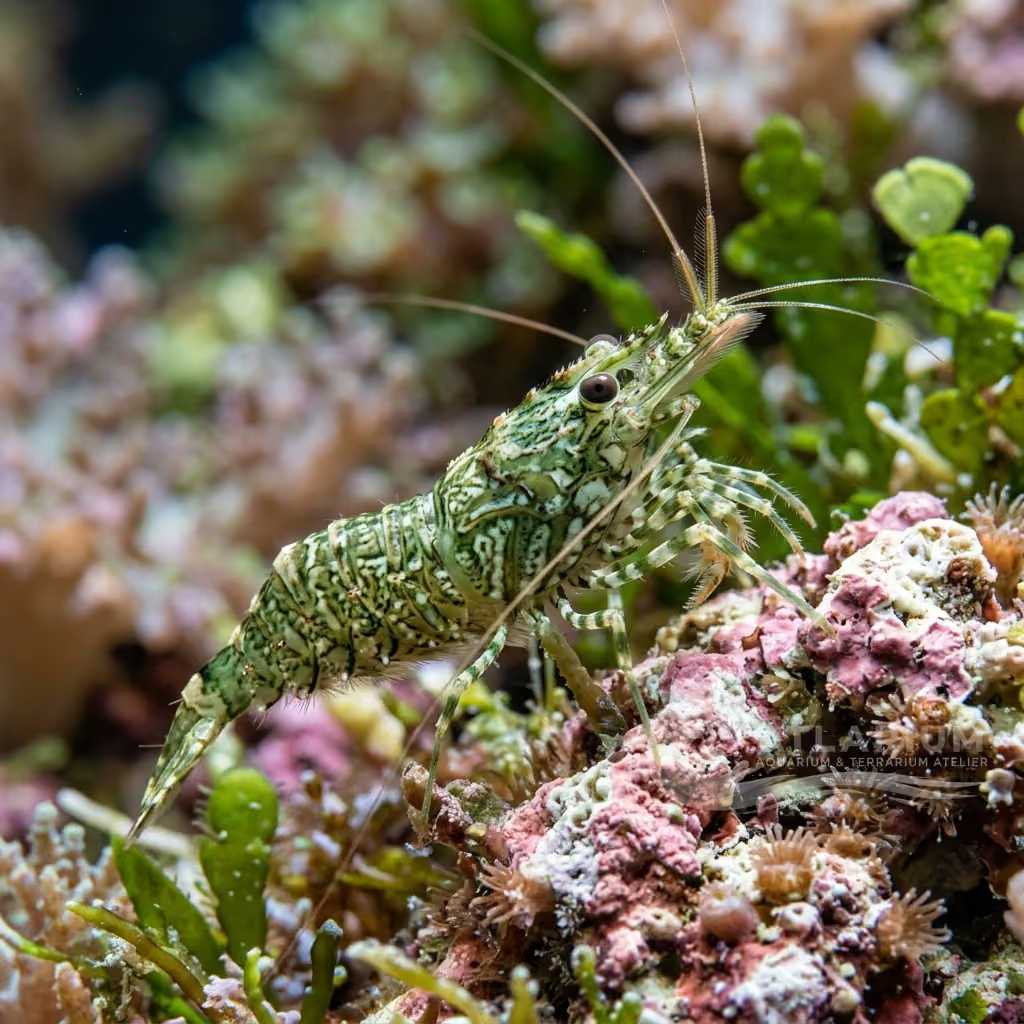
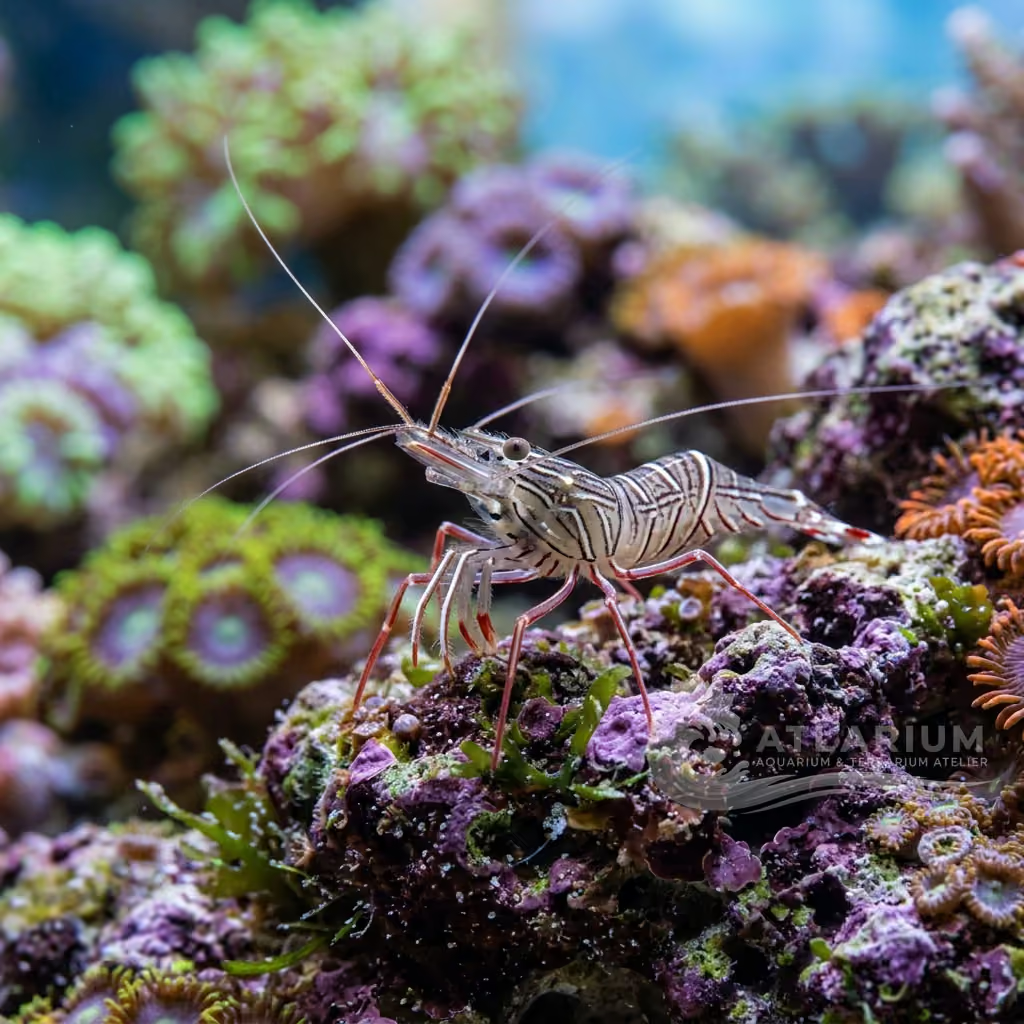
The Starfish Shrimp is an obligate commensal that lives exclusively on starfish. Peaceful and captivating, it mimics its host's coloration and requires a mature reef tank with a compatible starfish.
Température de l’eau
22 - 28 °C
Valeur du pH
8.1 - 8.4
Type d'eau
Marin
Type d'invertébré
Marine shrimp
Taille adulte
1,5 cm
Groupe minimal
>= 1
KH
8 - 12 dKH
Rôle écologique
Scavenger
Sensibilité au cuivre
High

Description de l'espèce
Geographical Origin and Habitat: Periclimenes soror is widely distributed throughout the tropical Indo-Pacific and eastern Pacific, ranging from the Red Sea and East African coast to Hawaii, the Gulf of California, and the Galápagos Islands. It lives exclusively in a commensal relationship with large starfish (primarily of the genera Culcita, Pentaceraster, Protoreaster, and Acanthaster planci) at depths between 1 and 30 meters.
Taxonomy: Belonging to the family Palaemonidae and the genus Periclimenes, it is commonly known as the Starfish Shrimp or Commensal Starfish Shrimp. Some regional color variants are studied for potential cryptic species complexes, but it is currently classified as a single highly variable species.
Social Behavior: An obligate or facultative commensal that spends its entire life on the body of its host starfish. It gains protection from predators among the host's spines and tubefeet, feeding on the host's mucus and trapped organic particles. Multiple individuals can occupy a single large host starfish without showing significant territorial aggression.
Coloration and Sexual Dimorphism: Displays remarkable camouflage, adjusting its color to match the host starfish, ranging from deep red, purple, and brown to bright yellow. Many specimens feature a broad white or translucent stripe along the back. Females are much larger than males and possess a broader abdomen for carrying egg clutches.

Soins, reproduction et cohabitation
Tank Setup: Requires an established marine aquarium of at least 80-100 liters. The primary requirement is the inclusion of a compatible host starfish (such as a Cushion Star Culcita or a Horned Star Pentaceraster). Keeping this shrimp without a host is not recommended, as it leads to severe stress and significantly reduces its lifespan.
Diet and Feeding: Feeds on the mucus produced by the host starfish and organic particles trapped on its skin. In captivity, supplement its diet by target-feeding small particles of frozen food like cyclops, rotifers, and finely crushed flakes near the host. Ensure the host starfish itself is well-fed and healthy.
Water Quality: Maintain stable reef parameters: temperature 24-27°C (75-80°F), specific gravity 1.022-1.025, and pH 8.1-8.4. Highly sensitive to elevated nitrates, phosphates, and any trace of copper. Regular addition of iodine is beneficial to ensure safe, successful shedding of its delicate exoskeleton.
Compatibility and Tankmates: Completely peaceful and reef-safe. It does not harm corals or other sessile invertebrates. Can be kept with small, non-aggressive fish such as gobies and firefish. Avoid any predatory tankmates such as wrasses, hawkfish, or larger predatory shrimp, which will readily consume this tiny crustacean.
Aquarium Breeding: Breeding in home aquaria is exceptionally difficult. Gravid females carry eggs under their tail until they hatch into planktonic larvae. Rearing these delicate larvae requires dedicated breeding setups without mechanical filtration, and a steady supply of live microplankton and rotifers.
Risks and Diseases: The single biggest risk is the health and survival of the host starfish. If the starfish dies or starves, the shrimp's survival rate drops drastically. It is also highly vulnerable during its molting phase, especially if it temporarily detaches from the host to find a secure hiding spot among the rocks.

Origine et répartition géographiques
Periclimenes soror is widely distributed throughout the tropical Indo-Pacific and eastern Pacific, ranging from the Red Sea and East African coast to Hawaii, the Gulf of California, and the Galápagos Islands. It lives exclusively in a commensal relationship with large starfish (primarily of the genera Culcita, Pentaceraster, Protoreaster, and Acanthaster planci) at depths between 1 and 30 meters.
Origine
Océans tropicaux et récifsAmérique du NordAfrique et Madagascar

Profil d'invertébré
- Régime alimentaire
- Carnivore
- As a omnivore/commensal, Periclimenes soror plays an active role in consuming various organic matters in its environment. Its diet in captivity should be varied, including specialized pellets, frozen foods, and natural algae or detritus depending on its specific preferences. Regular and balanced feeding is crucial for its health and longevity.
- Rôle écologique
- Scavenger
- The primary ecological role of Periclimenes soror is acting as a symbiotic within the aquarium ecosystem. By constantly foraging, it helps manage waste, uneaten food, or pests, contributing significantly to water quality. Its presence introduces a natural balance and mimics complex biological interactions found in the wild.
- Taille adulte
- 1.5 cm
- Risque de saut
- Yes
- The jump or escape risk for Periclimenes soror is considered low. Like many active invertebrates, it may attempt to climb out of the water if it feels stressed, threatened, or if water conditions deteriorate. A tight-fitting lid or mesh screen is highly recommended to prevent accidental escapes.
- Sensibilité aux chocs
- High
- Periclimenes soror is quite sensitive to sudden shifts in water parameters, particularly salinity, temperature, and pH. It is highly recommended to use a slow drip acclimation method over several hours when introducing it to a new tank. Maintaining stable conditions is vital to prevent stress-induced ailments or mortality.
- Calcium et minéraux
- High
- To support healthy molting and exoskeleton growth, Periclimenes soror requires adequate calcium and trace elements like iodine in the water. Regular water changes with a high-quality salt mix usually provide sufficient levels, but specific supplementation may be necessary in heavily stocked reef tanks. Monitoring calcium and alkalinity ensures proper skeletal development.
- Mue
- Yes
- During the molting process, Periclimenes soror becomes extremely vulnerable to predators and aggressive tankmates. It will typically retreat to a secure hiding spot until its new exoskeleton hardens. It is important to leave the discarded molt in the tank, as the invertebrate will often consume it to reclaim valuable minerals.
- Reproduction
- Bubble nest builder
- Breeding Periclimenes soror in a home aquarium is incredibly challenging due to its complex reproductive cycle. It typically involves a planktonic larval stage that requires highly specialized foods and precise water conditions to survive. In most standard setups, any spawned larvae will quickly become food for fish and corals.
- Compatibilité et compagnons
- Reef safe
- When considering tankmates, Periclimenes soror is generally compatible with peaceful fish and other similarly sized invertebrates. Since its reef compatibility is rated as 'yes', careful observation is required if kept with delicate corals or smaller ornamental shrimp. Aggressive or large predatory fish should always be avoided to ensure its safety.

Espèces associées
Recommandations regroupées par proches parents, compagnons et soins similaires.