Anker's Cleaner Shrimp
Lysmata ankeri
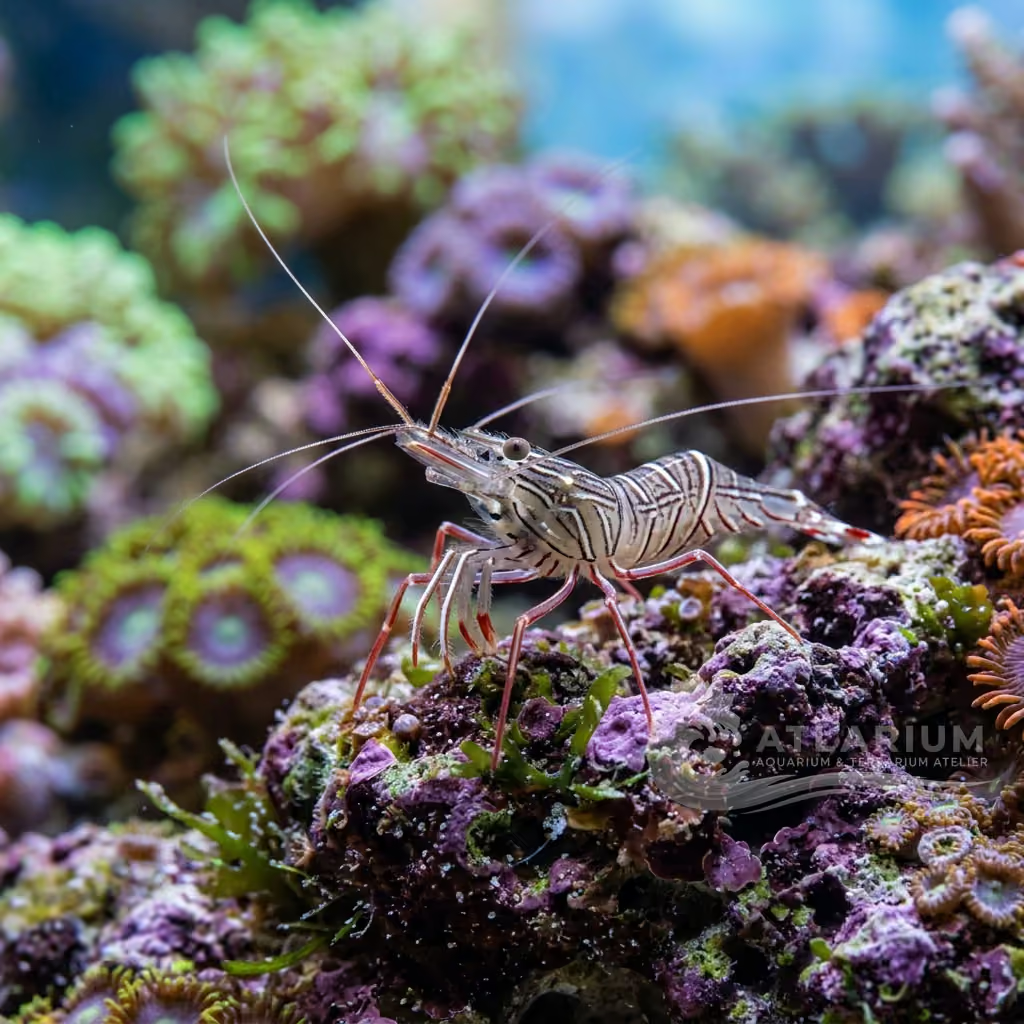
Anker's Cleaner Shrimp is a Western Atlantic peppermint shrimp species. It is highly popular among aquarists for controlling pest Aiptasia anemones.
Température de l’eau
22 - 27 °C
Valeur du pH
8.1 - 8.4
Type d'eau
Marin
Type d'invertébré
Marine shrimp
Taille adulte
4,5 cm
Groupe minimal
>= 1
KH
8 - 12 dKH
Rôle écologique
Cleaner
Sensibilité au cuivre
High

Description de l'espèce
Geographical Origin and Habitat: Western Atlantic: distributed from Florida and the Caribbean islands down to southern Brazil. It inhabits shallow coral reefs, rocky crevices, and seagrass beds, frequently seeking shelter under large sponges, rocks, or corals to avoid direct sunlight.
Taxonomy: Belongs to the family Lysmatidae (formerly Hippolytidae), genus Lysmata. It is distinguished by its modest size, reaching an adult length of 4 to 5 cm, and its delicate pincers and antennae which are used for tactile communication and cleaning activities.
Social Behavior: Gregarious and peaceful species, primarily active during twilight and nighttime. It behaves as a facultative cleaner shrimp, performing parasite removal on cooperative fish. It plays a key ecological role as a scavenger, consuming organic waste.
Coloration and Sexual Dimorphism: Semi-translucent body marked with distinct red-orange longitudinal and transverse stripes. Internal organs may show olive-green or yellowish tints. The species is a simultaneous hermaphrodite, meaning mature individuals function as both males and females.

Soins, reproduction et cohabitation
Tank Setup: Requires a reef or nano-reef tank of at least 50 liters (approx. 13 gallons). Providing plenty of live rock with dark caves, crevices, and overhangs is crucial, as the shrimp needs to hide during the daytime to feel secure.
Diet and Feeding: Omnivorous scavenger. Will readily consume leftover fish foods, mysis shrimp, brine shrimp, and sinking pellets. It is widely valued by aquarists for its ability to hunt and consume small Aiptasia (glass anemones) in the aquarium.
Water Quality: Keep parameters stable: temperature 22-27°C (72-80°F), pH 8.1-8.4, and specific gravity 1.023-1.025. Absolute zero tolerance for copper-based medications, which are lethal to invertebrates. Monitor iodine levels, as iodine is essential for proper molting.
Compatibility and Tankmates: 100% reef-safe. Compatible with peaceful community fish and other non-predatory invertebrates. Do not house with crustacean predators such as puffers, hawkfish, groupers, or large wrasses, which will quickly consume them.
Aquarium Breeding: Although pairs spawn regularly and carry green eggs beneath their pleopods, raising the larvae in a home aquarium is highly challenging due to a prolonged planktonic larval phase and the risk of larvae being drawn into mechanical filters.
Risks and Diseases: Highly vulnerable during and immediately after molting when its new exoskeleton is still soft. It will hide for a few days during this period. Extremely sensitive to osmotic shock; slow drip-acclimatization is required.

Origine et répartition géographiques
Western Atlantic: distributed from Florida and the Caribbean islands down to southern Brazil. It inhabits shallow coral reefs, rocky crevices, and seagrass beds, frequently seeking shelter under large sponges, rocks, or corals to avoid direct sunlight.
Origine
Océans tropicaux et récifsAmérique du Sud hors AmazonieAmérique centrale et CaraïbesAmérique du Nord

Profil d'invertébré
- Régime alimentaire
- Omnivore
- Omnivorous scavenger. Accepts flakes and frozen foods.
- Rôle écologique
- Cleaner
- Excellent nocturnal scavenger.
- Taille adulte
- 4.5 cm
- Risque de saut
- Yes
- Prone to jumping when chased. Use a lid.
- Sensibilité aux chocs
- High
- Requires stable reef parameters.
- Calcium et minéraux
- High
- Requires trace elements and calcium to molt.
- Mue
- Periodic
- Molting is a vital yet perilous phase for their growth. Once the old shell is shed, the shrimp is soft and defenseless. It is crucial to provide intricate live rock with dark caves where they can safely retreat for several days until their new exoskeleton absorbs enough minerals to harden.
- Reproduction
- Oviparous
- These shrimp are protandric simultaneous hermaphrodites, meaning they mature as males before developing female reproductive capabilities. Mating occurs right after molting. They regularly produce pelagic larvae, but successfully raising them in captivity is notoriously difficult, requiring specialized kreisel tanks and a constant supply of microscopic planktonic live foods.
- Compatibilité et compagnons
- Reef safe
- They are generally peaceful and reef-safe when given ample space and rockwork. However, overcrowding them can lead to territorial disputes and cannibalism, particularly targeting freshly molted shrimp. Unlike the closely related wurdemanni species, their appetite for consuming pest Aiptasia anemones is poorly documented and largely inconsistent in home aquariums.

Espèces associées
Recommandations regroupées par proches parents, compagnons et soins similaires.