California clean shrimp
Lysmata californica
A semi-translucent Pacific marine shrimp with red stripes, known for its active cleaning behavior and ease of care in captivity. Geographical Origin and Habitat: Lysmata californica...
Température de l’eau
15 - 22 °C
Valeur du pH
8.1 - 8.4
Type d'eau
Marin
Type d'invertébré
Marine shrimp
Taille adulte
7 cm
Groupe minimal
>= 1
Rôle écologique
Pest control
Sensibilité au cuivre
High

Description de l'espèce
Geographical Origin and Habitat: Lysmata californica (commonly known as the California cleaner shrimp or broken-back shrimp) is native to the Eastern Pacific Ocean, distributed from the coast of southern California (USA) down to the Baja California peninsula (Mexico). It inhabits tide pools, rocky reefs, breakwaters, and kelp forests from the intertidal zone down to depths of approximately 20 meters, often found in dense groups.
Taxonomy: Belongs to the class Malacostraca, order Decapoda, family Lysmatidae (formerly Hippolytidae), and genus Lysmata. This genus is famous for containing cleaner shrimps that participate in cleaning symbioses, removing parasites and dead tissue from cooperating reef fish.
Social Behavior: Unlike many other Lysmata species that are territorial or live in pairs, L. californica is highly gregarious, forming large clusters of dozens of individuals in the wild. While predominantly nocturnal, it quickly becomes active during daytime feeding in captivity. It actively engages in cleaning behaviors when fish present themselves.
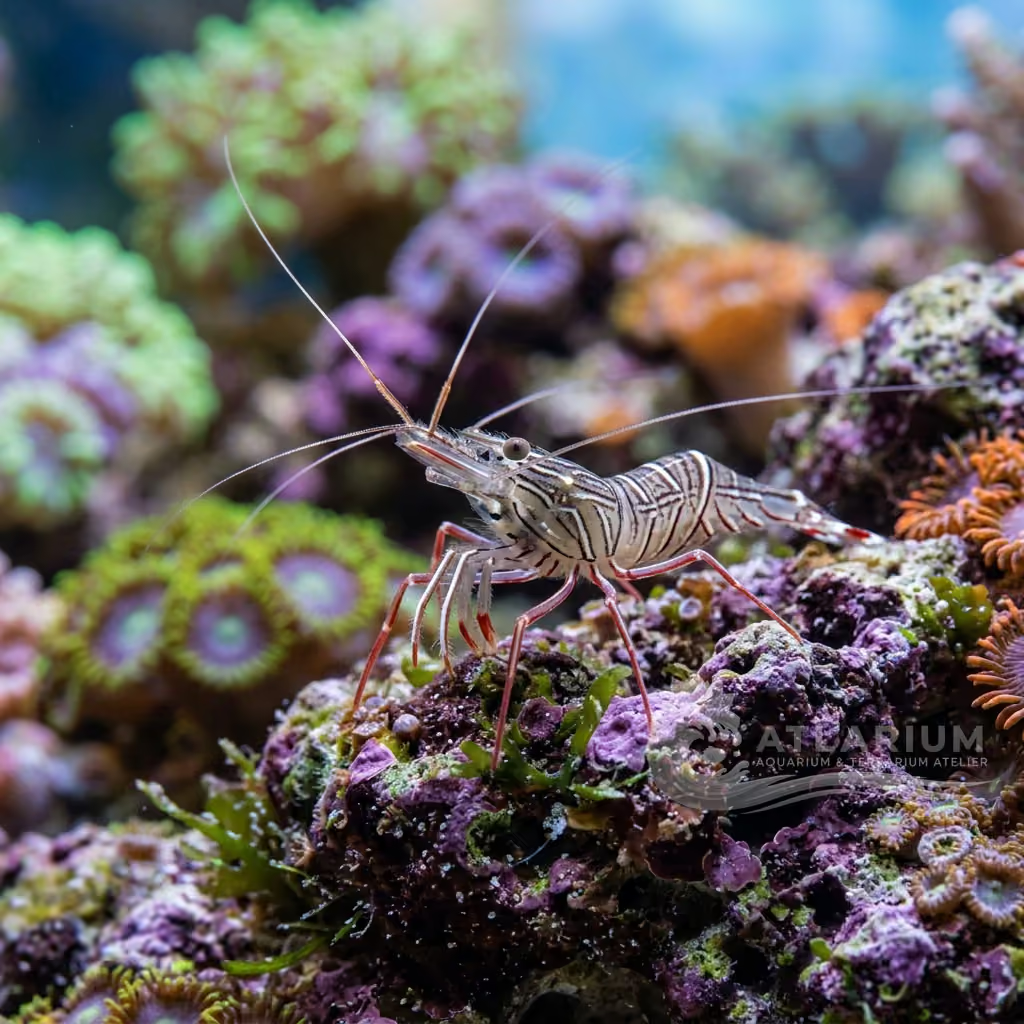
Coloration and Sexual Dimorphism: Features a semi-translucent body covered with numerous fine, longitudinal red or brownish-red stripes running along the carapace and abdomen. The walking legs and antennae are pale reddish-white. The species is a protandric simultaneous hermaphrodite; individuals mature first as males, later developing female reproductive organs while retaining male ones.

Soins, reproduction et cohabitation
Tank Setup: Requires an aquarium of at least 50-60 liters. Provide plenty of live rock arranged to form shaded crevices, caves, and overhangs where the shrimp can hide during daylight hours. Because this is a highly social, schooling species, keeping them in a group of 3-4 or more specimens is recommended.
Diet and Feeding: An omnivorous detritivore and active cleaner. It feeds on organic waste, pest anemones (like small Aiptasia), leftover fish food, and parasites. In captivity, it eagerly consumes frozen foods like mysis and brine shrimp, sinking pellets, dry flakes, and tiny pieces of fresh seafood.
Water Quality: Standard marine parameters: water temperature should ideally be kept between 18 and 24 °C (as a subtropical species, it prefers slightly cooler waters than tropical cleaner shrimps), pH 8.1 to 8.4, and specific gravity of 1.021 to 1.025. Dosing trace iodine and maintaining calcium is crucial for healthy molting.
Compatibility and Tankmates: Reef-safe and excellent for community tanks. It is peaceful toward fish, corals, and other invertebrates. Avoid keeping it with large predatory fish (such as hawkfish, wrasses, triggerfish, or lionfish) that will readily eat them, especially when they are soft-shelled during a molt.
Aquarium Breeding: While mating and egg production are common in aquariums (due to their simultaneous hermaphroditic nature), raising the larvae is extremely difficult. The larvae undergo a prolonged pelagic phase with multiple molts and require specialized larval rearing tanks and specific live microfoods.
Risks and Diseases: Highly sensitive to copper-based medications and heavy metals, which are quickly lethal to all invertebrates. Sudden shifts in salinity or temperature can cause osmotic shock, so slow drip acclimation is mandatory when introducing them to a new aquarium.

Origine et répartition géographiques
Lysmata californica (commonly known as the California cleaner shrimp or broken-back shrimp) is native to the Eastern Pacific Ocean, distributed from the coast of southern California (USA) down to the Baja California peninsula (Mexico). It inhabits tide pools, rocky reefs, breakwaters, and kelp forests from the intertidal zone down to depths of approximately 20 meters, often found in dense groups.
Origine
Océans tropicaux et récifsAmérique centrale et CaraïbesAmérique du Nord

Profil d'invertébré
- Régime alimentaire
- Omnivore
- Lysmata californica is primarily an omnivorous scavenger that constantly forages for detritus, biofilm, and leftover food among the substrate. In captivity, their diet should be supplemented with high-quality sinking pellets, frozen mysis, and occasional vegetable matter. A diverse and rich diet ensures robust molting and brilliant coloration.
- Rôle écologique
- Pest control
- Playing a critical role in the aquatic food web, Lysmata californica acts as a macro-detritivore that breaks down organic materials. Their constant scavenging significantly reduces the accumulation of decaying matter, thereby improving overall water quality. In reef or planted tanks, they often act as meticulous cleaners of the aquascape.
- Taille adulte
- 7 cm
- Risque de saut
- Yes
- When startled by a sudden movement, bright light, or aggressive tank mate, Lysmata californica possesses a powerful tail-flick reflex that can launch them entirely out of the water. This jumping behavior makes an unsecured aquarium a severe hazard. A tight-fitting lid or mesh top is absolutely mandatory to prevent them from becoming desiccated on the floor.
- Sensibilité aux chocs
- Medium
- Lysmata californica is highly susceptible to osmotic shock caused by rapid shifts in specific gravity, temperature, and pH. Sudden changes can compromise their delicate osmoregulatory systems, often leading to immediate fatalities or failed molts. A diligent drip acclimation process taking at least one to two hours is vital for successful introductions.
- Calcium et minéraux
- High
- To successfully regenerate their chitinous exoskeleton during a molt, Lysmata californica requires consistent availability of dissolved calcium, magnesium, and trace iodine. Poor mineral content in the water column can result in "white ring of death" or the inability to fully shed their old shell. Regular water changes and appropriate mineral supplementation are essential for their survival.
- Mue
- Yes
- Molting is the most precarious time in the life cycle of Lysmata californica, during which it will hide until its new exoskeleton hardens. Aquarists will often find complete, transparent molts in the tank, which should be left in the water as the shrimp will consume it to reclaim lost minerals. Never disturb or force a shrimp out of hiding during this vulnerable phase.
- Reproduction
- Oviparous
- Under optimal water conditions and with plenty of food, Lysmata californica can readily breed in captivity. Females can often be seen carrying clutches of eggs (berried) beneath their pleopods until they hatch into miniature shrimp or planktonic larvae. Providing dense moss or hiding spaces greatly increases the survival rate of the offspring.
- Compatibilité et compagnons
- Peaceful
- Lysmata californica is best kept in dedicated invertebrate setups or alongside small, peaceful nano fish. They are at high risk of predation from cichlids, larger wrasses, hawkfish, and puffers, which will readily hunt them. When kept with appropriate tank mates, they will confidently display their active and engaging behaviors.

Espèces associées
Recommandations regroupées par proches parents, compagnons et soins similaires.