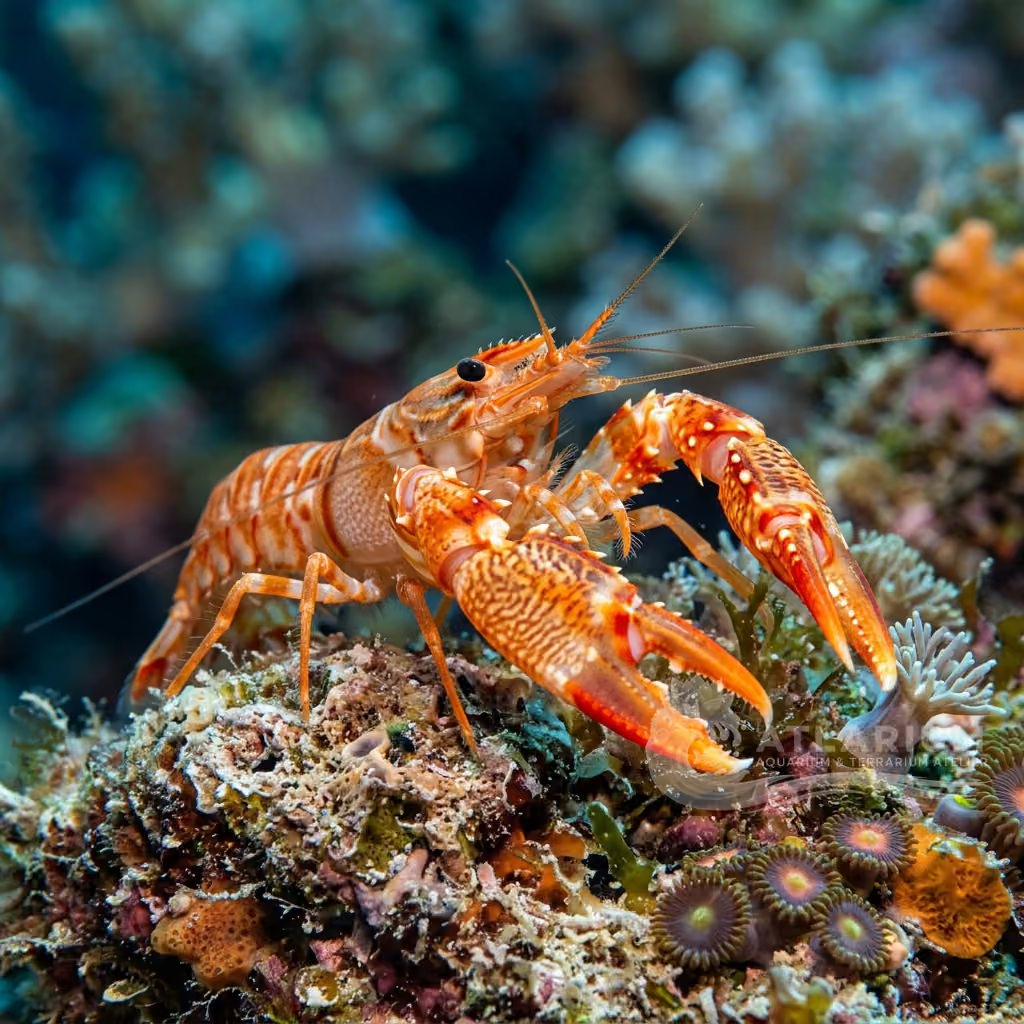
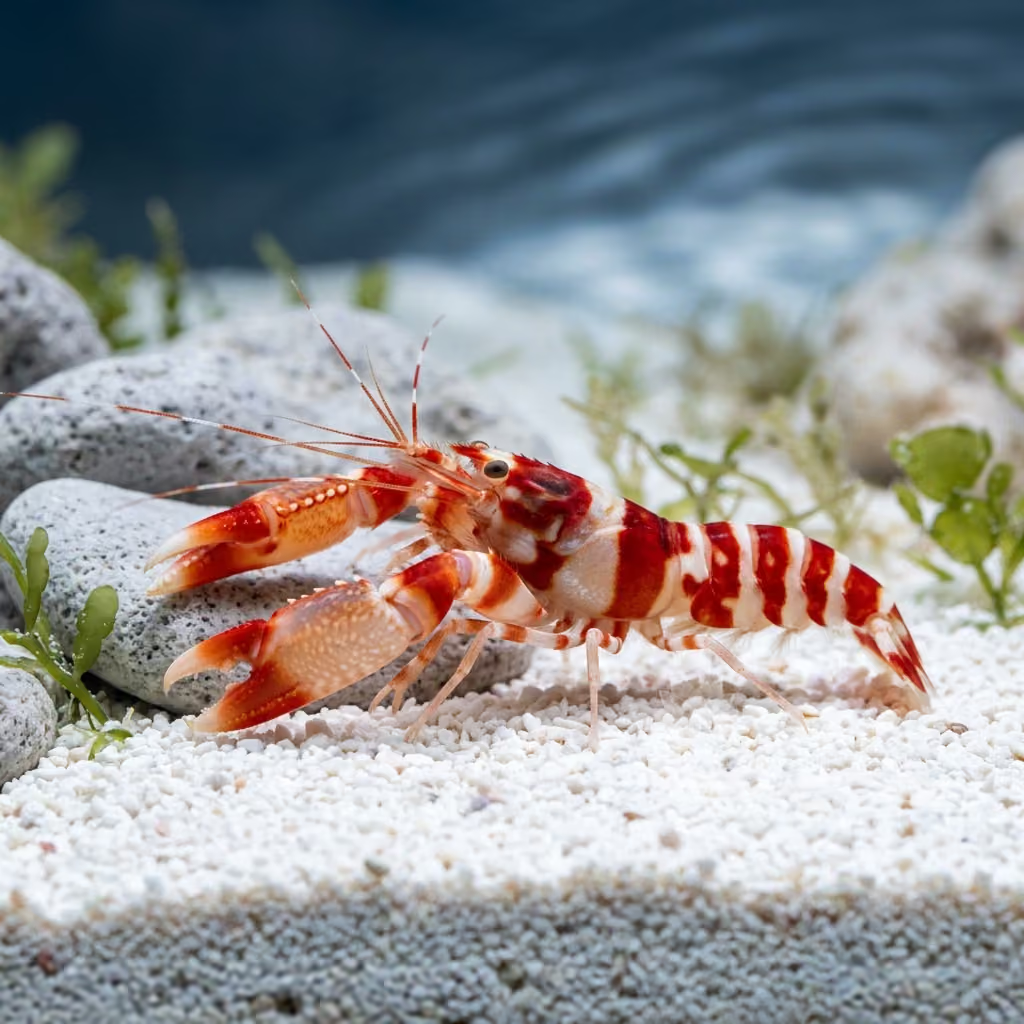
Bigclaw snapping shrimp
Alpheus heterochaelis
An Atlantic snapping shrimp famous for its incredibly modified claw. It generates a high-velocity cavitation bubble and an exceptionally loud popping sound.
Température de l’eau
20 - 26 °C
Valeur du pH
8.1 - 8.4
Type d'eau
Marin
Type d'invertébré
Marine shrimp
Taille adulte
5 cm
Groupe minimal
>= 1
KH
8 - 12 dKH
Rôle écologique
Symbiont
Sensibilité au cuivre
High

Description de l'espèce
Geographical Origin and Habitat: Alpheus heterochaelis is native to the coastal waters of the Western Atlantic Ocean, distributed primarily along the eastern coast of the United States from Maryland south to Florida, throughout the Gulf of Mexico, and down to northern Brazil. It inhabits shallow estuarine waters, salt marshes, coastal lagoons, and mudflats, preferring soft muddy or sandy substrates where it can burrow.
Taxonomy: Belongs to the class Malacostraca, order Decapoda, family Alpheidae (snapping shrimp), and genus Alpheus. This family is distinguished by the extreme specialization of one of the large chelipeds (claws), which has evolved into an acoustic weapon. A. heterochaelis is a model organism in scientific studies of acoustic cavitation physics.
Social Behavior: A fossorial and largely solitary animal, known for its ability to excavate complex burrow systems beneath rocks. It occasionally lives in heterosexual pairs. It uses its modified snapper claw to produce a loud popping sound, generating a high-velocity cavitation bubble that stuns small prey and deters intruders.
Coloration and Sexual Dimorphism: Features an elongated body with an olive-green, grey-green, or brownish-green base coloration, often showing blue or orange highlights on the claws and leg joints. The snapping claw is dramatically larger than the pincers of the opposite side. Sexual dimorphism is detected by examining abdominal pleopods.

Soins, reproduction et cohabitation
Tank Setup: Requires an aquarium of at least 60 liters. Provide a thick substrate bed (8-10 cm deep) consisting of a mix of coarse sand and rubble to facilitate burrowing behavior. It is critical to place live rocks directly on the glass bottom of the aquarium to prevent cave-ins caused by the shrimp's excavation activities.
Diet and Feeding: A carnivorous detritivore. In captivity, it feeds on leftover fish foods, frozen foods like mysis shrimp, brine shrimp, chopped seafood, and high-quality sinking pellets. It will actively hunt small worms and tiny invertebrates near its burrow entrance. It is generally safe for fish of average size.
Water Quality: Requires stable parameters: water temperature between 22 and 26 °C, pH levels of 8.1 to 8.4, and a specific gravity of 1.022 to 1.025. It is tolerant of slight salinity drops common in estuarine habitats, but requires proper levels of calcium and trace iodine for molting. Copper treatments are highly toxic.
Compatibility and Tankmates: Can be housed with peaceful reef fish. While it is not the typical Indo-Pacific partner shrimp that forms mutualistic relationships with symbiont gobies (like Alpheus bellulus), it may occasionally share burrows with benthic fish. Avoid housing with large, crustacean-eating predators.
Aquarium Breeding: Extremely difficult. The female carries eggs under her tail until they hatch into planktonic larvae. Rearing the larvae requires specialized tanks without mechanical filtration, and continuous feeding of microscopic live foods (rotifers and microalgae) through multiple developmental stages.
Risks and Diseases: The primary risk is structural collapse of rockwork if not secured properly. Molting failures can occur if water parameters or iodine levels are deficient. The loud snapping sound may surprise hobbyists, but the pressure wave generated by this species is not strong enough to crack aquarium glass.

Origine et répartition géographiques
Alpheus heterochaelis is native to the coastal waters of the Western Atlantic Ocean, distributed primarily along the eastern coast of the United States from Maryland south to Florida, throughout the Gulf of Mexico, and down to northern Brazil. It inhabits shallow estuarine waters, salt marshes, coastal lagoons, and mudflats, preferring soft muddy or sandy substrates where it can burrow.
Origine
Cosmopolite ou introduitAmérique du Sud hors AmazonieAmérique centrale et CaraïbesAmérique du NordOcéans tropicaux et récifs

Profil d'invertébré
- Régime alimentaire
- Omnivore
- This species is primarily a scavenger and carnivore, continuously foraging the substrate for uneaten food, detritus, and small benthic organisms. In captivity, their diet should be supplemented with meaty foods such as mysis shrimp, brine shrimp, and sinking pellets. Providing a varied diet is crucial for their long-term health and successful molting.
- Rôle écologique
- Symbiont
- In the wild, this shrimp plays a vital role as a bioturbator, constantly turning over the sand and gravel. This digging behavior helps oxygenate the substrate and prevents the buildup of toxic anaerobic zones. Furthermore, they often form beneficial symbiotic relationships with certain goby species, sharing a burrow for mutual protection.
- Taille adulte
- 5 cm
- Risque de saut
- Yes
- While not known to be prolific jumpers like some fish, they can suddenly propel themselves backward using a powerful tail flick if startled. This explosive movement could inadvertently launch them out of an uncovered tank. It is highly recommended to use a tightly fitting lid to prevent any accidental escapes during feeding or tank maintenance.
- Sensibilité aux chocs
- High
- They are highly sensitive to sudden fluctuations in water parameters such as salinity, temperature, and pH. Acclimation should be performed very slowly, preferably using the drip method over several hours. Sudden changes can induce shock, premature molting, or even immediate death in sensitive individuals.
- Calcium et minéraux
- Medium
- As a crustacean, this species requires adequate calcium levels and proper alkalinity to construct and harden its exoskeleton after molting. Iodine and magnesium traces are also essential to facilitate smooth molting processes. Regular water changes and appropriate dosing usually maintain these necessary elemental levels.
- Mue
- Yes
- During the molting process, the shrimp becomes extremely vulnerable and will retreat to its burrow or hideout until its new shell hardens. It is crucial to leave the discarded exoskeleton in the tank, as the shrimp will consume it to recover lost calcium and nutrients. Do not disturb the animal during this critical period to avoid causing fatal stress.
- Reproduction
- Oviparous
- Breeding in captivity is rare and quite challenging due to the specialized requirements of their planktonic larval stages. Females carry the fertilized eggs under their abdomen until they hatch into free-swimming zoeae. These larvae typically require specialized microscopic foods and a dedicated rearing setup to survive into adulthood.
- Compatibilité et compagnons
- Reef safe
- This species is generally peaceful towards most tankmates but can be fiercely territorial towards conspecifics or similar bottom-dwelling crustaceans. They are best kept either singly, in a mated pair, or associated with a compatible watchman goby. Avoid keeping them with large, aggressive predatory fish that may view them as a food source.

Espèces associées
Recommandations regroupées par proches parents, compagnons et soins similaires.