Spotted cleaner shrimp
Periclimenes yucatanicus
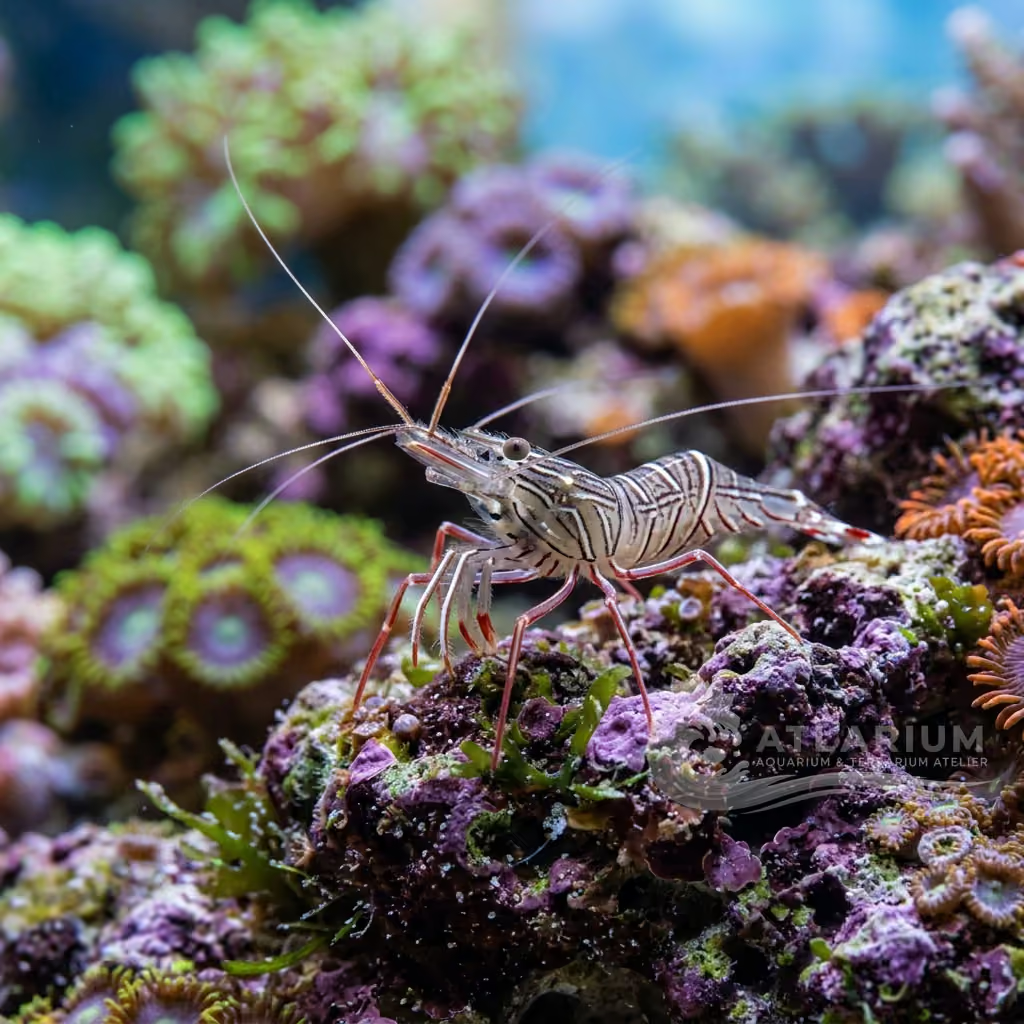
A transparent, attractively marked cleaner shrimp from the Western Atlantic, forming tight symbiotic bonds with sea anemones. Geographical Origin and Habitat: This species is widely...
Température de l’eau
22 - 27 °C
Valeur du pH
8.1 - 8.4
Type d'eau
Marin
Type d'invertébré
Marine shrimp
Taille adulte
3 cm
Groupe minimal
>= 1
Rôle écologique
Symbiont
Sensibilité au cuivre
High

Description de l'espèce
Geographical Origin and Habitat: This species is widely distributed in the tropical waters of the western Atlantic Ocean, particularly in the Caribbean Sea, the Gulf of Mexico, around Florida, the Bahamas, and along the northern coasts of South America. It lives in close symbiotic association with several large sea anemones (such as Condylactis gigantea, Bartholomea annulata, or Lebrunia danae) on shallow coral reefs, slopes, and seagrass beds at depths ranging from 1 to 25 meters.
Taxonomy: Periclimenes yucatanicus belongs to the class Malacostraca, order Decapoda, and family Palaemonidae. It is one of the most prominent cleaner shrimp species of the Caribbean basin. Its biology is defined by its obligate or facultative association with cnidarians, whose stinging tentacles provide almost complete protection from predators.
Social Behavior: It is a peaceful and highly specialized species that establishes 'cleaning stations' on its host anemone. It attracts client fish by performing a characteristic 'dance' where it sways its body from side to side and waves its long white antennae. It cleans fish by removing ectoparasites, dead tissue, and excess mucus from their skin and inside their oral cavities.
Coloration and Sexual Dimorphism: The body is mostly transparent, adorned with striking white and brown spots outlined in dark margins, symmetrically arranged on the carapace and abdomen. The legs and claws display alternating purple and white bands. The antennae are entirely white. Adult females are generally larger than males and have a deeper abdomen to carry the egg clutch.

Soins, reproduction et cohabitation
Tank Setup: Requires a well-established marine aquarium, preferably a reef tank, of at least 80-100 liters. The presence of a compatible host anemone (such as Condylactis gigantea) is strongly recommended to allow the shrimp to display its natural behavior and feel secure. The aquarium should include live rocks with shaded areas and moderate water flow to avoid disturbing both the anemone and the shrimp.
Diet and Feeding: In nature, it feeds on parasites and mucus collected from client fish, as well as organic particles suspended in the water column. In an aquarium, it accepts finely chopped foods like mysis, brine shrimp, copepods, and small pieces of shrimp or fish. If housed with an anemone, it will also benefit from tiny food fragments dropped by the anemone during feeding.
Water Quality: It requires excellent and stable chemical parameters: temperature between 24°C and 27°C, pH between 8.1 and 8.4, and salinity between 1.023 and 1.025. Nitrate and phosphate levels must be kept very low. Iodine levels should be monitored and supplemented regularly to support the molting process, and copper must be strictly avoided.
Compatibility and Tankmates: It is completely reef-safe and harmless to corals and other invertebrates. It coexists excellently with peaceful reef fish that utilize cleaning services. However, it should never be housed with large predators that ignore its role as a cleaner or might attack it when away from its anemone, such as hawkfish, triggerfish, groupers, and large wrasses.
Aquarium Breeding: While compatible pairs mate regularly in captivity and the female carries the eggs under her abdomen until hatching, larval rearing is extremely complex. The larvae released into the water are planktonic and require specific microscopic food (phytoplankton and rotifers) in dedicated rearing tanks, making successful home breeding nearly impossible.
Risks and Diseases: The main threat is predation, especially when the shrimp moves away from its host anemone, particularly after a molt when its body is soft and defenseless. It is highly sensitive to sudden changes in salinity and specific gravity, so drip acclimation for at least an hour is mandatory. Avoid temperature shocks and in-tank medications containing copper or heavy metals.

Origine et répartition géographiques
This species is widely distributed in the tropical waters of the western Atlantic Ocean, particularly in the Caribbean Sea, the Gulf of Mexico, around Florida, the Bahamas, and along the northern coasts of South America. It lives in close symbiotic association with several large sea anemones (such as Condylactis gigantea, Bartholomea annulata, or Lebrunia danae) on shallow coral reefs, slopes, and seagrass beds at depths ranging from 1 to 25 meters.
Origine
Océans tropicaux et récifsAmérique centrale et CaraïbesAmérique du Nord

Profil d'invertébré
- Régime alimentaire
- Omnivore
- Periclimenes yucatanicus is primarily an omnivorous scavenger that constantly forages for detritus, biofilm, and leftover food among the substrate. In captivity, their diet should be supplemented with high-quality sinking pellets, frozen mysis, and occasional vegetable matter. A diverse and rich diet ensures robust molting and brilliant coloration.
- Rôle écologique
- Symbiont
- Playing a critical role in the aquatic food web, Periclimenes yucatanicus acts as a macro-detritivore that breaks down organic materials. Their constant scavenging significantly reduces the accumulation of decaying matter, thereby improving overall water quality. In reef or planted tanks, they often act as meticulous cleaners of the aquascape.
- Taille adulte
- 3 cm
- Risque de saut
- Yes
- When startled by a sudden movement, bright light, or aggressive tank mate, Periclimenes yucatanicus possesses a powerful tail-flick reflex that can launch them entirely out of the water. This jumping behavior makes an unsecured aquarium a severe hazard. A tight-fitting lid or mesh top is absolutely mandatory to prevent them from becoming desiccated on the floor.
- Sensibilité aux chocs
- High
- Periclimenes yucatanicus is highly susceptible to osmotic shock caused by rapid shifts in specific gravity, temperature, and pH. Sudden changes can compromise their delicate osmoregulatory systems, often leading to immediate fatalities or failed molts. A diligent drip acclimation process taking at least one to two hours is vital for successful introductions.
- Calcium et minéraux
- High
- To successfully regenerate their chitinous exoskeleton during a molt, Periclimenes yucatanicus requires consistent availability of dissolved calcium, magnesium, and trace iodine. Poor mineral content in the water column can result in "white ring of death" or the inability to fully shed their old shell. Regular water changes and appropriate mineral supplementation are essential for their survival.
- Mue
- Yes
- Molting is the most precarious time in the life cycle of Periclimenes yucatanicus, during which it will hide until its new exoskeleton hardens. Aquarists will often find complete, transparent molts in the tank, which should be left in the water as the shrimp will consume it to reclaim lost minerals. Never disturb or force a shrimp out of hiding during this vulnerable phase.
- Reproduction
- Oviparous
- Under optimal water conditions and with plenty of food, Periclimenes yucatanicus can readily breed in captivity. Females can often be seen carrying clutches of eggs (berried) beneath their pleopods until they hatch into miniature shrimp or planktonic larvae. Providing dense moss or hiding spaces greatly increases the survival rate of the offspring.
- Compatibilité et compagnons
- Community
- Periclimenes yucatanicus is best kept in dedicated invertebrate setups or alongside small, peaceful nano fish. They are at high risk of predation from cichlids, larger wrasses, hawkfish, and puffers, which will readily hunt them. When kept with appropriate tank mates, they will confidently display their active and engaging behaviors.

Espèces associées
Recommandations regroupées par proches parents, compagnons et soins similaires.