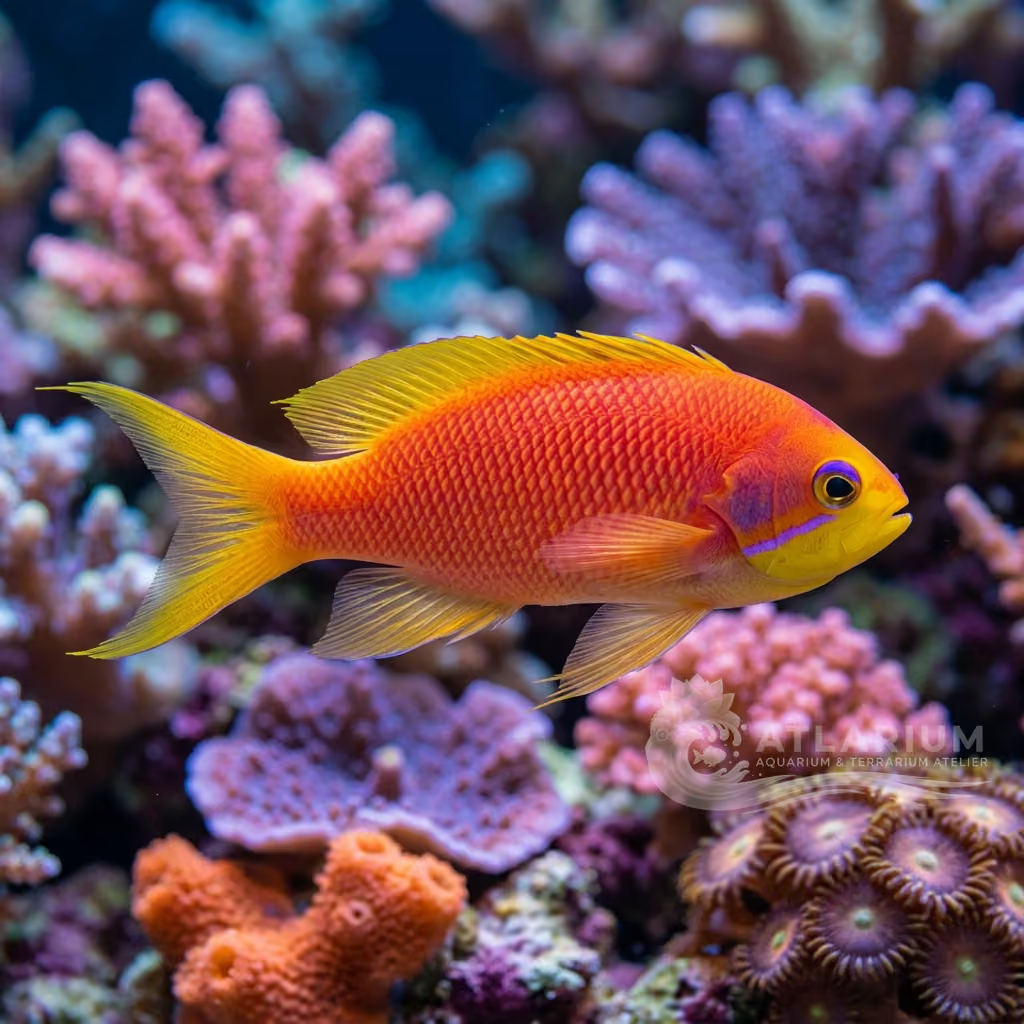
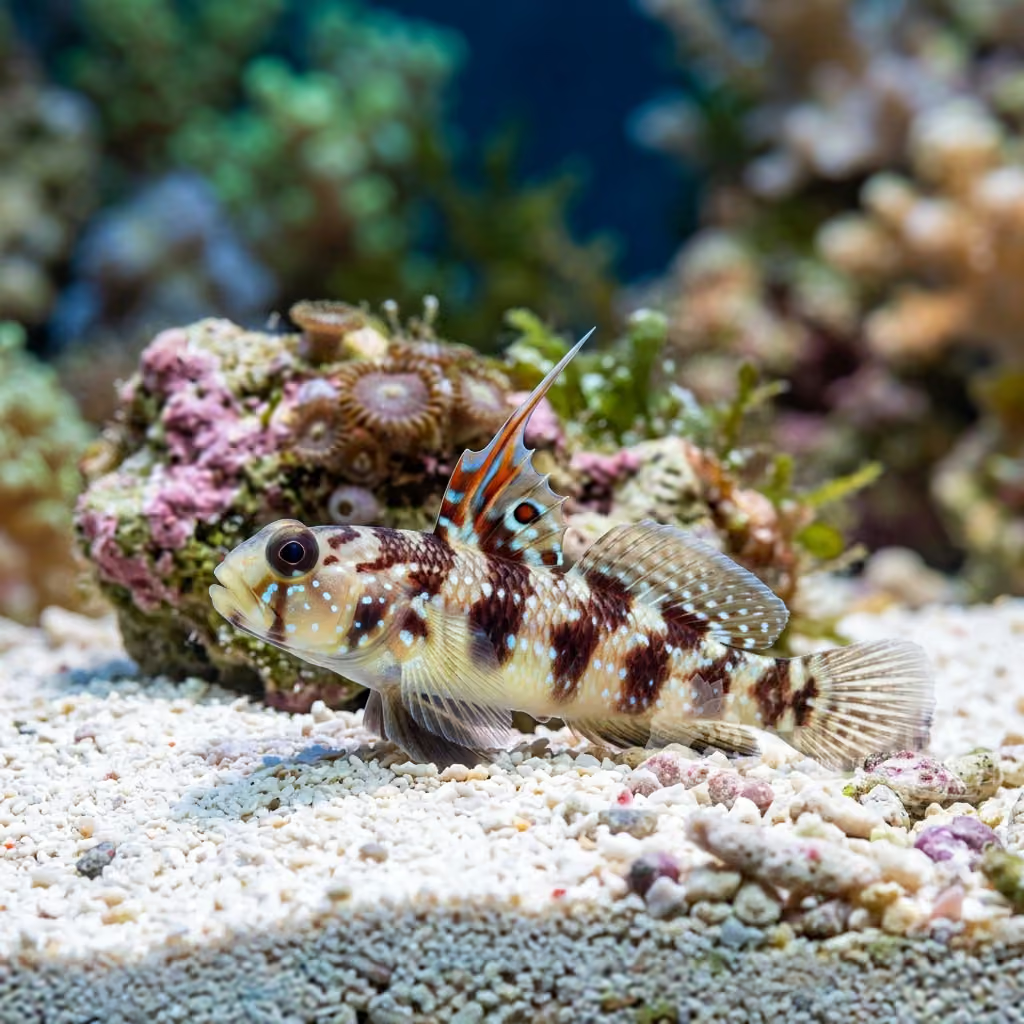
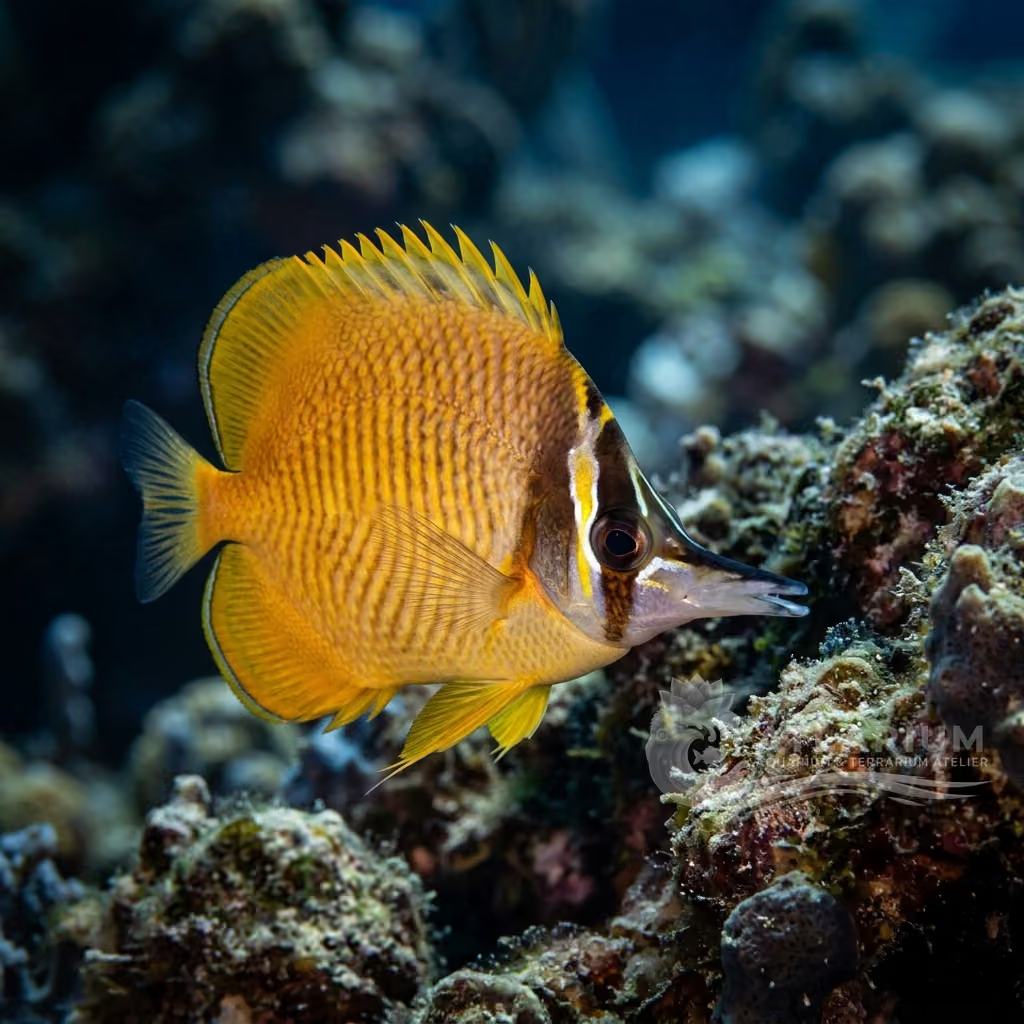
Borbonius Anthias / Checked Swallowtail
Odontanthias borbonius
A breathtaking deepwater anthias adorned with a yellow and pink checked pattern. It demands cooler temperatures, ample shaded rocky retreats, and a highly stable reef environment.
Température de l’eau
22 - 26 °C
Valeur du pH
8.1 - 8.4
Type d'eau
Marin
Niveau dans le bac
Fond
Taille adulte
15 cm
Volume minimal du bac
>= 450 L
Groupe minimal
>= 1
KH
8 - 12 dKH

Description de l'espèce
Geographical Origin and Habitat: Distributed throughout the tropical Indo-Pacific, from the coasts of East Africa and Madagascar to southern Japan, New Caledonia, and Palau. It inhabits deep reef slopes, vertical drop-offs, and marine caves at depths between 70 and 300 meters.
Taxonomy and Morphology: Belongs to the Serranidae family, subfamily Anthiadinae. It reaches approximately 15 cm (6 inches) in total length. Features a high-backed, laterally compressed body, large eyes adapted to low-light conditions, and elongated fin rays.
Social Behavior: Generally peaceful but can show territorial behavior towards other anthias or similar-looking species. It prefers to swim in small groups or singly close to caves and rocky overhangs, retreating instantly when threatened.
Coloration and Sexual Dimorphism: Extraordinary coloration featuring a pink-to-violet body adorned with large, irregular yellow, tan, and gold blotches in a checkered pattern. Fins are edged in neon blue or yellow. Dominant males are slightly larger and brighter than females.

Soins, reproduction et cohabitation
Aquarium Setup: Requires a mature, stable aquarium of at least 300 liters (80 gallons) with an abundance of rockwork forming caves, overhangs, and shaded zones to mimic deep reef habitats. Dimmer or low-intensity lighting helps ease acclimation.
Diet and Feeding: Demanding planktivore. Requires multiple daily feedings (2-3 times minimum) of high-quality frozen foods like mysis shrimp, copepods, vitamin-enriched brine shrimp, and fish eggs. It can take time to accept prepared dry pellets.
Water Quality: Prefers slightly cooler water than standard tropical reef tanks, ideally 21-24°C (70-75°F), though it can tolerate 25°C. Keep pH at 8.1-8.4, salinity at 1.023-1.025. Excellent oxygenation and active carbon filtration are essential.
Compatibility and Cohabitation: Coexists well with peaceful deepwater reef fish and non-photosynthetic corals. Avoid housing with hyperactive or aggressive feeders that might outcompete it for food, or large predators that view it as prey.
Aquarium Breeding: No documented cases of regular breeding in domestic aquariums. Being deepwater fish, simulating spawning conditions and raising the delicate pelagic larvae requires specialized commercial equipment and protocols.
Risks and Diseases: Highly susceptible to decompression sickness (swim bladder issues) if improperly harvested from the wild. Prone to marine ich (Cryptocaryon) during stress. A strict, quiet quarantine period is vital for stress reduction.

Origine et répartition géographiques
Distributed throughout the tropical Indo-Pacific, from the coasts of East Africa and Madagascar to southern Japan, New Caledonia, and Palau. It inhabits deep reef slopes, vertical drop-offs, and marine caves at depths between 70 and 300 meters.
Origine
Océans tropicaux et récifsAfrique et MadagascarAsie de l'EstAustralie, Nouvelle-Guinée et Océanie

Profil de poisson
- Tempérament
- Semi-aggressive
- Peaceful, elegant, and generally timid when first introduced to a new aquarium. Once established, they become active swimmers that add incredible color and movement to the tank. They establish a strict pecking order within their harem, led by the dominant male.
- Régime alimentaire
- Carnivore
- Primarily a zooplanktivore that feeds on small crustaceans drifting in the water column. In captivity, they require frequent feedings of frozen mysis shrimp, calanus, and enriched brine shrimp. They can usually be trained to accept high-quality small marine pellets over time.
- Espérance de vie
- 5-8 years
- Taille adulte
- 15 cm
- Ratio des sexes
- Harem
- Ideally kept as a single male with a harem of several females. Keeping multiple males will usually result in fighting unless the aquarium is exceptionally large. If kept singly, they will generally do well but may be less outgoing.
- Fréquence d'alimentation
- Twice daily
- Should be fed small amounts three to four times a day to simulate their natural constant foraging. Because of their active metabolism, infrequent feedings will lead to rapid weight loss. Using an auto-feeder for dry foods can help maintain their calorie intake.
- Charge biologique
- Medium to High
- Produces a moderate bioload that can be effectively managed with a good protein skimmer and regular water changes. They are deep-water reef fish that demand absolutely pristine, well-oxygenated water. Nitrates must be kept as close to zero as possible.
- Courant
- Strong
- Prefers moderate to strong, turbulent water flow to keep their food suspended in the water column. Good flow is essential to recreate their deep-reef drop-off environment. However, ensure they have access to calmer caves where they can retreat.
- Risque de saut
- Yes
- Like most Anthias, they are prone to jumping if startled or harassed by tank mates. A secure mesh lid is highly recommended to prevent tragic accidents. Egg crate is often insufficient as they can slip through the gaps.
- Reproduction
- Oviparous
- They are pelagic spawners and protogynous hermaphrodites, meaning females can transition into males. Breeding in home aquaria is extremely rare due to the difficulty of raising pelagic fry. They occasionally display spawning dances at dusk in large, deep tanks.
- Compatibilité et compagnons
- Reef safe
- A peaceful and somewhat shy species that does perfectly in a reef aquarium. They should be kept with other peaceful, non-aggressive tank mates to prevent them from being bullied. Do not house them with large angels, triggers, or aggressive tangs.
- Niveau dans le bac
- Bottom
- They generally inhabit the middle to lower areas of the tank, staying relatively close to rockwork. They favor dimmer lighting initially due to their deep-water origins, but will adapt to standard reef lights. They need plenty of caves and overhangs to feel secure.

Modèles et paramètres scientifiques
FishBase
Fenêtre sur les données scientifiques officielles de l’espèce
FishBase v25.04Données synchronisées le : 15/06/2026
- Niveau trophique
- 3,4 ± 0,45 se
- Résilience
- Élevée (moins de 15 mois)
- Singularité phylogénétique (PD50)
- 0.5
- Relation bayésienne longueur-poids
- a = 0.02512, b = 2.98
- VulnérabilitéVulnérabilité faible (10 / 100)

Espèces associées
Recommandations regroupées par proches parents, compagnons et soins similaires.