Polack's pencil wrasse
Pseudojuloides polackorum
Pseudojuloides polackorum is a stunning, slender pencil wrasse from the Indian Ocean. Extremely delicate, it requires a deep sand bed to survive in captivity.
Température de l’eau
22 - 26 °C
Valeur du pH
8.1 - 8.4
Type d'eau
Marin
Niveau dans le bac
Fond
Taille adulte
12 cm
Volume minimal du bac
>= 250 L
Groupe minimal
>= 1
KH
8 - 12 dKH

Description de l'espèce
Geographical Origin and Habitat:
This species is native to the South-Western Indian Ocean, with populations primarily recorded along the coasts of Kenya, Tanzania, South Africa, and around Madagascar. It inhabits shallow coastal coral reefs and seagrass beds at depths between 10 and 35 meters, preferring sandy areas mixed with coral rubble.
Taxonomy and Morphology:
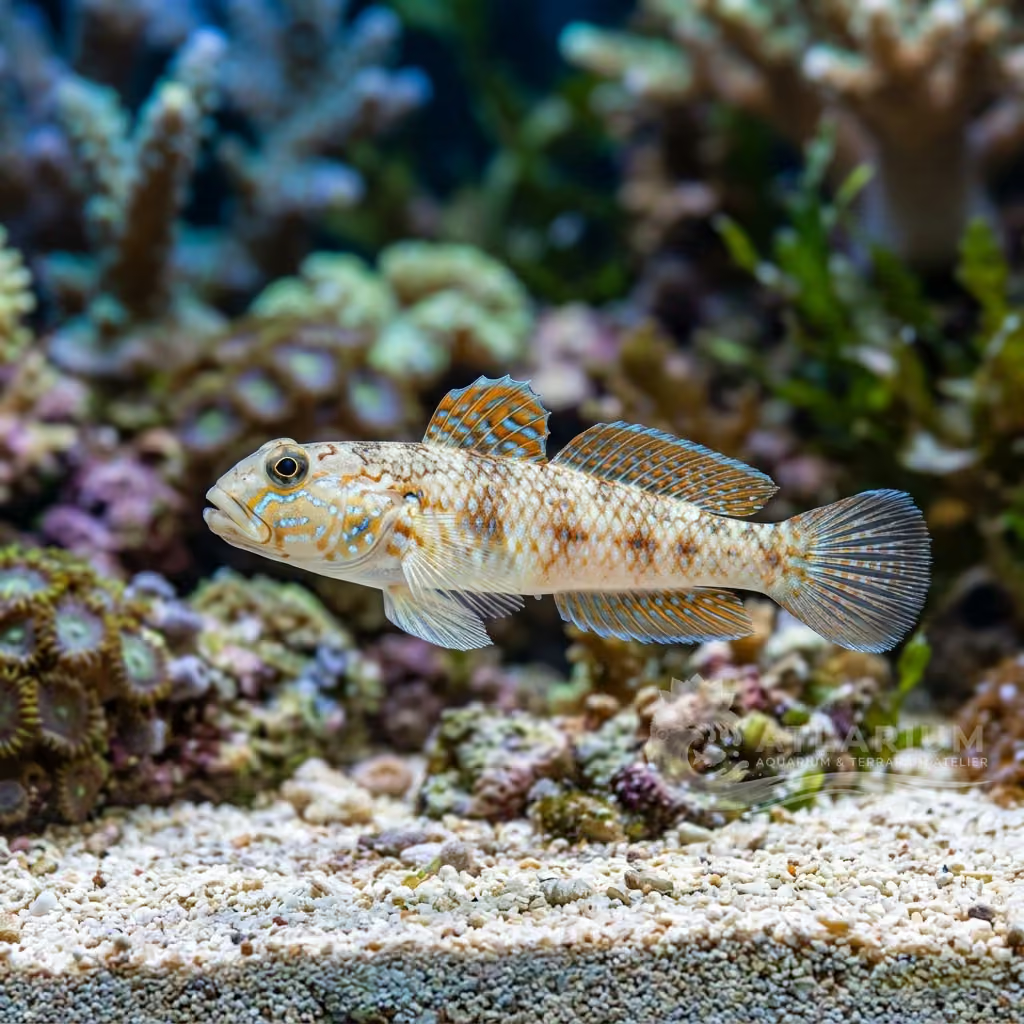
Belonging to the family Labridae, it features an extremely elongated, cylindrical body typical of the genus Pseudojuloides, commonly referred to as pencil wrasses. The head is tapered with a sharp, pointed snout. Adults reach a maximum length of about 12 centimeters. Its physical structure is adapted for diving into the sand.
Social Behavior:
It is a peaceful, shy, and gentle species. In the wild, it lives in small haremic groups dominated by a single male with several females. It displays zero aggression toward other reef species. In the aquarium, it can be easily intimidated by fast or territorial fish, causing it to remain buried in the sand.
Coloration and Sexual Dimorphism:
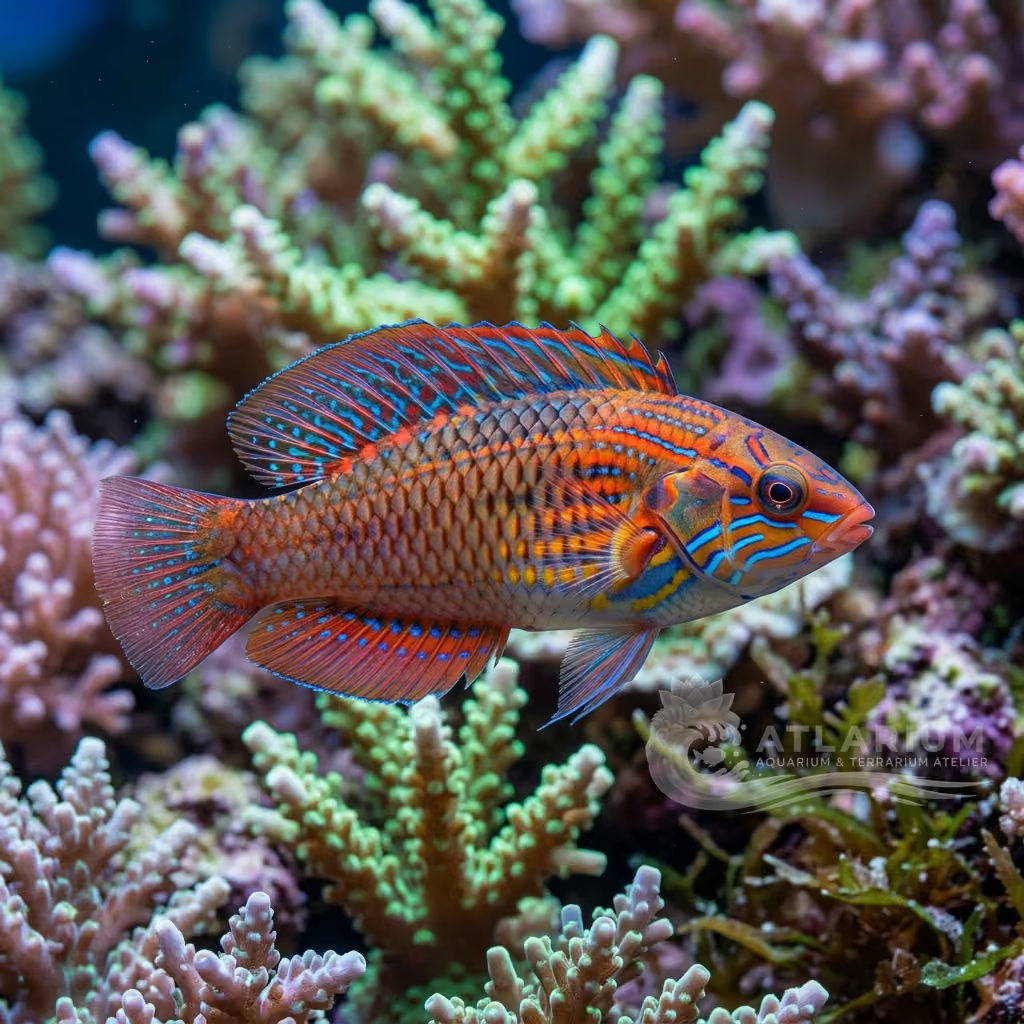
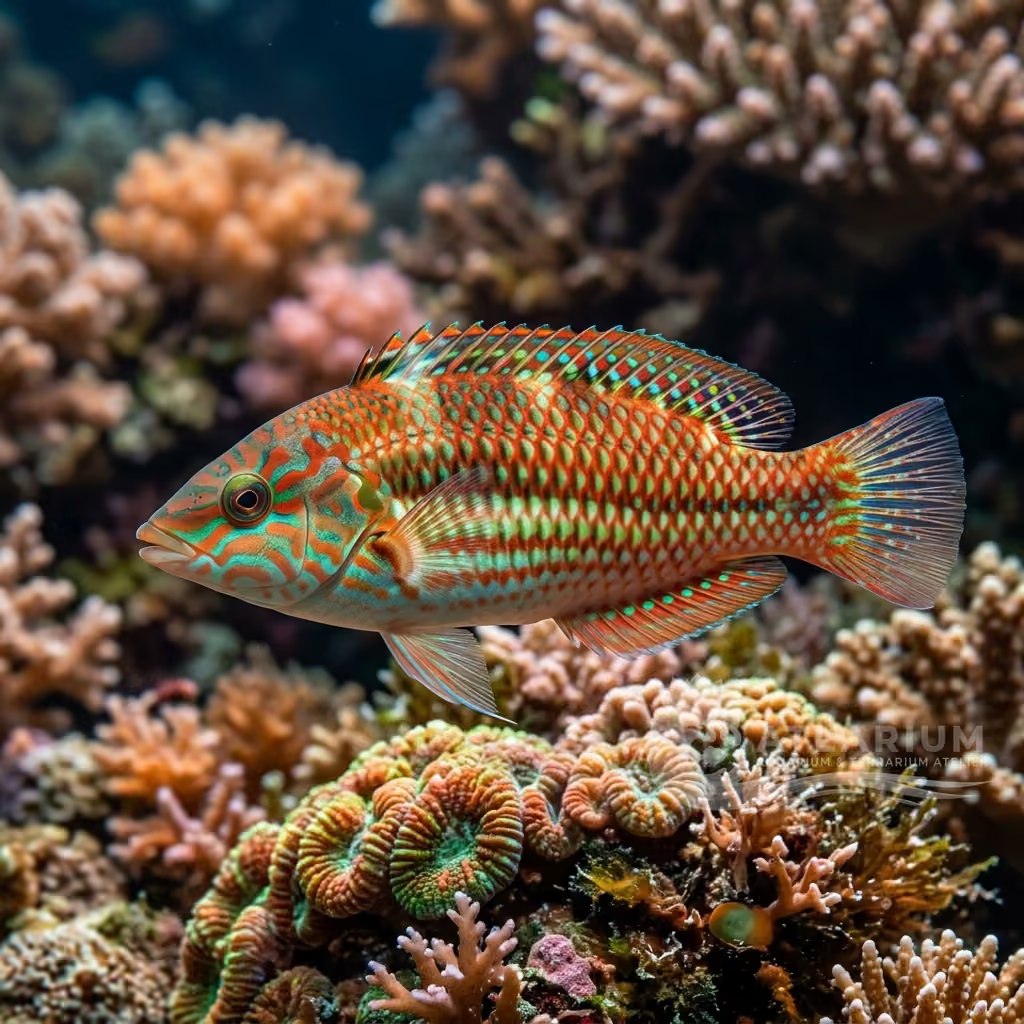
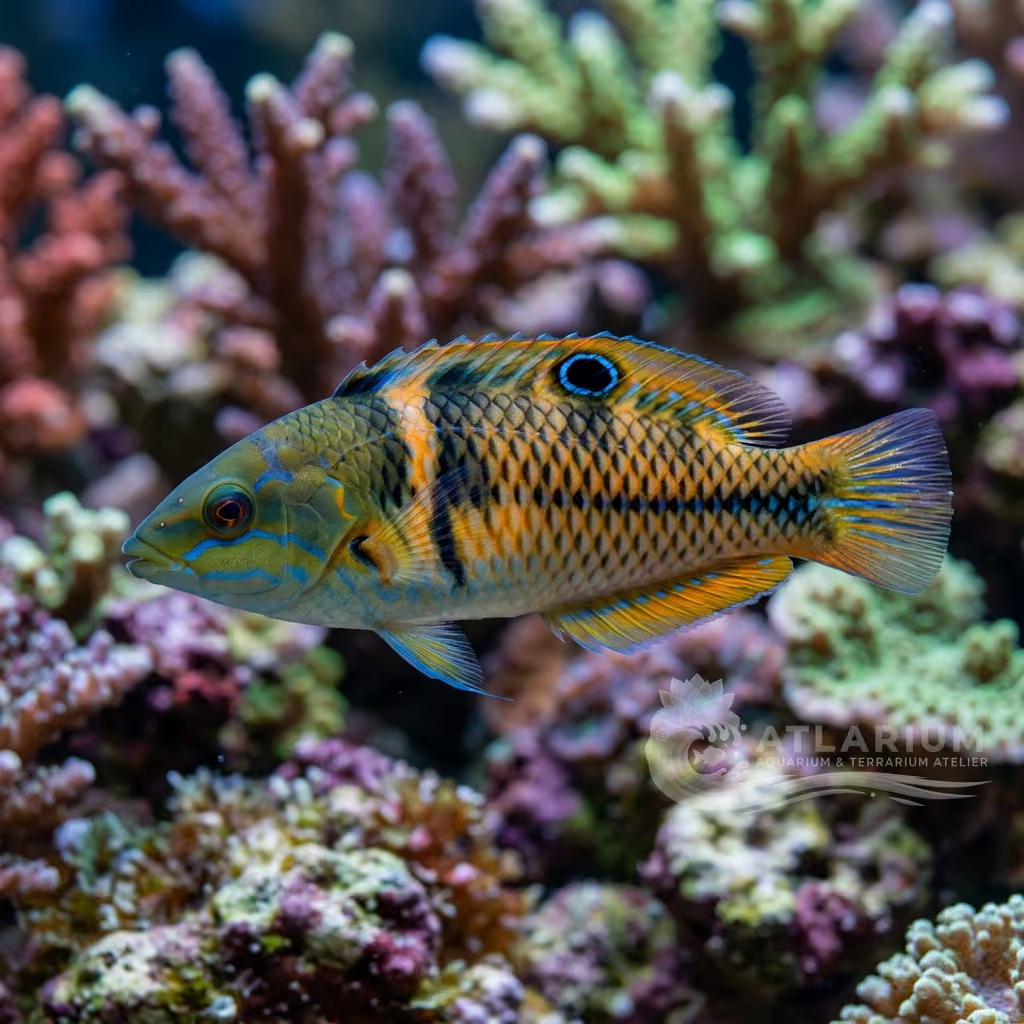
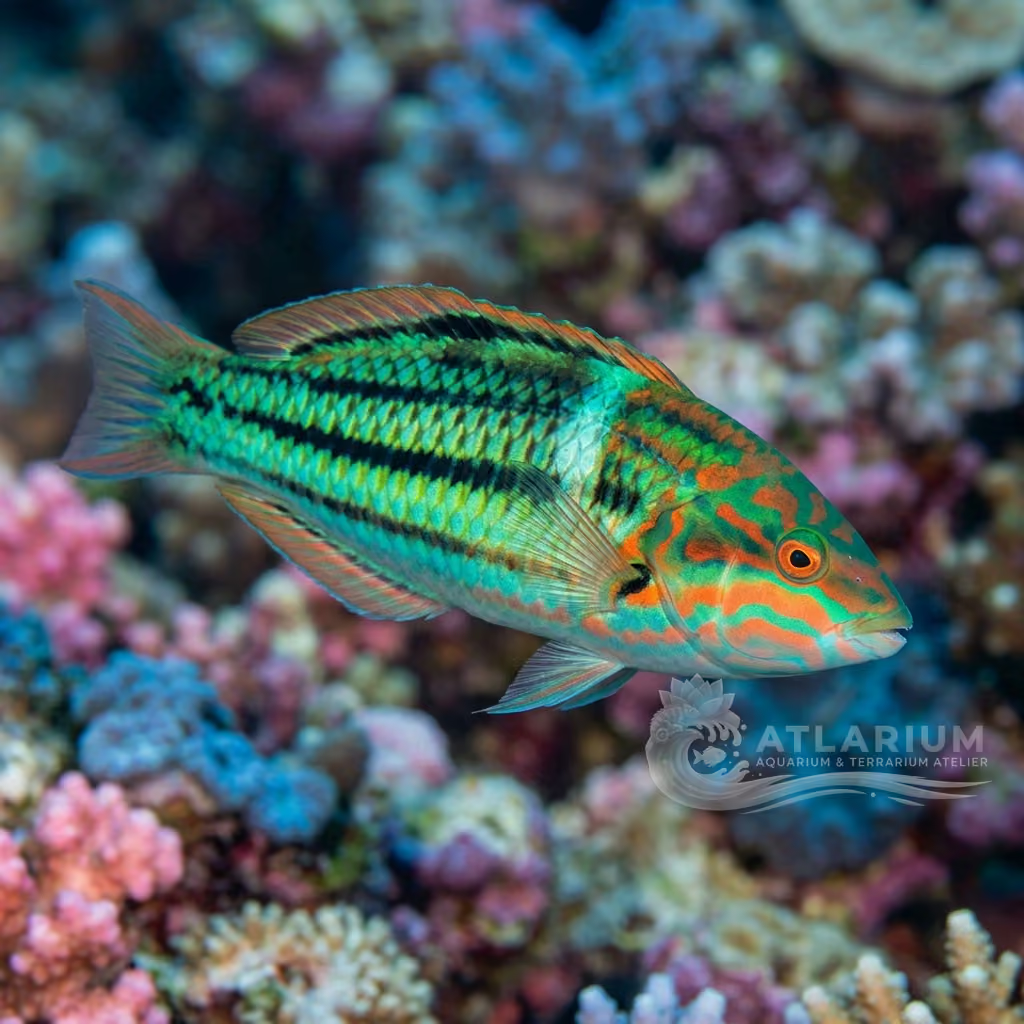
This species shows remarkable sexual dichromatism. Males boast a spectacular coloration with a bright orange upper body and a lemon-yellow lower body, separated by a distinct black and blue horizontal stripe. Females are much more uniform, displaying a pinkish-orange or reddish hue with a pale belly, making sexing simple.

Soins, reproduction et cohabitation
Aquarium Setup:
Requires a mature marine aquarium of at least 250 liters. The most critical requirement for keeping this wrasse is a deep bed of fine sand (at least 5-8 centimeters deep). This species dives into the sand to sleep at night or when threatened. Coarse gravel or sharp rocks can injure the fish's snout or body, often leading to fatal infections.
Diet and Feeding:
It is a demanding carnivore that feeds on tiny benthic invertebrates. In captivity, it must be fed multiple times a day with small portions of high-quality frozen foods like mysis, copepods, and finely chopped krill. It may take a while to accept dry foods, which should be very small pellets or flakes.
Water Quality:
Requires stable, high-quality water parameters: temperature between 24°C and 26°C, pH range from 8.1 to 8.4, specific gravity of 1.020 to 1.025, and nitrate levels ideally below 10 ppm. Regular water changes and efficient protein skimming are essential to maintain low nutrient levels and high water clarity.
Compatibility and Cohabitation:
Completely reef safe and suitable for coral systems as it does not harm polyps. It should be housed with calm, peaceful tankmates such as gobies, anthias, firefish, and peaceful wrasses. Avoid housing it with aggressive or highly territorial fish like dottybacks, damselfish, or large tangs that might stress it.
Aquarium Breeding:
There are no reports of successful captive breeding in home aquariums. In nature, they are protogynous hermaphrodites (females can transition into males) and reproduce via pelagic spawning. The larval phase is long and pelagic, relying on microscopic zooplankton, which is difficult to replicate in closed systems.
Risks and Diseases:
This is a delicate species that does not ship well. The main risks are starvation during shipping or physical injury due to lack of a proper sand bed. It is also susceptible to skin parasites under stress. Quarantine tanks must be equipped with a container filled with fine sand to allow the fish to sleep naturally.

Origine et répartition géographiques
This species is native to the South-Western Indian Ocean, with populations primarily recorded along the coasts of Kenya, Tanzania, South Africa, and around Madagascar. It inhabits shallow coastal coral reefs and seagrass beds at depths between 10 and 35 meters, preferring sandy areas mixed with coral rubble.
Origine
Océans tropicaux et récifsAfrique et MadagascarAsie du Sud et du Sud-Est

Profil de poisson
- Tempérament
- Peaceful
- Polack's Wrasse is peaceful, timid, and highly active. They are easily startled by sudden movements or aggressive fish. A calm environment allows them to flourish.
- Régime alimentaire
- Carnivore
- Their diet should consist primarily of meaty marine foods. Mysis shrimp, enriched brine, and finely chopped seafood are excellent. Diverse offerings ensure vibrant colors and health.
- Espérance de vie
- 5 years
- Taille adulte
- 12 cm
- Ratio des sexes
- Group
- A harem consisting of one male and multiple females is best. Males will display beautifully to their female counterparts. Two males should never share the same tank.
- Fréquence d'alimentation
- Twice daily
- They require feeding two to three times a day. Their active lifestyle demands a steady caloric intake. Small, frequent feedings prevent excess waste buildup.
- Charge biologique
- Medium
- This species creates a manageable, moderate bioload. They are sensitive to poor water quality. Consistent filtration and skimming are essential to keep nutrients in check.
- Courant
- Strong
- They enjoy moderate to high flow rates typical of outer reefs. Good water movement encourages natural swimming behaviors. Proper flow also maintains high dissolved oxygen levels.
- Risque de saut
- Yes
- This wrasse poses an extremely high jump risk. A custom mesh lid is required to keep them safe. Any small opening can result in a fatal leap.
- Reproduction
- Rare / not documented
- Captive breeding is generally undocumented for home aquarists. They breed via pelagic spawning in the wild ocean. Larval rearing is too complex for standard setups.
- Compatibilité et compagnons
- Territorial
- They are peaceful and suitable for community reef aquariums. They do not harm corals but may eat tiny crustaceans. Avoid housing with aggressive tank mates that cause stress.
- Niveau dans le bac
- Bottom
- They utilize the middle and bottom sections of the tank. They are fast swimmers that weave through rock structures. A sandy substrate is critical for their nightly burrowing.

Modèles et paramètres scientifiques
FishBase
Fenêtre sur les données scientifiques officielles de l’espèce
FishBase v25.04Données synchronisées le : 15/06/2026
- Niveau trophique
- 3,4 ± 0,4 se
- Résilience
- Élevée (moins de 15 mois)
- Singularité phylogénétique (PD50)
- 0.5
- Relation bayésienne longueur-poids
- a = 0.00977, b = 3.07
- VulnérabilitéVulnérabilité faible (10 / 100)

Espèces associées
Recommandations regroupées par proches parents, compagnons et soins similaires.