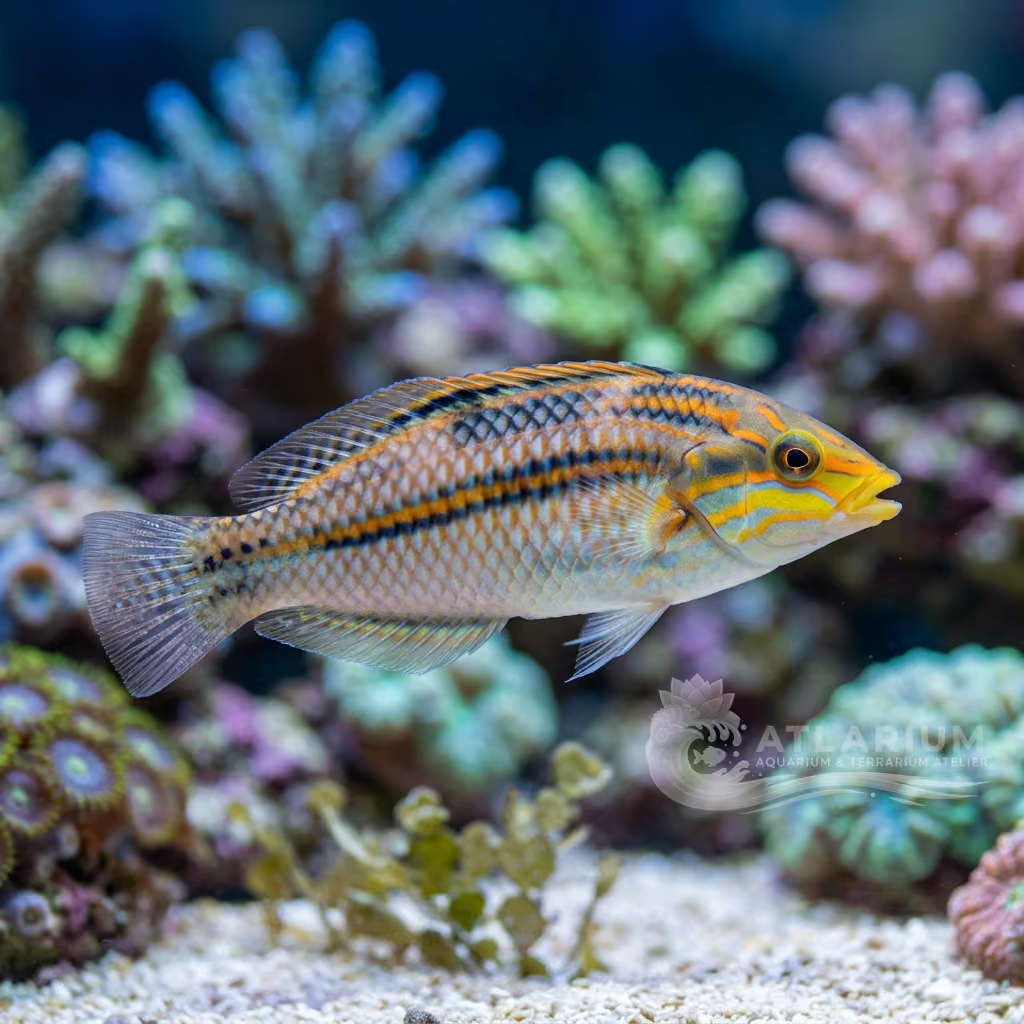
Two-tone Wrasse
Halichoeres prosopeion
The Two-tone Wrasse is an active, curious fish with a striking grey-blue to yellow-orange gradient. Reef-safe and peaceful, it needs a 200L tank with a deep, fine sand bed for sleeping and a carnivorous diet.
Température de l’eau
23 - 28 °C
Valeur du pH
8.1 - 8.4
Type d'eau
Marin
Niveau dans le bac
Tous les niveaux
Taille adulte
13 cm
Volume minimal du bac
>= 200 L
Groupe minimal
>= 1
KH
8 - 12 dKH

Description de l'espèce
Geographical Origin and Habitat: Western Indo-Pacific: distributed from the Ryukyu Islands to northern Australia and the Great Barrier Reef, extending east to Samoa and Micronesia. It frequents coral-rich reefs, sheltered lagoons, and outer slopes, preferably in clear waters with moderate currents, down to 40 meters.
Taxonomy and Morphology: Belongs to the family Labridae, genus Halichoeres. Features an elongated and slightly laterally compressed body, with a pointed snout and protruding canine teeth adapted to catch small invertebrates. It reaches a maximum adult size of about 13 centimeters, keeping an agile and swift build.
Social Behavior: Active, curious fish in perpetual motion during the day. At night, or if severely startled, it retreats by burrowing completely into the sand substrate to sleep. It behaves peacefully with fish of other families but may display intolerance toward other wrasses introduced after it.
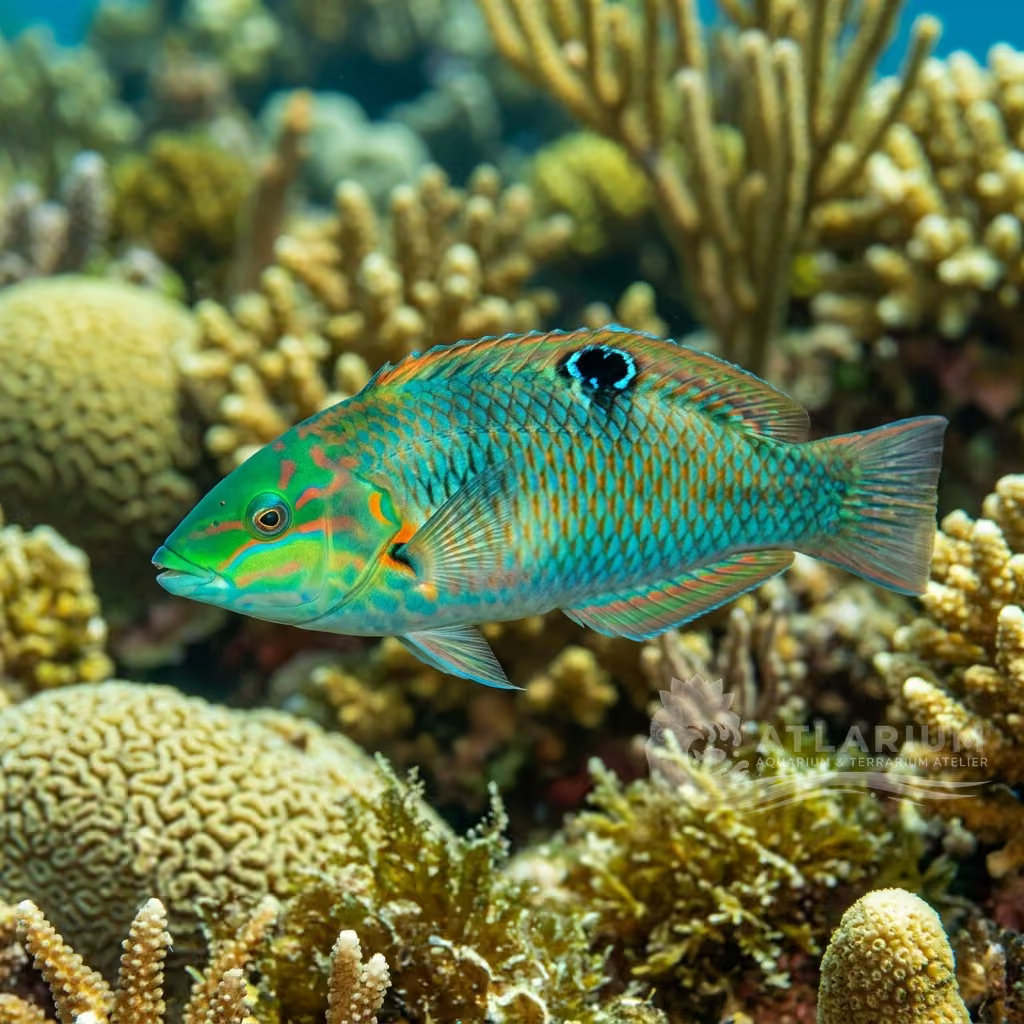
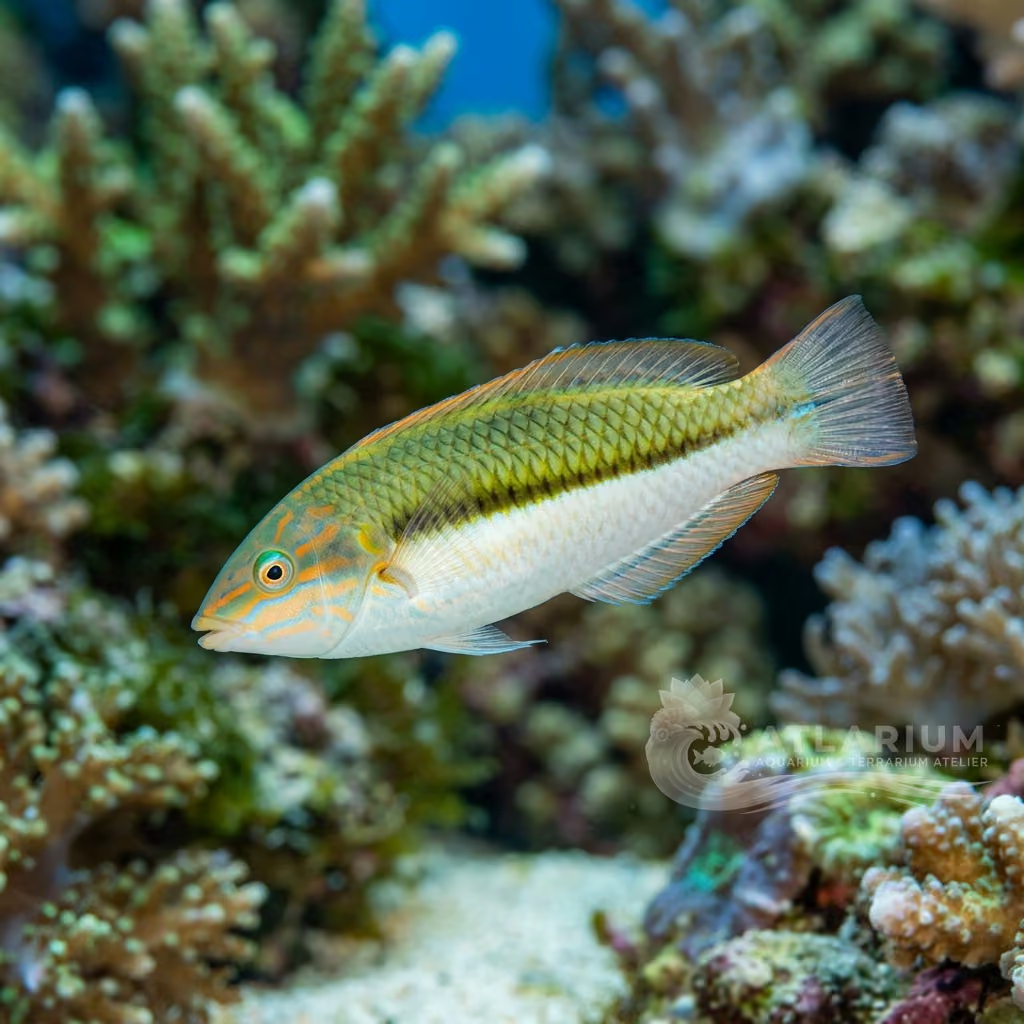
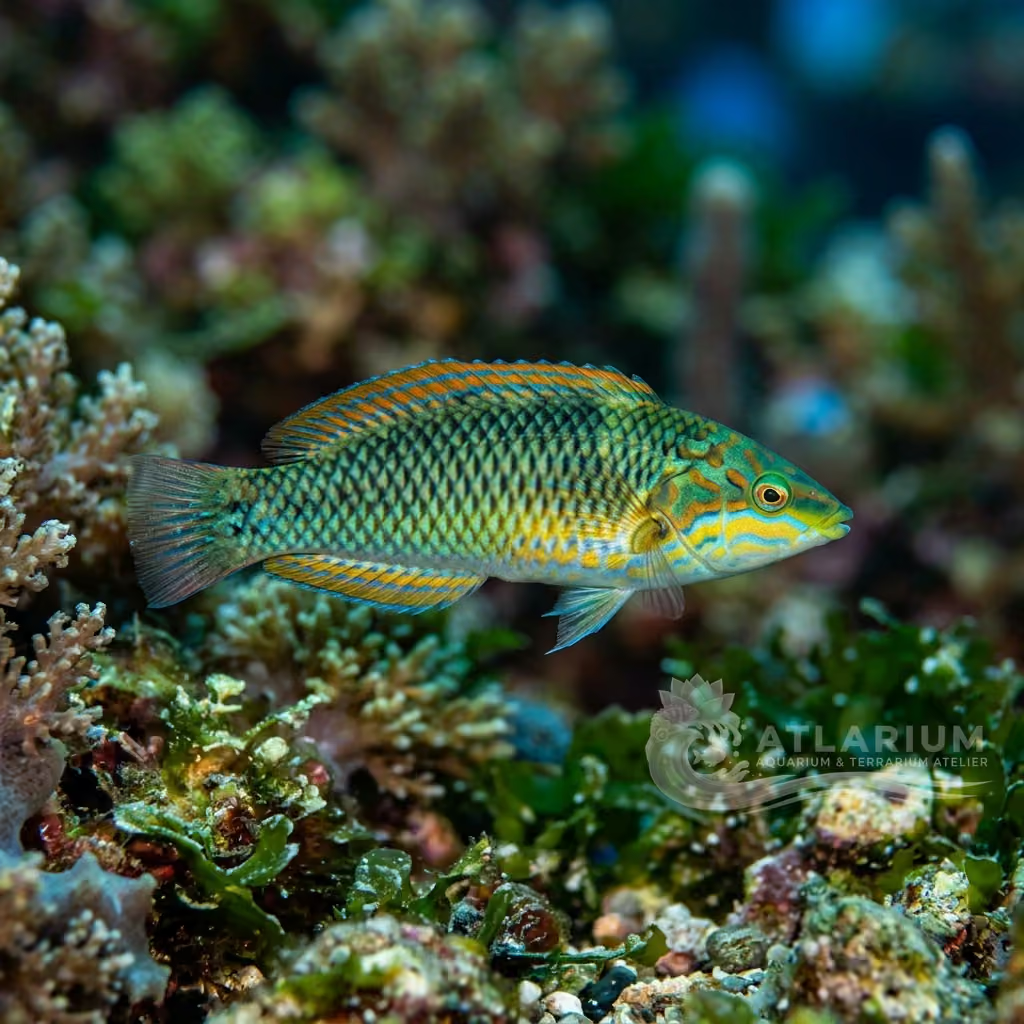
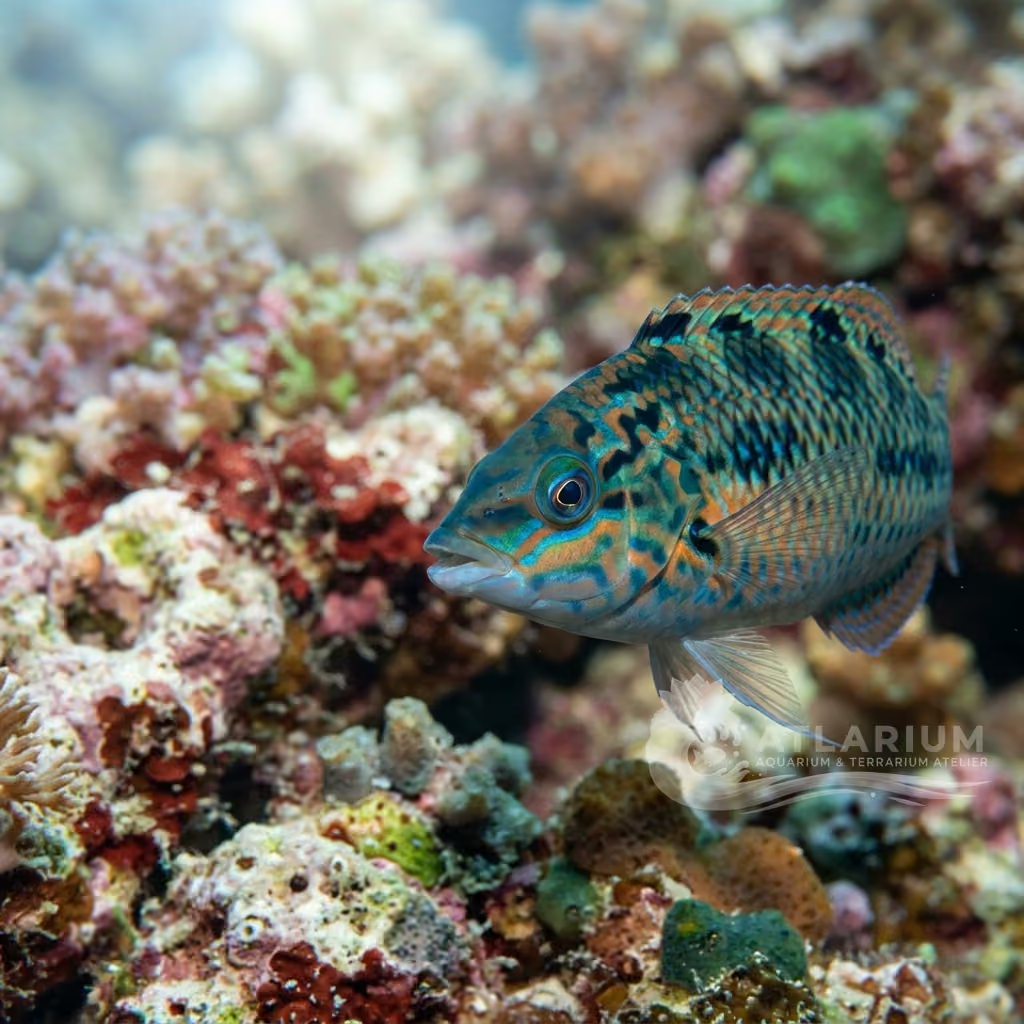
Coloration and Sexual Dimorphism: Characterized by a spectacular gradient coloration: the anterior portion of the body and head are greyish-blue or purple, fading gradually to a bright yellow-orange in the posterior half and caudal fin. Juveniles have faded vertical black lines. There is no macroscopically obvious sexual dimorphism.

Soins, reproduction et cohabitation
Aquarium Setup: Requires an aquarium of at least 200 liters with a sandy area at least 5-8 centimeters deep, composed of fine, non-sharp sand (aragonite), indispensable for allowing the fish to burrow at night. The rockwork must be stable and offer plenty of swimming paths.
Diet and Feeding: Carnivorous and active micro-invertebrate predator. In the aquarium, it eagerly accepts frozen foods (such as mysis, brine shrimp, chopped krill) and dry granular or flake foods. It constantly hunts among live rocks for flatworms, nudibranchs, and parasitic snails (like Pyramellidae).
Water Quality: Requires stable marine parameters and an efficient filtration system: water temperature between 24 and 28 °C, pH between 8.1 and 8.4, and stable density at 1.020-1.025. Good water movement and constant oxygenation promote the fish's well-being.
Compatibility and Cohabitation: Great for marine community and reef-safe aquariums. It may prey on very small ornamental shrimp or small feather dusters if hungry, but generally respects other inhabitants. Avoid cohabitation with excessively aggressive tankmates or very similar wrasses.
Aquarium Breeding: Oviparous reproduction with pelagic spawning. In nature, they form harems and spawn at dusk. There are no documented cases of successful breeding in home aquariums due to the extremely delicate planktonic larvae which are difficult to feed.
Risks and Diseases: If startled or kept in tanks without a sandy bottom, it can undergo severe stress that weakens its immune system, making it vulnerable to skin infections. It may jump out of the aquarium during the first few days, so a protective lid is highly recommended.

Origine et répartition géographiques
Western Indo-Pacific: distributed from the Ryukyu Islands to northern Australia and the Great Barrier Reef, extending east to Samoa and Micronesia. It frequents coral-rich reefs, sheltered lagoons, and outer slopes, preferably in clear waters with moderate currents, down to 40 meters.
Origine
Océans tropicaux et récifsAsie du Sud et du Sud-EstAsie de l'EstAustralie, Nouvelle-Guinée et Océanie

Profil de poisson
- Tempérament
- Territorial
- The Halichoeres prosopeion generally exhibits a peaceful but bold temperament, constantly patrolling the tank. While they ignore most corals, they are opportunistic predators of small ornamental shrimp, tubeworms, and small snails. They can occasionally become territorial toward other substrate-sleeping wrasses.
- Régime alimentaire
- Carnivore
- These wrasses are rigorous carnivores that spend their days scouring the rockwork for benthic invertebrates. In the home aquarium, their diet must include high-quality meaty items like mysis, brine shrimp, and chopped clam meat. They also serve a highly practical purpose by consuming various coral pests.
- Espérance de vie
- 10 years
- Taille adulte
- 13 cm
- Ratio des sexes
- Harem
- It is generally best to keep them as solitary individuals, unless the aquarium is exceptionally large. Keeping multiple males together will almost certainly lead to vicious territorial disputes. A single male can sometimes be kept with several females if introduced simultaneously.
- Fréquence d'alimentation
- 2-3 times daily
- Due to their constant movement and foraging behavior, they require feeding two to three times daily. Even with frequent feedings, they will relentlessly hunt for microfauna among the live rock. Providing ample food prevents them from becoming overly aggressive during feeding time.
- Charge biologique
- Medium
- The Halichoeres prosopeion produces a moderate bioload in a marine aquarium. Since they are active foragers with hearty appetites, their waste production is proportional to their substantial feeding requirements. A well-established protein skimmer and adequate biological filtration are recommended.
- Courant
- Moderate
- They prefer a moderate to strong water flow that mimics the surge zones and reefs they naturally inhabit. Good water circulation helps maintain high oxygen levels, which these energetic swimmers demand. Consistent flow also aids in flushing out detritus from the sandbed where they sleep.
- Risque de saut
- Yes
- Halichoeres prosopeion is an enthusiastic jumper and can easily escape an uncovered aquarium. A tightly woven mesh screen or canopy is essential to prevent these fish from ending up on the floor. Extra care should be taken when performing tank maintenance or adjusting lighting.
- Reproduction
- Oviparous
- This species is a protogynous hermaphrodite, undergoing a female-to-male sex change as they mature and establish dominance. Breeding them in captivity has proven exceptionally difficult because they release pelagic eggs into the water column. Dominant males often display striking terminal phase coloration.
- Compatibilité et compagnons
- With caution
- While generally peaceful toward similarly sized fish, Halichoeres prosopeion can be a menace to small decorative invertebrates. They will readily hunt flatworms, bristleworms, pyramid snails, and sometimes small ornamental shrimp. They are otherwise considered excellent, vibrant additions to community reef tanks.
- Niveau dans le bac
- All levels
- They are highly active in the lower and middle regions of the aquarium, constantly inspecting the aquascape for food. A critical requirement for this species is a deep, soft sand bed (at least 2-3 inches). They dive entirely under the sand to sleep at night or when severely stressed.

Modèles et paramètres scientifiques
FishBase
Fenêtre sur les données scientifiques officielles de l’espèce
FishBase v25.04Données synchronisées le : 15/06/2026
- Niveau trophique
- 3,5 ± 0,5 se
- Résilience
- Élevée (moins de 15 mois)
- Singularité phylogénétique (PD50)
- 0.5
- Relation bayésienne longueur-poids
- a = 0.01, b = 3.09
- VulnérabilitéVulnérabilité faible (10 / 100)

Espèces associées
Recommandations regroupées par proches parents, compagnons et soins similaires.