Zigzag Wrasse
Halichoeres scapularis
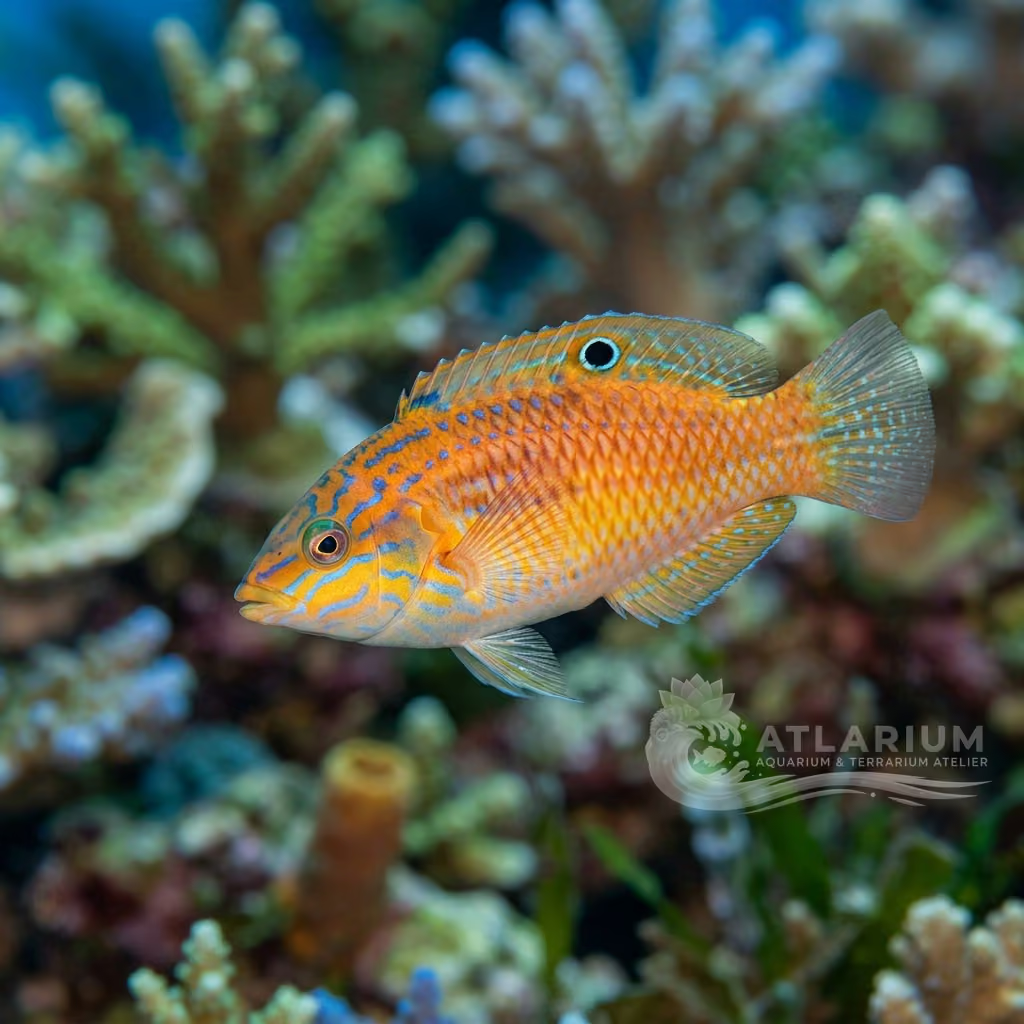
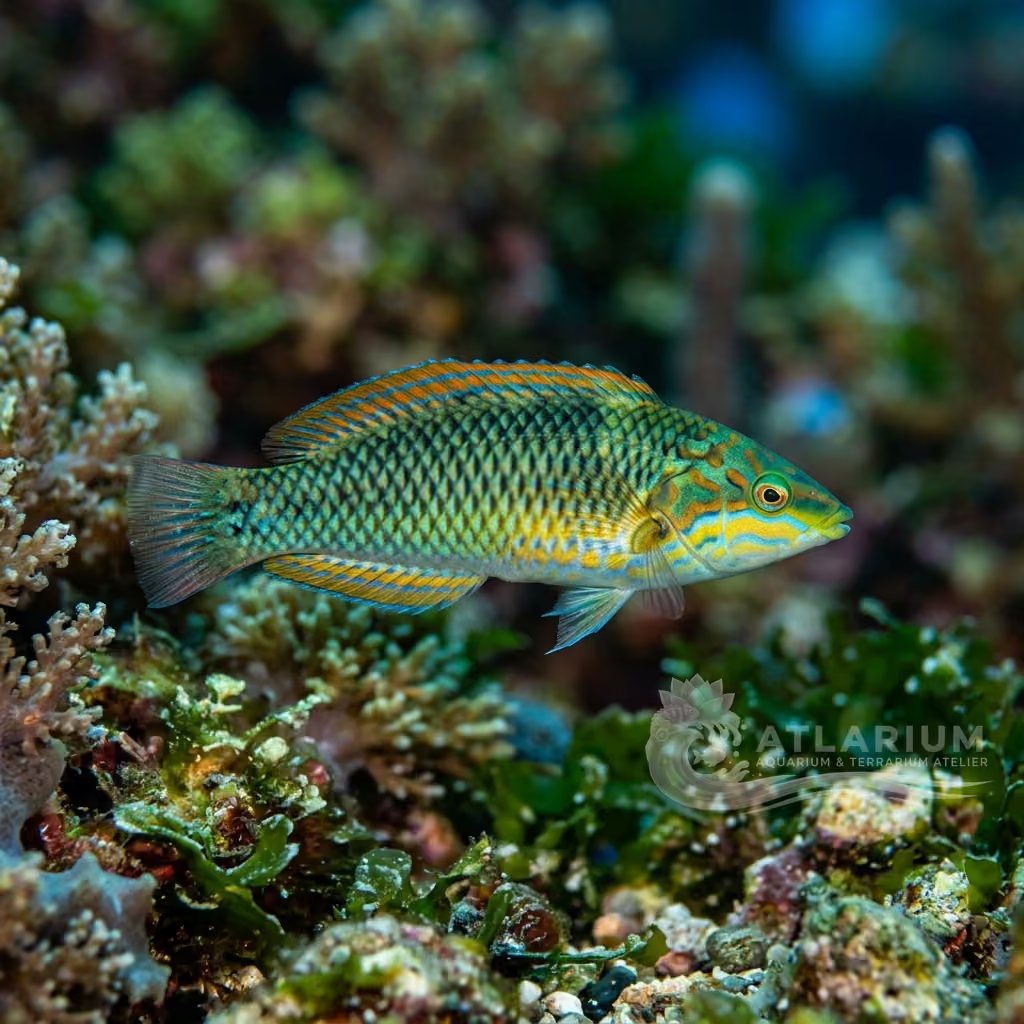
The Halichoeres scapularis, or zigzag wrasse, is an active Indo-Pacific species featuring a striking dark zigzag stripe. It requires a spacious aquarium and a deep sand bed for its nightly rest.
Température de l’eau
22 - 27 °C
Valeur du pH
8.1 - 8.4
Type d'eau
Marin
Niveau dans le bac
Fond et milieu
Taille adulte
20 cm
Volume minimal du bac
>= 300 L
Groupe minimal
>= 1

Description de l'espèce
Geographical Origin and Habitat: This species is widely distributed throughout the Indo-West Pacific, ranging from the Red Sea and East Africa to southern Japan and the Great Barrier Reef. It inhabits shallow lagoons and sandy areas near reefs.
Taxonomy and Morphology: Belonging to the family Labridae under the genus Halichoeres. It features an elongated, moderately compressed body shape with a pointed snout and terminal mouth. It can grow up to 20 centimeters in length.
Social Behavior: An active, diurnal swimmer that continuously explores the substrate for food. When threatened or when night falls, it immediately dives into the sand bed to hide and sleep.
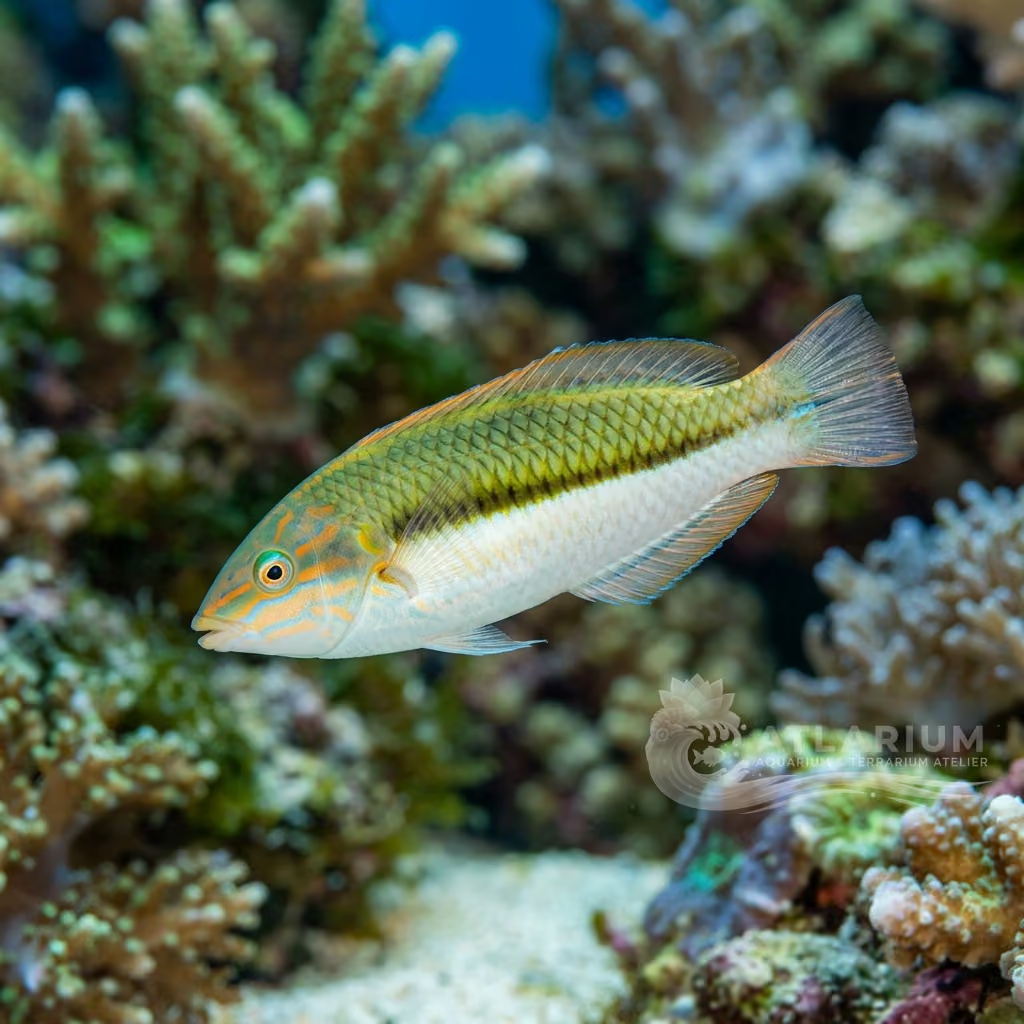
Coloration and Sexual Dimorphism: Displays a silvery-grey to pale greenish body background, marked by a prominent dark, zigzagging horizontal line along the upper flank. Terminal phase males show more vibrant pink and green facial markings.

Soins, reproduction et cohabitation
Aquarium Setup: Needs a spacious tank of at least 300 liters to accommodate its active swimming habits. It is critical to provide a deep sand bed of at least 5-8 cm of fine, non-abrasive sand for burying.
Diet and Feeding: Carnivorous. Feed a varied diet consisting of high-quality frozen foods like mysis shrimp, brine shrimp, krill, and chopped seafood. It also accepts vitamin-enriched marine pellets and flakes.
Water Quality: Keep standard marine parameters stable: temperature of 22.0 to 27.0 °C, pH range of 8.1 to 8.4, and specific gravity of 1.020 to 1.025. Efficient skimming and filtration are recommended.
Compatibility and Cohabitation: Generally peaceful toward other fish of similar size. However, it is not completely reef-safe as it will prey on small ornamental shrimps, crabs, tubeworms, and flatworms.
Aquarium Breeding: Captive spawning is undocumented in private aquariums. In nature, they are pelagic spawners, releasing eggs into the water column during tidal changes.
Risks and Diseases: It is a frequent jumper when startled; a covered tank is essential. Keeping this wrasse without a proper sand substrate leads to extreme stress, physical damage, and skin infections.

Origine et répartition géographiques
This species is widely distributed throughout the Indo-West Pacific, ranging from the Red Sea and East Africa to southern Japan and the Great Barrier Reef. It inhabits shallow lagoons and sandy areas near reefs.
Origine
Océans tropicaux et récifsAfrique et MadagascarAsie de l'Est

Profil de poisson
- Tempérament
- Active
- The Halichoeres scapularis exhibits a generally peaceful but incredibly active and curious temperament. They are constantly on the move, inspecting every crevice of the aquarium for potential food items. While they don't usually bother other fish, their active nature and potential to eat invertebrates should be carefully considered when choosing tank mates.
- Régime alimentaire
- Carnivore
- The Halichoeres scapularis is a specialized benthic predator that constantly scours the live rock and substrate for food. Its natural diet consists of small crustaceans, mollusks, and various polychaete worms. In the home aquarium, they eagerly accept a wide variety of frozen meaty foods, high-quality pellets, and marine flakes.
- Espérance de vie
- 5-8 years
- Taille adulte
- 20 cm
- Ratio des sexes
- Solitary
- Keeping the Halichoeres scapularis singly or as a male-female pair is typically the best approach in most home aquariums. While keeping a harem of one male and multiple females is possible, it requires a significantly large tank. Adding multiple males of the same species almost always leads to severe aggression and territorial disputes.
- Fréquence d'alimentation
- Twice daily
- To sustain its active foraging lifestyle, the Halichoeres scapularis requires regular feeding. Offering varied meals two to three times daily is considered optimal for their health and coloration. Ensuring they have a steady food supply also helps curb their appetite for beneficial invertebrates in the reef tank.
- Charge biologique
- Medium to High
- The Halichoeres scapularis contributes a moderate bioload to the marine aquarium system. They are active foragers with hearty appetites, which naturally results in a fair amount of waste production. Maintaining a robust filtration system, including a good protein skimmer, is necessary to handle their bioload.
- Courant
- Strong
- The Halichoeres scapularis appreciates a moderate to strong water flow throughout the aquarium. This water movement helps to keep the environment oxygenated and mimics the dynamic conditions of their natural reef habitats. Good flow also aids in keeping detritus suspended for the filtration system to remove.
- Risque de saut
- Yes
- Similar to many other wrasses, the Halichoeres scapularis is a notorious jumper and poses a significant risk of escaping the tank. They can easily be spooked by tank maintenance or sudden shadows. A secure and completely enclosed canopy or a tight-fitting mesh lid is an absolute necessity when housing these active fish.
- Reproduction
- Oviparous
- The Halichoeres scapularis shares the trait of being a protogynous hermaphrodite, beginning its life as a female. The largest and most dominant female will transition into a male if one is not present. Captive breeding has proven to be extremely difficult due to their complex mating rituals and challenging larval development stages.
- Compatibilité et compagnons
- Community
- While the Halichoeres scapularis is generally peaceful towards other fish, its compatibility with invertebrates is a mixed bag. They are excellent at pest control, readily consuming flatworms, pyramidellid snails, and bristle worms. However, as they grow larger, they may also start to view desirable ornamental shrimp, small snails, and feather dusters as a food source.
- Niveau dans le bac
- Middle/Bottom
- The Halichoeres scapularis is highly active and utilizes all levels of the aquarium, from the bottom substrate to the mid-water column. They spend their days constantly swimming and hunting for prey among the rockwork and sandbed. Notably, they require a deep, fine sandbed, as they will bury themselves in the sand to sleep at night or when frightened.

Modèles et paramètres scientifiques
FishBase
Fenêtre sur les données scientifiques officielles de l’espèce
FishBase v25.04Données synchronisées le : 15/06/2026
- Niveau trophique
- 3,5 ± 0,5 se
- Résilience
- Élevée (moins de 15 mois)
- Temps de génération
- 1,8 ans
- Singularité phylogénétique (PD50)
- 0.5
- Relation bayésienne longueur-poids
- a = 0.01023, b = 3.14
- VulnérabilitéVulnérabilité faible (23 / 100)

Espèces associées
Recommandations regroupées par proches parents, compagnons et soins similaires.